

Kirjailija
Saul Friedländer
Kirjat ja teokset yhdessä paikassa: 24 kirjaa, julkaisuja vuosilta 1998-2026, suosituimpien joukossa Proust lesen. Vertaile teosten hintoja ja tarkista saatavuus suomalaisista kirjakaupoista.
Mukana myös kirjoitusasut: Saul Friedlander
24 kirjaa
Kirjojen julkaisuhaarukka 1998-2026.
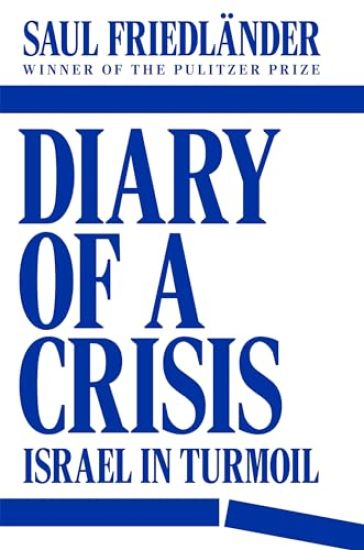
Diary of a Crisis explores the past tumultuous and traumatic year in Israel-Palestine. The eminent historian Saul Friedländer began a diary of Israeli politics in January 2023 as the country was convulsed by protests against Netanyahu's attempt to overhaul the judiciary. Hundreds of thousands took to the streets to demonstrate against this threat to democracy. But the protests said nothing about the Palestinian question-the "elephant in the room," according to Friedländer, who resumed his diary after Hamas's 7 October assault on southern Israel. Israel was facing one of the worst crises in its history, he observes, under the worst possible internal conditions.Friedländer weaves together profound reflections on a national history in which he has been an active participant. He describes how Prime Minister Golda Meir once flatly declared to him, "There is no Palestinian people." For Friedländer, on the other hand, the fight for democracy is inseparable from equality of treatment for Arab and Jewish citizens and an end to Israeli domination over Palestinians in the Occupied Territories. He argues that despite the continuing bloodshed, a two-state solution remains the only long-term answer to this most intractable of conflicts.


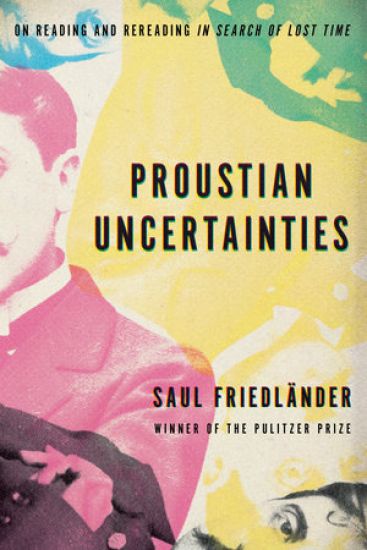
Named a Times Literary Supplement Best Book of the Year A Pulitzer Prize-winning historian revisits Marcel Proust's masterpiece in this essay on literature and memory, exploring the question of identity--that of the novel's narrator and Proust's own. This engaging reexamination of In Search of Lost Time considers how the narrator defines himself, how this compares to what we know of Proust himself, and what the significance is of these various points of commonality and divergence. We know, for example, that the author did not hide his homosexuality, but the narrator did. Why the difference? We know that the narrator tried to marginalize his part-Jewish background. Does this reflect the author's position, and how does the narrator handle what he tries, but does not manage, to dismiss? These are major questions raised by the text and reflected in the text, to which the author's life doesn't give obvious answers. The narrator's reflections on time, on death, on memory, and on love are as many paths leading to the image of self that he projects. In Proustian Uncertainties, Saul Friedl nder draws on his personal experience from a life spent investigating the ties between history and memory to offer a fresh perspective on the seminal work.
A Pulitzer Prize-winning historian revisits Marcel Proust's masterpiece in this essay on literature and memory, exploring the question of identity--that of the novel's narrator and Proust's own. This engaging reexamination of In Search of Lost Time considers how the narrator defines himself, how this compares to what we know of Proust himself, and what the significance is of these various points of commonality and divergence. We know, for example, that the author did not hide his homosexuality, but the narrator did. Why the difference? We know that the narrator tried to marginalize his part-Jewish background. Does this reflect the author's position, and how does the narrator handle what he tries, but does not manage, to dismiss? These are major questions raised by the text and reflected in the text, to which the author's life doesn't give obvious answers. The narrator's reflections on time, on death, on memory, and on love are as many paths leading to the image of self that he projects. In Proustian Uncertainties, Saul Friedl nder draws on his personal experience from a life spent investigating the ties between history and memory to offer a fresh perspective on the seminal work.


In this sequel to the classic work of Holocaust literature When Memory Comes, a Pulitzer Prize-winning historian returns to memoir to recount this tale of intellectual coming-of-age on three continents Forty years after his acclaimed, poignant first memoir, Friedl nder returns with WHEN MEMORY COMES: THE LATER YEARS, bridging the gap between the ordeals of his childhood and his present-day towering reputation in the field of Holocaust studies. After abandoning his youthful conversion to Catholicism, he rediscovers his Jewish roots as a teenager and builds a new life in Israeli politics. Friedl nder's initial loyalty to Israel turns into a lifelong fascination with Jewish life and history. He struggles to process the ubiquitous effects of European anti-Semitism while searching for a more measured approach to the Zionism that surrounds him. Friedl nder goes on to spend his adulthood shuttling between Israel, Europe, and the United States, armed with his talent for language and an expansive intellect. His prestige inevitably throws him up against other intellectual heavyweights. In his early years in Israel, he rubs shoulders with the architects of the fledgling state and brilliant minds such as Gershom Scholem and Carlo Ginzburg, among others. Most importantly, this memoir led Friedl nder to reflect on the wrenching events that induced him to devote sixteen years of his life to writing his Pulitzer Prize-winning masterpiece, The Years of Extermination: Nazi Germany and the Jews, 1939-1945.

A classic of Holocaust literature, the eloquent, acclaimed memoir of childhood by a Pulitzer-winning historian, now reissued with a new introduction by Claire Messud Four months before Hitler came to power, Saul Friedl nder was born in Prague to a middle-class Jewish family. In 1939, seven-year-old Saul and his family were forced to flee to France, where they lived through the German Occupation, until his parents' ill-fated attempt to flee to Switzerland. They were able to hide their son in a Roman Catholic seminary before being sent to Auschwitz where they were killed. After an imposed religious conversion, young Saul began training for priesthood. The birth of Israel prompted his discovery of his Jewish past and his true identity. Friedl nder brings his story movingly to life, shifting between his Israeli present and his European past with grace and restraint. His keen eye spares nothing, not even himself, as he explores the ways in which the loss of his parents, his conversion to Catholicism, and his deep-seated Jewish roots combined to shape him into the man he is today. Friedl nder's retrospective view of his journey of grief and self-discovery provides readers with a rare experience: a memoir of feeling with intellectual backbone, in equal measure tender and insightful.
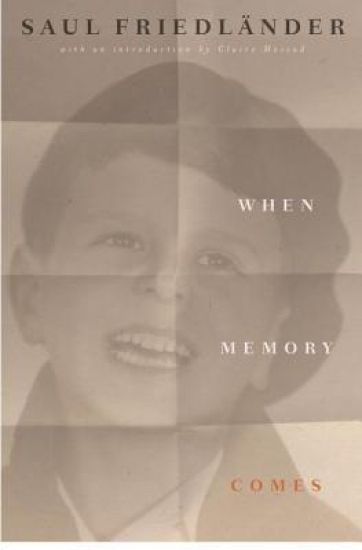
A classic of Holocaust literature, the eloquent, acclaimed memoir of childhood by a Pulitzer-winning historian, now reissued with a new introduction by Claire Messud Four months before Hitler came to power, Saul Friedl nder was born in Prague to a middle-class Jewish family. In 1939, seven-year-old Saul and his family were forced to flee to France, where they lived through the German Occupation, until his parents' ill-fated attempt to flee to Switzerland. They were able to hide their son in a Roman Catholic seminary before being sent to Auschwitz where they were killed. After an imposed religious conversion, young Saul began training for priesthood. The birth of Israel prompted his discovery of his Jewish past and his true identity. Friedl nder brings his story movingly to life, shifting between his Israeli present and his European past with grace and restraint. His keen eye spares nothing, not even himself, as he explores the ways in which the loss of his parents, his conversion to Catholicism, and his deep-seated Jewish roots combined to shape him into the man he is today. Friedl nder's retrospective view of his journey of grief and self-discovery provides readers with a rare experience: a memoir of feeling with intellectual backbone, in equal measure tender and insightful.
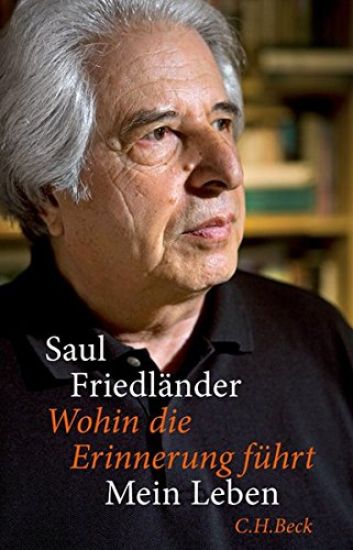

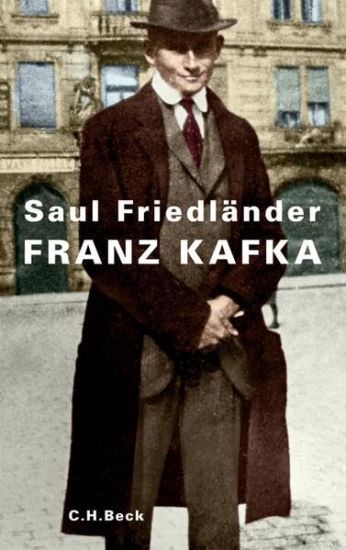
A highly original and engaging appraisal of Kafka’s life, work, legacy, and thought Franz Kafka was the poet of his own disorder. Throughout his life he struggled with a pervasive sense of shame and guilt that left traces in his daily existence—in his many letters, in his extensive diaries, and especially in his fiction. This stimulating book investigates some of the sources of Kafka’s personal anguish and its complex reflections in his imaginary world.In his query, Saul Friedländer probes major aspects of Kafka’s life (family, Judaism, love and sex, writing, illness, and despair) that until now have been skewed by posthumous censorship. Contrary to Kafka’s dying request that all his papers be burned, Max Brod, Kafka’s closest friend and literary executor, edited and published the author’s novels and other works soon after his death in 1924. Friedländer shows that, when reinserted in Kafka’s letters and diaries, deleted segments lift the mask of “sainthood” frequently attached to the writer and thus restore previously hidden aspects of his individuality.

Med Utrotningens år, 1939–45 avslutar Saul Friedländer sitt monumentala verk om historien bakom Förintelsen, Tredje riket och judarna. Med minutiös detaljrikedom visas hur den antisemitiska förföljelsen fick sitt genomslag i hela det ockuperade Europa. Friedländer fokuserar på de ideologiska-kulturella faktorerna bakom utrotningspolitiken. Den nazistiska maktapparaten var i hög grad beroende av att det fanns samarbetande krafter i de olika länderna, och här beskrivs hur ockupationsmakten hade stöd av exempelvis lokala myndigheter, polismakten och passiva, inflytelserika medborgare.Friedländer målar upp en mångfasetterad bild. Han tar stöd i ett omfattande arkivmaterial, men framför allt bygger han på personliga källor – dagböcker, brev och memoarer. Detta ger liv, nerv och en påtaglig närvarokänsla i ett material som lätt kan överväldiga läsaren, både på grund av dess omfattning och för att det skildrar en så ofattbart grym verklighet. Saul Friedlander föddes 1932 i Prag. Han är professor i historia vid University of California och en ledande auktoritet på Tysklands historia under nazitiden. Hans engagemang för att dokumentera krigsförbrytelserna har lett till att han belönats med Pulitzerpriset och de tyska bokhandlarnas fredspris.
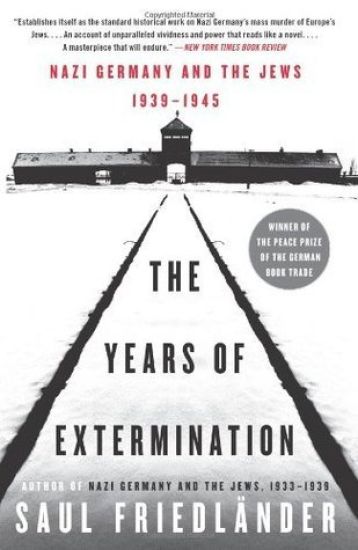
The Years of Extermination: Nazi Germany and the Jews, 1939-1945
Saul Friedlander
HARPER PERENNIAL
2008
nidottu
An authoritative account of the Holocaust goes beyond usual historical studies to include coverage of the reactions of period world authorities, religious groups, and social groups, in a volume that draws on more than thirty years of research. By the author of Nazi Germany and the Jews. Reprint.

"Bei Kriegsende war der Nazismus die fluchbeladene Seite der abendländischen Zivilisation, der Inbegriff des Bösen." Doch die Aufmerksamkeit verlagerte sich dann schrittweise "vom Grauen und Schmerz ... zu wollüstiger Beklemmung und hinreißenden Bildern". Dies konstatierte der berühmte Historiker Saul Friedländer und untersuchte den Nazismus als politisch-ästhetisches Phänomen unserer Zeit. "Der Widerschein des Nazismus", wie man ihn in den 70er Jahren zum Beispiel in den Filmen von Visconti, Fassbinder und Syberberg oder in den Büchern von Speer, Fest u.a. wahrnahm, hatte seinerzeit einen tiefgreifenden Diskurs über den Nazismus in Gang gebracht. In ihren Filmen und Büchern haben die Autoren damals eine neue Sensibilität für die Magie der Hitler-Bewegung entwickelt, die bis dahin fast in allen politischen Analysen gefehlt hatte. Die ästhetische Faszination durch Kitsch und Tod unterzieht Friedländer einer kritischen Analyse und kommt zu dem Fazit, dass dieses Phänomen nicht mit den Mitteln der Ästhetik bewältigt werden könne - es sei denn, man wollte einer geistig-moralischen Verwirrung Vorschub leisten. Für die vorliegende Taschenbuchausgabe des Buches, das erstmals in Deutschland 1984 herausgekommen ist, hat Saul Friedländer 1999 ein Vorwort mit neuen Überlegungen zu seinem Thema verfasst.
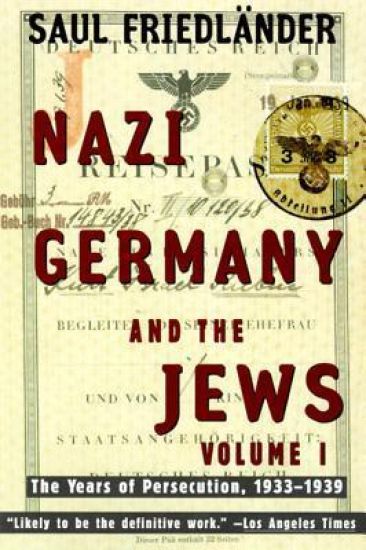
Nazi Germany and the Jews: Volume 1: The Years of Persecution 1933-1939
Saul Friedlander
HARPER PERENNIAL
1998
nidottu
A great historian crowns a lifetime of thought and research by answering a question that has haunted us for more than 50 years: How did one of the most industrially and culturally advanced nations in the world embark on and continue along the path leading to one of the most enormous criminal enterprises in history, the extermination of Europe's Jews? Giving considerable emphasis to a wealth of new archival findings, Saul Friedlander restores the voices of Jews who, after the 1933 Nazi accession to power, were engulfed in an increasingly horrifying reality. We hear from the persecutors themselves: the leaders of the Nazi party, the members of the Protestant and Catholic hierarchies, the university elites, and the heads of the business community. Most telling of all, perhaps, are the testimonies of ordinary German citizens, who in the main acquiesced to increasing waves of dismissals, segregation, humiliation, impoverishment, expulsion, and violence.

Por Que El Holocausto?: Historia de Una Psicosis Colectiva
Saul Friedländer
Herder Herder
2026
nidottu
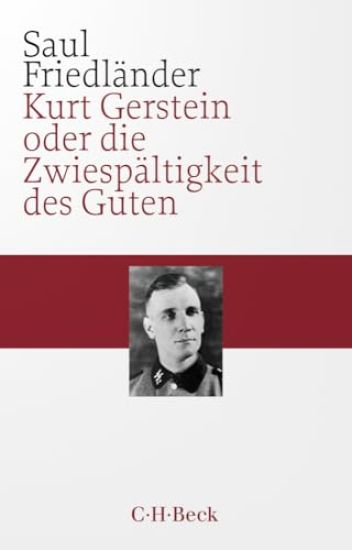

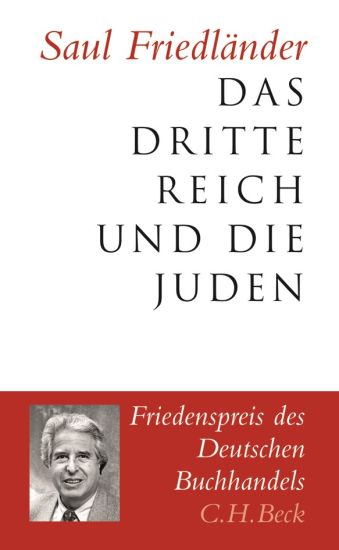
Saul Friedländers Buch über die Verfolgung und Vernichtung der europäischen Juden ist einhellig als eines der bedeutendsten historischen und literarischen Werke unserer Zeit gerühmt worden. Nirgendwo sonst wird die Geschichte des Holocaust so eindringlich, kenntnisreich und reflektiert erzählt. Wer wissen will, was in Deutschland und dann in ganz Europa zwischen 1933 und 1945 geschehen ist, und wie es geschehen konnte, der kommt an dieser vielfach preisgekrönten Darstellung nicht vorbei.