Kirjojen hintavertailu. Mukana 12 390 323 kirjaa ja 12 kauppaa.

Kirjailija

Saul Newman

Kirjat ja teokset yhdessä paikassa: 25 kirjaa, julkaisuja vuosilta 1996-2025, suosituimpien joukossa Postanarkhizm. Vertaile teosten hintoja ja tarkista saatavuus suomalaisista kirjakaupoista.

25 kirjaa

Kirjojen julkaisuhaarukka 1996-2025.

Politics Most Unusual

Politics Most Unusual

Damian Cox; M. Levine; Saul Newman

Palgrave Macmillan
2008
sidottu
How has 9/11 and the declaration of the 'global war on terror' changed our conceptions of politics? How has it affected our understanding of democracy, personal freedom and government accountability? In answering these and other questions, the authors engage in a comprehensive and critical analysis of politics in the age of terrorism.
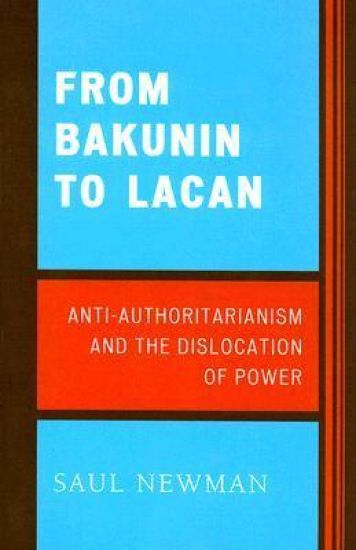
From Bakunin to Lacan

From Bakunin to Lacan

Saul Newman

Lexington Books
2007
nidottu
In its comparison of anarchist and poststructuralist thought, From Bakunin to Lacan contends that the most pressing political problem we face today is the proliferation and intensification of power. Saul Newman targets the tendency of radical political theories and movements to reaffirm power and authority, in different guises, in their very attempt to overcome it. In his examination of thinkers such as Bakunin, Lacan, Stirner, and Foucault Newman explores important epistemological, ontological, and political questions: Is the essential human subject the point of departure from which power and authority can be opposed? Or, is the humanist subject itself a site of domination that must be unmasked? As it deftly charts this debate's paths of emergence in political thought, the book illustrates how the question of essential identities defines and re-defines the limits and possibilities of radical politics today.
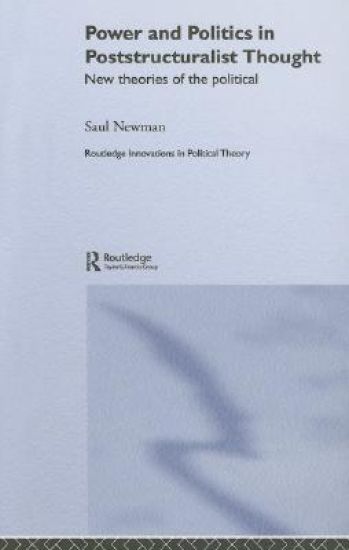
Power and Politics in Poststructuralist Thought
This book explores the impact of poststructuralism on contemporary political theory by focussing on problems and issues central to politics today. Drawing on the theoretical concerns brought to light by the ‘poststructuralist’ thinkers Foucault, Derrida, Lacan, Deleuze and Max Stirner, Newman provides a critical examination of new developments in contemporary political theory: post-Marxism, discourse analysis, new theories of ideology and power, hegemony, radical democracy and psychoanalytic theory. He re-examines the political in light of these developments in theory to suggest new ways of thinking about politics through a reflection on the challenges that confront it.This volume will be of great interest to students of postmodernism and poststructuralist theory in political science, philosophy, sociology, philosophy and cultural studies.
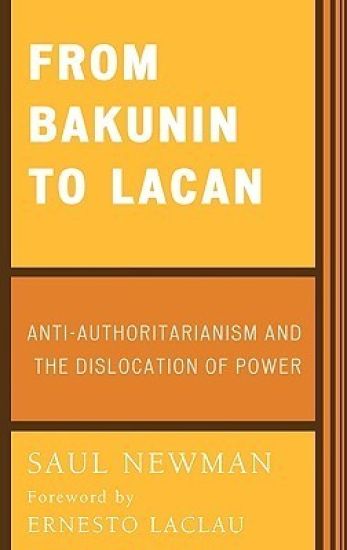
From Bakunin to Lacan

From Bakunin to Lacan

Saul Newman

Lexington Books
2001
sidottu
In its comparison of anarchist and poststructuralist thought, From Bakunin to Lacan contends that the most pressing political problem we face today is the proliferation and intensification of power. Saul Newman targets the tendency of radical political theories and movements to reaffirm power and authority, in different guises, in their very attempt to overcome it. In his examination of thinkers such as Bakunin, Lacan, Stirner, and Foucault Newman explores important epistemological, ontological, and political questions: Is the essential human subject the point of departure from which power and authority can be opposed? Or, is the humanist subject itself a site of domination that must be unmasked? As it deftly charts this debate's paths of emergence in political thought, the book illustrates how the question of essential identities defines and re-defines the limits and possibilities of radical politics today.

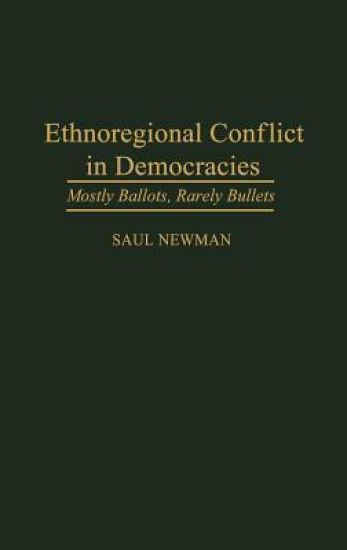
Ethnoregional Conflict in Democracies

Ethnoregional Conflict in Democracies

Saul Newman

Praeger Publishers Inc
1996
sidottu
Most advanced industrial democracies have been successful in controlling ethnic political conflicts peacefully. This book examines ethnoregional conflicts in seven ethnoregions—in Scotland, Flanders, Wallonia, Brussels, Quebec, Northern Ireland, and the Basque region of Spain—to explain what mactors determine electoral support for ethnoregional parties, why in some cases electoral conflict has co-existed with ethnic violence, and why there appears to be an inverse relationship between electoral success and policy success among many ethnoregional parties. As ethnic conflicts—peaceful and violent—continue to rage around the world, this important new study merits the attention of scholars and students in comparative politics and ethnic studies.