Kirjojen hintavertailu. Mukana 12 390 323 kirjaa ja 12 kauppaa.

Kirjailija

Scott D. Sagan

Kirjat ja teokset yhdessä paikassa: 3 kirjaa, julkaisuja vuosilta 1983-2016, suosituimpien joukossa Learning from a Disaster. Vertaile teosten hintoja ja tarkista saatavuus suomalaisista kirjakaupoista.

3 kirjaa

Kirjojen julkaisuhaarukka 1983-2016.

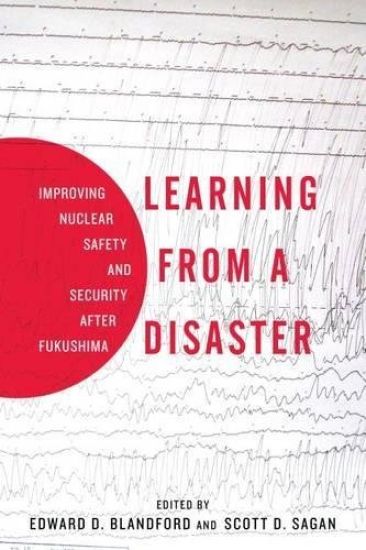
Learning from a Disaster

Learning from a Disaster

Scott D. Sagan; Edward D. Blandford

Stanford University Press
2016
sidottu
This book—the culmination of a truly collaborative international and highly interdisciplinary effort—brings together Japanese and American political scientists, nuclear engineers, historians, and physicists to examine the Fukushima accident from a new and broad perspective. It explains the complex interactions between nuclear safety risks (the causes and consequences of accidents) and nuclear security risks (the causes and consequences of sabotage or terrorist attacks), exposing the possible vulnerabilities all countries may have if they fail to learn from this accident. The book further analyzes the lessons of Fukushima in comparative perspective, focusing on the politics of safety and emergency preparedness. It first compares the different policies and procedures adopted by various nuclear facilities in Japan and then discusses the lessons learned—and not learned—after major nuclear accidents and incidents in other countries in the past. The book's editors conclude that learning lessons across nations has proven to be very difficult, and they propose new policies to improve global learning after nuclear accidents or attacks.
Learning from a Disaster

Learning from a Disaster

Scott D. Sagan; Edward D. Blandford

Stanford University Press
2016
pokkari
This book—the culmination of a truly collaborative international and highly interdisciplinary effort—brings together Japanese and American political scientists, nuclear engineers, historians, and physicists to examine the Fukushima accident from a new and broad perspective. It explains the complex interactions between nuclear safety risks (the causes and consequences of accidents) and nuclear security risks (the causes and consequences of sabotage or terrorist attacks), exposing the possible vulnerabilities all countries may have if they fail to learn from this accident. The book further analyzes the lessons of Fukushima in comparative perspective, focusing on the politics of safety and emergency preparedness. It first compares the different policies and procedures adopted by various nuclear facilities in Japan and then discusses the lessons learned—and not learned—after major nuclear accidents and incidents in other countries in the past. The book's editors conclude that learning lessons across nations has proven to be very difficult, and they propose new policies to improve global learning after nuclear accidents or attacks.
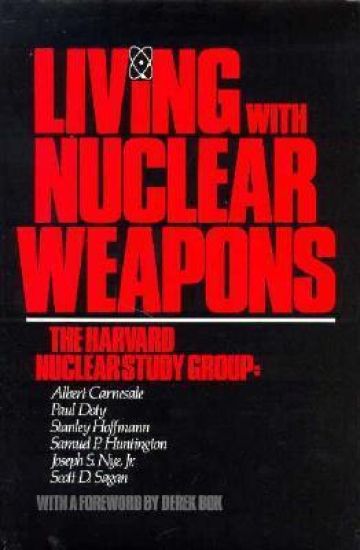
Living with Nuclear Weapons

Living with Nuclear Weapons

Albert Carnesale; Paul Doty; Stanley Hoffmann; Samuel P. Huntington; Joseph S. Nye; Scott D. Sagan; Derek Bok

Harvard University Press
1983
sidottu
At the request of the President of Harvard University, six Harvard scholars have joined forces to write a book that lays out the facts about nuclear weapons for all concerned citizens who want to think through the nuclear dilemma for themselves. Living with Nuclear Weapons is written by specialists for the general reader. It conveys crucial information clearly, concisely, and without technical jargon.Living with Nuclear Weapons presents all sides of the nuclear debate while explaining what everyone needs to know to develop informed and reasoned opinions about the issues. Among the specifics are a history of nuclear weaponry; an examination of current nuclear arsenals; scenarios of how a nuclear war might begin; a discussion of what can be done to promote arms control and disarmament; a study of the hazards of nuclear proliferation; an analysis of various nuclear strategies; and an explanation of how public opinion can influence policy on the nuclear arms question.