Kirjojen hintavertailu. Mukana 12 239 448 kirjaa ja 12 kauppaa.

Kirjailija

Scott Douglas Gerber

Kirjat ja teokset yhdessä paikassa: 9 kirjaa, julkaisuja vuosilta 1995-2025, suosituimpien joukossa Law and Religion in Colonial America. Vertaile teosten hintoja ja tarkista saatavuus suomalaisista kirjakaupoista.

9 kirjaa

Kirjojen julkaisuhaarukka 1995-2025.

Law and Religion in Colonial America

Law and Religion in Colonial America

Scott Douglas Gerber

Cambridge University Press
2025
pokkari
Law – charters, statutes, judicial decisions, and traditions – mattered in colonial America, and laws about religion mattered a lot. The legal history of colonial America reveals that America has been devoted to the free exercise of religion since well before the First Amendment was ratified. Indeed, the two colonies originally most opposed to religious liberty for anyone who did not share their views, Connecticut and Massachusetts, eventually became bastions of it. By focusing on law, Scott Douglas Gerber offers new insights about each of the five English American colonies founded for religious reasons – Maryland, Rhode Island, Pennsylvania, Connecticut, and Massachusetts – and challenges the conventional view that colonial America had a unified religious history.
Law and Religion in Colonial America

Law and Religion in Colonial America

Scott Douglas Gerber

Cambridge University Press
2023
sidottu
Law – charters, statutes, judicial decisions, and traditions – mattered in colonial America, and laws about religion mattered a lot. The legal history of colonial America reveals that America has been devoted to the free exercise of religion since well before the First Amendment was ratified. Indeed, the two colonies originally most opposed to religious liberty for anyone who did not share their views, Connecticut and Massachusetts, eventually became bastions of it. By focusing on law, Scott Douglas Gerber offers new insights about each of the five English American colonies founded for religious reasons – Maryland, Rhode Island, Pennsylvania, Connecticut, and Massachusetts – and challenges the conventional view that colonial America had a unified religious history.
The Art of the Law

The Art of the Law

Scott Douglas Gerber

Anaphora Literary Press
2018
pokkari
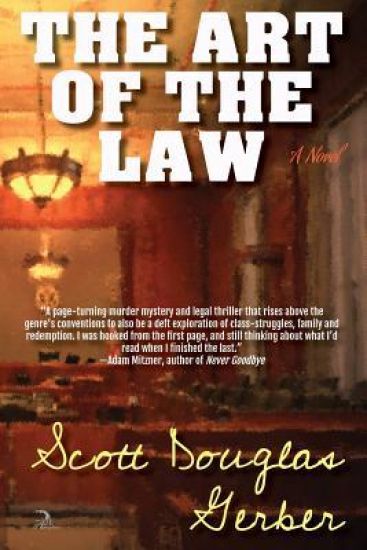
Nevin Montgomery, a young lawyer with a prestigious Boston law firm, is dispatched to the Cape Cod compound of Andrew Windsor, the most acclaimed artist in America, to update Windsor's will. Nevin arrives to the news that a woman, who had secretly modeled for Windsor for decades, has been found dead. Nevin, who is battling a hidden drug addiction, is asked to remain at the Windsor compound to complete his assignment because the health of his law firm's most famous client is deteriorating rapidly. Nevin is introduced to the secretive art world, and he becomes smitten along the way with Catina Cruz, a beautiful young Portuguese-American woman he meets at the compound. Nevin eventually learns that Catina models for James Windsor, Andrew Windsor's son. James is a painter in his own right, albeit not nearly of the stature of his father. When Andrew Windsor finally dies, a will contest ensues. At Andrew's request, Nevin had cut Andrew's wife and son out of the will and they challenge the will in court. Nevin is instructed by his law firm to defend the will, but he has some further investigating to do before he can: investigating that reveals more than he ever wanted to know about the woman he has come to love... and about himself.
The Art of the Law

The Art of the Law

Scott Douglas Gerber

Anaphora Literary Press
2018
sidottu
Nevin Montgomery, a young lawyer with a prestigious Boston law firm, is dispatched to the Cape Cod compound of Andrew Windsor, the most acclaimed artist in America, to update Windsor's will. Nevin arrives to the news that a woman who had secretly modeled for Windsor for almost twenty years has been found dead. Nevin, who is battling a hidden drug addiction, is asked to remain at the Windsor compound to complete his assignment because the health of his law firm's most famous client is deteriorating rapidly. Nevin is introduced to the secretive art world, and he becomes smitten along the way with Catina Cruz, a beautiful young Portuguese-American woman he meets at the compound. Nevin eventually learns that Catina models for James Windsor, Andrew Windsor's son. James is a painter in his own right, albeit not nearly of the stature of his father. When Andrew Windsor finally dies, a will contest ensues. At Andrew's request, Nevin had cut Andrew's wife and son out of the will and they challenge the will in court. Nevin is instructed by his law firm to defend the will, but he has some further investigating to do before he can: investigating that reveals more than he ever wanted to know about the woman he has come to love... and about himself.
A Distinct Judicial Power

A Distinct Judicial Power

Scott Douglas Gerber

Oxford University Press Inc
2011
sidottu
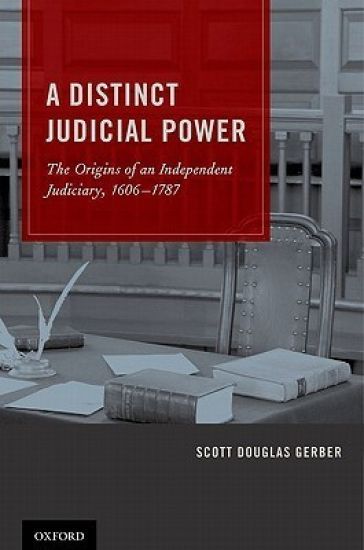
A Distinct Judicial Power: The Origins of an Independent Judiciary, 1606-1787, by Scott Douglas Gerber, provides the first comprehensive critical analysis of the origins of judicial independence in the United States. Part I examines the political theory of an independent judiciary. Gerber begins chapter 1 by tracing the intellectual origins of a distinct judicial power from Aristotle's theory of a mixed constitution to John Adams's modifications of Montesquieu. Chapter 2 describes the debates during the framing and ratification of the federal Constitution regarding the independence of the federal judiciary. Part II, the bulk of the book, chronicles how each of the original thirteen states and their colonial antecedents treated their respective judiciaries. This portion, presented in thirteen separate chapters, brings together a wealth of information (charters, instructions, statutes, etc.) about the judicial power between 1606 and 1787, and sometimes beyond. Part III, the concluding segment, explores the influence the colonial and early state experiences had on the federal model that followed and on the nature of the regime itself. It explains how the political theory of an independent judiciary examined in Part I, and the various experiences of the original thirteen states and their colonial antecedents chronicled in Part II, culminated in Article III of the U.S. Constitution. It also explains how the principle of judicial independence embodied by Article III made the doctrine of judicial review possible, and committed that doctrine to the protection of individual rights.
First Principles

First Principles

Scott Douglas Gerber

New York University Press
2002
pokkari
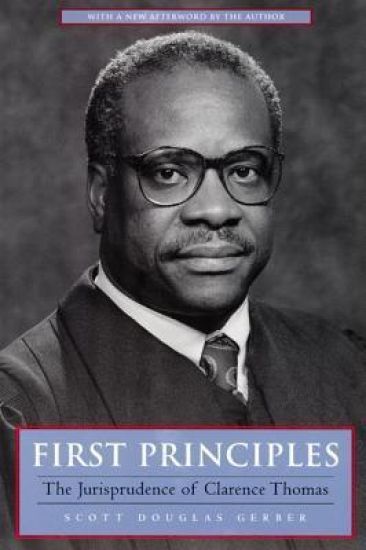
An assessment of the first five years of Justice Clarence Thomas's time on the Court Clarence Thomas is one of the most vilified public figures of our day. Time magazine called him "Uncle Tom Justice," and famed columnist Nat Hentoff accused him of "having done more damage, more quickly, than any Supreme Court Justice in history." To date, however, his legal philosophy has received only cursory treatment. Scott Gerber provides a portrait of Thomas based not on the justice's caricatured reputation, but on his judicial opinions and votes, his scholarly writings, and his public speeches. And what Gerber finds is likely to surprise Justice Thomas's critics and supporters alike.
First Principles

First Principles

Scott Douglas Gerber

New York University Press
1998
sidottu
An assessment of the first five years of Justice Clarence Thomas's time on the Court Clarence Thomas is one of the most vilified public figures of our day. Time magazine called him "Uncle Tom Justice," and famed columnist Nat Hentoff accused him of "having done more damage, more quickly, than any Supreme Court Justice in history." To date, however, his legal philosophy has received only cursory treatment. Scott Gerber provides a portrait of Thomas based not on the justice's caricatured reputation, but on his judicial opinions and votes, his scholarly writings, and his public speeches. And what Gerber finds is likely to surprise Justice Thomas's critics and supporters alike.
To Secure These Rights

To Secure These Rights

Scott Douglas Gerber

New York University Press
1996
pokkari
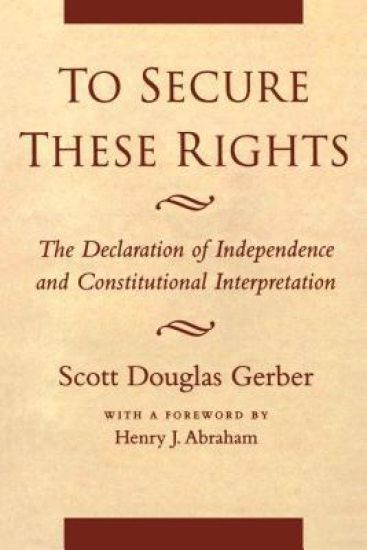
To Secure These Rights enters the fascinating--and often contentious--debate over constitutional interpretation. Scott Douglas Gerber here argues that the Constitution of the United States should be interpreted in light of the natural rights political philosophy of the Declaration of Independence and that the Supreme Court is the institution of American government that should be primarily responsible for identifying and applying that philosophy in American life. Importantly, the theory advanced in this book--what Gerber calls liberal originalism--is neither consistently liberal nor consistently conservative in the modern conception of those terms. Rather, the theory is liberal in the classic sense of viewing the basic purpose of government to be safeguarding the natural rights of individuals. As Thomas Jefferson wrote in the Declaration of Independence, to secure these rights, governments are instituted among men. In essence, Gerber maintains that the Declaration articulates the philosophical ends of our nation and that the Constitution embodies the means to effectuate those ends. Gerber's analysis reveals that the Constitution cannot be properly understood without recourse to history, political philosophy, and law.
To Secure These Rights

To Secure These Rights

Scott Douglas Gerber

New York University Press
1995
sidottu
To Secure These Rights enters the fascinating--and often contentious--debate over constitutional interpretation. Scott Douglas Gerber here argues that the Constitution of the United States should be interpreted in light of the natural rights political philosophy of the Declaration of Independence and that the Supreme Court is the institution of American government that should be primarily responsible for identifying and applying that philosophy in American life. Importantly, the theory advanced in this book--what Gerber calls liberal originalism--is neither consistently liberal nor consistently conservative in the modern conception of those terms. Rather, the theory is liberal in the classic sense of viewing the basic purpose of government to be safeguarding the natural rights of individuals. As Thomas Jefferson wrote in the Declaration of Independence, to secure these rights, governments are instituted among men. In essence, Gerber maintains that the Declaration articulates the philosophical ends of our nation and that the Constitution embodies the means to effectuate those ends. Gerber's analysis reveals that the Constitution cannot be properly understood without recourse to history, political philosophy, and law.