Kirjojen hintavertailu. Mukana 12 595 353 kirjaa ja 12 kauppaa.

Kirjailija

Scott E. Maxwell

Kirjat ja teokset yhdessä paikassa: 5 kirjaa, julkaisuja vuosilta 1986-2026, suosituimpien joukossa Designing Experiments and Analyzing Data. Vertaile teosten hintoja ja tarkista saatavuus suomalaisista kirjakaupoista.

Mukana myös kirjoitusasut: Scott E. Maxwell

5 kirjaa

Kirjojen julkaisuhaarukka 1986-2026.

Designing Experiments and Analyzing Data

Designing Experiments and Analyzing Data

Scott E. Maxwell; Harold D. Delaney; Ken Kelley

TAYLOR FRANCIS LTD
2026
nidottu
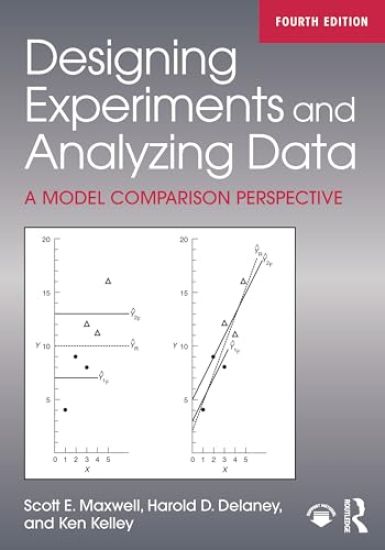
Designing Experiments and Analyzing Data: A Model Comparison Perspective (Fourth edition) offers an updated version of the award-winning text that has influenced the social sciences for more than a generation.Maxwell, Delaney, and Kelley first apply fundamental principles to simple experimental designs followed by an application of the same principles to more complicated designs. Their integrative conceptual framework better prepares readers to understand the logic behind a general strategy of data analysis that is appropriate for a wide variety of designs, which allows for the introduction of more complex topics that are generally omitted from other books. Numerous pedagogical features further facilitate understanding: examples of published research demonstrate the applicability of each chapter’s content; flowcharts assist in choosing the most appropriate procedure; end-of-chapter lists of important formulas highlight key ideas and assist readers in locating the initial presentation of equations; useful programming code and tips are provided throughout the book and in associated resources available at DesigningExperiments.Com; and extensive exercises help develop a deeper understanding of the topics. Detailed solutions for some of the exercises and realistic data sets are included on their website, DesigningExperiments.Com. The pedagogical approach used throughout the book enables readers to gain an overview of experimental design, from conceptualization of the research question to analysis of the data. The book and its companion website with web apps, tutorials, and detailed code are ideal for students and researchers seeking the optimal way to design their studies and analyze the resulting data.

Designing Experiments and Analyzing Data

Designing Experiments and Analyzing Data

Scott E. Maxwell; Harold D. Delaney; Ken Kelley

TAYLOR FRANCIS LTD
2026
sidottu
Designing Experiments and Analyzing Data: A Model Comparison Perspective (Fourth edition) offers an updated version of the award-winning text that has influenced the social sciences for more than a generation.Maxwell, Delaney, and Kelley first apply fundamental principles to simple experimental designs followed by an application of the same principles to more complicated designs. Their integrative conceptual framework better prepares readers to understand the logic behind a general strategy of data analysis that is appropriate for a wide variety of designs, which allows for the introduction of more complex topics that are generally omitted from other books. Numerous pedagogical features further facilitate understanding: examples of published research demonstrate the applicability of each chapter’s content; flowcharts assist in choosing the most appropriate procedure; end-of-chapter lists of important formulas highlight key ideas and assist readers in locating the initial presentation of equations; useful programming code and tips are provided throughout the book and in associated resources available at DesigningExperiments.Com; and extensive exercises help develop a deeper understanding of the topics. Detailed solutions for some of the exercises and realistic data sets are included on their website, DesigningExperiments.Com. The pedagogical approach used throughout the book enables readers to gain an overview of experimental design, from conceptualization of the research question to analysis of the data. The book and its companion website with web apps, tutorials, and detailed code are ideal for students and researchers seeking the optimal way to design their studies and analyze the resulting data.
Designing Experiments and Analyzing Data

Designing Experiments and Analyzing Data

Scott E. Maxwell; Harold D. Delaney; Ken Kelley

TAYLOR FRANCIS LTD
2024
nidottu
Designing Experiments and Analyzing Data: A Model Comparison Perspective (3rd edition) offers an integrative conceptual framework for understanding experimental design and data analysis. Maxwell, Delaney, and Kelley first apply fundamental principles to simple experimental designs followed by an application of the same principles to more complicated designs. Their integrative conceptual framework better prepares readers to understand the logic behind a general strategy of data analysis that is appropriate for a wide variety of designs, which allows for the introduction of more complex topics that are generally omitted from other books. Numerous pedagogical features further facilitate understanding: examples of published research demonstrate the applicability of each chapter’s content; flowcharts assist in choosing the most appropriate procedure; end-of-chapter lists of important formulas highlight key ideas and assist readers in locating the initial presentation of equations; useful programming code and tips are provided throughout the book and in associated resources available online, and extensive sets of exercises help develop a deeper understanding of the subject. Detailed solutions for some of the exercises and realistic data sets are included on the website (DesigningExperiments.com). The pedagogical approach used throughout the book enables readers to gain an overview of experimental design, from conceptualization of the research question to analysis of the data. The book and its companion website with web apps, tutorials, and detailed code are ideal for students and researchers seeking the optimal way to design their studies and analyze the resulting data.
Designing Experiments and Analyzing Data

Designing Experiments and Analyzing Data

Scott E. Maxwell; Harold D. Delaney; Ken Kelley

Routledge
2017
sidottu
Designing Experiments and Analyzing Data: A Model Comparison Perspective (3rd edition) offers an integrative conceptual framework for understanding experimental design and data analysis. Maxwell, Delaney, and Kelley first apply fundamental principles to simple experimental designs followed by an application of the same principles to more complicated designs. Their integrative conceptual framework better prepares readers to understand the logic behind a general strategy of data analysis that is appropriate for a wide variety of designs, which allows for the introduction of more complex topics that are generally omitted from other books. Numerous pedagogical features further facilitate understanding: examples of published research demonstrate the applicability of each chapter’s content; flowcharts assist in choosing the most appropriate procedure; end-of-chapter lists of important formulas highlight key ideas and assist readers in locating the initial presentation of equations; useful programming code and tips are provided throughout the book and in associated resources available online, and extensive sets of exercises help develop a deeper understanding of the subject. Detailed solutions for some of the exercises and realistic data sets are included on the website (DesigningExperiments.com). The pedagogical approach used throughout the book enables readers to gain an overview of experimental design, from conceptualization of the research question to analysis of the data. The book and its companion website with web apps, tutorials, and detailed code are ideal for students and researchers seeking the optimal way to design their studies and analyze the resulting data.
Multivariate Analysis of Variance

Multivariate Analysis of Variance

James H. Bray; Scott E. Maxwell

SAGE Publications Inc
1986
nidottu
Analysis of variance (ANOVA) is one of the most frequently employed statistical techniques in the social sciences because it provides a flexible methodology for testing differences among means. This monograph considers the multivariate form of analysis of variance (MANOVA) and represents a logical extension of an earlier paper in this series, Analysis of Variance. It provides a unique perspective for readers seeking to understand how MANOVA works and how to interpret MANOVA analyses.