Kirjojen hintavertailu. Mukana 12 595 353 kirjaa ja 12 kauppaa.

Kirjailija

Scott F. Gilbert

Kirjat ja teokset yhdessä paikassa: 6 kirjaa, julkaisuja vuosilta 2004-2026, suosituimpien joukossa Evolution Evolving. Vertaile teosten hintoja ja tarkista saatavuus suomalaisista kirjakaupoista.

6 kirjaa

Kirjojen julkaisuhaarukka 2004-2026.

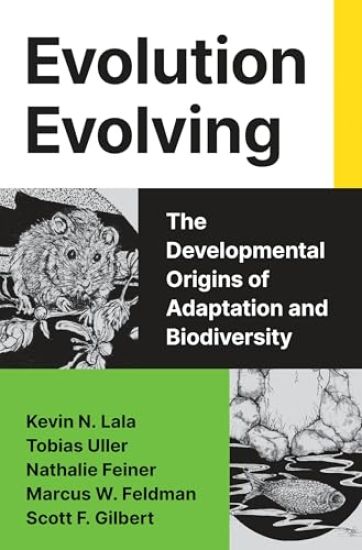
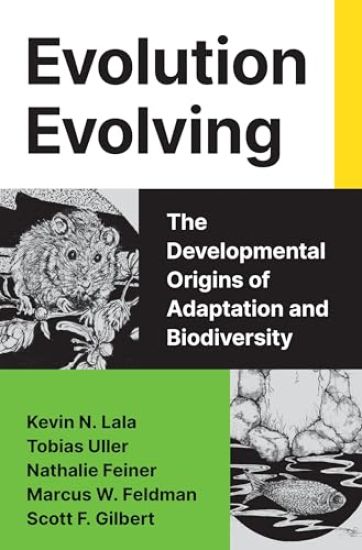
Evolution Evolving

Evolution Evolving

Kevin N. Lala; Tobias Uller; Nathalie Feiner; Marcus Feldman; Scott F. Gilbert

PRINCETON UNIVERSITY PRESS
2026
pokkari
A new account of the central role developmental processes play in evolution A new scientific view of evolution is emerging—one that challenges and expands our understanding of how evolution works. Recent research demonstrates that organisms differ greatly in how effective they are at evolving. Whether and how each organism adapts and diversifies depends critically on the mechanistic details of how that organism operates—its development, physiology, and behavior. That is because the evolutionary process itself has evolved over time, and continues to evolve. The scientific understanding of evolution is evolving too, with groundbreaking new ways of explaining evolutionary change. In this book, a group of leading biologists draw on the latest findings in evolutionary genetics and evo-devo, as well as novel insights from studies of epigenetics, symbiosis, and inheritance, to examine the central role that developmental processes play in evolution. Written in an accessible style, and illustrated with fascinating examples of natural history, the book presents recent scientific discoveries that expand evolutionary biology beyond the classical view of gene transmission guided by natural selection. Without undermining the central importance of natural selection and other Darwinian foundations, new developmental insights indicate that all organisms possess their own characteristic sets of evolutionary mechanisms. The authors argue that a consideration of developmental phenomena is needed for evolutionary biologists to generate better explanations for adaptation and biodiversity. This book provides a new vision of adaptive evolution.
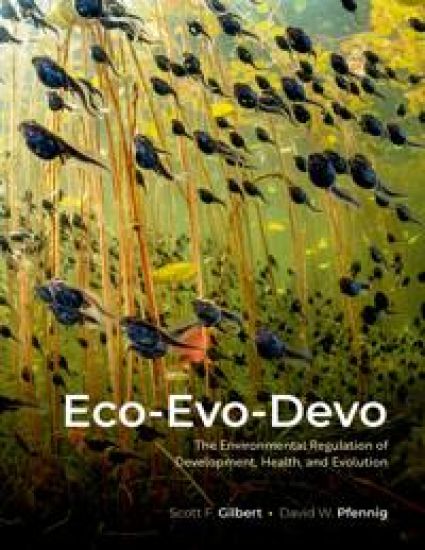
Eco-Evo-Devo

Eco-Evo-Devo

Scott F. Gilbert; David W. Pfennig

OXFORD UNIVERSITY PRESS INC
2026
nidottu
Recent discoveries in fields ranging from molecular and cell biology to ecology and evolution have given rise to 'ecological and evolutionary developmental biology' (or simply, 'eco-evo-devo'), the new science aimed at clarifying how the interplay between genes and environment shapes how organisms develop, interact, and evolve. Eco-Evo-Devo: The Environmental Regulation of Development, Health, and Evolution provides a synthetic overview of this new field, which merges evolution with ecological developmental biology. The book discusses such major themes as how multicellular organisms function, develop, and evolve as consortia of different symbiotic organisms, how many organisms can generate numerous traits depending on the environmental conditions they experience via phenotypic plasticity, and how living things have evolved several layers of inheritance that do not rely on the transmission of genes from parent to offspring. As the book details, these themes question many of our longstanding assumptions about how biology works, as well as having practical implications in preventing many diseases and mitigating biodiversity loss. Written for any undergraduate and graduate students with a basic knowledge of biology, Eco-Evo-Devo promises to stimulate new thinking about inheritance, development, ecology, evolution, and health.
Evolution Evolving

Evolution Evolving

Kevin N. Lala; Tobias Uller; Nathalie Feiner; Marcus Feldman; Scott F. Gilbert

PRINCETON UNIVERSITY PRESS
2024
sidottu
A new account of the central role developmental processes play in evolutionA new scientific view of evolution is emerging—one that challenges and expands our understanding of how evolution works. Recent research demonstrates that organisms differ greatly in how effective they are at evolving. Whether and how each organism adapts and diversifies depends critically on the mechanistic details of how that organism operates—its development, physiology, and behavior. That is because the evolutionary process itself has evolved over time, and continues to evolve. The scientific understanding of evolution is evolving too, with groundbreaking new ways of explaining evolutionary change. In this book, a group of leading biologists draw on the latest findings in evolutionary genetics and evo-devo, as well as novel insights from studies of epigenetics, symbiosis, and inheritance, to examine the central role that developmental processes play in evolution.Written in an accessible style, and illustrated with fascinating examples of natural history, the book presents recent scientific discoveries that expand evolutionary biology beyond the classical view of gene transmission guided by natural selection. Without undermining the central importance of natural selection and other Darwinian foundations, new developmental insights indicate that all organisms possess their own characteristic sets of evolutionary mechanisms. The authors argue that a consideration of developmental phenomena is needed for evolutionary biologists to generate better explanations for adaptation and biodiversity. This book provides a new vision of adaptive evolution.
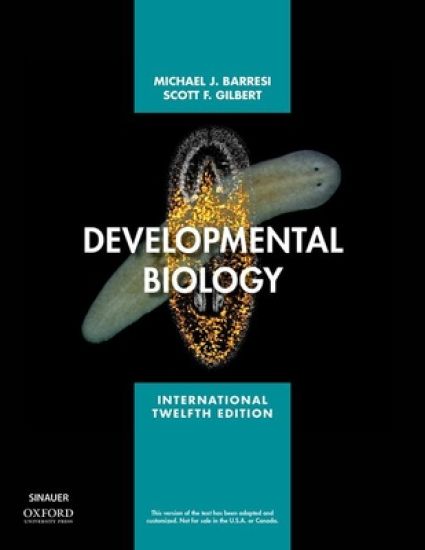
Developmental Biology

Developmental Biology

Michael J.F. Barresi; Scott F. Gilbert

Oxford University Press Inc
2020
nidottu
Thoroughly updated, streamlined, and enhanced with pedagogical features, the twelfth edition of Barresi and Gilbert's Developmental Biology engages students and empowers instructors to effectively teach both the stable principles and the newest front-page research of this vast, complex, and multi-disciplinary field. This much loved, well-illustrated, and remarkably well written textbook invigorates the classical insights of embryology with cutting edge material, and makes the most complex topics understandable to a new generation of students. Designed with the undergraduate student in mind, this new, streamlined edition now contains studies of plant development, expanded coverage of regeneration, over a hundred new and revised illustrations, and deeply integrated active learning resources that build on the text's enthusiasm and accuracy. This is a text designed to make students become excited about how animals and plants develop their complex bodies from simple origins. The new edition makes it easier to customize one's developmental biology course to the needs and interests of today's students, integrating the printed book with electronic interviews, videos, and tutorials. Michael J. F. Barresi brings his creativity and expertise as a teacher and as an artist of computer-mediated learning to the book, allowing the professor to use both standard and alternative ways of teaching animal and plant development.
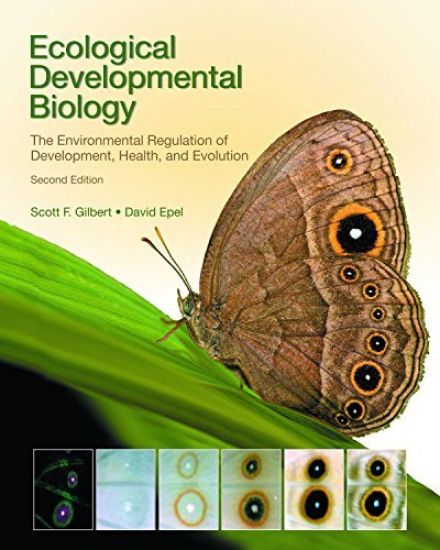
Ecological Developmental Biology

Ecological Developmental Biology

Scott F. Gilbert

Oxford University Press Inc
2015
nidottu
The science studying this new world, uncovering the relationships between genes, developing organisms, and their environments, is called ecological developmental biology. This book presents the data for ecological developmental biology, integrating it into new accounts of medicine, evolution, and embryology.The new evolutionary science created by this approach to nature is called ecological evolutionary developmental biology (eco-evo-devo). The book documents the evidence for a new, extended, evolutionary synthesis, a synthesis that: confounds the creationist belief that evolution can't be described above the species-level; integrates aging and 'Western' diseases such as diabetes, atherosclerosis, cancer, and obesity into an evolutionary context; and sees interspecies interactions both within the organism and between organisms as being critical for evolution, development, and fitness. The only book that, in one place: Details the three main epigenetic sources of phenotype: symbionts, altered chromatin structure, and plasticity. Discusses the various ways that development can be disrupted: teratogens, endocrine disruptors, global climate change, and mismatches between diet and environment. Documents the evidence for an extended evolutionary synthesis involving the modern synthesis, evo-devo, and eco-evo-devo.
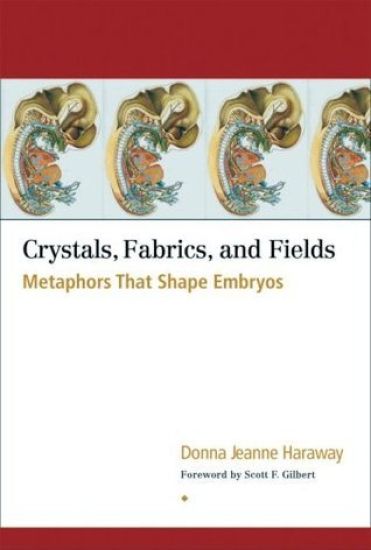
Crystals, Fabrics, and Fields

Crystals, Fabrics, and Fields

Donna Jeanne Haraway; Scott F. Gilbert

North Atlantic Books,U.S.
2004
pokkari
Social scientist Donna Jeanne Haraway uses the work of pioneering developmental biologists Ross G. Harrison, Joseph Needham, and Paul Weiss as a springboard for a discussion about a shift in developmental biology from a vitalism-mechanism framework to organicism. the book interweaves Thomas Kuhn's concept of paradigm change into this wide-ranging analysis, emphasizing the role of model, analogy, and metaphor in the paradigm and arguing that any truly useful theoretical system in biology must have a central metaphor.