Kirjojen hintavertailu. Mukana 12 595 353 kirjaa ja 12 kauppaa.

Kirjailija

Scott Kaufman

Kirjat ja teokset yhdessä paikassa: 15 kirjaa, julkaisuja vuosilta 2003-2025, suosituimpien joukossa Impeachment in U.S. History. Vertaile teosten hintoja ja tarkista saatavuus suomalaisista kirjakaupoista.

15 kirjaa

Kirjojen julkaisuhaarukka 2003-2025.

Impeachment in U.S. History

Impeachment in U.S. History

William K. Bolt; Scott Kaufman

TAYLOR FRANCIS LTD
2025
sidottu
This book offers the most comprehensive study yet of the history behind impeachment in the United States, considering its use against presidents, judges, justices, and members of the cabinet.Although the Founding Fathers intended for the impeachment of federal officials to take place rarely, and only for the most egregious instances of malfeasance, calls for impeaching members of the U.S. government seem today to be almost routine. Presenting their arguments in a manner engaging to laypersons and specialists alike, authors Bolt and Kaufman describe the precolonial and colonial origins of impeachment in the United States, how the Founding Fathers intended for the process of impeachment to occur, the changes that have taken place to that process since the country’s founding, and why one hears the word “impeachment” used so often at present. Incorporating dozens of cases, including many that are oftentimes forgotten, this book demonstrates that partisanship is not new when it comes to trying to remove federal officers from their post and that unseating those officers via impeachment proceedings has proven very difficult.Accessibly written and featuring a number of primary source documents and tools for student learning, Impeachment in U.S History is ideal for students of American history and American political history in particular.
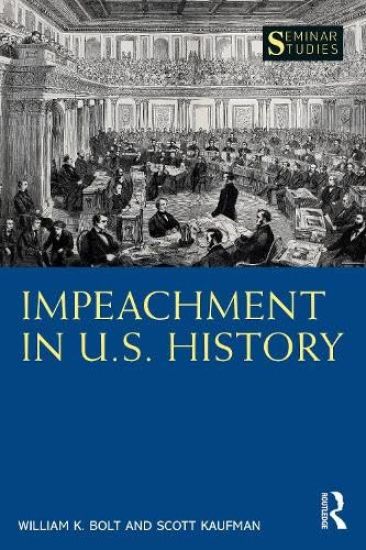
Impeachment in U.S. History

Impeachment in U.S. History

William K. Bolt; Scott Kaufman

TAYLOR FRANCIS LTD
2025
nidottu
This book offers the most comprehensive study yet of the history behind impeachment in the United States, considering its use against presidents, judges, justices, and members of the cabinet.Although the Founding Fathers intended for the impeachment of federal officials to take place rarely, and only for the most egregious instances of malfeasance, calls for impeaching members of the U.S. government seem today to be almost routine. Presenting their arguments in a manner engaging to laypersons and specialists alike, authors Bolt and Kaufman describe the precolonial and colonial origins of impeachment in the United States, how the Founding Fathers intended for the process of impeachment to occur, the changes that have taken place to that process since the country’s founding, and why one hears the word “impeachment” used so often at present. Incorporating dozens of cases, including many that are oftentimes forgotten, this book demonstrates that partisanship is not new when it comes to trying to remove federal officers from their post and that unseating those officers via impeachment proceedings has proven very difficult.Accessibly written and featuring a number of primary source documents and tools for student learning, Impeachment in U.S History is ideal for students of American history and American political history in particular.
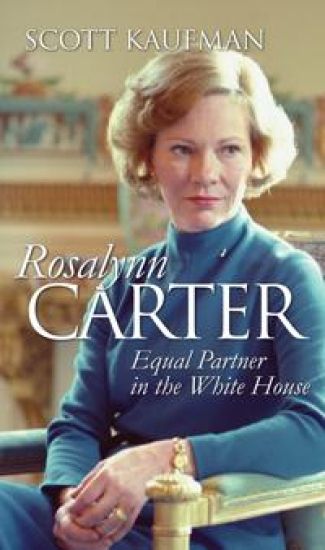
Rosalynn Carter

Rosalynn Carter

Scott Kaufman

UNIVERSITY PRESS OF KANSAS
2025
nidottu
Before Hillary, there was Rosalynn.Rosalynn Carter—the most politically active first lady since Eleanor Roosevelt—was sometimes called the second most powerful person in the United States. Even when her husband Jimmy Carter’s approval ratings sank to record lows, she still tied with Mother Teresa as the most admired woman in the world.In this first biography of Rosalynn Carter since 1980 and first book-length account since her own 1984 memoir, Scott Kaufman depicts a hard-working first lady whose energetic style sparked an administration that seemed to have lost its way—and who accomplished far more than she received credit for. He particularly examines how this activist first lady became a lightning rod for controversy when she took on roles that some considered inappropriate. Not only her husband’s sounding board and adviser, Mrs. Carter at times seemed to serve as a virtual copresident, sitting in on cabinet meetings, testifying before Congress, and traveling abroad as the president's personal representative to discuss substantive issues with foreign officials.Kaufman challenges outdated stereotypes about the first lady dubbed a “Steel Magnolia,” showing readers a talented, purposeful woman who pursued an ambitious agenda as the president’s equal partner. Meticulously researched and balanced, his account provides the fullest account to date of her efforts on behalf of the mentally ill and of her diplomatic trips to Latin America and Asia. It also addresses the irony that, despite the strides she made in advancing her office beyond that of mere hostess, Rosalynn Carter had a difficult relationship with feminists who believed that she failed to take their interests to heart.Drawing upon recently released documents from the Carter Library, as well as on interviews with President and Mrs. Carter and the latter’s White House aides, Kaufman’s insightful narrative illuminates both the Carter years and the changing roles of women in the late twentieth century, while objectively critiquing Rosalynn Carter’s part in a presidency that fell short of its promise. It portrays a dynamic and influential individual who undeniably helped mold the institution of first lady into its modern form.
The Environment and International History

The Environment and International History

Scott Kaufman

Bloomsbury Academic
2018
sidottu
Studies of the history of international relations traditionally have focused on the decisions made by those at the highest levels of government. In more recent years, scholars have expanded their attention to cover economic, cultural, or social interactions among nations. What has remained largely ignored, however, is the impact of an increasingly-interdependent world upon the environment and, conversely, how environmental concerns have affected the ecology, social relationships, economics, and politics at national, regional, and global levels. The Environment and International History fills this gap, looking at the interrelationship between international politics and the environment. Using a transnational and interdisciplinary approach, this book examines how imperialism, war, and a divergence of interests between the developed and underdeveloped world all have had implications for plants, animals, and humans worldwide.
The Environment and International History

The Environment and International History

Scott Kaufman

Bloomsbury Academic
2018
nidottu
Studies of the history of international relations traditionally have focused on the decisions made by those at the highest levels of government. In more recent years, scholars have expanded their attention to cover economic, cultural, or social interactions among nations. What has remained largely ignored, however, is the impact of an increasingly-interdependent world upon the environment and, conversely, how environmental concerns have affected the ecology, social relationships, economics, and politics at national, regional, and global levels. The Environment and International History fills this gap, looking at the interrelationship between international politics and the environment. Using a transnational and interdisciplinary approach, this book examines how imperialism, war, and a divergence of interests between the developed and underdeveloped world all have had implications for plants, animals, and humans worldwide.
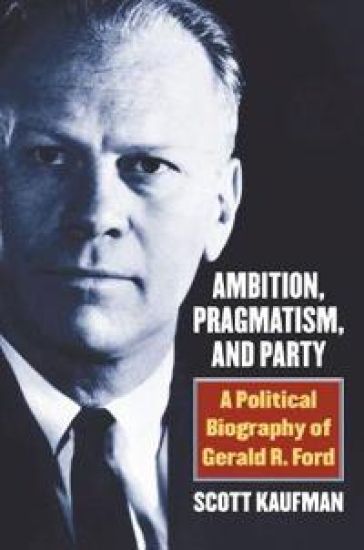
Ambition, Pragmatism, and Party

Ambition, Pragmatism, and Party

Scott Kaufman

University Press of Kansas
2017
sidottu
Within eight turbulent months in 1974 Gerald Ford went from the United States House of Representatives, where he was the minority leader, to the White House as the country’s first and only unelected president. His unprecedented rise to power, after Richard Nixon’s equally unprecedented fall, has garnered the lion’s share of scholarly attention devoted to America’s thirty-eighth president. But Gerald Ford’s (1913–2006) life and career in and out of Washington spanned nearly the entire twentieth century. Ambition, Pragmatism, and Party captures for the first time the full scope of Ford’s long and remarkable political life.The man who emerges from these pages is keenly ambitious, determined to climb the political ladder in Washington, and loyal to his party but not a political ideologue. Drawing on interviews with family and congressional and administrative officials, presidential historian Scott Kaufman traces Ford’s path from a Depression-era childhood through service in World War II to entry into Congress shortly after the Cold War began. He delves deeply into the workings of Congress and legislative–executive relations, offering insight into Ford’s role as the House minority leader in a time of conservative insurgency in the Republican Party.Kaufman’s account of the Ford presidency provides a new perspective on how human rights figured in the making of U.S. foreign policy in the Cold War era, and how environmental issues figured in the making of domestic policy. It also presents a close look at the 1976 presidential election—emphasizing the significance of image in that contest—and extensive coverage of Ford’s post-presidency. In sum, Ambition, Pragmatism, and Party is the most comprehensive political biography of Gerald Ford and will become the definitive resource on the thirty-eighth president of the United States.
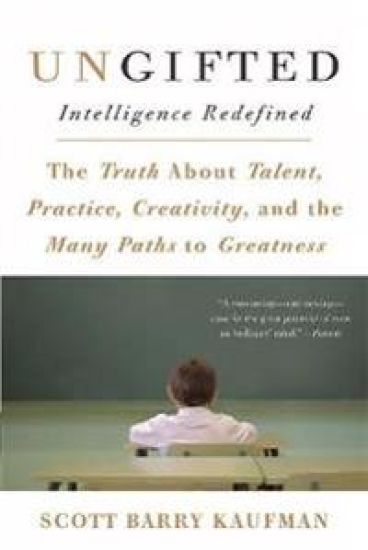
Ungifted

Ungifted

Scott Kaufman

Basic Books
2015
pokkari
In Ungifted , cognitive psychologist Scott Barry Kaufman,who was relegated to special education as a child,offers a new way of looking at intelligence. He explores the latest research in genetics, neuroscience, and psychology to challenge the conventional wisdom about the childhood predictors of adult success, arguing for a more holistic approach to intelligence that takes into account each individual's abilities, engagement, and personal goals. Combining original research and a singular compassion, Ungifted increases our appreciation for all different kinds of minds and ways of achieving both personally meaningful and publicly recognized forms of success.
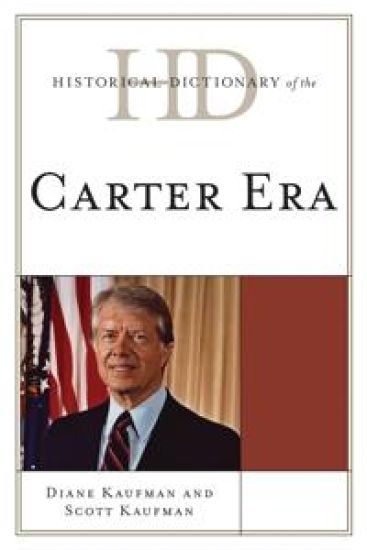
Historical Dictionary of the Carter Era

Historical Dictionary of the Carter Era

Diane Kaufman; Scott Kaufman

Scarecrow Press
2013
sidottu
James Earl Carter, Jr. – better known as Jimmy Carter – was not the greatest or most popular president of the United States but he did accomplish quite a lot in the fields of civil rights, energy and foreign policy during his term from 1977 to 1981. However, the economy fared badly and he lost face in his dealings with Iran. So when he left after one term, he was not greatly missed… or so it seemed. For, after the presidency, he made an amazing comeback as a diplomat and trouble-shooter in international crises, becoming an amazing ex-president. And even the earlier views of his presidency have been improving… at least he did not get the country into a war. This rather special trajectory is explained in the Historical Dictionary of the Carter Era, with an obvious focus on his term as president. His run for the presidency and what he did during his term in office is traced carefully by the chronology. The introduction takes a longer view and also puts events in a broader context. Then the dictionary section, with hundreds of detailed and cross-referenced entries, tells us more about his policy in various fields but also how America changed culturally and socially during this period. The extensive bibliography points toward further information, although this book is certainly a good starting point and also a place to refresh one’s memory.
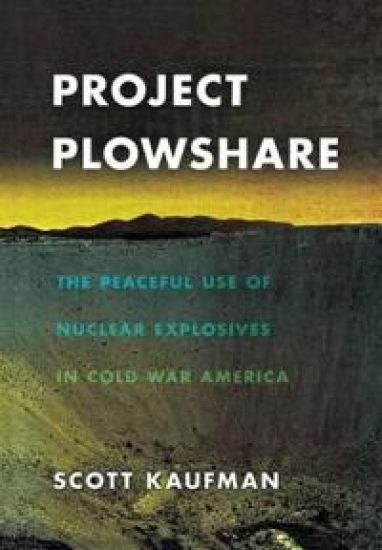
Project Plowshare

Project Plowshare

Scott Kaufman

Cornell University Press
2012
sidottu
Inspired by President Dwight D. Eisenhower's "Atoms for Peace" speech, scientists at the Atomic Energy Commission and the University of California's Radiation Laboratory began in 1957 a program they called Plowshare. Joined by like-minded government officials, scientists, and business leaders, champions of "peaceful nuclear explosions" maintained that they could create new elements and isotopes for general use, build storage facilities for water or fuel, mine ores, increase oil and natural gas production, generate heat for power production, and construct roads, harbors, and canals. By harnessing the power of the atom for nonmilitary purposes, Plowshare backers expected to protect American security, defend U.S. legitimacy and prestige, and ensure access to energy resources. Scott Kaufman's extensive research in nearly two dozen archives in three nations shows how science, politics, and environmentalism converged to shape the lasting conflict over the use of nuclear technology. Indeed, despite technological and strategic promise, Plowshare's early champions soon found themselves facing a vocal and powerful coalition of federal and state officials, scientists, industrialists, environmentalists, and average citizens. Skeptical politicians, domestic and international pressure to stop nuclear testing, and a lack of government funding severely restricted the program. By the mid-1970s, Plowshare was, in the words of one government official, "dead as a doornail." However, the thought of using the atom for peaceful purposes remains alive.
United Nations -- Past, Present & Future

United Nations -- Past, Present & Future

Scott Kaufman; Alissa Warters

Nova Science Publishers Inc
2010
sidottu
The United Nations (UN) is an international organisation whose stated aims are to facilitate co-operation in international law, international security, economic development, social progress, human rights and achieving world peace. The UN was founded in 1945 after World War II to replace the League of Nations, to stop wars between countries and to provide a platform for dialogue. There are currently 192 member states, including nearly every recognised independent state in the world. From its headquarters on international territory in New York City, the UN and its specialised agencies decide on substantive and administrative issues in regular meetings held throughout the year. This new and important book presents the proceedings of a conference dedicated to the past, present and future of this sometimes unwieldy but essential international organisation.
Plans Unraveled

Plans Unraveled

Scott Kaufman

Northern Illinois University Press
2008
sidottu
During the past decade, the literature on the Carter administration's foreign policy has grown rapidly, due largely to both the release of new materials at the presidential library and the attention Jimmy Carter has received since leaving the White House. While previous monographs have focused on specific foreign policy issues, Scott Kaufman breaks away from the mold and offers this up-to-date, comprehensive look at Carter's aggregate foreign policy record. Although many Americans regard Jimmy Carter as the nation's greatest ex-president, Kaufman argues that the diplomatic performance of the thirty-ninth president was mediocre, primarily because of Carter's own doing. Carter, who entered office at a time of transition, was determined to shift the direction of U.S. foreign policy in a way that would downplay conflict between the superpowers; to give more emphasis to North-South issues; and generally to make the world a better place by curbing repression, reducing arms sales, halting nuclear proliferation, ending political and military conflicts abroad, and strengthening the world economy. But, as crises developed abroad, the president gradually assumed a diplomatic stance similar to that of his predecessors, and ultimately his foreign policy boiled down to containing the Soviet threat. Kaufman admits that Carter, like all presidents, faced limitations in what he wanted to achieve, including lawmakers or foreign officials who did not see eye-to-eye with him. Despite difficulties, the president did have some success: he achieved ratification of the Panama Canal treaties, normalized relations with China, convinced Israel and Egypt to sign the Camp David Accords and a peace agreement, and made human rights a permanent component of U.S. diplomacy. Nonetheless, Kaufman concludes that Carter's style of leadership caused his failures to far outnumber his successes: Carter viewed himself as a political outsider, attempted to achieve too much at once, failed to prioritize initiatives or to understand the complexities involved in achieving them, poorly handled intra-administration disputes, and failed to give the nation a vision of the state in which he wanted to leave the country by the end of his administration.
Rosalynn Carter

Rosalynn Carter

Scott Kaufman

University Press of Kansas
2007
sidottu
Before Hillary, there was Rosalynn. Rosalynn Carter - the most politically active first lady since Eleanor Roosevelt - was sometimes called the second most powerful person in the United States. Even when her husband Jimmy Carter's approval ratings sank to record lows, she still tied with Mother Teresa as the most admired woman in the world. In this first biography of Rosalynn Carter since 1980 and first book-length account since her own 1984 memoir, Scott Kaufman depicts a hard-working first lady whose energetic style sparked an administration that seemed to have lost its way - and who accomplished far more than she received credit for. He particularly examines how this activist first lady became a lightning rod for controversy when she took on roles that some considered inappropriate. Not only her husband's sounding board and adviser, Mrs. Carter at times seemed to serve as a virtual copresident, sitting in on cabinet meetings, testifying before Congress, and traveling abroad as the president's personal representative to discuss substantive issues with foreign officials. Kaufman challenges outdated stereotypes about the first lady dubbed a ""Steel Magnolia,"" showing readers a talented, purposeful woman who pursued an ambitious agenda as the president's equal partner. Meticulously researched and balanced, his account provides the fullest account to date of her efforts on behalf of the mentally ill and of her diplomatic trips to Latin America and Asia. It also addresses the irony that, despite the strides she made in advancing her office beyond that of mere hostess, Rosalynn Carter had a difficult relationship with feminists who believed that she failed to take their interests to heart. Drawing upon recently released documents from the Carter Library, as well as on interviews with President and Mrs. Carter and the latter's White House aides, Kaufman's insightful narrative illuminates both the Carter years and the changing roles of women in the late twentieth century, while objectively critiquing Rosalynn Carter's part in a presidency that fell short of its promise. It portrays a dynamic and influential individual who undeniably helped mold the institution of first lady into its modern form.
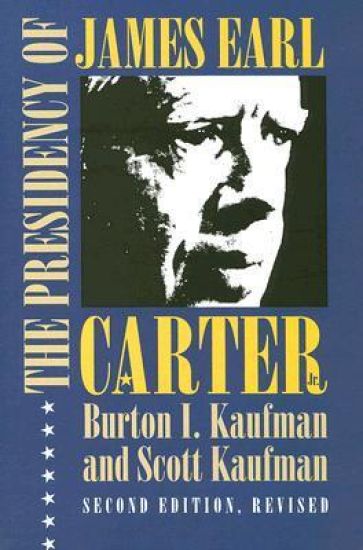
The Presidency of James Earl Carter, Jr.

The Presidency of James Earl Carter, Jr.

Burton I. Kaufman; Scott Kaufman

University Press of Kansas
2006
nidottu
He has been called America's greatest ex-president, a man who lost the White House after one term but went on to become a respected spokesman for peace and human rights. Burton Kaufman's book on the Carter years was hailed as the best account of his administration. This new edition probes more deeply into Jimmy Carter's approach to the presidency and the issues that he faced. It features more information on his foreign and environmental policies and expanded coverage of his personal background - both his upbringing and naval career - along with insights into his wife's activist role. Drawing on Carter's previously unavailable ""Handwriting File"", as well as on new oral histories and Carter's own books, Burton and Scott Kaufman show the ways in which Carter had the opportunity - but failed - to be a successful transitional president. By the fall of 1978, he had become a more effective leader than during the first part of his presidency but could not undo his earlier mistakes and continued to make serious errors of political judgment. Weighing achievements such as the Alaska Land Bill with shortcomings such as disarray within the White House and strained relations with Congress, the authors re-examine the world events that shaped Carter's presidency, from Koreagate and the Cuban boatlift to the Camp David accords and the Iran hostage crisis. They explore bureaucratic infighting over his human rights policies, describing how the administration's position changed with greater emphasis on security issues after 1979; they also examine the issue of arms control in the light of newly opened Soviet archives and argue that the Vance-Brzezinski dispute was more profound than had originally been thought. In the final analysis, the Kaufmans fault Carter for not crafting a coherent message that would offer the American people a vision on which to build a base of support and assure his success. As his reputation as an ex-president continues to grow, this updated book offers an even better understanding of his White House years.
The Presidency of James Earl Carter, Jr.

The Presidency of James Earl Carter, Jr.

Burton I. Kaufman; Scott Kaufman

University Press of Kansas
2006
sidottu
He has been called America's greatest ex-president, a man who lost the White House after one term but went on to become a respected spokesman for peace and human rights. Burton Kaufman's book on the Carter years was hailed as the best account of his administration. This new edition probes more deeply into Jimmy Carter's approach to the presidency and the issues that he faced. It features more information on his foreign and environmental policies and expanded coverage of his personal background - both his upbringing and naval career - along with insights into his wife's activist role. Drawing on Carter's previously unavailable ""Handwriting File"", as well as on new oral histories and Carter's own books, Burton and Scott Kaufman show the ways in which Carter had the opportunity - but failed - to be a successful transitional president. By the fall of 1978, he had become a more effective leader than during the first part of his presidency but could not undo his earlier mistakes and continued to make serious errors of political judgment. Weighing achievements such as the Alaska Land Bill with shortcomings such as disarray within the White House and strained relations with Congress, the authors re-examine the world events that shaped Carter's presidency, from Koreagate and the Cuban boatlift to the Camp David accords and the Iran hostage crisis. They explore bureaucratic infighting over his human rights policies, describing how the administration's position changed with greater emphasis on security issues after 1979; they also examine the issue of arms control in the light of newly opened Soviet archives and argue that the Vance-Brzezinski dispute was more profound than had originally been thought. In the final analysis, the Kaufmans fault Carter for not crafting a coherent message that would offer the American people a vision on which to build a base of support and assure his success. As his reputation as an ex-president continues to grow, this updated book offers an even better understanding of his White House years.
The Pig War

The Pig War

Scott Kaufman

Lexington Books
2003
sidottu
Very few people have heard of the 'Pig War,' since this episode in American history was overshadowed by the U.S. Civil War and the beginning of mass immigration from Europe. Yet this diplomatic conflict between the United States and Great Britain, resulting from the shooting of a single pig, lasted more than twenty years, and greatly impacted the relationship between the two nations. Scott Kaufman carefully examines, and places into both an American and an international context, the origins and the resolution of this tense stand-off over contested colonial territory. His story not only reveals a tense dispute between a burgeoning imperial power and a waning empire but also highlights the changing Reconstruction-era U.S. national ideology, foreign diplomacy, and control over foreign markets. The Pig War contributes greatly to nineteenth-century American and British diplomatic history and sheds new light on the emergence of the United States as an international superpower.