Kirjojen hintavertailu. Mukana 12 290 406 kirjaa ja 12 kauppaa.

Kirjailija

Scott MacDonald

Kirjat ja teokset yhdessä paikassa: 33 kirjaa, julkaisuja vuosilta 1988-2025, suosituimpien joukossa The Flaherty. Vertaile teosten hintoja ja tarkista saatavuus suomalaisista kirjakaupoista.

33 kirjaa

Kirjojen julkaisuhaarukka 1988-2025.

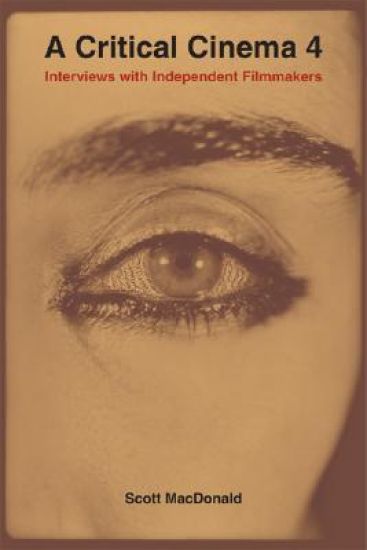
A Critical Cinema 4

A Critical Cinema 4

Scott MacDonald

University of California Press
2005
pokkari
A Critical Cinema 4 is the fourth volume in Scott MacDonald's Critical Cinema series, the most extensive, in-depth exploration of independent cinema available in English. In this new set of interviews, MacDonald once again engages filmmakers in detailed discussions of their films and of the personal experiences and political and theoretical currents that have shaped their work. The interviews are arranged to express the remarkable diversity of modern independent cinema and the network of interconnections within the community of filmmakers. A Critical Cinema 4 includes the most extensive interview with the late Stan Brakhage yet published; a conversation with P. Adams Sitney about his arrival on the New York independent film scene; a detailed discussion with Peter Kubelka about the experience of making Our African Journey; a conversation with Jill Godmilow and Harun Farocki on modern political documentary; Jim McBride's first extended published conversation in thirty years; a discussion with Abigail Child about her evolution from television documentarian to master editor; and the first extended interview with Chuck Workman. This volume also contains discussions with Chantal Akerman about her place trilogy; Lawrence Brose on his examination of Oscar Wilde's career; Hungarian Peter Forgács about his transformation of European home movies into video operas; Iranian-born Shirin Neshat on working between two cultures; and Ellen Spiro about exploring America with her video camera and her dog. Each interview is supplemented by an introductory overview of the filmmaker's contributions. A detailed filmography and a selected bibliography complete the volume. Illustrations: 75 b/w photographs
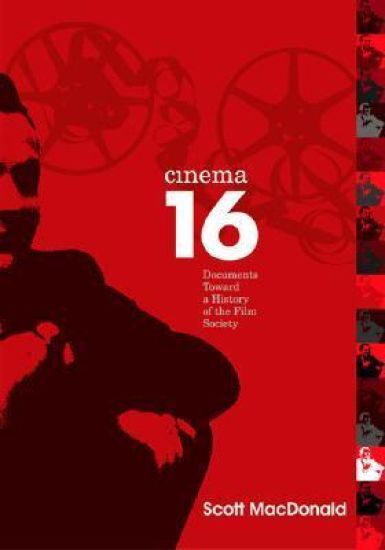
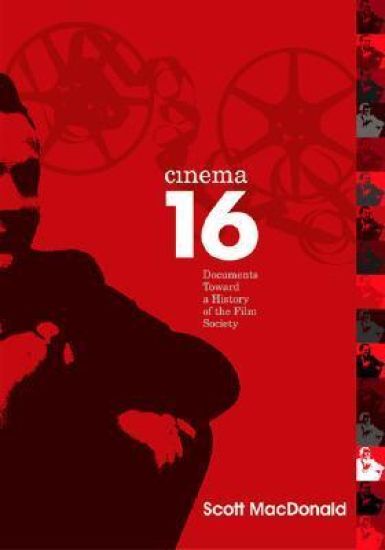
Cinema 16

Cinema 16

Scott MacDonald

Temple University Press,U.S.
2002
pokkari
As the most successful and influential film society in American history, Cinema 16 was a crucial organization for the creation of a public space for the full range of cinema achievement in the years following World War II. A precursor of the New York Film Festival, Cinema 16 screenings became a gathering place for New Yorkers interested not only in cinema, but in the use of media in the development of a more complete, effective democracy. For seventeen years, many of the leading intellectuals and artists of the time came together as part of a membership society of thousands to experience the creative programming of Cinema 16 director, Amos Vogel. What audiences saw at Cinema 16 changed their lives and had an enduring impact not only on the New York City cultural scene, but nationwide. Vogel's distribution of landmark documentary and avant-garde films helped make a place for many films that could never have had commercial release, given the pressures of commercialism and censorship during the postwar era. Vogel's commitment to the broadest range of cinema practice led him to develop a programming strategy, inherited from the European cine-club movement, that involved confronting audiences with such a wide range of cinematic forms that viewers left the theater considering not only the often remarkable films Vogel showed, but the place of Cinema itself in modern life. Cinema 16: Documents Toward a History of the Film Society is the first book on Cinema 16. Scott MacDonald provides a sense of the life and work of the society, using the complete Cinema 16 program announcements, selected letters between Vogel and the filmmakers whose films he showed; selections from the program notes that accompanied Cinema 16 screenings, theoretical essays by Vogel on curating independent cinema; conversations between MacDonald and Cinema 16 members; photographs and stills; and a variety of other documents.
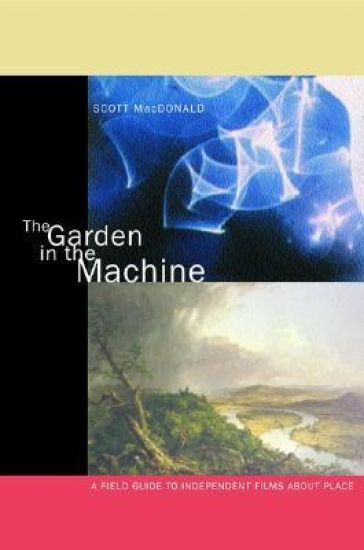
The Garden in the Machine

The Garden in the Machine

Scott MacDonald

University of California Press
2001
pokkari
The Garden in the Machine explores the evocations of place, and particularly American place, that have become so central to the representational and narrative strategies of alternative and mainstream film and video. Scott MacDonald contextualizes his discussion with a wide-ranging and deeply informed analysis of the depiction of place in nineteenth- and twentieth-century literature, painting, and photography. Accessible and engaging, this book examines the manner in which these films represent nature and landscape in particular, and location in general. It offers us both new readings of the films under consideration and an expanded sense of modern film history. Among the many antecedents to the films and videos discussed here are Thomas Cole's landscape painting, Thoreau's Walden, Olmsted and Vaux's Central Park, and Eadweard Muybridge's panoramic photographs of San Francisco. MacDonald analyzes the work of many accomplished avant-garde filmmakers: Kenneth Anger, Bruce Baillie, James Benning, Stan Brakhage, Nathaniel Dorsky, Hollis Frampton, Ernie Gehr, Larry Gottheim, Robert Huot, Peter Hutton, Marjorie Keller, Rose Lowder, Marie Menken, J.J. Murphy, Andrew Noren, Pat O'Neill, Leighton Pierce, Carolee Schneemann, and Chick Strand. He also examines a variety of recent commercial feature films, as well as independent experiments in documentary and such contributions to independent video history as George Kuchar's Weather Diaries and Ellen Spiro's Roam Sweet Home. MacDonald reveals the spiritual underpinnings of these works and shows how issues of race, ethnicity, gender, and class are conveyed as filmmakers attempt to discover forms of Edenic serenity within the Machine of modern society. Both personal and scholarly, The Garden in the Machine will be an invaluable resource for those interested in investigating and experiencing a broader spectrum of cinema in their teaching, in their research, and in their lives.
Cinema 16

Cinema 16

Scott Macdonald

Temple University Press,U.S.
2001
sidottu
As the most successful and influential film society in American history, Cinema 16 was a crucial organization for the creation of a public space for the full range of cinema achievement in the years following World War II. A precursor of the New York Film Festival, Cinema 16 screenings became a gathering place for New Yorkers interested not only in cinema, but in the use of media in the development of a more complete, effective democracy. For seventeen years, many of the leading intellectuals and artists of the time came together as part of a membership society of thousands to experience the creative programming of Cinema 16 director, Amos Vogel. What audiences saw at Cinema 16 changed their lives and had an enduring impact not only on the New York City cultural scene, but nationwide. Vogel's distribution of landmark documentary and avant-garde films helped make a place for many films that could never have had commercial release, given the pressures of commercialism and censorship during the postwar era.Vogel's commitment to the broadest range of cinema practice led him to develop a programming strategy, inherited from the European cine-club movement, that involved confronting audiences with such a wide range of cinematic forms that viewers left the theater considering not only the often remarkable films Vogel showed, but the place of Cinema itself in modern life.Cinema 16: Documents Toward a History of the Film Society is the first book on Cinema 16. Scott MacDonald provides a sense of the life and work of the society, using the complete Cinema 16 program announcements, selected letters between Vogel and the filmmakers whose films he showed; selections from the program notes that accompanied Cinema 16 screenings, theoretical essays by Vogel on curating independent cinema; conversations between MacDonald and Cinema 16 members; photographs and stills; and a variety of other documents.
A Critical Cinema 3

A Critical Cinema 3

Scott MacDonald

University of California Press
1998
pokkari
"A Critical Cinema 3" continues Scott MacDonald's compilation of personal interviews and public discussions with major contributors to independent filmmaking and film awareness. An informative exchange with Amos Vogel, whose "Cinema 16 Society" drew American filmgoers into a broader sense of film history, is followed by interviews reflecting a wide range of approaches to filmmaking. Sally Potter discusses her popular feature, "Orlando", in relation to the experimental work that preceded it, and Canadian independent John Porter argues compellingly for small-gauge, Super-8 mm filmmaking. Ken Jacobs discusses the 'Nervous System' apparatus with which he transforms old film footage into new forms of motion picture art; Jordan Belson describes his "Vortex Concerts", ancestors of modern laser light shows; and Elias Merhige talks about going beneath the 'rational structure of meaning' in Begotten. "A Critical Cinema 3" presents independent cinema as an international and multiethnic phenomenon. MacDonald interviews filmmakers from Sweden, France, Italy, Austria, Armenia, India, the Philippines, and Japan and examines the work of African Americans, European Americans, Asian Americans, and Hispanics. He provides an introductory overview of each interviewee, as well as detailed film/videographies and selected bibliographies. With its predecessors, "A Critical Cinema" (California, 1988) and "A Critical Cinema 2" (California, 1992), this is the most extensive, in-depth exploration of independent cinema available in English.
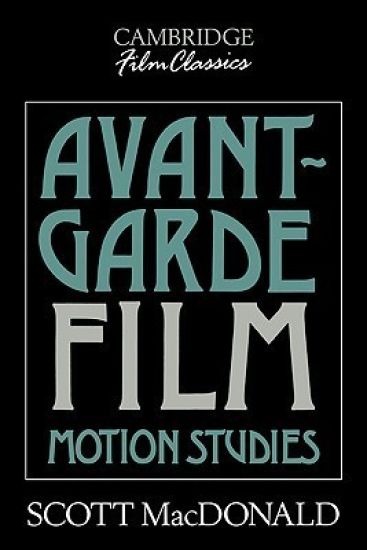
Avant-Garde Film

Avant-Garde Film

Scott MacDonald

Cambridge University Press
1993
pokkari
The past thirty years have seen the proliferation of forms of independent cinema that challenge the conventions of mass-market commercial movies from within the movie theatre. Avant-Garde Film examines fifteen of the most suggestive and useful films from this film tradition. The films discussed include No. 4 (Bottoms) by Yoko Ono, Wavelength by Michael Snow, Serene Velocity by Ernie Gehr, Print Generation by J. J. Murphy, Standard Gauge by Morgan Fisher, Zorns Lemma by Hollis Frampton, The Ties that Bind by Su Friedrich, From the Pole to the Equator by Yervant Gianikian and The Carriage Trade by Warren Sonbert. Through in-depth readings of these works, Scott MacDonald takes viewers on a critical circumnavigation of the conventions of movie going as seen by filmmakers who have rebelled against the conventions. MacDonald's discussions do not merely analyse the films; they provide a useful, accessible, jargon-free critical apparatus for viewing avant-garde film and communicate the author's pleasure in exploring 'impenetrable' works.
A Critical Cinema 2

A Critical Cinema 2

Scott MacDonald

University of California Press
1992
pokkari
This sequel to "A Critical Cinema" offers a new collection of interviews with independent filmmakers that is a feast for film fans and film historians. Scott MacDonald reveals the sophisticated thinking of these artists regarding film, politics, and contemporary gender issues. The interviews explore the careers of Robert Breer, Trinh T. Minh-ha, James Benning, Su Friedrich, and Godfrey Reggio. Yoko Ono discusses her cinematic collaboration with John Lennon, Michael Snow talks about his music and films, Anne Robertson describes her cinematic diaries, Jonas Mekas and Bruce Baillie recall the New York and California avant-garde film culture. The selection has a particularly strong group of women filmmakers, including Yvonne Rainer, Laura Mulvey, and Lizzie Borden. Other notable artists are Anthony McCall, Andrew Noren, Ross McElwee, Anne Severson, and Peter Watkins.
International Handbook on Drug Control

International Handbook on Drug Control

Scott Macdonald; Bruce Zagaris

Greenwood Press
1992
sidottu
This international handbook is the first to analyze the status of drug control efforts around the world in so comprehensive a manner with up-to-date information. A series of experts provide a systematic overview of this major world problem in the 1980s and the 1990s, point to 10 major trends in current developments and to 3 probable shocks in the immediate future, and assess targets and networks for combatting the drug trade in the next decade. This handbook is a convenient reference for academicians, professionals, policymakers, and all who are concerned with this scourge on modern-day society. This valuable survey of the major consumers and suppliers of drugs and of national and international responses and enforcement measures opens with an introduction that gives an overview of efforts to control the international drug problem. Money laundering and asset forfeiture problems and policies are described in some detail. Country and regional studies follow with analyses about the history and structure of the industry/trade, governmental and societal responses, international controls and networks. The work of the United Nations and regional organizations is summarized as well. Appendixes offer comparative data about drug consumption, production, and trade and about international legislature's legal efforts to control the drug trade. Bibliographies at the ends of chapters and an essay at the end of the book offer suggestions for further research. A full index makes the reference an accessible one for researchers with different needs and perspectives.
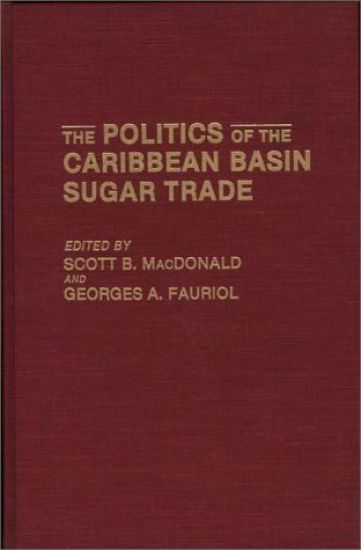
The Politics of the Caribbean Basin Sugar Trade

The Politics of the Caribbean Basin Sugar Trade

Georges A. Fauriol; Scott Macdonald

Praeger Publishers Inc
1991
sidottu
Growing global interdependence made the 1970s and 1980s a volatile period in the sugar trade at a time when Caribbean countries, while not the major world producers of sugar, were economically dependent on their sugar exports. Since then, government farm supports and quotas on imported sugar in the United States, overproduction in developing countries, and the emergence of a highly protected European Community sugar industry have all served to make the sugar trade a highly political global issue. This study focuses on the evolution of the U.S.--Caribbean Basin sugar trade in the 1980s and its impact on political relations between the countries involved. According to the authors, the sugar trade was not driven by laws of supply and demand, but by various political agendas. Economic protectionism, government subsidies for inefficient elements of the sugar industry, as well as corruption and mismanagement have contributed to the Byzantine politics of the sugar trade. Now the United States needs to determine how lifting quotas and terminating subsides will affect this complex relationship. By providing an in-depth look at the development of current policies in the sugar trade, this book offers the necessary background for making informed policy decisions.After examining the U.S. sugar policy from 1974 to 1989, the book provides a broader Latin American perspective of U.S. and European Community sugar policies. It also offers subregional and country analyses covering the Commonwealth Caribbean, Central America, Cuba, the Dominican Republic, Haiti, and Panama. Despite the difficulty of competing against the United States and Europe, Caribbean and Central American countries are likely to continue to depend on sugar cane. Climactic and ecological factors make agricultural diversification extremely difficult. Some Caribbean and Central American producers have considered making ethanol automobile fuel from sugar, but here too they face protectionist pressure from U.S. producers of corn. Given current political realignments, the authors predict that the influence of the United States and the Soviet Union will diminish in the 1990s. The European Community, on the other hand, is likely to have greater influence on the inter-American sugar trade. Students of Latin American politics and international relationships, as well as those involved in the sugar industry or the policies affecting it, will find this book a valuable resource for future decisions.
A Critical Cinema 1

A Critical Cinema 1

Scott MacDonald

University of California Press
1988
pokkari
It is widely understood that writing can discuss writing, but we rarely consider that film can be used as a means of analyzing conventions of the commercial film industry, or of theorizing about cinema in general. Over the past few decades, however, independent cinema has produced a body of fascinating films that provide intensive critiques of nearly every element of the cinematic apparatus. The experience of these films simultaneously depends on and redefines our relationship to the movies. Critical Cinema provides a collection of in-depth interviews with some of the most accomplished "critical" filmmakers. These interviews demonstrate the sophistication of their thinking about film (and a wide range of other concerns) and serve as an accessible introduction to this important area of independent cinema. Each interview is preceded by a general introduction to the filmmaker's work; detailed filmographies and bibliographies are included. Critical Cinema will be a valuable resource for all those involved in the formal study of film, and will be essential reading for film lovers interested in keeping abreast of recent developments in North American cinema. INTERVIEWEES: Hollis Frampton, Larry Gottheim, Robert Huot, Taka Iimura, Carolee Schneeman, Tom Chomont, J.J. Murphy, Beth B and Scott B, John Waters, Vivienne Dick, Bruce Conner, Robert Nelson, Babette Mangolte, George Kuchar, Diana Barrie, Manuel DeLanda, Morgan Fisher.
The Caribbean After Grenada

The Caribbean After Grenada

Paul Goodwin; Scott Macdonald; Harald Sandstrom

Praeger Publishers Inc
1988
sidottu
This latest of many Grenadian-inspired books provides a useful supplement to the exclusively Grenadian-oriented volumes of recent years. Six of the articles represent conflicting interpretations of Maurice Bishop's New Jewel Movement and the US invasion of 1983. . . Formats and foci for the other Caribbean pieces vary, but they establish clearly that domestic, not external forces are what shape political development in the Caribbean, making arguments regarding Grenada's (or Cuba's) threat to the region less credible. . . . . [The] editors put the events in Grenada in perspective, a task that has long been overdue. For all levels. ChoiceThe Caribbean After Grenada examines the major political and economic developments in the Caribbean since the events of October 1983 in Grenada. The contributors represent a range of ideological viewpoints--from neo-Marxist to conservative--and thus offer an unusually balanced and informed discussion of the lessons of Grenada and the problems of revolution, conflict, and democracy faced by contemporary Caribbean societies. Coverage is extremely broad in scope and encompasses all geographic regions, from the islands furthest out in Atlantic to the Central American Republics, all major regime types, and all cultural/linguistic areas. An ideal supplemental text for courses on comparative politics, the Caribbean, and economic development, this volume brings a much needed historical perspective to the study of events since the Grenada crisis.
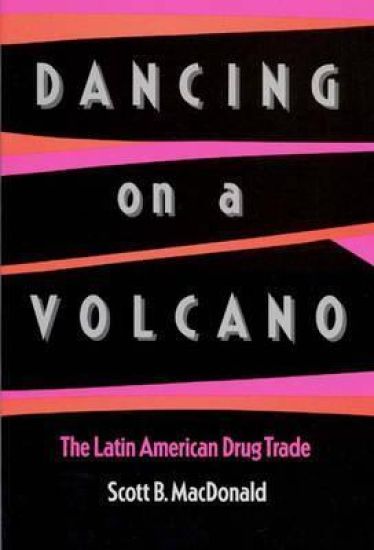
Dancing on a Volcano

Dancing on a Volcano

Scott Macdonald

Praeger Publishers Inc
1988
nidottu
This provocative, informative book explores what is rapidly becoming a major obstacle in inter-American relations. Despite the common problems created by increasing drug addiction and drug-related violence, each side continues to blame the other for the deepening crisis. There is, MacDonald states emphatically, enough blame to go around for everyone. He puts the Latin American drug trade in much-needed perspective, providing both historical backgrund and insight on the contemporary political ramifications of drug trafficking. Because the drug trade is an inter-American phenomenon, the solution to it will have to be a joint one. Among the problems that will have to be faced, according to the author, are Cuba's role as an active middleman in the drug trade, the U.S. market for illegal drugs, the impact of the drug trade on U.S. policy in the region, and the interrelationship of the drug problem to the Latin Americn debt crisis. He warns that there will be no quick victories in the war on drugs in Latin America and the strategies used must attack both supply and demand. Whatever the approach used, its success or failure will depend on the ability of both the United Stataes and the Latin American nations to contain the drugs-insurgence nexus and to deal with the increasingly political nature of the drug trade.
Dancing on a Volcano

Dancing on a Volcano

Scott Macdonald

Praeger Publishers Inc
1988
sidottu
This book is an informative and well written piece of research on a contemporary issues of major interest to the United States. . . . Most highly recommended. La Red/The Net Provides in one place a well written survey of the problem of the drug trade in the Americas, especially on the socio-economic and political aspects of the phenomena. The book will serve as a useful resource to persons working in Latin American drug trade. Caribbean Review This short book is an excellent introduction to the complicated history and turbulent present-day status of illegal drugs in several Latin American neighborhoods. National Catholic News ServiceThis provocative, informative book explores what is rapidly becoming a major obstacle in inter-American relations. Despite the common problems created by increasing drug addiction and drug-related violence, each side continues to blame the other for the deepening crisis. There is, MacDonald states emphatically, enough blame to go around for everyone. He puts the Latin American drug trade in much-needed perspective, providing both historical backgrund and insight on the contemporary political ramifications of drug trafficking. Because the drug trade is an inter-American phenomenon, the solution to it will have to be a joint one. Among the problems that will have to be faced, according to the author, are Cuba's role as an active middleman in the drug trade, the U.S. market for illegal drugs, the impact of the drug trade on U.S. policy in the region, and the interrelationship of the drug problem to the Latin Americn debt crisis. He warns that there will be no quick victories in the war on drugs in Latin America and the strategies used must attack both supply and demand. Whatever the approach used, its success or failure will depend on the ability of both the United Stataes and the Latin American nations to contain the drugs-insurgence nexus and to deal with the increasingly political nature of the drug trade.