Kirjojen hintavertailu. Mukana 12 390 323 kirjaa ja 12 kauppaa.

Kirjailija

Scott Michaelsen

Kirjat ja teokset yhdessä paikassa: 5 kirjaa, julkaisuja vuosilta 1999-2018, suosituimpien joukossa Anthropology's Wake. Vertaile teosten hintoja ja tarkista saatavuus suomalaisista kirjakaupoista.

5 kirjaa

Kirjojen julkaisuhaarukka 1999-2018.

Anthropology's Wake

Anthropology's Wake

David E. Johnson; Scott Michaelsen

Fordham University Press
2008
pokkari
Posing a powerful challenge to dominant trends in cultural analysis, this book covers the whole history of the concept of culture, providing the broadest study of this notion to date. Johnson and Michaelsen examine the principal methodological strategies or metaphors of anthropology in the past two decades (embodied in works by Edward Said, James Clifford, George Marcus, V. Y. Mudimbe, and others) and argues that they do not manage to escape anthropology's grounding in representational practices. To the extent that it remains a practice of representation, anthropology, however complex, critical, or self-reflexive, cannot avoid objectifying its others. Extending beyond a critique of anthropology, the book reads the twinned notions of the human and culture across the long history of the human sciences broadly conceived, including anthropology, cultural studies, history, literature, and philosophy. Although there is no chance, they argue, for a "new" anthropology that would not repeat the old anthropology's problem of disciplining the other, they also recognize that there may be no way out of anthropology. We are always writing, thinking, and living in anthropology's wake, within its specific compass or horizon. Moreover, they demonstrate, we have been doing so for a very long time, since at least the beginning of the institution of philosophy in Plato and Aristotle.
Anthropology's Wake

Anthropology's Wake

David E. Johnson; Scott Michaelsen

Fordham University Press
2008
sidottu
Posing a powerful challenge to dominant trends in cultural analysis, this book covers the whole history of the concept of culture, providing the broadest study of this notion to date. Johnson and Michaelsen examine the principal methodological strategies or metaphors of anthropology in the past two decades (embodied in works by Edward Said, James Clifford, George Marcus, V. Y. Mudimbe, and others) and argues that they do not manage to escape anthropology's grounding in representational practices. To the extent that it remains a practice of representation, anthropology, however complex, critical, or self-reflexive, cannot avoid objectifying its others. Extending beyond a critique of anthropology, the book reads the twinned notions of the human and culture across the long history of the human sciences broadly conceived, including anthropology, cultural studies, history, literature, and philosophy. Although there is no chance, they argue, for a "new" anthropology that would not repeat the old anthropology's problem of disciplining the other, they also recognize that there may be no way out of anthropology. We are always writing, thinking, and living in anthropology's wake, within its specific compass or horizon. Moreover, they demonstrate, we have been doing so for a very long time, since at least the beginning of the institution of philosophy in Plato and Aristotle.
The Love of Ruins

The Love of Ruins

Scott Cutler Shershow; Scott Michaelsen

State University of New York Press
2018
pokkari
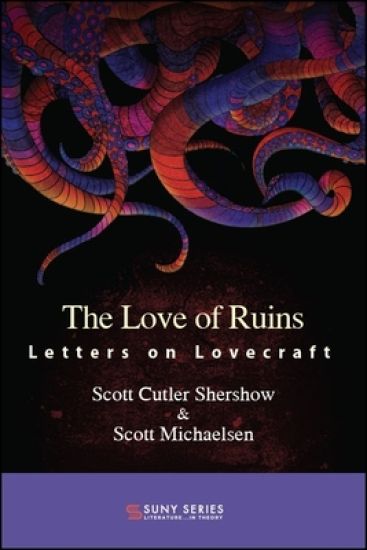
Explores issues related to race and religion in Lovecraft criticism. Today, H. P. Lovecraft is both more popular and controversial than ever: the influence of his "Cthulhu mythos" is everywhere in popular culture, his cosmic pessimism has reemerged as a major theme in contemporary philosophy, and his racism continues to spark controversy in the media. The Love of Ruins takes a fresh look at a figure widely acknowledged as the father of modern horror or "weird" fiction. In these pages, Lovecraft emerges not as the atheist and nihilist he is often claimed to be, but as a kind of "psychonaut" and mystic whose stories, through their own imaginative rigor, expose the intellectual bankruptcy of their author's racism. The Love of Ruins is itself written in the form of letters, in order to do homage to Lovecraft's love of the form of the personal letter (he wrote more than 100,000), and to emulate Lovecraft's lifetime practice of thinking-as-corresponding.
The Love of Ruins

The Love of Ruins

Scott Cutler Shershow; Scott Michaelsen

State University of New York Press
2017
sidottu
Explores issues related to race and religion in Lovecraft criticism.Today, H. P. Lovecraft is both more popular and controversial than ever: the influence of his "Cthulhu mythos" is everywhere in popular culture, his cosmic pessimism has reemerged as a major theme in contemporary philosophy, and his racism continues to spark controversy in the media. The Love of Ruins takes a fresh look at a figure widely acknowledged as the father of modern horror or "weird" fiction. In these pages, Lovecraft emerges not as the atheist and nihilist he is often claimed to be, but as a kind of "psychonaut" and mystic whose stories, through their own imaginative rigor, expose the intellectual bankruptcy of their author's racism. The Love of Ruins is itself written in the form of letters, in order to do homage to Lovecraft's love of the form of the personal letter (he wrote more than 100,000), and to emulate Lovecraft's lifetime practice of thinking-as-corresponding.
Limits of Multiculturalism

Limits of Multiculturalism

Scott Michaelsen

University of Minnesota Press
1999
nidottu
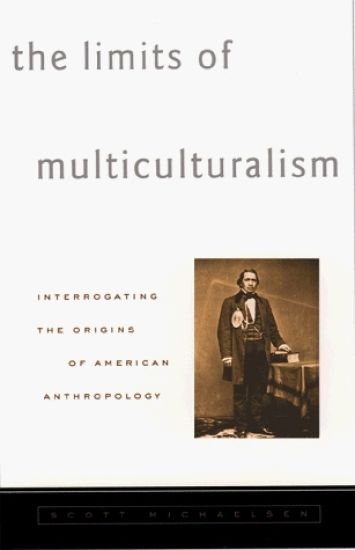
Traces anthropology’s Native American roots.In the early nineteenth century, the profession of American anthropology emerged as European Americans James Fenimore Cooper and Henry Rowe Schoolcraft, among others, began to make a living by studying the “Indian.” Less well known are the AmerIndians who, at that time, were writing and publishing ethnographic accounts of their own people. By bringing to the fore this literature of autoethnography and revealing its role in the forming of anthropology as we know it, this book searches out-and shakes-the foundations of American cultural studies.Scott Michaelsen shows cultural criticism to be at an impasse, trapped by tradition even in its attempts to get beyond tradition. With this dilemma in mind, he takes us back to anthropology’s nineteenth-century roots to show us a network of nearly unknown AmerIndian anthropological writers-David Cusick, Jane Johnston, William Apess, Ely S. Parker, Peter Jones, George Copway, and John Rollin Ridge-working contemporaneously with the major white anthropologists who wrote on Indian topics. Michaelsen tests present-day theses about difference in light of these AmerIndian voices and concludes that multiculturalism never will locate critical differences from Western or white writing, since these traditions are inextricably bound together. The Limits of Multiculturalism is a first step in finding the proper anthropological grounds for questions about cultures in the Americas, and in coming to terms with the co-invention of anthropology by AmerIndians-with the fact that Indian voices are lodged at the heart of anthropology.