Kirjojen hintavertailu. Mukana 12 595 353 kirjaa ja 12 kauppaa.

Kirjailija

Scott N. Brooks

Kirjat ja teokset yhdessä paikassa: 5 kirjaa, julkaisuja vuosilta 2004-2027, suosituimpien joukossa Playing Time. Vertaile teosten hintoja ja tarkista saatavuus suomalaisista kirjakaupoista.

5 kirjaa

Kirjojen julkaisuhaarukka 2004-2027.

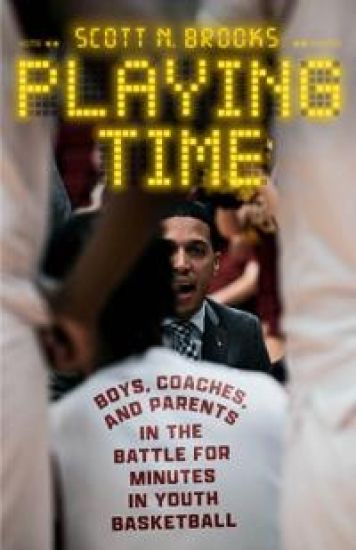
Playing Time

Playing Time

Scott N. Brooks

THE UNIVERSITY OF CHICAGO PRESS
2027
nidottu
An in-depth look at the timeless quandary of how average high school basketball players navigate their dreams of greatness with the adults who coach and support them. We all admire the stories of famous athletes with humble origins who rose to the top through hard work and dedication. Michael Jordan and Steph Curry, after all, both started as second-string players. But their climbs to athletic dominance call to us because they seem to prove a message we all want to believe: Anything is possible with hard work and determination. But for most people, it simply isn’t. Most of us will end up being more or less average rather than extraordinary. In Playing Time, sociologist and sports scholar Scott N. Brooks introduces readers to young athletes who are middle-status players on their basketball teams—not the best, but not the worst—who often find themselves at odds with their coaches and teammates as they compete for playing time to show off their skills. Drawing on his extensive experience as a coach of middle and high school-age boys, Brooks invites us into the inner lives and daily experiences of kids, parents, and coaches, as players try to make sense of who they are and differentiate themselves on the court. These boys have been told by coaches, their parents, and society that hard work, effort, and attitude determine effectiveness, and Brooks reveals how that message affects them when it’s clear that their best efforts are not always enough. Middle-status boys often feel alone, alienated, socially stigmatized, and powerless to improve their fate. By focusing on the boys stuck in the middle, Brooks uncovers essential aspects of the formative years of adolescence when kids dream of and plan for a future. As many of us will recognize our own dreams of greatness in these kids, we can all learn to support them as they build their sense of self, both on and off the court.

Playing Time

Playing Time

Scott N. Brooks

THE UNIVERSITY OF CHICAGO PRESS
2027
sidottu
An in-depth look at the timeless quandary of how average high school basketball players navigate their dreams of greatness with the adults who coach and support them. We all admire the stories of famous athletes with humble origins who rose to the top through hard work and dedication. Michael Jordan and Steph Curry, after all, both started as second-string players. But their climbs to athletic dominance call to us because they seem to prove a message we all want to believe: Anything is possible with hard work and determination. But for most people, it simply isn’t. Most of us will end up being more or less average rather than extraordinary. In Playing Time, sociologist and sports scholar Scott N. Brooks introduces readers to young athletes who are middle-status players on their basketball teams—not the best, but not the worst—who often find themselves at odds with their coaches and teammates as they compete for playing time to show off their skills. Drawing on his extensive experience as a coach of middle and high school-age boys, Brooks invites us into the inner lives and daily experiences of kids, parents, and coaches, as players try to make sense of who they are and differentiate themselves on the court. These boys have been told by coaches, their parents, and society that hard work, effort, and attitude determine effectiveness, and Brooks reveals how that message affects them when it’s clear that their best efforts are not always enough. Middle-status boys often feel alone, alienated, socially stigmatized, and powerless to improve their fate. By focusing on the boys stuck in the middle, Brooks uncovers essential aspects of the formative years of adolescence when kids dream of and plan for a future. As many of us will recognize our own dreams of greatness in these kids, we can all learn to support them as they build their sense of self, both on and off the court.

Black Men Can't Shoot

Black Men Can't Shoot

Scott N. Brooks

University of Chicago Press
2014
nidottu
The myth of the natural black athlete is widespread, though it's usually talked about only when a sports commentator or celebrity embarrasses himself by bringing it up in public. Those gaffes are swiftly decried as racist, but apart from their link to the long history of ugly racial stereotypes about black people - especially men - they are also harmful because they obscure very real, hard-fought accomplishments. As Black Men Can't Shoot demonstrates, such successes on the basketball court don't happen just because of natural gifts - instead, they grow out of the long, tough, and unpredictable process of becoming a known player. Scott N. Brooks spent four years coaching summer league basketball in Philadelphia. And what he saw, heard, and felt working with the young black men on his team tells us much about how some kids are able to make the extraordinary journey from the ghetto to the NCAA. He tells the story of two young men, Jermaine and Ray, following them through their high school years and chronicling their breakthroughs and frustrations on the court as well as their troubles at home. Black Men Can't Shoot is a moving coming-of-age story that counters the belief that basketball only exploits kids and lures them into following empty dreams-and shows us that by playing ball, some of these young black men have already begun their education even before they get to college.
Black Men Can't Shoot

Black Men Can't Shoot

Scott N. Brooks

University of Chicago Press
2009
sidottu
The myth of the natural black athlete is widespread, though it's usually only talked about when a sports commentator or celebrity embarrasses himself by bringing it up in public. Those gaffes are swiftly decried as racist, but apart from their link to the long history of ugly racial stereotypes about black people - especially men - they are also harmful because they obscure very real, hard-fought accomplishments. As "Black Men Can't Shoot" demonstrates, such successes on the basketball court don't just happen because of natural gifts - instead, they grow out of the long, tough, and unpredictable process of becoming a known player. Scott N. Brooks spent four years coaching summer league basketball in Philadelphia. And what he saw, heard, and felt working with the young black men on his team tells us much about how some kids are able to make the extraordinary journey from the ghetto to the NCAA. To show how good players make the transition to greatness, Brooks tells the story of two young men, Jermaine and Ray, following them through their high school years and chronicling their breakthroughs and frustrations on the court as well as their troubles at home. We witness them negotiating the pitfalls of forging a career and a path out of poverty, we see their triumphs and setbacks, and we hear from the network of people - their families, the neighborhood elders, and Coach Brooks himself - invested in their fates. "Black Men Can't Shoot" has all the hallmarks of a classic sports book, with a climactic championship game and a suspenseful ending as we wait to find out if Jermaine and Ray will be recruited. Brooks' moving coming-of-age story counters the belief that basketball only exploits kids and lures them into following empty dreams - and shows us that by playing ball, some of these young black men have already begun their education even before they get to college.
Being Here and Being There: Fieldwork Encounters and Ethnographic Discoveries

Being Here and Being There: Fieldwork Encounters and Ethnographic Discoveries

Elijah Anderson; Scott N. Brooks; Raymond Gunn

Sage Publications, Inc
2004
nidottu
As students of culture, ethnographers must have curiosity, openness, and humility - three traits vital for "getting with"people. But how do ethnographers go about developing relationships with people in the field? And how do they learn from these people so they can conduct a systematic study of the culture? These key questions can best be answered by sharing field experiences among a diverse group of ethnographers. Yet researchers often become so embedded in the extensive data collections, analysis, and writing that the opportunity rarely occurs to share experiences, fieldwork, and current projects. Leading ethnographers recognized the need for a forum where information could be exchanged. The major ethnography conference (held at the University of Pennsylvania in November 2003) presented by established ethnographers along with graduate students the chance to participate in an exciting format where works-in-progress could be shared. This intimate setting built a bridge to take ethnography into the future while reestablishing ties to scholarly roots. Using the Chicago School and its emphasis on "bringing back the news" from unknown or misknown social worlds as a foundation, these conferences created a buzz where information was freely shared and ethnographers connected. The University of Pennsylvania conference became the springboard for the articles in this special volume of The ANNALS. Contemporary ethnography is much too large, too diverse, too contentious to be represented in its entirety in a single collection of articles. However, this weighty volume represents a distinctive approach to ethnography that seeks to engage, reassert, and reassess three recurring themes found in classic Chicago-style fieldwork: I. The focus on discovery, rather than on theory or methodII. "Loyalty to the phenomenon" - emphasizing what people are actually doing versus what theory suggests people are doingIII. The collection of original data, as well as the collection of ethnographic data in original waysThis unique volume offers the rare chance to learn what ethnographers are doing in the field as well as the different approaches taken and styles used in conducting fieldwork. It also provides poignant insight for public policy students and practitioners. The articles included in this volume reflect a wide range of stories and researchers from around the country and around the world. Taken together they provide the big picture of the challenges and boons of fieldwork and examined experiences.