Kirjojen hintavertailu. Mukana 12 390 323 kirjaa ja 12 kauppaa.
Kirjailija
Scott O. Lilienfeld
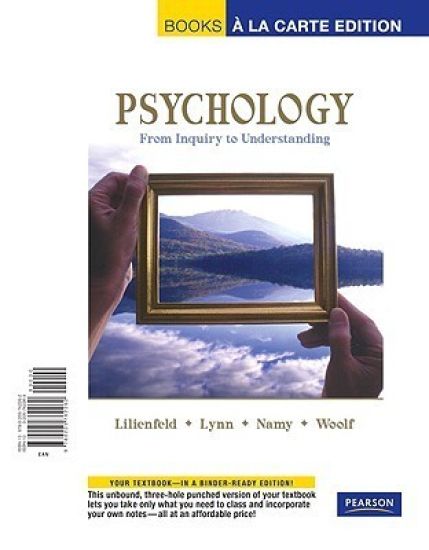
Kirjat ja teokset yhdessä paikassa: 8 kirjaa, julkaisuja vuosilta 2009-2022, suosituimpien joukossa Psychology: From Inquiry to Understanding. Vertaile teosten hintoja ja tarkista saatavuus suomalaisista kirjakaupoista.
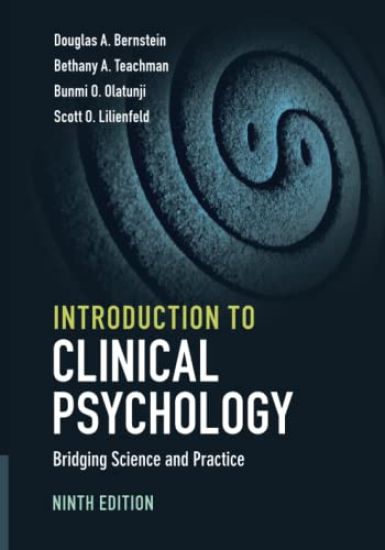
Thoroughly updated and revised, the ninth edition of this bestselling textbook introduces students to clinical psychology as a bridge between science and practice. Extensive revisions since the previous edition have resulted in the most accessible, up-to-date and thematically integrated edition of Introduction to Clinical Psychology yet, while maintaining the authority and accessibility students and instructors have come to rely on. Updates include: three new co-authors who are internationally recognized scholar-practitioners; illustrations of how psychologists use evidence-based practices to help clients; the fictional 'Jackson family' case studies, providing vivid examples of a family confronting numerous mental health challenges; 'Thinking Scientifically' sections in each chapter, which break down how students can think critically with conflicting findings and use them to draw conclusions; 'In Review' tables at the end of each major section prompting students to review the material and test their comprehension; and an expanded image program, printed in color for the first time.
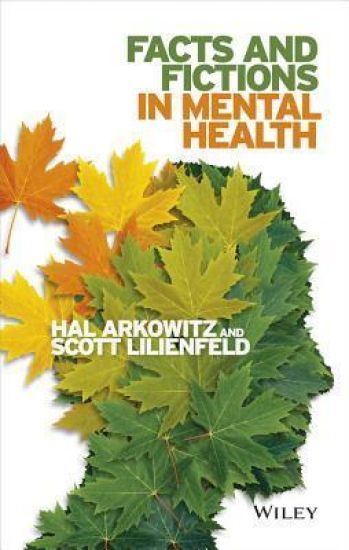
Written in a lively and entertaining style, Facts and Fictions in Mental Health examines common conceptions and misconceptions surrounding mental health and its treatment. Each chapter focuses on a misconception and is followed by a discussion of related findings from scientific research. A compilation of the authors' "Facts and Fictions" columns written for Scientific American Mind, with the addition of six new columns exclusive to this bookWritten in a lively and often entertaining style, accessible to both the undergraduate and the interested general readerEach chapter covers a different "fiction" and allows readers to gain a more balanced and accurate view of important topics in mental healthThe six new columns examine myths and misconceptions of considerable interest and relevance to undergraduates in abnormal psychology coursesIntroductory material and references are included throughout the book
Written in a lively and entertaining style, Facts and Fictions in Mental Health examines common conceptions and misconceptions surrounding mental health and its treatment. Each chapter focuses on a misconception and is followed by a discussion of related findings from scientific research. A compilation of the authors' "Facts and Fictions" columns written for Scientific American Mind, with the addition of six new columns exclusive to this bookWritten in a lively and often entertaining style, accessible to both the undergraduate and the interested general readerEach chapter covers a different "fiction" and allows readers to gain a more balanced and accurate view of important topics in mental healthThe six new columns examine myths and misconceptions of considerable interest and relevance to undergraduates in abnormal psychology coursesIntroductory material and references are included throughout the book
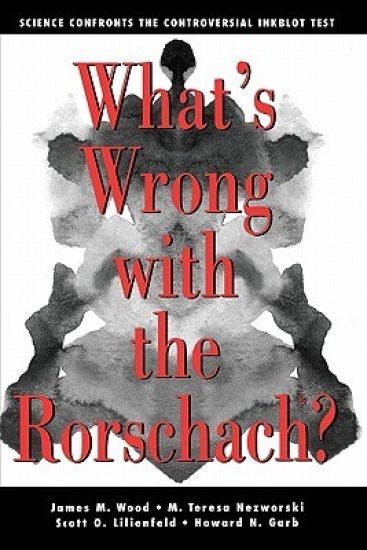
Since its creation more than eighty years ago, the famous Rorschach inkblot test has become an icon of clinical psychology and popular culture. Administered over one million times world-wide each year, the Rorschach is used to assess personality and mental illness across a wide range of circumstances: child custody disputes, educational placement decisions, employment and termination proceedings, parole determinations, and even investigations of child abuse allegations. The test's enormous power shapes the lives of hundreds of thousands of people -- often without their knowledge. In the 1970s, this notoriously subjective test was supposedly systematized and improved. But is the Rorschach more than a modern variant on tea leaf reading? What's Wrong With the Rorschach? challenges the validity and utility of the Rorschach and explains why psychologists continue to judge people by their reactions to ink blots, in spite of a half century of largely negative scientific evidence. What's Wrong With the Rorschach? offers a provocative critique of one of the most widely applied and influential - and still intensely controversial - psychological tests in the world today. Surveying more than fifty years of clinical and scholarly research, the authors provide compelling scientific evidence that the Rorschach has relatively little value for diagnosing mental illness, assessing personality, predicting behavior, or uncovering sexual abuse or other trauma. In this highly engaging, novelistic account of the Rorschach's origins and history, the authors detail the wealth of scientific evidence that the test is of questionable utility for real-world decision making. What's Wrong With the Rorschach? presents a powerfully reasoned case against using the test in the courtroom or consulting room - and reveals the strong psychological, economic, and political forces that continue to support the Rorschach despite the research that has exposed its shortcomings and dangers. James M. Wood (El Paso, TX) is Associate Professor, Department of Psychology, at the University of Texas at El Paso. M. Teresa Nezworski (Dallas, TX) is Associate Professor, Department of Psychology, University of Texas at Dallas. Scott O. Lilienfeld (Atlanta, GA) is an Associate Professor of Psychology at Emory University in Atlanta. Howard N. Garb (Pittsburgh, PA) is on the faculty at the University of Pittsburgh and the author of Studying the Clinician: Judgement Research and Psychological Assessment.
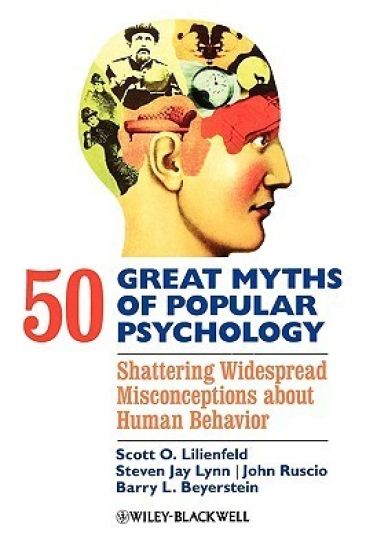
50 Great Myths of Popular Psychology uses popular myths as a vehicle for helping students and laypersons to distinguish science from pseudoscience. Uses common myths as a vehicle for exploring how to distinguish factual from fictional claims in popular psychology Explores topics that readers will relate to, but often misunderstand, such as 'opposites attract', 'people use only 10% of their brains', and 'handwriting reveals your personality' Provides a 'mythbusting kit' for evaluating folk psychology claims in everyday life Teaches essential critical thinking skills through detailed discussions of each myth Includes over 200 additional psychological myths for readers to exploreContains an Appendix of useful Web Sites for examining psychological myths Features a postscript of remarkable psychological findings that sound like myths but that are true Engaging and accessible writing style that appeals to students and lay readers alike
50 Great Myths of Popular Psychology uses popular myths as a vehicle for helping students and laypersons to distinguish science from pseudoscience. Uses common myths as a vehicle for exploring how to distinguish factual from fictional claims in popular psychology Explores topics that readers will relate to, but often misunderstand, such as 'opposites attract', 'people use only 10% of their brains', and 'handwriting reveals your personality' Provides a 'mythbusting kit' for evaluating folk psychology claims in everyday life Teaches essential critical thinking skills through detailed discussions of each myth Includes over 200 additional psychological myths for readers to exploreContains an Appendix of useful Web Sites for examining psychological myths Features a postscript of remarkable psychological findings that sound like myths but that are true Engaging and accessible writing style that appeals to students and lay readers alike