Kirjojen hintavertailu. Mukana 12 595 353 kirjaa ja 12 kauppaa.

Kirjailija

Scott R. Stroud

Kirjat ja teokset yhdessä paikassa: 7 kirjaa, julkaisuja vuosilta 2011-2023, suosituimpien joukossa A Practical Guide to Ethics. Vertaile teosten hintoja ja tarkista saatavuus suomalaisista kirjakaupoista.

7 kirjaa

Kirjojen julkaisuhaarukka 2011-2023.

The Evolution of Pragmatism in India

The Evolution of Pragmatism in India

Scott R. Stroud

THE UNIVERSITY OF CHICAGO PRESS
2023
nidottu
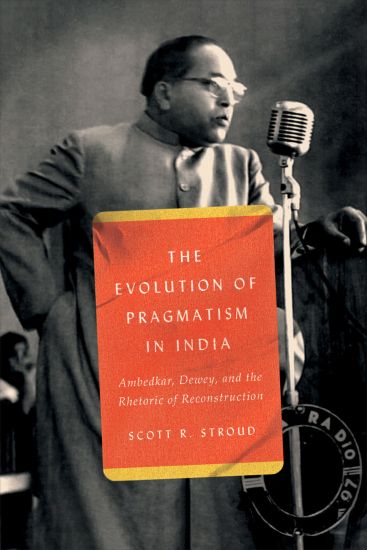
"A magnificent study" (New York Review of Books) of how the Indian reformer Bhimrao Ambedkar reimagined John Dewey’s pragmatism. In The Evolution of Pragmatism in India, Scott R. Stroud delivers a comprehensive exploration of the influence of John Dewey’s pragmatism on Bhimrao Ambedkar, architect of the Republic of India’s constitution. Stroud traces Ambedkar’s development in Dewey’s Columbia University classes in 1913–1916 through his final years in 1950s India when he rewrote the story of Buddhism. Stroud examines pragmatism’s influence not only on the philosophical ideas underpinning Ambedkar’s fight against caste oppression but also how his persuasive techniques drew on pragmatism’s commitment to reconstruction and meliorism. At the same time, Stroud is careful to point out the ways that Ambedkar pushed back against Dewey’s paradigm and developed his own approach to challenges in India. The result is a nuanced study of one of the most important figures in Indian history.
The Evolution of Pragmatism in India

The Evolution of Pragmatism in India

Scott R. Stroud

THE UNIVERSITY OF CHICAGO PRESS
2023
sidottu
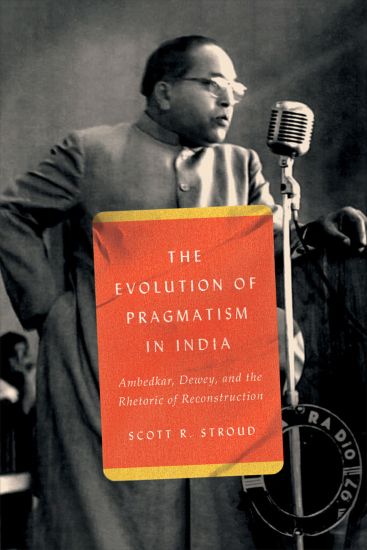
"A magnificent study" (New York Review of Books) of how the Indian reformer Bhimrao Ambedkar reimagined John Dewey’s pragmatism. In The Evolution of Pragmatism in India, Scott R. Stroud delivers a comprehensive exploration of the influence of John Dewey’s pragmatism on Bhimrao Ambedkar, architect of the Republic of India’s constitution. Stroud traces Ambedkar’s development in Dewey’s Columbia University classes in 1913–1916 through his final years in 1950s India when he rewrote the story of Buddhism. Stroud examines pragmatism’s influence not only on the philosophical ideas underpinning Ambedkar’s fight against caste oppression but also how his persuasive techniques drew on pragmatism’s commitment to reconstruction and meliorism. At the same time, Stroud is careful to point out the ways that Ambedkar pushed back against Dewey’s paradigm and developed his own approach to challenges in India. The result is a nuanced study of one of the most important figures in Indian history.
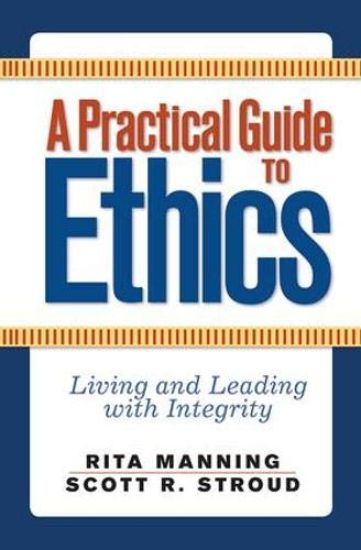
A Practical Guide to Ethics

A Practical Guide to Ethics

Rita Manning; Scott R. Stroud

Routledge
2019
sidottu
This essential new text is designed for courses in contemporary moral issues, applied ethics, and leadership. Emphasizing personal choice in the study of ethics, the authors take the reader on a journey of self-discovery rather than a mere academic survey of the field of ethics.A Practical Guide to Ethics: Living and Leading with Integrity helps students develop their skills in ethical decision-making and put those decisions into effective practice. Its unique focus on leadership, especially the moral dimensions of understanding one's own values, teaches students to understand and, through dialog and negotiation, communicate their own beliefs as a step to building coalitions with those who may hold different views. It is also distinctive in combining ethical theory with both multicultural ethics (Confucianism, Hinduism, Islam, feminism) and a practical orientation to moral decision-making and leadership.
Kant and the Promise of Rhetoric

Kant and the Promise of Rhetoric

Scott R. Stroud

Pennsylvania State University Press
2016
pokkari
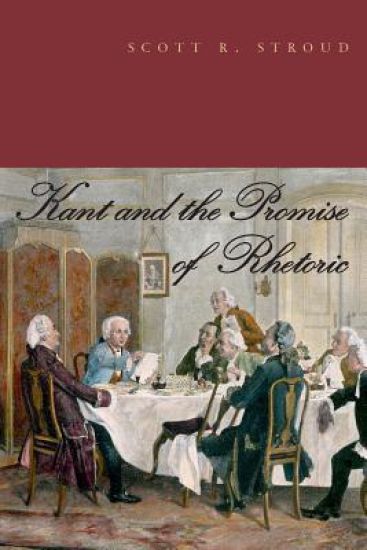
Immanuel Kant is rarely connected to rhetoric by those who study philosophy or the rhetorical tradition. If anything, Kant is said to see rhetoric as mere manipulation and as not worthy of attention. In Kant and the Promise of Rhetoric, Scott Stroud presents a first-of-its-kind reappraisal of Kant and the role he gives rhetorical practices in his philosophy. By examining the range of terms that Kant employs to discuss various forms of communication, Stroud argues that the general thesis that Kant disparaged rhetoric is untenable. Instead, he offers a more nuanced view of Kant on rhetoric and its relation to moral cultivation. For Kant, certain rhetorical practices in education, religious settings, and public argument become vital tools to move humans toward moral improvement without infringing on their individual autonomy. Through the use of rhetorical means such as examples, religious narratives, symbols, group prayer, and fallibilistic public argument, individuals can persuade other agents to move toward more cultivated states of inner and outer autonomy. For the Kant recovered in this book, rhetoric becomes another part of human activity that can be animated by the value of humanity, and it can serve as a powerful tool to convince agents to embark on the arduous task of moral self-cultivation.
Kant and the Promise of Rhetoric

Kant and the Promise of Rhetoric

Scott R. Stroud

Pennsylvania State University Press
2014
sidottu
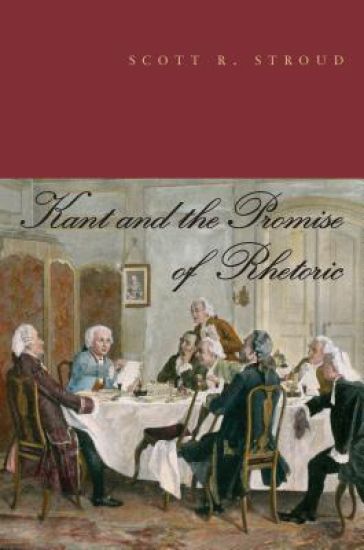
Immanuel Kant is rarely connected to rhetoric by those who study philosophy or the rhetorical tradition. If anything, Kant is said to see rhetoric as mere manipulation and as not worthy of attention. In Kant and the Promise of Rhetoric, Scott Stroud presents a first-of-its-kind reappraisal of Kant and the role he gives rhetorical practices in his philosophy. By examining the range of terms that Kant employs to discuss various forms of communication, Stroud argues that the general thesis that Kant disparaged rhetoric is untenable. Instead, he offers a more nuanced view of Kant on rhetoric and its relation to moral cultivation. For Kant, certain rhetorical practices in education, religious settings, and public argument become vital tools to move humans toward moral improvement without infringing on their individual autonomy. Through the use of rhetorical means such as examples, religious narratives, symbols, group prayer, and fallibilistic public argument, individuals can persuade other agents to move toward more cultivated states of inner and outer autonomy. For the Kant recovered in this book, rhetoric becomes another part of human activity that can be animated by the value of humanity, and it can serve as a powerful tool to convince agents to embark on the arduous task of moral self-cultivation.
John Dewey and the Artful Life

John Dewey and the Artful Life

Scott R. Stroud

Pennsylvania State University Press
2011
pokkari
Aesthetic experience has had a long and contentious history in the Western intellectual tradition. Following Kant and Hegel, a human’s interaction with nature or art frequently has been conceptualized as separate from issues of practical activity or moral value. This book examines how art can be seen as a way of moral cultivation. Scott Stroud uses the thought of the American pragmatist John Dewey to argue that art and the aesthetic have a close connection to morality. Dewey gives us a way to reconceptualize our ideas of ends, means, and experience so as to locate the moral value of aesthetic experience in the experience of absorption itself, as well as in the experience of reflective attention evoked by an art object.
John Dewey and the Artful Life

John Dewey and the Artful Life

Scott R. Stroud

Pennsylvania State University Press
2011
sidottu
Aesthetic experience has had a long and contentious history in the Western intellectual tradition. Following Kant and Hegel, a human’s interaction with nature or art frequently has been conceptualized as separate from issues of practical activity or moral value. This book examines how art can be seen as a way of moral cultivation. Scott Stroud uses the thought of the American pragmatist John Dewey to argue that art and the aesthetic have a close connection to morality. Dewey gives us a way to reconceptualize our ideas of ends, means, and experience so as to locate the moral value of aesthetic experience in the experience of absorption itself, as well as in the experience of reflective attention evoked by an art object.