

Kirjailija
Scott Ritter
Kirjat ja teokset yhdessä paikassa: 5 kirjaa, julkaisuja vuosilta 2018-2025, suosituimpien joukossa Scorpion King. Vertaile teosten hintoja ja tarkista saatavuus suomalaisista kirjakaupoista.
5 kirjaa
Kirjojen julkaisuhaarukka 2018-2025.


Kniga-sensatsija amerikanskogo zhurnalista Skotta Rittera rasskazyvaet istoriju zakljuchenija i ispolnenija objazatelstv po Dogovoru o likvidatsii raket srednej i maloj dalnosti (RSMD). Mnogoletnjaja borba za mir i razoruzhenie dostigla svoego apogeja v kontse 1980-kh i sovpala so vremenem globalnykh peremen v SSSR - Perestrojkoj. Skott Ritter pokazyvaet otnoshenie amerikanskogo pravitelstva k voprosam razoruzhenija i kontrolja jadernogo oruzhija. Buduchi neposredstvennym uchastnikom sobytij, avtor delitsja vospominanijami o rabote amerikanskikh inspektorov po kontrolju vooruzhenij na Votkinskom zavode, proizvodivshem rakety srednej i maloj dalnosti. V knige opisyvajutsja razlichnye sposoby kontrolja amerikantsami sovetskogo oboronnogo zavoda, vzaimodejstvie razlichnykh amerikanskikh spetssluzhb i organizatsij, zhizn amerikanskikh inspektorov v Sovetskom Sojuze i lichnye vpechatlenija avtora o SSSR, Votkinske i ego zhiteljakh.
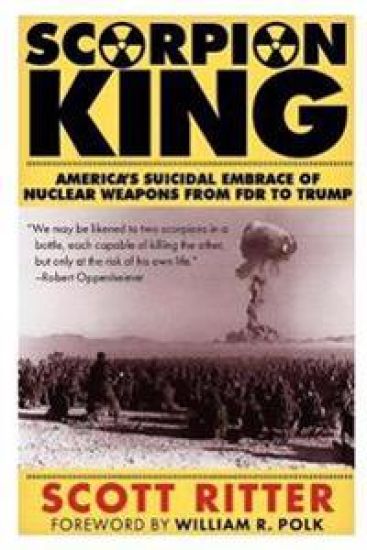
"We may be likened to two scorpions in a bottle, each capable of killing the other, but only at the risk of his own life." -- ROBERT OPPENHEIMER Scorpion King: America's Suicidal Embrace of Nuclear Weapons from FDR to Trump is a history of America's corrosive affair with nuclear weapons, and the failed efforts to curb this radioactive ardor through arms control. The book's title refers to the allusion by Robert Oppenheimer, the father of the American atomic bomb, to dueling scorpions when discussing the deadly nuclear rivalry between the US and Soviet Union, and signals the dangers inherent in the resumption of the perilous US drive for nuclear supremacy. Providing a vivid and gripping A-Z history of America's deceptive use of arms control as a means of actually furthering its quest for nuclear dominance, Ritter sheds light on a contradictory US agenda little understood by the lay reader, while providing sufficient detail and context to engage the specialist. Originally published by Nation Books in 2010 under the title Dangerous Ground, this new version has been streamlined and significantly expanded to account for the failed arms control policies of the Obama administration, and the rejection of arms control as a policy during the first term of the Trump administration. The Trump administration has pulled out of one landmark arms control treaty, the 1987 Intermediate Nuclear Forces treaty, and is threatening to let another, the 2010 New START treaty, expire. The terrifying Cuban missile crisis of 1962 demonstrated the apocalyptic folly of nuclear arsenals operating without limitation, and led to reciprocal constraints that moderated the nuclear ambitions of both the US and Soviet Union Those constraints, for the most part, no longer exist. The next missile crisis could prove terminal for humanity. Scorpion King is a book that can, and should, occupy the shelves of academic libraries, diplomats and military professionals, as well as make the reading lists of concerned citizens, given the dangerous state of US and Russian relations, now hovering on the cusp of a new and increasingly hazardous nuclear arms race. It provides a road map showing how we collectively returned to the nuclear cliff edge, and shines light on the possibility of an exit from a seemingly endless dark tunnel. Providing context for the forthcoming 2020 Review of the Non-Proliferation Treaty, Scorpion King is must reading for an imperiled world.
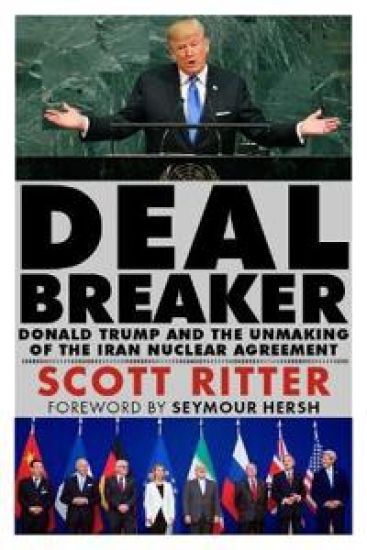
The Iran deal was a crowning moment of international diplomacy, allowing the world to step away from the edge of a self-created abyss. Donald Trump's decision to withdraw from this agreement threatens to return the world to that precipice. Dealbreaker recounts how this deal was made, why it was broken, and what the consequences of that action could be. When the United States made the decision in the 1980s to deny Iran access to nuclear technology, Iran was forced to turn to the black market to get the material, technology and know-how required to meet its needs for nuclear power generation, inclusive of the ability to indigenously produce nuclear fuel. The revelation of Iran's secret nuclear program in 2002 set in motion a battle of wills between the Iranians, who viewed nuclear power as their inherent right, and the international community as defined by the United States, Israel and Europe, who feared the proliferation implications of allowing Iran access to technology that could be used to make a nuclear weapon. The United States and Israel pulled no punches, using diplomatic pressure to impose crippling economic sanctions, and cover activities to sow disinformation, sabotage equipment and murder Iranian nuclear scientists in an effort to stop the Iranian nuclear program from going forward. Iran prevailed, confronting the United States with the choice of either going to war, or accepting the reality of an Iranian nuclear program. The Iranian nuclear deal was the result. But the deal had an Achilles heel--the disinformation campaign waged by the United States and Israel to paint the Iranian program as military in nature left a residue of uncertainty and fear that detractors of the deal used to attack it as little more than a sham. Donald Trump decried the Iranian nuclear deal as a "failed agreement" and promised to tear it up if elected. Proving true to his word, Trump pulled America out of the Iranian nuclear deal on May 12, 2018. Dealabreaker explores the nuances of the Iranian nuclear program, exposing the duplicity and hypocrisy of American diplomacy, supported by Israel and abetted by Europe, that led to the need for the Iranian nuclear deal, and eventually caused the demise of an agreement that was simultaneously "the deal of the century" and "fatally flawed".