Kirjojen hintavertailu. Mukana 12 595 353 kirjaa ja 12 kauppaa.

Kirjailija

Sean Latham

Kirjat ja teokset yhdessä paikassa: 6 kirjaa, julkaisuja vuosilta 2003-2015, suosituimpien joukossa The Little Review "Ulysses". Vertaile teosten hintoja ja tarkista saatavuus suomalaisista kirjakaupoista.

6 kirjaa

Kirjojen julkaisuhaarukka 2003-2015.

The Little Review "Ulysses"

The Little Review "Ulysses"

James Joyce; Mark Gaipa; Sean Latham; Robert Scholes

Yale University Press
2015
pokkari
James Joyce’s Ulysses first appeared in print in the pages of an American avant-garde magazine, The Little Review, between 1918 and 1920. The novel many consider to be the most important literary work of the twentieth century was, at the time, deemed obscene and scandalous, resulting in the eventual seizure of The Little Review and the placing of a legal ban on Joyce’s masterwork that would not be lifted in the United States until 1933. For the first time, The Little Review “Ulysses” brings together the serial installments of Ulysses to create a new edition of the novel, enabling teachers, students, scholars, and general readers to see how one of the previous century’s most daring and influential prose narratives evolved, and how it was initially introduced to an audience who recognized its radical potential to transform Western literature. This unique and essential publication also includes essays and illustrations designed to help readers understand the rich contexts in which Ulysses first appeared and trace the complex changes Joyce introduced after it was banned.
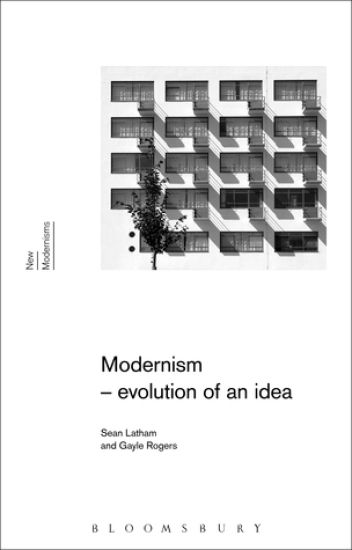
Modernism: Evolution of an Idea

Modernism: Evolution of an Idea

Sean Latham; Gayle Rogers

Bloomsbury Academic
2015
sidottu
What exactly is 'modernism'? And how has the critical definition of the word changed?Exploring shifting understandings of modernism from the beginning of the 20th century to the present day, this is a concise critical history of modernist criticism. Taking an accessible chronological approach, Modernism: Evolution of An Idea covers such topics as:•Early debates, from Calinescu's Five Faces of Modernity to The New Age magazine and writer-critics such as T.S. Eliot and Cyril Connolly•New Criticism and the forming of the modernist canon•The rise of Theory - from Derrida and Houston Baker to the Frankfurt School•New modernist studies and contemporary approaches: from international modernisms to engagements with race, sexuality and genderWith annotated guides to further reading throughout and a companion website with additional resources, this is an essential survey for students and scholars working in modernist studies at all levels.
Modernism: Evolution of an Idea

Modernism: Evolution of an Idea

Sean Latham; Gayle Rogers

Bloomsbury Academic
2015
nidottu
What exactly is “modernism”? And how and why has its definition changed over time?Modernism: Evolution of an Idea is the first book to trace the development of the term “modernism” from cultural debates in the early twentieth century to the dynamic contemporary field of modernist studies. Rather than assuming and recounting the contributions of modernism’s chief literary and artistic figures, this book focuses on critical formulations and reception through topics such as:- The evolution of “modernism” from a pejorative term in intellectual arguments, through its condemnation by Pope Pius X in 1907, and on to its subsequent centrality to definitions of new art by T. S. Eliot, Laura Riding and Robert Graves, F. R. Leavis, Edmund Wilson, and Clement Greenberg- New Criticism and its legacies in the formation of the modernist canon in anthologies, classrooms, and literary histories - The shifting conceptions of modernism during the rise of gender and race studies, French theory, Marxist criticism, postmodernism, and more - The New Modernist Studies and its contemporary engagements with the politics, institutions, and many cultures of modernism internationallyWith a glossary of key terms and movements and a capacious critical bibliography, this is an essential survey for students and scholars working in modernist studies at all levels.
The Art of Scandal

The Art of Scandal

Sean Latham

Oxford University Press Inc
2012
nidottu
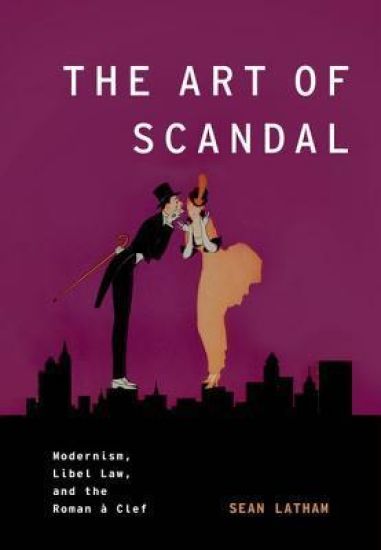
The Art of Scandal advances a relatively simple claim with far-reaching consequences for modernist studies: writers and readers throughout the early twentieth century revived the long-despised codes and habits of the roman á clef as a key part of that larger assault on Victorian realism we now call modernism. In the process, this resurgent genre took on a life of its own, reconfiguring the intricate relationship between literature, celebrity, and the law. Sean Latham summons cases of the novel's social notoriety--and the numerous legal scandals the form provoked--to articulate the material networks of reception and circulation through which modernism took shape, revealing a little explored popular history within its development. Producers as well as consumers used elements of the controversial roman á clef, a genre that challenges the idea of fiction as autonomous from the social and political world. In turn, this widespread practice provoked not only a generative aesthetic crisis, but also a gradually unfolding legal quandary that led Britain's highest courts to worry that fiction itself might be illegal. Modernism sat squarely, for a time, between literature and the law. With skillful close readings aided by extensive archival research, Latham illuminates the world of backbiting, gossip, litigation, and sensationalism through chapters on Oscar Wilde's trial, Joyce's Ulysses, celebrity salons, and Parisian bohemia. Original, colorful, and perceptive, The Art of Scandal both salvages the reputation of the roman á clef form and traces its curious itinerary through the early twentieth century. Seeking out the best new interdisciplinary work, this series explores the cultural bearings of literary modernism across multiple fields, geographies, symbolic forms, and media.
Am I a Snob?

Am I a Snob?

Sean Latham

Cornell University Press
2003
pokkari
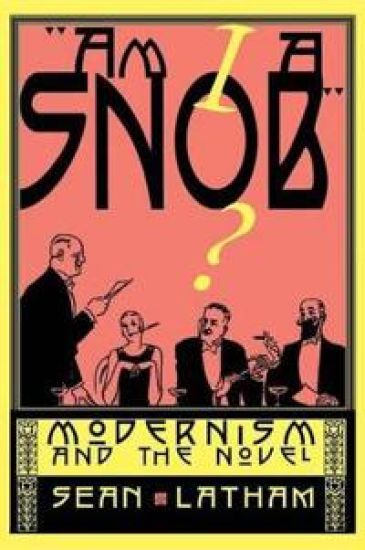
Is there a "great divide" between highbrow and mass cultures? Are modernist novels for, by, and about snobs? What might Lord Peter Wimsey, Mrs. Dalloway, and Stephen Dedalus have to say to one another?Sean Latham's appealingly written book "Am I a Snob?" traces the evolution of the figure of the snob through the works of William Makepeace Thackeray, Oscar Wilde, Virginia Woolf, James Joyce, and Dorothy Sayers. Each of these writers played a distinctive role in the transformation of the literary snob from a vulgar social climber into a master of taste. In the process, some novelists and their works became emblems of sophistication, treated as if they were somehow apart from or above the fiction of the popular marketplace, while others found a popular audience. Latham argues that both coterie writers like Joyce and popular novelists like Sayers struggled desperately to combat their own pretensions. By portraying snobs in their novels, they attempted to critique and even transform the cultural and economic institutions that they felt isolated them from the broad readership they desired.Latham regards the snobbery that emerged from and still clings to modernism not as an unfortunate by-product of aesthetic innovation, but as an ongoing problem of cultural production. Drawing on the tools and insights of literary sociology and cultural studies, he traces the nineteenth-century origins of the "snob," then explores the ways in which modernist authors developed their own snobbery as a means of coming to critical consciousness regarding the connections among social, economic, and cultural capital. The result, Latham asserts, is a modernism directly engaged with the cultural marketplace yet deeply conflicted about the terms of its success.