Kirjojen hintavertailu. Mukana 12 595 353 kirjaa ja 12 kauppaa.

Kirjailija

Sean M. Maloney

Kirjat ja teokset yhdessä paikassa: 15 kirjaa, julkaisuja vuosilta 2005-2026, suosituimpien joukossa Emergency War Plan: The American Doomsday Machine, 1945-1960. Vertaile teosten hintoja ja tarkista saatavuus suomalaisista kirjakaupoista.

Mukana myös kirjoitusasut: Sean M Maloney

15 kirjaa

Kirjojen julkaisuhaarukka 2005-2026.

The Cool War

The Cool War

Sean M. Maloney

Naval Institute Press
2025
sidottu
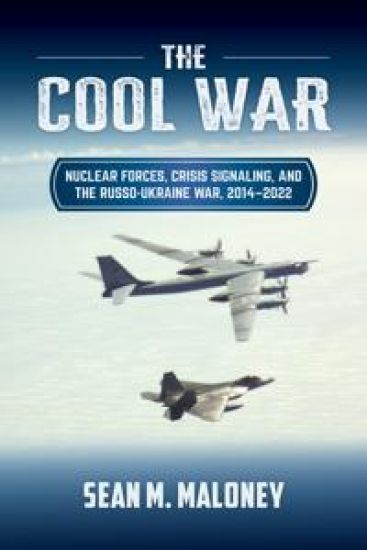
Sean Maloney reveals how Vladimir Putin has aggressively leveraged nuclear signaling to manipulate NATO and deter Western intervention in Ukraine. With Cold War–level brinkmanship and modern information warfare, Russia’s tactics have reshaped the strategic landscape—and raised urgent questions about how long the West can hold the line. Nuclear signaling is defined as the deliberate maneuvering of nuclear forces to deter and influence an adversary’s actions. Author Sean Maloney shows how Russian leader Vladimir Putin has systematically employed nuclear signaling to force desired behavior from both NATO and the United States. This strategy has escalated greatly during the Russo-Ukraine War as Putin seeks to deter Western intervention and support of Ukraine. Putin uses many forms of nuclear signaling, including ordering jets capable of carrying nuclear weapons to fly in western European airspace, staging a joint bomber exercise with China near Alaska, and instructing submarines carrying nuclear weapons to surface through the Arctic icepack. The frequency of this signaling far exceeds that of similar activity during the Cold War and has escalated to more dangerous levels than before. When Russia experienced setbacks on the battlefield, Putin often intensified his nuclear-force posturing by paring it with thinly veiled threats to use tactical nuclear weapons. Maloney argues convincingly that in the post–Cold War era, Putin has skillfully combined his use of nuclear signaling with advances in information technology to more effectively manipulate Western nations. He asserts that the United States was initially late in recognizing this development, but as the situation worsened, America and NATO have devised a series of responses that now hold Russia in check. The question is, for how long? Maloney concludes that Putin’s nuclear posturing has produced mixed results. First and foremost, Putin did successfully deter the United States and other NATO countries from outright military action in defense of Ukraine following the 2022 invasion. However, Russia’s nuclear signaling did not prevent the West from providing weapons and intelligence to Ukraine, nor did it stop NATO’s expansion. Nevertheless, the partial success of Russia’s Cool War activity does not lessen the significance of this new reality or the scope of the problems that face the West moving forward.
The Canadian Army in Afghanistan

The Canadian Army in Afghanistan

Sean M Maloney

Double Dagger Books
2024
sidottu
The Canadian Army's involvement with Afghanistan after the 9-11 attacks in 2001 was as dramatic as it was historically significant. The conflict was Canada's first war since Korea in the 1950s and was the first counterinsurgency campaign undertaken by the Army. Acts of valour by Canadian men and women, not seen outside of the pages of Second World War history books, once again became commonplace. Canada was now up against a new type of enemy, global in scope, agile and adaptable. Twenty-four Canadians, among nearly 3000 other people, were killed in the 9-11 attacks by Al Qaeda, an organization that hid behind a shield provided by the Pakistan-supported Taliban movement. Once the Taliban were removed from power by Operation ENDURING FREEDOM, renewed fighting among factions had to be avoided. Some form of governance had to be established before the international community would invest in reconstruction efforts. Al Qaeda was itself in the process of being defeated in Iraq, countered in Somalia, challenged in the Philippines, and confounded in its attempts to destroy civilian airliners throughout the world. The coalition reconstruction effort in Afghanistan led by the International Security Assistance Force was a tempting collection of fragile targets and there were plenty of aggrieved elements that could be employed by the adversary as proxies in such a fight. Afghanistan was one front in Al Qaeda's war, while it became the only front left for a renewed Taliban and their allies. Protecting the Afghanistan reconstruction effort was a necessary part of confronting Al Qaeda, the Taliban, and their allies. It was crucial that the coalition create space and time for Afghans to recover from two decades of violence. In order to achieve this goal it was vital that the insurgency be thwarted from attaining its objectives. These volumes explain how the Canadian Army's soldiers succeeded against all odds in doing so.
L'Armée Canadienne en Afghanistan, Volume II, partie 1
L'intervention de l'Arm e canadienne en Afghanistan apr s les attentats du 11 septembre 2001 a t aussi dramatique que significative sur le plan historique. Le conflit a t la premi re guerre laquelle le Canada participait depuis la Cor e dans les ann es 1950 et la premi re campagne de contre-insurrection entreprise par l'Arm e. Les actes de bravoure des Canadiens et des Canadiennes, que l'on n'avait jamais vus ailleurs que dans les livres d'histoire de la Seconde Guerre mondiale, sont redevenus monnaie courante. Le Canada tait maintenant confront un nouveau type d'ennemi, d'envergure mondiale, agile et adaptable.Vingt-quatre Canadiens, parmi pr s de 3 000 autres personnes, ont t tu s lors des attentats du 11 septembre par Al-Qa da, une organisation qui se cachait derri re un bouclier fourni par le mouvement taliban soutenu par le Pakistan. Une fois les talibans chass s du pouvoir par l'op ration ENDURING FREEDOM, il fallait viter la reprise des combats entre factions. Une certaine forme de gouvernance devait tre mise sur pied avant que la communaut internationale n'investisse dans les efforts de reconstruction. Al-Qa da tait, son tour, en train d' tre vaincue en Irak, contr e en Somalie, d fi e aux Philippines et d rout e dans ses tentatives de d truire des avions de ligne civils dans le monde entier. L'effort de reconstruction de la coalition en Afghanistan, men par la Force internationale d'assistance la s curit , constituait une mosa que attrayante de cibles fragiles, et les l ments l s s susceptibles d' tre utilis s par l'adversaire comme interm diaires dans un tel combat taient nombreux. L'Afghanistan repr sentait d'abord un front dans la guerre d'Al-Qa da; toutefois, ce pays est rapidement devenu le seul front restant pour un mouvement renouvel des talibans et de leurs alli s.La protection de l'effort de reconstruction de l'Afghanistan tait une partie n cessaire de la lutte contre Al Qa da, les talibans et leurs alli s. Il tait essentiel que la coalition fournisse un espace s curitaire et donne du temps aux Afghans pour qu'ils puissent se remettre de deux d cennies de violence. Pour y parvenir, il tait indispensable d'emp cher les insurg s d'atteindre leurs objectifs. Ces volumes expliquent la fa on dont les soldats de l'Arm e canadienne ont r ussi, contre toute attente, y arriver.
The Canadian Army in Afghanistan

The Canadian Army in Afghanistan

Sean M Maloney

Double Dagger Books
2024
sidottu
The Canadian Army's involvement with Afghanistan after the 9-11 attacks in 2001 was as dramatic as it was historically significant. The conflict was Canada's first war since Korea in the 1950s and was the first counterinsurgency campaign undertaken by the Army. Acts of valour by Canadian men and women, not seen outside of the pages of Second World War history books, once again became commonplace. Canada was now up against a new type of enemy, global in scope, agile and adaptable.Twenty-four Canadians, among nearly 3000 other people, were killed in the 9-11 attacks by Al Qaeda, an organization that hid behind a shield provided by the Pakistan-supported Taliban movement. Once the Taliban were removed from power by Operation ENDURING FREEDOM, renewed fighting among factions had to be avoided. Some form of governance had to be established before the international community would invest in reconstruction efforts. Al Qaeda was itself in the process of being defeated in Iraq, countered in Somalia, challenged in the Philippines, and confounded in its attempts to destroy civilian airliners throughout the world.The coalition reconstruction effort in Afghanistan led by the International Security Assistance Force was a tempting collection of fragile targets and there were plenty of aggrieved elements that could be employed by the adversary as proxies in such a fight. Afghanistan was one front in Al Qaeda's war, while it became the only front left for a renewed Taliban and their allies.Protecting the Afghanistan reconstruction effort was a necessary part of confronting Al Qaeda, the Taliban, and their allies. It was crucial that the coalition create space and time for Afghans to recover from two decades of violence. In order to achieve this goal it was vital that the insurgency be thwarted from attaining its objectives. These volumes explain how the Canadian Army's soldiers succeeded against all odds in doing so.
The Canadian Army in Afghanistan

The Canadian Army in Afghanistan

Sean M Maloney

Double Dagger Books
2024
sidottu
The Canadian Army's involvement with Afghanistan after the 9-11 attacks in 2001 was as dramatic as it was historically significant. The conflict was Canada's first war since Korea in the 1950s and was the first counterinsurgency campaign undertaken by the Army. Acts of valour by Canadian men and women, not seen outside of the pages of Second World War history books, once again became commonplace. Canada was now up against a new type of enemy, global in scope, agile and adaptable. Twenty-four Canadians, among nearly 3000 other people, were killed in the 9-11 attacks by Al Qaeda, an organization that hid behind a shield provided by the Pakistan-supported Taliban movement. Once the Taliban were removed from power by Operation ENDURING FREEDOM, renewed fighting among factions had to be avoided. Some form of governance had to be established before the international community would invest in reconstruction efforts. Al Qaeda was itself in the process of being defeated in Iraq, countered in Somalia, challenged in the Philippines, and confounded in its attempts to destroy civilian airliners throughout the world. The coalition reconstruction effort in Afghanistan led by the International Security Assistance Force was a tempting collection of fragile targets and there were plenty of aggrieved elements that could be employed by the adversary as proxies in such a fight. Afghanistan was one front in Al Qaeda's war, while it became the only front left for a renewed Taliban and their allies. Protecting the Afghanistan reconstruction effort was a necessary part of confronting Al Qaeda, the Taliban, and their allies. It was crucial that the coalition create space and time for Afghans to recover from two decades of violence. In order to achieve this goal it was vital that the insurgency be thwarted from attaining its objectives. These volumes explain how the Canadian Army's soldiers succeeded against all odds in doing so.
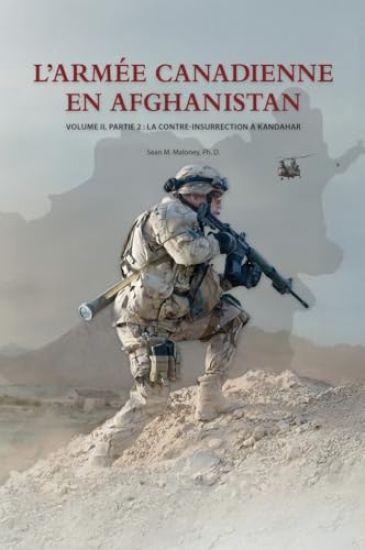
L'Armée Canadienne en Afghanistan, Volume II, partie 2
L'intervention de l'Arm e canadienne en Afghanistan apr s les attentats du 11 septembre 2001 a t aussi dramatique que significative sur le plan historique. Le conflit a t la premi re guerre laquelle le Canada participait depuis la Cor e dans les ann es 1950 et la premi re campagne de contre-insurrection entreprise par l'Arm e. Les actes de bravoure des Canadiens et des Canadiennes, que l'on n'avait jamais vus ailleurs que dans les livres d'histoire de la Seconde Guerre mondiale, sont redevenus monnaie courante. Le Canada tait maintenant confront un nouveau type d'ennemi, d'envergure mondiale, agile et adaptable.Vingt-quatre Canadiens, parmi pr s de 3 000 autres personnes, ont t tu s lors des attentats du 11 septembre par Al-Qa da, une organisation qui se cachait derri re un bouclier fourni par le mouvement taliban soutenu par le Pakistan. Une fois les talibans chass s du pouvoir par l'op ration ENDURING FREEDOM, il fallait viter la reprise des combats entre factions. Une certaine forme de gouvernance devait tre mise sur pied avant que la communaut internationale n'investisse dans les efforts de reconstruction. Al-Qa da tait, son tour, en train d' tre vaincue en Irak, contr e en Somalie, d fi e aux Philippines et d rout e dans ses tentatives de d truire des avions de ligne civils dans le monde entier. L'effort de reconstruction de la coalition en Afghanistan, men par la Force internationale d'assistance la s curit , constituait une mosa que attrayante de cibles fragiles, et les l ments l s s susceptibles d' tre utilis s par l'adversaire comme interm diaires dans un tel combat taient nombreux. L'Afghanistan repr sentait d'abord un front dans la guerre d'Al-Qa da; toutefois, ce pays est rapidement devenu le seul front restant pour un mouvement renouvel des talibans et de leurs alli s.La protection de l'effort de reconstruction de l'Afghanistan tait une partie n cessaire de la lutte contre Al Qa da, les talibans et leurs alli s. Il tait essentiel que la coalition fournisse un espace s curitaire et donne du temps aux Afghans pour qu'ils puissent se remettre de deux d cennies de violence. Pour y parvenir, il tait indispensable d'emp cher les insurg s d'atteindre leurs objectifs. Ces volumes expliquent la fa on dont les soldats de l'Arm e canadienne ont r ussi, contre toute attente, y arriver.
L'Armée Canadienne en Afghanistan, Volume I

L'Armée Canadienne en Afghanistan, Volume I

Sean M Maloney

Double Dagger Books
2024
sidottu
L'intervention de l'Arm e canadienne en Afghanistan apr s les attentats du 11 septembre 2001 a t aussi dramatique que significative sur le plan historique. Le conflit a t la premi re guerre laquelle le Canada participait depuis la Cor e dans les ann es 1950 et la premi re campagne de contre-insurrection entreprise par l'Arm e. Les actes de bravoure des Canadiens et des Canadiennes, que l'on n'avait jamais vus ailleurs que dans les livres d'histoire de la Seconde Guerre mondiale, sont redevenus monnaie courante. Le Canada tait maintenant confront un nouveau type d'ennemi, d'envergure mondiale, agile et adaptable.Vingt-quatre Canadiens, parmi pr s de 3 000 autres personnes, ont t tu s lors des attentats du 11 septembre par Al-Qa da, une organisation qui se cachait derri re un bouclier fourni par le mouvement taliban soutenu par le Pakistan. Une fois les talibans chass s du pouvoir par l'op ration ENDURING FREEDOM, il fallait viter la reprise des combats entre factions. Une certaine forme de gouvernance devait tre mise sur pied avant que la communaut internationale n'investisse dans les efforts de reconstruction. Al-Qa da tait, son tour, en train d' tre vaincue en Irak, contr e en Somalie, d fi e aux Philippines et d rout e dans ses tentatives de d truire des avions de ligne civils dans le monde entier. L'effort de reconstruction de la coalition en Afghanistan, men par la Force internationale d'assistance la s curit , constituait une mosa que attrayante de cibles fragiles, et les l ments l s s susceptibles d' tre utilis s par l'adversaire comme interm diaires dans un tel combat taient nombreux. L'Afghanistan repr sentait d'abord un front dans la guerre d'Al-Qa da; toutefois, ce pays est rapidement devenu le seul front restant pour un mouvement renouvel des talibans et de leurs alli s.La protection de l'effort de reconstruction de l'Afghanistan tait une partie n cessaire de la lutte contre Al Qa da, les talibans et leurs alli s. Il tait essentiel que la coalition fournisse un espace s curitaire et donne du temps aux Afghans pour qu'ils puissent se remettre de deux d cennies de violence. Pour y parvenir, il tait indispensable d'emp cher les insurg s d'atteindre leurs objectifs. Ces volumes expliquent la fa on dont les soldats de l'Arm e canadienne ont r ussi, contre toute attente, y arriver.
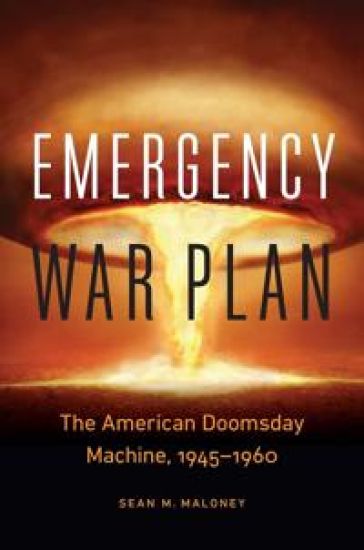
Emergency War Plan

Emergency War Plan

Sean M. Maloney

Potomac Books Inc
2021
sidottu
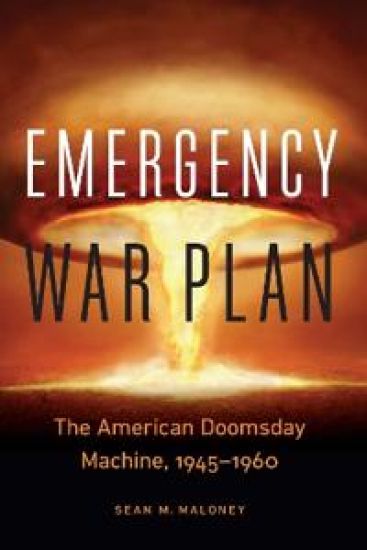
Winner of the 2023 AFHF Air Power History Book Prize Emergency War Plan examines the theory and practice of American nuclear deterrence and its evolution during the Cold War. Previous examinations of nuclear strategy during this time have, for the most part, categorized American efforts as “massive retaliation” and “mutually assured destruction,” blunt instruments to be casually dismissed in favor of more flexible approaches or summed up in inflammatory and judgmental terms like “MAD.” These descriptors evolved into slogans, and any nuanced discussion of the efficacy of the actual strategies withered due to a variety of political and social factors. Drawing on newly released weapons effects information along with new information about Soviet capabilities as well as risky and covert espionage missions, Emergency War Plan provides a completely new examination of American nuclear deterrence strategy during the first fifteen years of the Cold War, the first such study since the 1980s. Ultimately what emerges is a picture of a gargantuan and potentially devastating enterprise that was understood at the time by the public in only the vaguest terms but that was not as out of control as has been alleged and was more nuanced than previously understood.
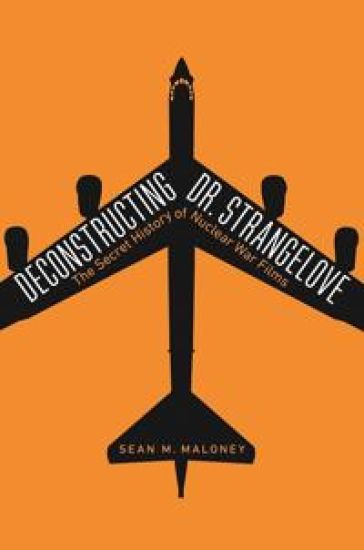
Deconstructing Dr. Strangelove

Deconstructing Dr. Strangelove

Sean M. Maloney

Potomac Books Inc
2020
sidottu
King of the Cold War crisis film, Dr. Strangelove became a cultural touchstone from the moment of its release in 1964. The duck-and-cover generation saw it as a satire on nuclear issues and Cold War thinking. Subsequent generations, removed from the film’s historical moment, came to view it as a quasi-documentary about an unfathomable secret world. Sean M. Maloney uses Dr. Strangelove and other genre classics like Fail Safe and The Bedford Incident to investigate a curious pop cultural contradiction. Nuclear crisis films repeatedly portrayed the failures of the Cold War’s deterrent system. Yet the system worked. What does this inconsistency tell us about the genre? What does it tell us about the deterrent system, for that matter? Blending film analysis with Cold War history, Maloney looks at how the celluloid crises stack up against reality-or at least as much of reality as we can reconstruct from these films with confidence. The result is a daring intellectual foray that casts new light on Dr. Strangelove, one of the Cold War era’s defining films.
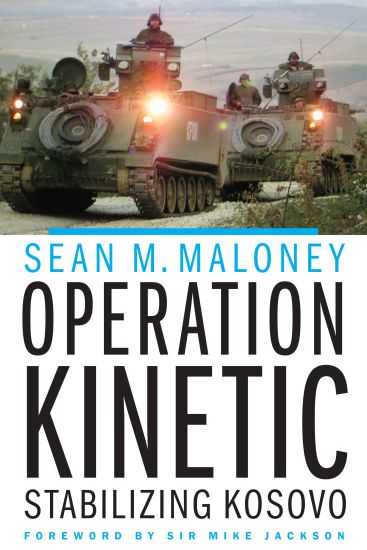
Operation Kinetic

Operation Kinetic

Sean M. Maloney; Mike Jackson

Potomac Books Inc
2018
sidottu
In the late 1990s, NATO led the Kosovo Force (KFOR), charged with stabilizing Kosovo and the former Yugoslav Republic of Macedonia after genocide and other atrocities were carried out in the Balkan region. Operation Kinetic is not only a history of the origins and operations of the Kosovo Force but also a history of the vital operations conducted by the Canadian Army units and their allies assigned to KFOR during the crucial early days and months after entry into the province in 1999 and through 2000. Operating alongside American, British, French, Norwegian, Finnish, and Swedish forces, these surveillance and response units were instrumental in preventing violence in numerous areas before it could escalate and draw in the Serbian Army, which could have led to further genocide or war in the region. Sean M. Maloney, a Canadian military historian with extensive field experience in the Balkans, draws on numerous interviews and firsthand accounts of an operation that would later serve as a model in preparing for similar efforts in Afghanistan and provide a blueprint for stabilizing operations around the world.
Fighting for Afghanistan

Fighting for Afghanistan

Sean M. Maloney

Naval Institute Press
2011
sidottu
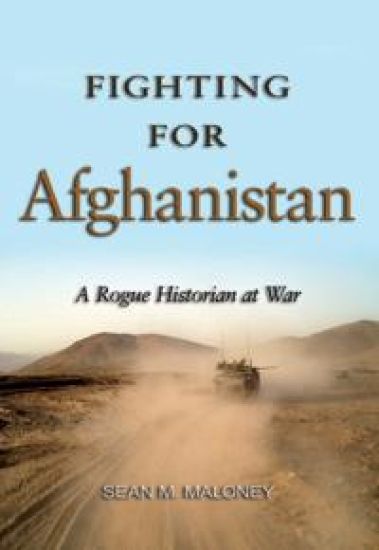
Fighting For Afghanistan is the third book in the Rogue Historian trilogy, taking Maloney’s story into the conflict in 2006, when the Taliban-led insurgency threatened to overwhelm the U.S.-led coalition in southern Afghanistan. This shift to near-conventional warfare, as opposed to the small-scale guerilla attacks and urban terrorism in Kandahar, caught everybody by surprise and forced a small, under-equipped Canadian battle group, supported by a Canadian-led multinational brigade consisting of American, British and Dutch forces, into a desperate series of battles to protect the city and to prevent the collapse of British forces in neighbouring Helmand province. Sean Maloney arrived on the ground just as the situation spun out of control and he was able to capture, at all levels from infantry company to battle group to brigade headquarters, exactly what happened. This book explains the difficulties in balancing security and development, the challenges of operating in an austere, alien environment, and the human cost of counterinsurgency warfare in Afghanistan. Fighting For Afghanistan takes the reader through all of the moving parts and planning and then depicts how it played out on the field of battle. During the course of the action, the author became the first Canadian military historian to go into combat since the Korean War. The battles around Kandahar City in 2006 were the turning point in the Afghanistan war and this book is the first to explain events in detail from all three levels. This is the only account that shows the scope of the fighting in the south in this time period. Because of his close proximity to the action, the author was nearly killed on several occasions that summer during the fighting and he brings the intensity of this experience to his writing.
Learning to Love the Bomb

Learning to Love the Bomb

Sean M. Maloney

Potomac Books Inc
2007
sidottu
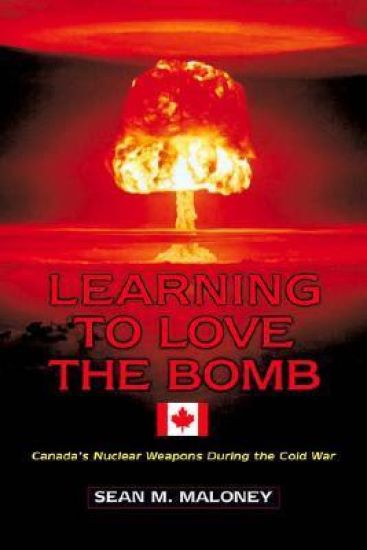
In Learning to Love the Bomb, Sean M. Maloney explores the controversial subject of Canada’s acquisition of nuclear weapons during the Cold War. Based on newly declassified Canadian and U.S. documents, it examines policy, strategy, operational, and technical matters and weaves these seemingly disparate elements into a compelling story that finally unlocks several Cold War mysteries. For example, while U.S. military forces during the 1962 Cuban Missile Crisis were focused on the Caribbean Sea and the southeastern United States, Canadian forces assumed responsibility for defending the northern United States, with aircraft armed with nuclear depth charges flying patrols and guarding against missile attack by Soviet submarines. This defensive strategy was a closely guarded secret because it conflicted with Canada’s image as a peacekeeper and therefore a more passive member of NATO than its ally to the south. It is revealed here for the first time. The place of nuclear weapons in Canadian history has, until now, been a highly secret and misunderstood field subject to rumor, rhetoric, half-truths, and propaganda. Learning to Love the Bomb reveals the truth about Canada’s role as a nuclear power.
Enduring the Freedom

Enduring the Freedom

Sean M. Maloney

Potomac Books Inc
2007
pokkari
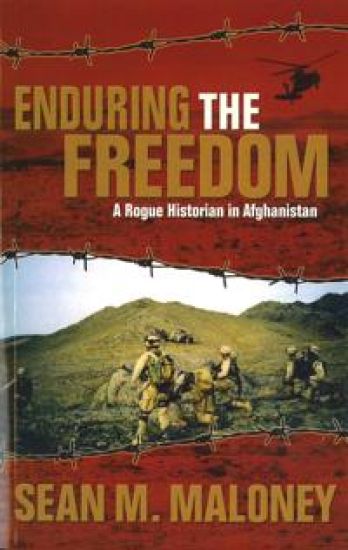
Within hours of the September 11 attacks, Sean M. Maloney deciphered that Osama bin Laden and al Qaeda were the aggressors behind the despicable act. A war in Afghanistan then was inevitable. As a military historian, Maloney was determined to go there to study and record the events for posterity, if for no other reason than the education of his future students at Canada's Royal Military College. What resulted is an in-depth and up-close look at the planning stages, deployment, and aftermath of Operation Enduring Freedom in Afghanistan. In Enduring the Freedom, Maloney presents a rare on-the-spot view from such important locations as Kabul, Bagram, and Kandahar. He describes the American-led intervention in Afghanistan and the conduct of the war through early 2003, then discusses the events of 2003 from the three locales in detail. Some critics contend that the war in Afghanistan is another Vietnam. Maloney rebuts that appraisal, pointing out that as opposed to the vague language of the Vietnam era, American objectives were clearly stated for Afghanistan. Those objectives were: to destroy al Qaeda's networks, training camps, resources, and communication systems; to destroy any governmental entity providing support or sanctuary to al Qaeda; and to undertake reconstruction efforts to ensure international terrorists can never again use the country as a base. The first objective has more or less been achieved. How to accomplish the last two is still widely debated, and Maloney offers some insightful thoughts and opinions. Finally, he offers educated advice going forward in the hopeful completion of Operation Enduring Freedom.
Enduring the Freedom

Enduring the Freedom

Sean M. Maloney

Potomac Books Inc
2005
sidottu
Within hours of the September 11 attacks, Sean M. Maloney deciphered that Osama bin Laden and al Qaeda were the aggressors behind the despicable act. A war in Afghanistan then was inevitable. As a military historian, Maloney was determined to go there to study and record the events for posterity, if for no other reason than the education of his future students at Canada's Royal Military College. What resulted is an in-depth and up-close look at the planning stages, deployment, and aftermath of Operation Enduring Freedom in Afghanistan. In Enduring the Freedom, Maloney presents a rare on-the-spot view from such important locations as Kabul, Bagram, and Kandahar. He describes the American-led intervention in Afghanistan and the conduct of the war through early 2003, then discusses the events of 2003 from the three locales in detail. Some critics contend that the war in Afghanistan is another Vietnam. Maloney rebuts that appraisal, pointing out that as opposed to the vague language of the Vietnam era, American objectives were clearly stated for Afghanistan. Those objectives were: to destroy al Qaeda's networks, training camps, resources, and communication systems; to destroy any governmental entity providing support or sanctuary to al Qaeda; and to undertake reconstruction efforts to ensure international terrorists can never again use the country as a base. The first objective has more or less been achieved. How to accomplish the last two is still widely debated, and Maloney offers some insightful thoughts and opinions. Finally, he offers educated advice going forward in the hopeful completion of Operation Enduring Freedom.