Kirjojen hintavertailu. Mukana 12 595 353 kirjaa ja 12 kauppaa.

Kirjailija

Sean McCloud

Kirjat ja teokset yhdessä paikassa: 3 kirjaa, julkaisuja vuosilta 2004-2026, suosituimpien joukossa Everyone Has Class. Vertaile teosten hintoja ja tarkista saatavuus suomalaisista kirjakaupoista.

3 kirjaa

Kirjojen julkaisuhaarukka 2004-2026.

Everyone Has Class

Everyone Has Class

Allison L. Hurst; Sean McCloud

Oregon State University
2026
nidottu
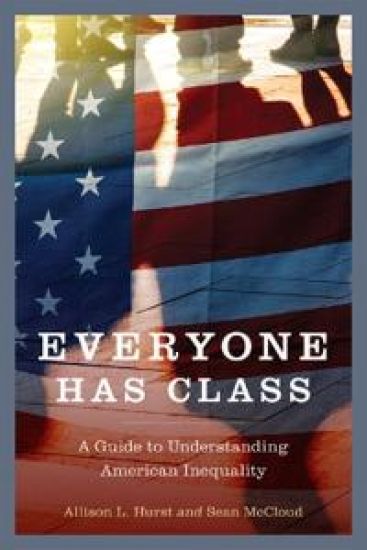
Social class is a neglected, misunderstood, yet overwhelmingly powerful factor in the United States. In Everyone Has Class Allison L. Hurst and Sean McCloud draw on both personal stories and insights from recent studies to recount the many ways class influences American life. The authors explore the material conditions we live in, the social relationships we develop, and the unconscious and conscious psychological and physical habits we form based on our social class location. Each chapter reveals the profound presence and complex influence of social class—beyond that of money, education, and occupation—providing readers with an understanding of what social class is and how it operates in our everyday lives. Starting with "what is class?" in chapter one, personal narratives alongside interviews with key researchers and scholars allow entrée for everyone to the meaning of the term class, the impact of class, and the broader applications and perspectives within the study of class. Can one overcome class? Does recognizing its effects allow us to navigate our own social standing? Through twelve stand-alone chapters, Hurst and McCloud show how class shapes and influences both individual and social lives in consequential ways.
American Possessions

American Possessions

Sean McCloud

Oxford University Press Inc
2015
sidottu
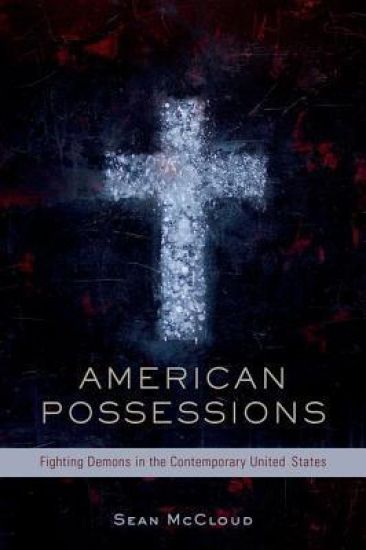
Stories of contemporary exorcisms are largely met with ridicule, or even hostility. Sean McCloud argues, however, that there are important themes to consider within these narratives of seemingly well-adjusted people--who attend school, go shopping, and watch movies--who also happen to fight demons. American Possessions examines Third Wave evangelical spiritual warfare, a late twentieth-, early twenty-first century movement of evangelicals focused on banishing demons from human bodies, material objects, land, regions, political parties, and nation states. While Third Wave beliefs may seem far removed from what many scholars view as mainstream religious practice in America, McCloud argues that the movement provides an ideal case study for identifying some of the most prescient tropes within the contemporary American religious landscape; namely "the consumerist," "the haunted," and "the therapeutic." Drawing on interviews, television shows, documentaries, websites, and dozens of spiritual warfare handbooks, McCloud examines Third Wave practices such deliverance rituals (a uniquely Protestant form of exorcism), spiritual housekeeping (the removal of demons from everyday objects), and spiritual mapping (searching for the demonic in the physical landscape). Demons, he shows, are the central fact of life in the Third Wave imagination. McCloud provides the first book-length study of this influential movement, highlighting the important ways that it reflects and diverts from the larger, neo-liberal culture from which it originates.
Making the American Religious Fringe

Making the American Religious Fringe

Sean McCloud

The University of North Carolina Press
2004
nidottu
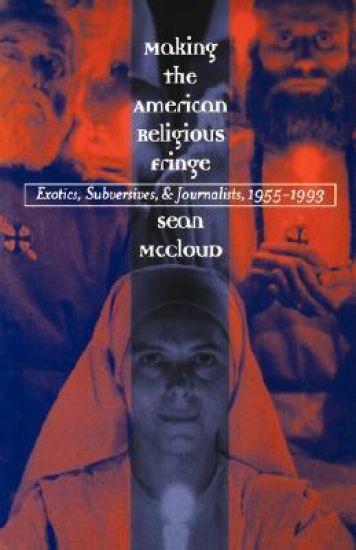
In an examination of religion coverage in Time, Newsweek, Life, The Saturday Evening Post, Ebony, Christianity Today, National Review, and other news and special interest magazines, Sean McCloud combines religious history and social theory to analyze how and why mass-market magazines depicted religions as ""mainstream"" or ""fringe"" in the post-World War II United States. McCloud argues that in assuming an American mainstream that was white, middle class, and religiously liberal, journalists in the largest magazines, under the guise of objective reporting, offered a spiritual apologetics for the dominant social order. McCloud analyzes articles on a wide range of religious movements from the 1950s through the early 1990s, including Pentecostalism, the Nation of Islam, California cults, the Jesus movement, South Asian gurus, and occult spirituality. He shows that, in portraying certain beliefs as ""fringe,"" magazines evoked long-standing debates in American religious history about emotional versus rational religion, exotic versus familiar spirituality, and normal versus abnormal levels of piety. He also traces the shifting line between mainstream and fringe, showing how such boundary shifts coincided with larger changes in society, culture, and the magazine industry. McCloud's astute analysis helps us understand both broad conceptions of religion in the United States and the role of mass media in American society.