Kirjailija
Sean McConville
Kirjat ja teokset yhdessä paikassa: 12 kirjaa, julkaisuja vuosilta 1987-2022, suosituimpien joukossa The Routledge Guide to Interviewing. Vertaile teosten hintoja ja tarkista saatavuus suomalaisista kirjakaupoista.
Mukana myös kirjoitusasut: Seán McConville
12 kirjaa
Kirjojen julkaisuhaarukka 1987-2022.
This is a comprehensive, detailed and humane account of the thousands who came into custody during the years of the Northern Ireland conflict and how they lived out the months, years and decades in Irish and English maximum security prisons.Erupting in 1969, the Northern Ireland troubles continued with terrible intensity until 1998. The most enduring civil conflict in Western Europe since the Second World War cost almost 4,000 lives, inflicted a vast toll of injuries and wrought much destruction. Based on extensive archival research and numerous interviews, this book covers the jurisdictions of Northern Ireland, the Republic of Ireland and England, providing an account of riots, escapes, strip and dirty protests and hunger strikes. It paints a picture of coming to terms with sentences, some of which lasted for two decades and more. Republicans and loyalists, male and female prisoners, officials and staff, families, supporters, clergy and politicians all played a part – and all were changed. The narrative includes some of the most remarkable events in prison history anywhere – mass breakouts, organised cell-fouling and prolonged nakedness, and hunger striking to the death; there are also accounts of the prisoners’ very effective parallel command structure. The book shows how Anglo-Irish and intra-Irish relations were profoundly affected and how the prisoners’ involvement and consent were critical to the Good Friday Agreement that ended the long war.The final part of a trilogy dealing with Irish political prisoners from 1848 to 2000 by renowned expert Seán McConville, this is an essential resource for students and scholars of Irish history and Irish political prisoners; it is also a major contribution to the study of imprisonment.

This title, first published in 1981, draws from an extensive range of national and local material, and examines how innovations in policy and administration, while solving problems or setting new objectives, frequently created or disclosed fresh difficulties, and brought different types of people into the administration and management of prisons, whose interests, values and expectations in turn often had significant effects upon penal ideas and their practical applications. Special attention has been paid to the study of recruitment, the work and influence of gaolers, keepers, governors, and highly administrative officials. This comprehensive book will be of interest to students of criminology and history.
The Case for a Royal Commission on the Penal System
Louis Blom-Cooper; Sean McConville
Waterside Press
2014
lehtivihko, moniste
An initiative supported by leading political, academic, religious and professional figures and in association with Queen Mary University of London. Virtually half-a-century has passed since the last Royal Commission on the Penal System was dissolved, its work uncompleted. Looking forwards, six members of the Commission asserted that 'after some years' a new Royal Commission would be of great public service. As commentators, writers and practitioners, Sir Louis Blom-Cooper QC and Professor Sean McConville have many decades of experience of penal policy and practice. Some 20-years ago they urged the appointment of a new Royal Commission on the subject. They have since pressed their case in letters to major newspapers and in earlier writings. In this publication the momentum for which is supported by leading figures, they make the case for a new Royal Commission that will be reflective, effective and swift, capable of building consensus and providing directions for generations. They argue that penal policy is fragmented and frequently irrational, contradictory, counterproductive, insubstantial and put together in a haphazard way.The dynamics and pressures of party politics inevitably mean that penal policy often emerges in response to hard cases and headlines. As this pamphlet claims, broader and more considered views, drawing on evidence and seeking to maximise social good, cannot be delivered by politicians afraid of missing an opportunity to score party political points.
The local prisons of the latter half of the nineteenth century refined systems of punishment so harsh that one judge considered the maximum penalty of two years local imprisonment to be the most severe punishment known to English law: "next only to death". This work examines how private perceptions and concerns became public policy. It also traces the move in English government from the rural and aristocratic to the urban and more democratic. It follows the rise of the powerful elite of the higher civil service, describes some of the forces that attempted to oppose it, and provides a window through which to view the process of state formation.
Irish Political Prisoners presents a detailed and gripping overview of political imprisonment from 1920-1962. Seán McConville examines the years from the formation of the Northern Ireland state to the release of the last border campaign prisoners in 1962. Drawing extensively and, in many cases, uniquely on archives and special collections in the three jurisdictions, and interviews with survivors from the period, McConville demonstrates how punishment came to embody and shape the nationalist consciousness. Irish Political Prisoners 1920-1962 commences with the legacy of the Anglo Irish and Irish Civil Wars - militancy, division and bitterness. The book travels from the embedding of Northern Ireland’s security agenda in the 1920’s, and the IRA’s search for a role in the 1930’s (including the 1939 bombing campaign against Britain) to the decisive use of internment during the war and the border campaign years. This volume will be an essential resource for students of Irish history and is a major contribution to the study of imprisonment. .

The Routledge Guide to Interviewing sets out a well-tested and practical approach and methodology: what works, difficulties and dangers to avoid and key questions which must be answered before you set out. Background methodological issues and arguments are considered and drawn upon but the focus is on what is ethical, legally acceptable and productive: Rationale (why, what for, where, how) Ethics and Legalities (informed consent, data protection, risks, embargoes) Resources (organisational, technical, intellectual) Preparation (selecting and approaching interviewees, background and biographical research, establishing credentials, identifying topics) Technique (developing expertise and confidence) Audio-visual interviews Analysis (modes, methods, difficulties) Storage (archiving and long-term preservation) Sharing Resources (dissemination and development)From death row to the mansion of a head of state, small kitchens and front parlours, to legislatures and presbyteries, Anna Bryson and Seán McConville’s wide interviewing experience has been condensed into this book. The material set out here has been acquired by trial, error and reflection over a period of more than four decades. The interviewees have ranged from the delightfully straightforward to the painfully difficult to the near impossible – with a sprinkling of those that were impossible.Successful interviewing draws on the survival skills of everyday life. This guide will help you to adapt, develop and apply these innate skills. Including a range of useful information such as sample waivers, internet resources, useful hints and checklists, it provides sound and plain-speaking support for the oral historian, social scientist and investigator.
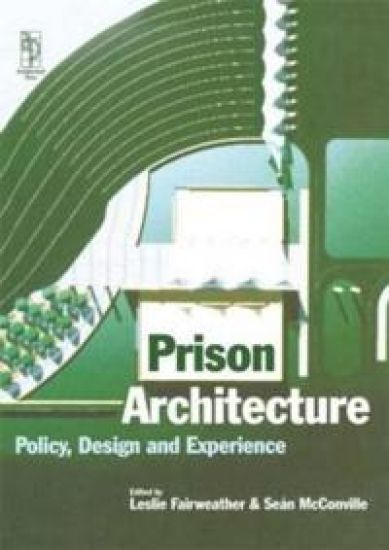
Current and future prison designs are examined in this book, within the government's prison building programme, and the confines of current penal philosophies and legislation. America has led the way in prison design, with two main types of architecture predominating: radial layouts (outside cells with windows) and linear blocks (inside cells with grilles). Now, 'new' generation prisons (central association surrounded by small groups of cells) look set to become the fashion. But are they a better answer, and should they be copied worldwide before we know? Architects and administrators show in this book the designs of these 'new generation' prisons and assess their impact. Most countries in central Europe also have a rising crime rate and a demand for new prisons. Contributions from significant architects from the UK, Europe and America comment on these issues. Other topics within the book are: setting current prison architecture and design against an historical setting; looking at penal ideas and prison architecture and design in the post-war period; the psychological effects of the prison environment; the influence of technology and design on security management; and how prison architecture and design can be more flexible and innovative.
The local prisons of the latter half of the nineteenth century refined systems of punishment so harsh that one judge considered the maximum penalty of two years local imprisonment to be the most severe punishment known to English law: "next only to death". This work examines how private perceptions and concerns became public policy. It also traces the move in English government from the rural and aristocratic to the urban and more democratic. It follows the rise of the powerful elite of the higher civil service, describes some of the forces that attempted to oppose it, and provides a window through which to view the process of state formation.
America's Correctional Crisis
Stephen D. Gottfredson; Sean Mcconville
Praeger Publishers Inc
1987
sidottu
These essays treat the legal, financial, ethical, political, institutional, and social dimensions of the most important element of America's correctional crisis: prison overcrowding. The collection may become a standard work in the field, especially for those who question the feasibility and wisdom of building more prisons. The need for rational policy-making that links prison sentences with available prison space comes through clearly and forcefully. Chapters by well-known authorities describe the extent of overcrowding in prisons and jails, review current law regarding the constituitonality of overcrowded prison facilities, and summarize research on causes and consequences. . . . Highly recommended. ChoiceBecause of the recent explosion in the American prison population, which has risen more than 40 percent in just six years, overcrowding has reached crisis proportions and conditions within prisons continue to deteriorate. This book takes a close look at the policy implications of that crisis, addressing constitutional issues, economic and political questions, and a wide range of possible long- and short-term solutions. Written by some of the most experienced academics and consultants now working the field, it provides a theoretical orientation and up-to-date factual background for each of the issues and practical policy alternatives that are studied.