Kirjojen hintavertailu. Mukana 12 595 353 kirjaa ja 12 kauppaa.

Kirjailija

Sean Michael Chick

Kirjat ja teokset yhdessä paikassa: 5 kirjaa, julkaisuja vuosilta 2015-2026, suosituimpien joukossa Unparalleled Horror. Vertaile teosten hintoja ja tarkista saatavuus suomalaisista kirjakaupoista.

5 kirjaa

Kirjojen julkaisuhaarukka 2015-2026.

Unparalleled Horror

Unparalleled Horror

Sean Michael Chick; John F. Schmutz

Savas Beatie
2026
nidottu
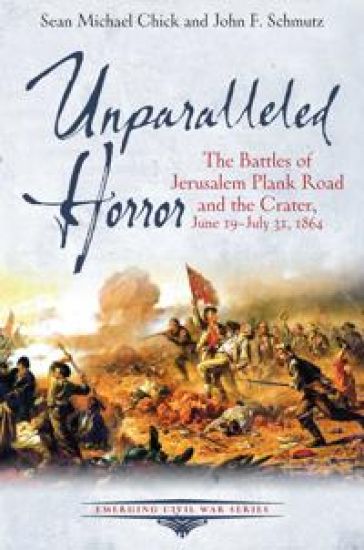
After the first attempt to storm Petersburg failed on June 18, 1864, Ulysses S. Grant decided to try again. War weariness was growing in the North. Gold shot up in price. Republicans schemed to replace Abraham Lincoln. The Democrats delayed their nominating convention, confident that Grant would be no nearer to victory. With William Tecumseh Sherman seemingly stalled before Atlanta, Grant decided to try again. Only one day after the disastrous assault of June 18, Grant ordered George Meade to swing out to the west and cut off the railroads leading to Petersburg, while Grant unleashed his cavalry on Lee’s communications. The Federals suffered a stunning defeat at Jerusalem Plank Road, and Grant’s cavalry was ravaged. Grant settled for a siege while still looking for a chance to turn the tide. Grant saw that chance in Ambrose Burnside’s mine. For weeks, IX Corps dug a mine under P.G.T. Beauregard’s front with the plan to blow a literal hole in the Confederate works. Despite mockery from Meade and others, the mine was ready by July 30. By then, Robert E. Lee had most of his army at Deep Bottom, opposing the latest offensive by Grant. It seemed Petersburg would fall, and with it Lincoln’s election all but decided. Instead, the attack failed. Warren Wilkinson of the 57th Massachusetts called the Crater “a scene of unparalleled horror. In places, the panic-stricken soldiers were so tightly packed together that they could not move or even raise their arms to defend themselves.” When the dust cleared, one of the most horrific battles of the Civil War was over and Grant was no closer to Petersburg. Sean Michael Chick and John F. Schmutz portray the weeks after the June 18 attack in Unparalleled Horror: The Battles of Jerusalem Plank Road and the Crater, June 19-July 31, 1864. The narrative considers Grant and Lee’s evolving reaction to a situation neither man wanted. Lee saw Grant’s eventual victory as a “mere question of time,” while Grant was under tremendous pressure to deliver a victory that would secure Lincoln another term. The result was a series of Federal disasters, although Lee lacked the strength to pry Grant away from Petersburg, therefore leaving both sides in a stalemate as the summer of 1864 wore on and the presidential election loomed.
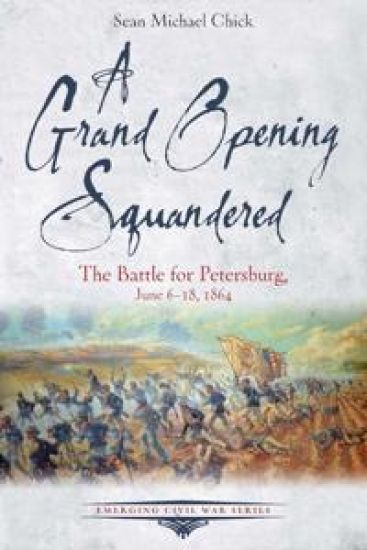
A Grand Opening Squandered

A Grand Opening Squandered

Sean Michael Chick

Savas Beatie
2025
nidottu
May and June 1864 in Virginia witnessed some of the most brutal and bloody fighting of the Civil War. After the Wilderness, Spotsylvania Court House, North Anna, and Cold Harbor, combined losses for the two armies exceeded 80,000 men killed, wounded, and captured. And the result after all that carnage was a stalemate outside the gates of Richmond. Federal Lt. Gen. Ulysses S. Grant remained undeterred and set his armies toward their next target: The logistical powerhouse of Petersburg. Grant’s surprising maneuver, which included the construction of a massive pontoon bridge across the broad James River and a surprise march against Petersburg, caught Confederate commander Robert E. Lee by surprise. Petersburg was but lightly guarded and seemed at the mercy of the aggressive Federal commander. Its fall would cut the lifelines into Richmond and force the evacuation of the Southern capital. The capture of the city would ensure President Abraham Lincoln’s reelection and eliminate whatever thin hopes the Confederacy still had for victory. Petersburg was fortified, its garrison small but determined to hold the city. Department commander, Gen. P. G. T. Beauregard, realized the danger and shifted as many men as he could spare into the defenses and took the field himself. North of the river, meanwhile, Lee remained unconvinced that Grant had stolen a march on him. Three days of battle (June 15-17) followed. The Federals bungled the effort, and somehow the understrength Confederates managed to fight the Federals to a standstill. Reinforcements from Lee’s army finally arrived on June 18\. Petersburg would hold—for now. Beauregard had won one of the Confederacy’s most impressive victories and one of the Confederacy last strategic victories. Sean Chick’s A Grand Opening Squandered: The Battle for Petersburg, June 6-18, 1864 provides fresh and renewed attention to one of the most important, fascinating, and yet oddly forgotten battles of the Civil War. Inside are original maps, new research, and dozens of images—many published here for the first time. A Grand Opening Squandered is the first in a series on the Petersburg Campaign, which will provide readers with a strong introduction to the war’s longest campaign.
The Shiloh Campaign, 1862

The Shiloh Campaign, 1862

Sean Michael Chick

Casemate Publishers
2024
nidottu
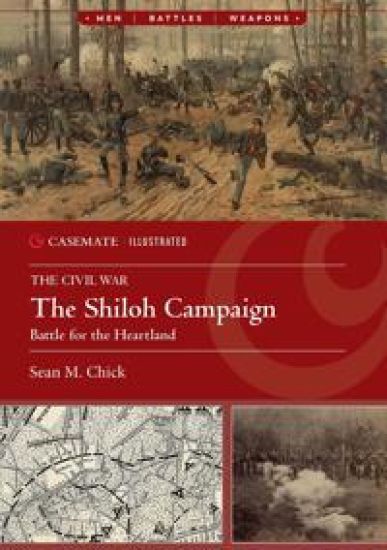
After taking Forts Henry and Donelson, the Union army prepared to try and take the vital rail hub of Corinth, Mississippi. To facilitate this, Major General H. Halleck planned to combine Grant’s Army of West Tennessee with Buell’s Army of the Ohio. Meanwhile the newly formed Confederate Army of the Mississippi was placed under the command of General A. S. Johnston. Johnston planned to attack Grant’s encampment before Grant and Buell could combine their commands. The Confederate army left Corinth and marched north into Tennessee. On the morning of April 6, 1862, Johnston attacked at Shiloh, taking Grant’s forces by surprise. Grant’s troops put up a tenacious defense with their backs against the Tennessee River. Unfortunately for the Confederates, Johnston was killed early that afternoon. Buell’s army arrived that night and next morning launched a counterattack along with Grant’s semi-organized survivors. The Union forces were too large to be stopped, and after a stout defensive effort Beauregard ordered a withdrawal. The first great bloodbath of the Civil War was over, resulting in up to 30,000 killed, wounded, and captured. Its ramifications would be felt for the rest of the war. Illustrated with photographs, paintings and maps, this is a full account of the first large set-piece battle of the war, the only time a large Union army was taken by surprise.
They Came Only to Die

They Came Only to Die

Sean Michael Chick

Savas Beatie
2024
nidottu
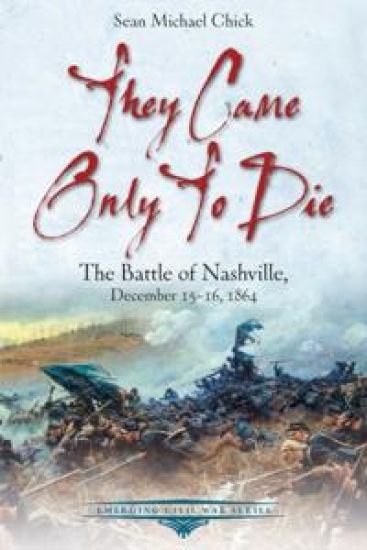
The November 1864 battle of Franklin left the Army of Tennessee stunned. In only a few hours, the army lost 6,000 men and a score of generals. Rather than pause, John Bell Hood marched his army north to Nashville. He had risked everything on a successful campaign and saw his offensive as the Confederacy’s last hope. There was no time to mourn. There was no question of attacking Nashville. Too many Federals occupied too many strong positions. But Hood knew he could force them to attack him and, in doing so, he could win a defensive victory that might rescue the Confederacy from the chasm of collapse. Unfortunately for Hood, he faced George Thomas. He was one of the Union’s best commanders, and he had planned and prepared his forces. But with battle imminent, the ground iced over, Thomas had to wait. An impatient Ulysses S. Grant nearly sacked him, but on December 15-16, Thomas struck and routed Hood’s army. He then chased him out of Tennessee and into Mississippi in a grueling winter campaign. After Nashville, the Army of Tennessee was never again a major fighting force. Combined with William Tecumseh Sherman’s march through Georgia and the Carolinas and Grant’s capture of Petersburg and Richmond, Nashville was the first peal in the long death knell of the Confederate States of America. In They Came Only to Die: The Battle of Nashville, historian Sean Michael Chick offers a fast-paced, well analyzed narrative of John Bell Hood’s final campaign, complete with the most accurate maps yet made of this crucial battle.
The Battle of Petersburg, June 15-18, 1864

The Battle of Petersburg, June 15-18, 1864

Sean Michael Chick

Potomac Books Inc
2015
sidottu
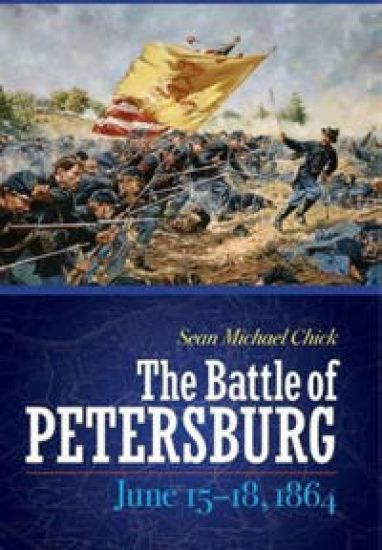
The Battle of Petersburg was the culmination of the Virginia Overland campaign, which pitted the Army of the Potomac, led by Ulysses S. Grant and George Gordon Meade, against Robert E. Lee’s Army of Northern Virginia. In spite of having outmaneuvered Lee, after three days of battle in which the Confederates at Petersburg were severely outnumbered, Union forces failed to take the city, and their final, futile attack on the fourth day only added to already staggering casualties. By holding Petersburg against great odds, the Confederacy arguably won its last great strategic victory of the Civil War.In The Battle of Petersburg, June 15–18, 1864, Sean Michael Chick takes an in-depth look at an important battle often overlooked by historians and offers a new perspective on why the Army of the Potomac’s leadership, from Grant down to his corps commanders, could not win a battle in which they held colossal advantages. He also discusses the battle’s wider context, including politics, memory, and battlefield preservation. Highlights include the role played by African American soldiers on the first day and a detailed retelling of the famed attack of the First Maine Heavy Artillery, which lost more men than any other Civil War regiment in a single battle. In addition, the book has a fresh and nuanced interpretation of the generalships of Grant, Meade, Lee, P. G. T. Beauregard, and William Farrar Smith during this critical battle.