Kirjojen hintavertailu. Mukana 12 303 435 kirjaa ja 12 kauppaa.
Kirjailija
Sean O'Toole
Kirjat ja teokset yhdessä paikassa: 10 kirjaa, julkaisuja vuosilta 2006-2024, suosituimpien joukossa David Goldblatt. Vertaile teosten hintoja ja tarkista saatavuus suomalaisista kirjakaupoista.
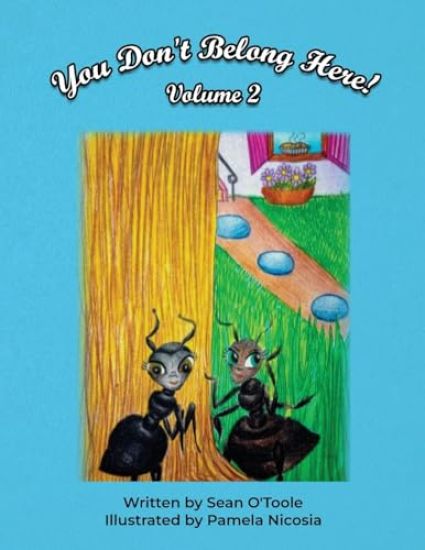
Cali and Carly are carpenter ants who are sick of eating the same old food every day. So they decide to attempt to snack on a food source discovered with their insect friends, which just so happens to be inside a lady's house. They end up getting more than they bargained for and learn a valuable lesson in the process.
A bold reimagining of the literary history of Decadence through a close examination of the transnational contexts of Oscar Wilde's classic novel The Picture of Dorian Gray.Building upon a large body of archival and critical work on Oscar Wilde's only novel, Dorian Unbound offers a new account of the importance of transnational contexts in the forging of Wilde's imagination and the wider genealogy of literary Decadence. Sean O'Toole argues that the attention critics have rightly paid to Wilde's backgrounds in Victorian Aestheticism and French Decadence has had the unintended effect of obscuring a much broader network of transnational contexts. Attention to these contexts allows us to reconsider how we read The Picture of Dorian Gray, what we believe we know about Wilde, and how we understand literary Decadence as both a persistent, highly mobile cultural mode and a precursor to global modernism. In developing a transnational framework for reading Dorian Gray, O'Toole recovers a subterranean network of nineteenth-century cultural movements. At the same time, he joins several active and vital conversations about what it might mean to expand the geographical reach of Victorian studies and to trace the globalization of literature over a longer period of time. Dorian Unbound includes chapters on the Irish Gothic, German historical romance, US magic-picture tradition, and experimental English epigrams, as well as a detailed history and a new close reading of the novel, in an effort to understand Wilde's contribution to a more dynamic idea of Decadence than has been previously known. From its rigorous account of the broad archive of texts that Wilde read and the array of cultural movements from which he drew inspiration in writing Dorian Gray to the novel's afterlives and global resonances, O'Toole paints a richer picture of the author and his famously allusive prose. This book makes a compelling case for a comparative reading of the novel in a global context. It will appeal to historians and admirers of Wilde's career as well as to scholars of nineteenth-century literature, queer and narrative theory, Irish studies, and art history.
A bold reimagining of the literary history of Decadence through a close examination of the transnational contexts of Oscar Wilde's classic novel The Picture of Dorian Gray.Building upon a large body of archival and critical work on Oscar Wilde's only novel, Dorian Unbound offers a new account of the importance of transnational contexts in the forging of Wilde's imagination and the wider genealogy of literary Decadence. Sean O'Toole argues that the attention critics have rightly paid to Wilde's backgrounds in Victorian Aestheticism and French Decadence has had the unintended effect of obscuring a much broader network of transnational contexts. Attention to these contexts allows us to reconsider how we read The Picture of Dorian Gray, what we believe we know about Wilde, and how we understand literary Decadence as both a persistent, highly mobile cultural mode and a precursor to global modernism. In developing a transnational framework for reading Dorian Gray, O'Toole recovers a subterranean network of nineteenth-century cultural movements. At the same time, he joins several active and vital conversations about what it might mean to expand the geographical reach of Victorian studies and to trace the globalization of literature over a longer period of time. Dorian Unbound includes chapters on the Irish Gothic, German historical romance, US magic-picture tradition, and experimental English epigrams, as well as a detailed history and a new close reading of the novel, in an effort to understand Wilde's contribution to a more dynamic idea of Decadence than has been previously known. From its rigorous account of the broad archive of texts that Wilde read and the array of cultural movements from which he drew inspiration in writing Dorian Gray to the novel's afterlives and global resonances, O'Toole paints a richer picture of the author and his famously allusive prose. This book makes a compelling case for a comparative reading of the novel in a global context. It will appeal to historians and admirers of Wilde's career as well as to scholars of nineteenth-century literature, queer and narrative theory, Irish studies, and art history.
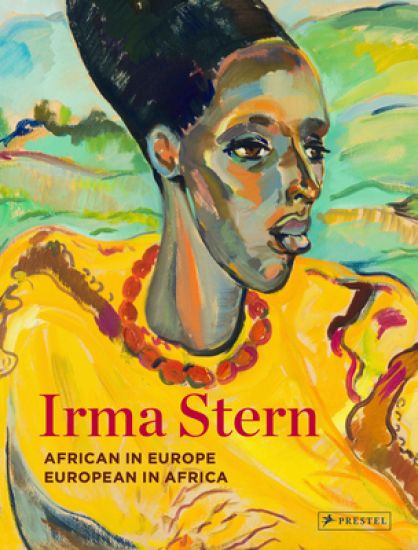
The vivid and powerful expressionist paintings of Irma Stern were a key factor in the modernization of early 20th-century South African art. Although she was widely recognized during her lifetime, Stern's posthumous fame has dwindled outside her home country, and this beautifully produced monograph serves to correct that injustice. A master of color and composition, Stern is best known for her portraits and still lifes that reflected her passion for travel and devotion to home. Drawing from letters, journals, the artist's own illustrated travelogues as well as the latest scholarship, this volume traces Stern's childhood in South Africa and her family's flight to Germany in the wake of the South African War (1899-1902). Readers will learn of her artistic development at the center of Weimar, Germany's expressionist avant-garde, her return to her homeland and the derisive reaction to her early work, and finally her productive travels throughout the African continent and the acclaim she achieved. The book also focuses on the political and cultural forces that shaped Stern's work, including the unification of South Africa, the rise of expressionism in Germany, the interplay between indigenous and colonial art in the African continent, and Stern's continued influence on contemporary South African artists.
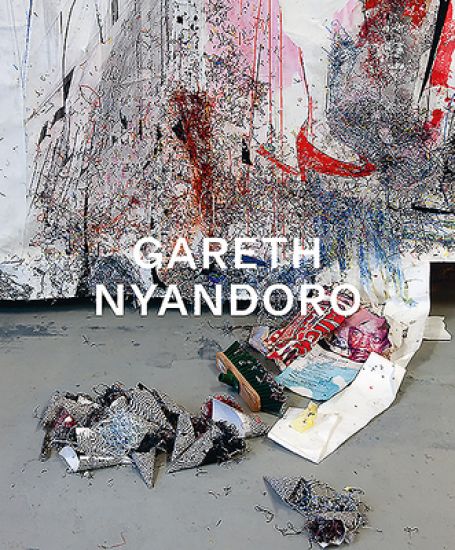
Gareth Nyandoro is noted for his large works on paper, which often spill out of their two-dimensional format and into installations that include paper scraps and objects found in the street markets of Harare, where he lives and works. The artist’s primary source of inspiration is the rapidly changing urban and cultural panorama of Zimbabwe. Inspired by his training as a printmaker, and derived from etching, the artist’s distinctive technique, 'Kucheka-cheka', is named after the infinitive and present tense declinations of the Shona verb 'cheka', which means 'to cut'.This, the artist’s first monograph, documents selected bodies of work created since 2015 and presented in exhibitions at venues including the Palais de Tokyo, Paris, Quetzal Art Centre, Portugal, Tiwani Contemporary, London, Modern Art Oxford, and the Rijksakademie van beeldende kunsten, Amsterdam.The publication features an introduction by curator Adélaïde Blanc, who curated Nyandoro’s 2017 solo exhibition 'Stall(s) of Fame' at the Palais de Tokyo. The publication also includes a newly commissioned essay from Cape Town-based writer, critic, and editor Sean O’Toole, which discusses notions of ‘cutting’ and ‘spilling’ in Nyandoro’s practice against a backdrop of both Zimbabwe’s colonial past and ‘southern urbanism’ – city life in the global South.Gareth Nyandoro was born in 1982 in Bikita, Zimbabwe. He lives and works in Harare, Zimbabwe. Recent solo exhibitions include '…Read All About', Van Doren Waxter, New York (2018); 'Stall(s) of Fame', Palais de Tokyo, Paris (2017); 'Stall(s) of Fame', Tiwani Contemporary, London (2017). Selected group exhibitions include 'Par Amour du Jeu', Magasins Généraux, Paris (2018); 'Drawing Africa on the Map', Quetzal Art Centre, Portugal (2018); 'Five Bhobh – Painting at the End of an Era', Zeitz MOCAA, Cape Town (2018); 'Kaleidoscope', Modern Art Oxford (2016) and 'Paper Cut', Tiwani Contemporary, London (2016). Nyandoro won the FT/Oppenheimer Funds Emerging Voices award in 2016 and was a resident at the Rijksakademie van Beeldende Kunsten, Amsterdam, in 2014-15.The publication, launched alongside a solo presentation of work by the artist at Art Basel Miami Beach in December 2019, is produced by Tiwani Contemporary with generous support from the A. G. Leventis Foundation, allowing for the production of artists’ books and their dissemination to libraries and institutions across the globe. Designed by Joe Gilmore and co-published with Anomie Publishing, the series is distributed internationally by Casemate Art.
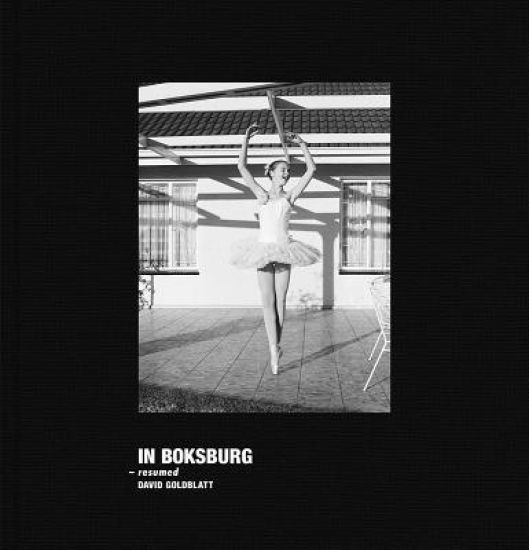
David Goldblatt's (born 1930) "In Bosburg" was published in 1982, making it one of the earlier photobooks in South African history. Goldblatt, himself from a white background and a critical observer of the racist dynamics of his native country, was interested in capturing the "wholly uneventful flow of commonplace, orderly life" of the white population around him. Boksburg, a legally white-only town on the Eastern periphery of Johannesburg (which, at the time, was heavily dependent on black labor), seemed to best fit his purposes, and between 1979 and 1980 he recorded everyday scenes in the town. This new edition includes several additional photographs and a new essay by Sean O'Toole, providing penetrating insight into the history of the book and the story behind the photographs and their subject.
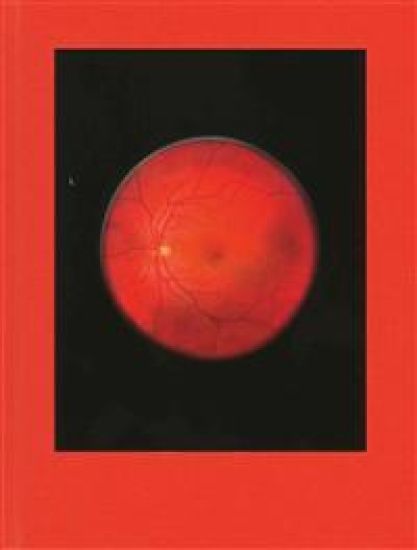
Retinal Shift is the catalogue for Mikhael Subotzky's 2012 Standard Bank Young Artist Exhibition, which will tour every major museum in South Africa. Retinal Shift investigates the practice and mechanics of looking - in relation to the history of Grahamstown, the history of photographic devices, and Subotzky's own history as an artist. The works draw on archival portraits from the last century, found surveillance footage, as well as Subotzky's own photographs from various series' that he re-contextualizes. The opening work in the book is a self-portrait that Subotzky made with the assistance of an optometrist. High-resolution images of his left and right retinas sit side by side. Says Subotzky: "I was fascinated by this encounter. At the moment that my retinas, parts of my essential organs of seeing, were photographed, I was blinded by the apparatus that made the images. Mikhael Subotzky was born in 1981 in Cape Town and is currently based in Johannesburg. Subotzky adopts the directness of the social documentary mode while questioning the photographic medium itself.Over the past eight years, his work has focused on the inside and outside of South Africa's notorious prisons, the small town of Beaufort West, and Ponte City, a single iconic building in Johannesburg.
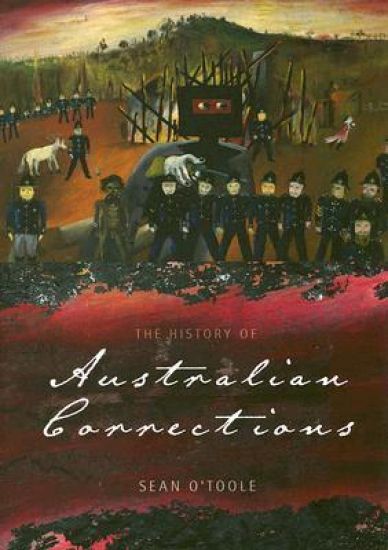
Beginning with the punishment systems of the ancient world, Sean OToole investigates the birth of the modern prison, the transportation process, the convict era and finally the creation of Australias various State and Territory prisons and community corrections systems.