Kirjojen hintavertailu. Mukana 12 595 353 kirjaa ja 12 kauppaa.

Kirjailija

Sebastian Edwards

Kirjat ja teokset yhdessä paikassa: 10 kirjaa, julkaisuja vuosilta 1991-2026, suosituimpien joukossa Two Lucky People. Vertaile teosten hintoja ja tarkista saatavuus suomalaisista kirjakaupoista.

10 kirjaa

Kirjojen julkaisuhaarukka 1991-2026.

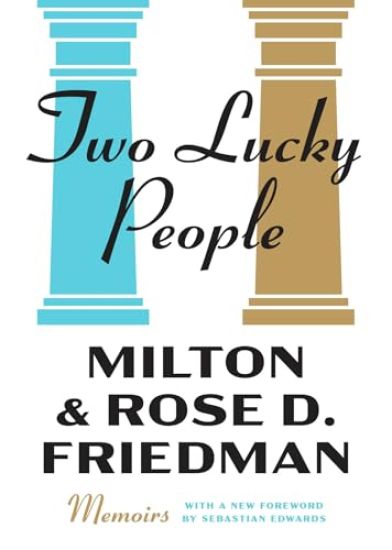
Two Lucky People

Two Lucky People

Milton Friedman; Rose D. Friedman; Sebastian Edwards

THE UNIVERSITY OF CHICAGO PRESS
2026
nidottu
The story of Rose and Milton Friedman’s incredible lives and influential work told in their own words, now with a new foreword by Sebastian Edwards. In Two Lucky People, Rose and Milton Friedman provide a memorable and lively account of their lives, the people they knew, and the work they shared. Their involvement with world leaders and many of this century's most important public policy issues moves their memoir beyond the merely personal and makes fascinating reading for anyone interested in the history of twentieth-century ideas. This new edition of the Friedmans’ jointly authored memoir includes a foreword by economist Sebastian Edwards, the Henry Ford II Professor of International Economics at the University of California, Los Angeles.
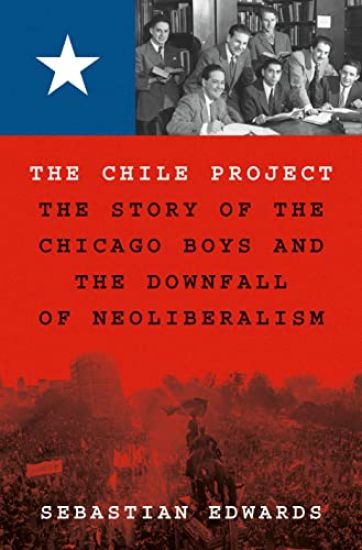
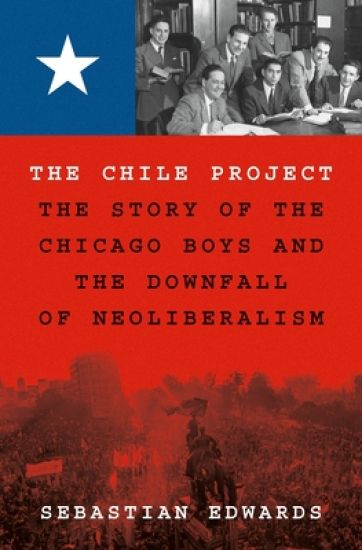
The Chile Project

The Chile Project

Sebastian Edwards

PRINCETON UNIVERSITY PRESS
2025
pokkari
How Chile became home to the world’s most radical free-market experiment—and what its downfall suggests about the fate of neoliberalism around the globeIn The Chile Project, Sebastian Edwards tells the remarkable story of how the neoliberal economic model—installed in Chile during the Pinochet dictatorship and deepened during three decades of left-of-center governments—came to an end in 2021, when Gabriel Boric, a young former student activist, was elected president, vowing that “If Chile was the cradle of neoliberalism, it will also be its grave.” More than a story about one Latin American country, The Chile Project is a behind-the-scenes history of the spread and consequences of the free-market thinking that dominated economic policymaking around the world in the second half of the twentieth century—but is now on the retreat.In 1955, the U.S. State Department launched the “Chile Project” to train Chilean economists at the University of Chicago, home of the libertarian Milton Friedman. After General Augusto Pinochet overthrew socialist president Salvador Allende in 1973, Chile’s “Chicago Boys” implemented the purest neoliberal model in the world for the next seventeen years, undertaking a sweeping package of privatization and deregulation, creating a modern capitalist economy, and sparking talk of a “Chilean miracle.” But under the veneer of success, a profound dissatisfaction with the vast inequalities caused by neoliberalism was growing. In 2019, protests erupted throughout the country, and in 2022 Boric began his presidency with a clear mandate: to end neoliberalismo.In telling the fascinating story of the Chicago Boys and Chile’s free-market revolution, The Chile Project provides an important new perspective on the history of neoliberalism and its global decline today.
The Chile Project

The Chile Project

Sebastian Edwards

PRINCETON UNIVERSITY PRESS
2023
sidottu
How Chile became home to the world’s most radical free-market experiment—and what its downfall suggests about the fate of neoliberalism around the globeIn The Chile Project, Sebastian Edwards tells the remarkable story of how the neoliberal economic model—installed in Chile during the Pinochet dictatorship and deepened during three decades of left-of-center governments—came to an end in 2021, when Gabriel Boric, a young former student activist, was elected president, vowing that “If Chile was the cradle of neoliberalism, it will also be its grave.” More than a story about one Latin American country, The Chile Project is a behind-the-scenes history of the spread and consequences of the free-market thinking that dominated economic policymaking around the world in the second half of the twentieth century—but is now on the retreat.In 1955, the U.S. State Department launched the “Chile Project” to train Chilean economists at the University of Chicago, home of the libertarian Milton Friedman. After General Augusto Pinochet overthrew socialist president Salvador Allende in 1973, Chile’s “Chicago boys” implemented the purest neoliberal model in the world for the next seventeen years, undertaking a sweeping package of privatization and deregulation, creating a modern capitalist economy, and sparking talk of a “Chilean miracle.” But under the veneer of success, a profound dissatisfaction with the vast inequalities caused by neoliberalism was growing. In 2019, protests erupted throughout the country, and in 2022 Boric began his presidency with a clear mandate: to end neoliberalismo.In telling the fascinating story of the Chicago Boys and Chile’s free-market revolution, The Chile Project provides an important new perspective on the history of neoliberalism and its global decline today.
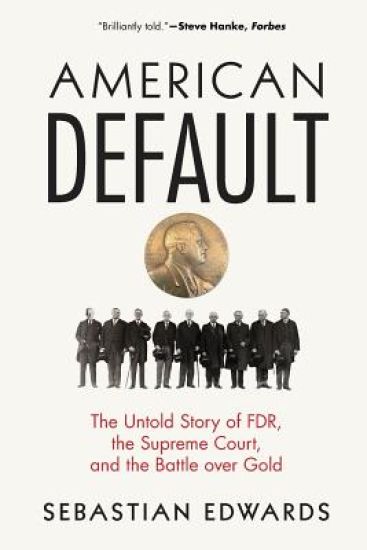
American Default

American Default

Sebastian Edwards

Princeton University Press
2019
pokkari
The untold story of how FDR did the unthinkable to save the American economyThe American economy is strong in large part because nobody believes that America would ever default on its debt. Yet in 1933, Franklin D. Roosevelt did just that, when in a bid to pull the country out of depression, he depreciated the US dollar in relation to gold, effectively annulling all debt contracts. From FDR’s order for Americans to sell the government all their gold holdings to the Supreme Court confrontation that threatened to finish the New Deal, American Default provides a compelling account of an economic and legal drama that embroiled a nation.
Toxic Aid

Toxic Aid

Sebastian Edwards

Oxford University Press
2018
nidottu
For many years Tanzania was the darling of international aid agencies. During the 1970s it received more assistance per capita than any other nation in the world. And yet, the economy performed dismally: growth was negative, exports collapsed, and poverty increased massively. In the mid-1980s, however, the international community changed tack and developed an approach based on conditionality and "program ownership". Since 1996 the country has grown steadily, and social conditions have improved significantly. This book provides an economic history of Tanzania since independence in 1961. It covers the policies of African Socialism and the Arusha Declaration, the collapse of the early 1980s, the rocky relationships with the IMF, and the reforms of the 1990s and 2000s. This book shows that the relationship between foreign aid economic is highly complex, and that the effect of foreign assistance on poor countries performance depends on historical circumstances, ownership of programs, and the involvement of the local communities.
American Default

American Default

Sebastian Edwards

PRINCETON UNIVERSITY PRESS
2018
sidottu
The untold story of how FDR did the unthinkable to save the American economyThe American economy is strong in large part because nobody believes that America would ever default on its debt. Yet in 1933, Franklin D. Roosevelt did just that, when in a bid to pull the country out of depression, he depreciated the U.S. dollar in relation to gold, effectively annulling all debt contracts. American Default is the story of this forgotten chapter in America's history.Sebastian Edwards provides a compelling account of the economic and legal drama that embroiled a nation already reeling from global financial collapse. It began on April 5, 1933, when FDR ordered Americans to sell all their gold holdings to the government. This was followed by the abandonment of the gold standard, the unilateral and retroactive rewriting of contracts, and the devaluation of the dollar. Anyone who held public and private debt suddenly saw its value reduced by nearly half, and debtors--including the U.S. government—suddenly owed their creditors far less. Revaluing the dollar imposed a hefty loss on investors and savers, many of them middle-class American families. The banks fought back, and a bitter battle for gold ensued. In early 1935, the case went to the Supreme Court. Edwards describes FDR's rancorous clashes with conservative Chief Justice Charles Evans Hughes, a confrontation that threatened to finish the New Deal for good—and that led to FDR's attempt to pack the court in 1937.At a time when several major economies never approached the brink of default or devaluing or recalling currencies, American Default is a timely account of a little-known yet drastic experiment with these policies, the inevitable backlash, and the ultimate result.
Toxic Aid

Toxic Aid

Sebastian Edwards

Oxford University Press
2014
sidottu
For many years Tanzania was the darling of international aid agencies. During the 1970s it received more assistance per capita than any other nation in the world. And yet, the economy performed dismally: growth was negative, exports collapsed, and poverty increased massively. In the mid 1980s, however, the international community changed tacks and developed an approach based on conditionality and 'program ownership'. Since 1996 the country has grown steadily, and social conditions have improved significantly. This book provides an economic history of Tanzania, since independence in 1961. It covers the policies of African Socialism and the Arusha Declaration, the collapse of the early 1980s, the rocky relationships with the IMF, and the reforms of the 1990s and 2000s.
Left Behind

Left Behind

Sebastian Edwards

University of Chicago Press
2012
nidottu
The political and economic history of Latin America has been marked by great hopes and even greater disappointments. Despite abundant resources - and a history of productivity and wealth - in recent decades the region has fallen further and further behind developed nations, surpassed even by other developing economies in Southeast Asia and elsewhere. In "Left Behind", Sebastian Edwards explains why the nations of Latin America have failed to share in the fruits of globalization and highlights the dangers of the recent turn to economic populism in the region. He begins by detailing the many ways Latin American governments have stifled economic development over the years through excessive regulation, currency manipulation, and thoroughgoing corruption. He then turns to the neoliberal reforms of the early 1990s, which called for the elimination of deficits, lowering of trade barriers, and privatization of inefficient public enterprises - and which, Edwards argues, held the promise of freeing Latin America from the burdens of the past. Flawed implementation, however, meant the promised gains of globalization were never felt by the mass of citizens, and growing frustration with stalled progress has led to a resurgence of populism throughout the region, exemplified by the economic policies of Venezuela's Hugo Chavez. But such measures, Edwards warns, are a recipe for disaster; instead, he argues, the way forward for Latin America lies in further modernization reforms, more honestly pursued and fairly implemented. As an example of the promise of that approach, Edwards points to Latin America's giant, Brazil, which in recent years has finally begun to show signs of reaching its true economic potential.
Left Behind

Left Behind

Sebastian Edwards

University of Chicago Press
2010
sidottu
The political and economic history of Latin America has been marked by great hopes and even greater disappointments. Despite abundant resources - and a history of productivity and wealth - in recent decades the region has fallen further and further behind developed nations, surpassed even by other developing economies in Southeast Asia and elsewhere. In "Left Behind", Sebastian Edwards asks why the nations of Latin America have failed to share in the fruits of globalization and forcefully highlights the dangers of the recent turn to economic populism in the region. He begins by detailing the many ways Latin American governments have stifled economic development over the years through excessive regulation, currency manipulation, and thoroughgoing corruption. He then turns to the neoliberal reforms of the early 1990s, which called for the elimination of deficits, lowering of trade barriers, and privatization of inefficient public enterprises-and which, Edwards argues, held the promise of freeing Latin America from the burdens of the past. Flawed implementation, however, meant the promised gains of globalization were never felt by the mass of citizens, and growing frustration with stalled progress has led to a resurgence of populism, exemplified by the economic policies of Venezuela's Hugo Chavez. But such measures, Edwards warns, are a recipe for disaster; instead, he argues, the way forward for Latin America lies in further market reforms, more honestly pursued and fairly implemented. As the global financial crisis has reminded us, the risks posed by failing economies extend far beyond their national borders. Putting Latin America back on a path toward sustained growth is crucial not just for the region but for the world, and "Left Behind" offers a clear, concise blueprint for the road ahead.
Monetarism and Liberalization

Monetarism and Liberalization

Sebastian Edwards; Alejandra Cox Edwards

University of Chicago Press
1991
nidottu
The successes and failures of free market policy in Chile, implemented in 1973 under the guidance of economists trained at the University of Chicago, are clearly explained in this well-written study. The authors argue that it was a combination of misjudgments, including important policy errors, that led to the collapse of the Chilean economy. "The Edwards's book is an indispensable guide to the policy reforms and mistakes that have taken the [Chilean] economy to its present state."—Philip L. Brock, Money, Credit, and Banking "This book is a 'must' for anybody interested in development economies and the problems of liberalization."—Hansjorg Blochliger, Journal of International Economics