Kirjojen hintavertailu. Mukana 12 390 323 kirjaa ja 12 kauppaa.

Kirjailija

Sebastian Smee

Kirjat ja teokset yhdessä paikassa: 12 kirjaa, julkaisuja vuosilta 2006-2026, suosituimpien joukossa Lucian Freud. Vertaile teosten hintoja ja tarkista saatavuus suomalaisista kirjakaupoista.

12 kirjaa

Kirjojen julkaisuhaarukka 2006-2026.

Lucian Freud

Lucian Freud

David Dawson; Joseph Leo Koerner; Jasper Sharp; Sebastian Smee

Royal Academy of Arts
2019
sidottu
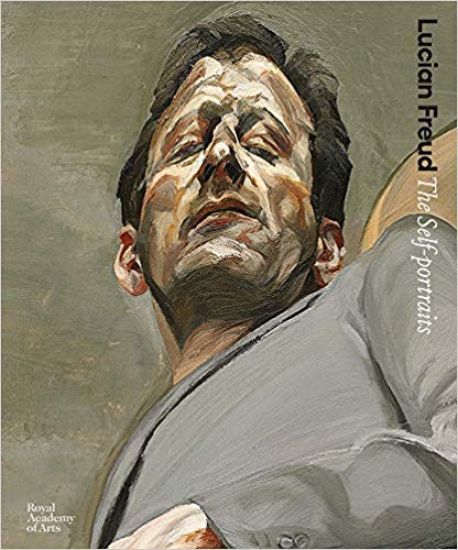
In 1964 Lucian Freud set his students at the Norwich College of Art an assignment: to paint naked self-portraits and to make them 'revealing, telling, believable... really shameless'. It was advice that the artist was often to follow himself. Visceral, unflinching and often nude, Freud's self-portraits give us an insight into the development of his style as a painter. The works provide the viewer with a constant reminder of the artist's overwhelming presence, whether he is confronting the viewer directly or only present as a shadow or in a reflection. Essays by leading authorities - including those who knew him well - explore Freud's life and work, and analyse the importance of self-portraiture in his practice and the intensity that he maintained when studying his own.
Paris in Ruins: Love, War, and the Birth of Impressionism
From the summer of 1870 to the spring of 1871, famously dubbed the "Terrible Year" by Victor Hugo, Paris and its people were besieged, starved, and forced into surrender by Germans--then imperiled again as radical republicans established a breakaway Commune, ultimately crushed by the French Army after bloody street battles and the burning of central Paris. As renowned art critic Sebastian Smee shows, it was against the backdrop of these tumultuous times that the Impressionist movement was born--in response to violence, civil war, and political intrigue.In stirring and exceptionally vivid prose, Smee tells the story of those dramatic days through the eyes of great figures of Impressionism. douard Manet, Berthe Morisot, and Edgar Degas were trapped in Paris during the siege and deeply enmeshed in its politics. Others, including Pierre-August Renoir and Fr d ric Bazille, joined regiments outside of the capital, while Claude Monet and Camille Pissarro fled the country just in time. In the aftermath, these artists developed a newfound sense of the fragility of life. That feeling for transience--reflected in Impressionism's emphasis on fugitive light, shifting seasons, glimpsed street scenes, and the impermanence of all things--became the movement's great contribution to the history of art.At the heart of it all is a love story; that of Manet, by all accounts the father of Impressionism, and Morisot, the only woman to play a central role in the movement from the start. Smee poignantly depicts their complex relationship, their tangled effect on each other, and their great legacy, while bringing overdue attention to the woman at the heart of Impressionism.Incisive and absorbing, Paris in Ruins captures the shifting passions and politics of the art world, revealing how the pressures of the siege and the chaos of the Commune had a profound impact on modern art, and how artistic genius can emerge from darkness and catastrophe.
Paris in Ruins

Paris in Ruins

Sebastian Smee

Oneworld Publications
2025
pokkari
Pulitzer-winner Sebastian Smee relives the remarkable birth of Impressionism from the ashes of war 'Enjoyable... a fine portrait not only of impressionism but the society that made it possible' THE SUNDAY TIMES Paris, January 1871 – the final, agonising days of the Franco-Prussian War. As the German army cements its advantage, shells rattle through the Left Bank. It is a bitterly cold winter; there is no fuel, no medicine, no food. The city’s poorer citizens have long turned to eating rats, cats and dogs. France has been brought to its knees. Édouard Manet, Berthe Morisot, and Edgar Degas are trapped in the besieged city. Renoir and Bazille have joined regiments outside of Paris, while Monet and Pissarro fled the country just in time. Out of the Siege and the Commune, these artists developed a newfound sense of the fragility of life. A feeling for transience – reflected in Impressionism’s emphasis on fugitive light, shifting seasons, glimpsed street scenes, and the impermanence of all things – would change art history forever. This is the extraordinary account of the ‘Terrible Year’ in Paris and its monumental impact on the rise of Impressionism. *** 'Vigorous and enjoyable' DAILY TELEGRAPH 'Smee has a gimlet eye, a seductive style and a novelist’s feel for character and incident' NEW YORK TIMES 'Detailed, lively and at times richly novelistic' LITERARY REVIEW
Paris in Ruins: Love, War, and the Birth of Impressionism
From the summer of 1870 to the spring of 1871, famously dubbed the "Terrible Year" by Victor Hugo, Paris and its people were besieged, starved, and forced into surrender by Germans--then imperiled again as radical republicans established a breakaway Commune, ultimately crushed by the French Army after bloody street battles and the burning of central Paris. As renowned art critic Sebastian Smee shows, it was against the backdrop of these tumultuous times that the Impressionist movement was born--in response to violence, civil war, and political intrigue.In stirring and exceptionally vivid prose, Smee tells the story of those dramatic days through the eyes of great figures of Impressionism. douard Manet, Berthe Morisot, and Edgar Degas were trapped in Paris during the siege and deeply enmeshed in its politics. Others, including Pierre-August Renoir and Fr d ric Bazille, joined regiments outside of the capital, while Claude Monet and Camille Pissarro fled the country just in time. In the aftermath, these artists developed a newfound sense of the fragility of life. That feeling for transience--reflected in Impressionism's emphasis on fugitive light, shifting seasons, glimpsed street scenes, and the impermanence of all things--became the movement's great contribution to the history of art.At the heart of it all is a love story; that of Manet, by all accounts the father of Impressionism, and Morisot, the only woman to play a central role in the movement from the start. Smee poignantly depicts their complex relationship, their tangled effect on each other, and their great legacy, while bringing overdue attention to the woman at the heart of Impressionism.Incisive and absorbing, Paris in Ruins captures the shifting passions and politics of the art world, revealing how the pressures of the siege and the chaos of the Commune had a profound impact on modern art, and how artistic genius can emerge from darkness and catastrophe.
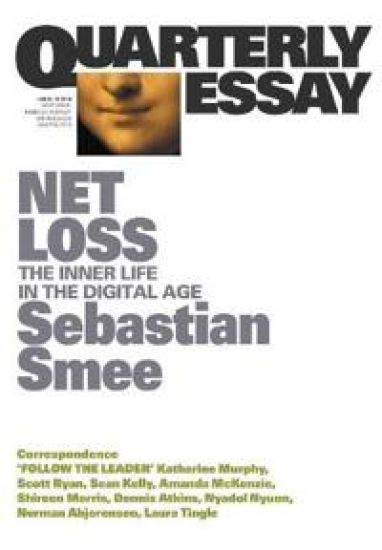
Net Loss: The Inner Life in the Digital Age: Quarterly Essay 72
We live in an age of constant distraction. Is there a price to pay for this?In this superb essay, renowned critic Sebastian Smee explores the fate of the inner life in the age of the internet. Throughout history, artists and thinkers have cultivated the deep self, and seen value in solitude and reflection. But today, with social media, wall-to-wall marketing and the agitation of modern life, everything feels illuminated, made transparent. We feel bereft without our phones and their cameras and the feeling of instant connectivity. It gets hard to pick up a book, harder still to stay with it.Without nostalgia or pessimism, Sebastian Smee evokes what is valuable and worth cultivating- he guides us from the apparent fullness of the app-filled world towards a more complex sense of self, and the inner life. If we lose this, Smee asks, what do we lose of ourselves? "Every day I spend hours and hours on my phone ... We are all doing it, aren't we? It has come to feel completely normal. Even when I put my device aside and attach it to a charger, it pulses away in my mind, like the throat of a toad, full of blind, amphibian appetite."Sebastian Smee, Net Loss
The Art of Rivalry

The Art of Rivalry

Sebastian Smee

Profile Books Ltd
2017
pokkari
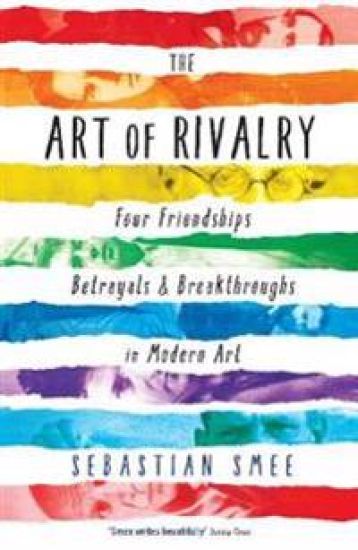
This is a story about rivalry among artists. Not the kind of rivalry that grows out of hatred and dislike, but rather, rivalry that emerges from admiration, friendship, love. The kind of rivalry that existed between Degas and Manet, Picasso and Matisse, Pollock and de Kooning, and Freud and Bacon. These were some of the most famous and creative relationships in the history of art, driving each individual to heights of creativity and inspiration - and provoking them to despair, jealousy and betrayal. Matisse's success threatened Picasso so much that his friends would throw darts at a portrait of his rival's beloved daughter Marguerite, shouting 'there's one in the eye for Matisse!' And Willem de Kooning's twisted friendship with Jackson Pollock didn't stop him taking up with his friend's lover barely a year after Pollock's fatal car crash. In The Art of Rivalry Pulitzer Prize-winning art critic Sebastian Smee explores how, as both artists struggled to come into their own, they each played vital roles in provoking the other's creative breakthroughs - ultimately determining the course of modern art itself.
The Art of Rivalry: Four Friendships, Betrayals, and Breakthroughs in Modern Art
Pulitzer Prize-winning art critic Sebastian Smee tells the fascinating story of four pairs of artists--Manet and Degas, Picasso and Matisse, Pollock and de Kooning, Freud and Bacon--whose fraught, competitive friendships spurred them to new creative heights. Rivalry is at the heart of some of the most famous and fruitful relationships in history. The Art of Rivalry follows eight celebrated artists, each linked to a counterpart by friendship, admiration, envy, and ambition. All eight are household names today. But to achieve what they did, each needed the influence of a contemporary--one who was equally ambitious but possessed sharply contrasting strengths and weaknesses. Edouard Manet and Edgar Degas were close associates whose personal bond frayed after Degas painted a portrait of Manet and his wife. Henri Matisse and Pablo Picasso swapped paintings, ideas, and influences as they jostled for the support of collectors like Leo and Gertrude Stein and vied for the leadership of a new avant-garde. Jackson Pollock's uninhibited style of "action painting" triggered a breakthrough in the work of his older rival, Willem de Kooning. After Pollock's sudden death in a car crash, de Kooning assumed Pollock's mantle and became romantically involved with his late friend's mistress. Lucian Freud and Francis Bacon met in the early 1950s, when Bacon was being hailed as Britain's most exciting new painter and Freud was working in relative obscurity. Their intense but asymmetrical friendship came to a head when Freud painted a portrait of Bacon, which was later stolen. Each of these relationships culminated in an early flashpoint, a rupture in a budding intimacy that was both a betrayal and a trigger for great innovation. Writing with the same exuberant wit and psychological insight that earned him a Pulitzer Prize for art criticism, Sebastian Smee explores here the way that coming into one's own as an artist--finding one's voice--almost always involves willfully breaking away from some intimate's expectations of who you are or ought to be. Praise for The Art of Rivalry "Gripping . . . Mr. Smee's skills as a critic are evident throughout. He is persuasive and vivid. . . . You leave this book both nourished and hungry for more about the art, its creators and patrons, and the relationships that seed the ground for moments spent at the canvas."--The New York Times "With novella-like detail and incisiveness Sebastian Smee] opens up the worlds of four pairs of renowned artists. . . . Each of his portraits is a biographical gem. . . . The Art of Rivalry is a pure, informative delight, written with canny authority."--The Boston Globe "Bacon liked to say his portraiture aimed to capture 'the pulsations of a person.' Revealing these rare creators as the invaluable catalysts they also were, Smee conveys exactly that on page after page. . . . His brilliant group biography is one of a kind."--The Atlantic "Perceptive . . . Smee is onto something important. His book may bring us as close as we'll ever get to understanding the connections between these bristly bonds and brilliance."--The Christian Science Monitor "In this intriguing work of art history and psychology, The Boston Globe's art critic looks at the competitive friendships of Matisse and Picasso, Manet and Degas, Pollock and de Kooning, and Freud and Bacon. All four relationships illuminate the creative process--both its imaginative breakthroughs and its frustrating blocks."--Newsday From the Hardcover edition.
Lucian Freud

Lucian Freud

Sebastian Smee

Taschen GmbH
2015
sidottu
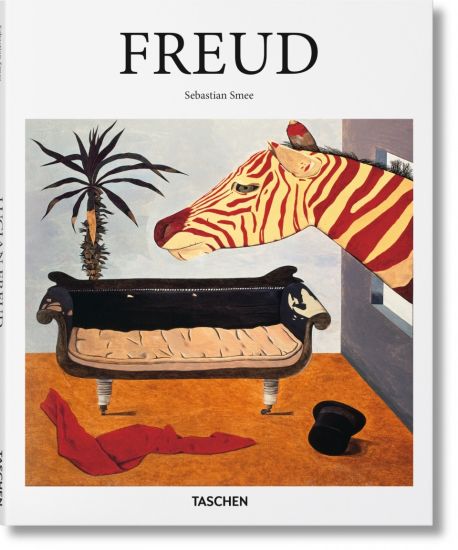
Lucian Freud (1922–2011) was interested in the telling of truths. Always operating outside the main currents of 20th-century art, the esteemed portrait painter observed his subjects with the regimen and precision of a laboratory scientist. He recorded not only the blotches, bruises, and swellings of the living body, but also, beneath the flaws and folds of flesh, the microscopic details of what lies within: the sensation, the emotion, the intelligence, the bloom, and the inevitable, unstoppable decay. Despite rejecting parallels between him and his renowned grandfather, the correlation between Lucian Freud’s sitting process for portraiture and Sigmund Freud’s psychotherapy sessions is a fascinating element to this figurative oeuvre. Despite the thickness of the impasto surfaces, Freud’s portraits of subjects as varied as the Queen, Kate Moss, and an obese job center supervisor penetrate the physicality of the body with a direct and often disarming insight. The result is as much a psychological interrogation as it is an uneasy examination of the relationship between artist and model. This book brings together some of Freud’s most outstanding and unapologetic portraits, to introduce an artist widely considered one of the finest masters of the human form.