Kirjojen hintavertailu. Mukana 12 390 323 kirjaa ja 12 kauppaa.
Kirjailija
Selwyn R. Cudjoe
Kirjat ja teokset yhdessä paikassa: 4 kirjaa, julkaisuja vuosilta 1988-2018, suosituimpien joukossa V.S.Naipaul. Vertaile teosten hintoja ja tarkista saatavuus suomalaisista kirjakaupoista.
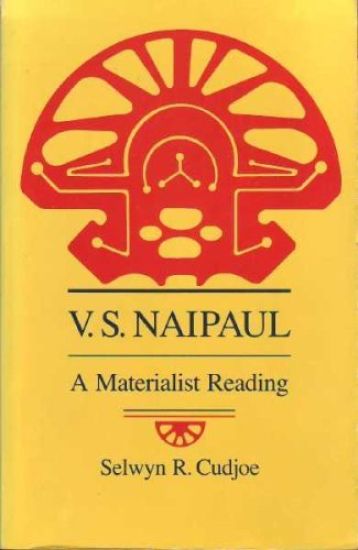
Because Naipaul's work occupies such an important place in English literature today, it is necessary to understand the forces that shape his work and the issues with which he is concerned. If this study raises some of the more important questions about Naipaul's work and demonstrates that is cannot be seen as an unproblematic guide to post colonial reality, then it would have gone a long way toward opening up the terrain in which the most meaningful discussion of his work can take place. Like it or not, Naipaul's work represents an important postcolonial impulse/responce that begs to be understood and interpreted.
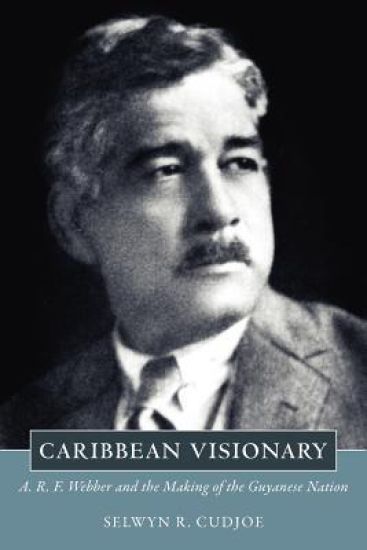
Caribbean Visionary: A. R. F. Webber and the Making of the Guyanese Nation traces the life of Albert Raymond Forbes Webber (1880-1932), a distinguished Caribbean scholar, statesman, legislator, and novelist. Using Webber as a lens, the book outlines the Guyanese struggle for justice and equality in an age of colonialism, imperialism, and indentureship. In this fascinating work, Selwyn R. Cudjoe examines Webber's emergence from the interior of Guyana to become a major presence in Caribbean politics.Caribbean Visionary examines Webber's insightful novel, Those That Be in Bondage, his travel writings, and his poetry. The book chronicles his formation of the West Indian Press Association, his work on British Guiana's constitution, and his championing of its people's causes. Cudjoe studies Webber's work with the British Guiana Labour Union to improve the conditions of the Guyanese working people and Webber's authorship of the Centenary History and Handbook of British Guiana.An important addition to Caribbean intellectual history, Caribbean Visionary is an indispensable work for scholars interested in the region's literature, political science, and economic thought. It is also an invaluable resource for those who wish to understand the genesis of contemporary Guyana and the English-speaking Caribbean.
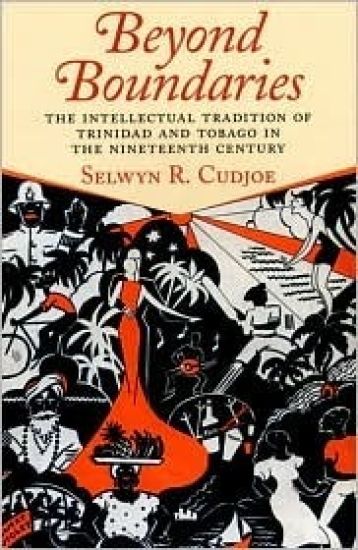
The first survey of writings on nineteenth-century Trinidad and Tobago; When V. S. Naipaul received the Nobel Prize for Literature in 2001, the award marked the culmination of a literary tradition that was almost two hundred years in the making. The island nation of Trinidad and Tobago has produced such important writers and thinkers as C. L. R. James, J. J. Thomas, Eric Williams, Oliver Cromwell Cox, Sylvester Williams, George Padmore, Earl Lovelace, Arnold Rampersad, and Merle Hodge. Yet this literary legacy is not well known, particularly with respect to works dating from the nineteenth century. Beyond Boundaries traces the development of the country's literary and intellectual history from the ""Narrative of Louisa Calderon"" (1803) to Stephen Cobham's Rupert Gray: A Tale of Black and White (1907). Selwyn R. Cudjoe examines a wide range of narratives by and about the people of Trinidad and Tobago, from treatises in the natural sciences, to journals and memoirs, histories, slave narratives, travelers' accounts, poems, stories, novels, theatrical works, and writings in the popular press. Along the way, he discusses such seminal works as Jean Baptiste Philippe's Free Mulatto (1824) and Maxwell Philip's Emmanuel Appadocca (1854), the first indigenous novel. He explores books that shed light on ideological processes, such as J. J. Thomas's The Theory and Practice of Creole Grammar (1869) and Froudacity (1899). He examines how notions of savagery and civilization were deployed in the writings of the dominant class to stymie the growing self-awareness of the colonized. And he traces the rise of racial pride and nationalist sentiments among Indo- and Afro-Trinidadians. Cudjoe demonstrates how Enlightenment concepts, English literature, African philosophy, Hindu theology, Islamic passion plays, and the culture of carnival all contributed to this body of ideas to create a vibrant literature, which in turn helped to shape a national identity.
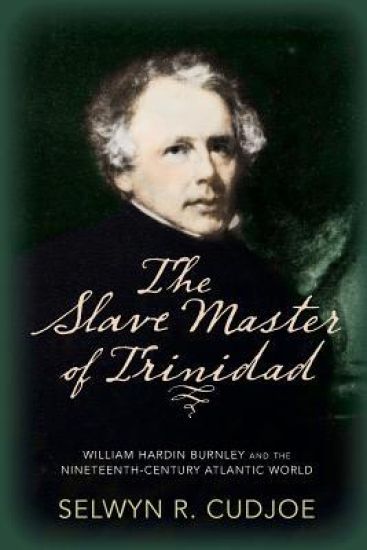
William Hardin Burnley (1780-1850) was the largest slave owner in Trinidad during the nineteenth century. Born in the United States to English parents, he settled on the island in 1802 and became one of its most influential citizens and a prominent agent of the British Empire. A central figure among elite and moneyed transnational slave owners, Burnley moved easily through the Atlantic world of the Caribbean, the United States, Great Britain, and Europe, and counted among his friends Alexis de Tocqueville, British politician Joseph Hume, and prime minister William Gladstone.In this first full-length biography of Burnley, Selwyn R. Cudjoe chronicles the life of Trinidad's ""founding father"" and sketches the social and cultural milieu in which he lived. Reexamining the decades of transition from slavery to freedom through the lens of Burnley's life, The Slave Master of Trinidad demonstrates that the legacies of slavery persisted in the new post-emancipation society.