Kirjojen hintavertailu. Mukana 12 604 678 kirjaa ja 12 kauppaa.
Kirjailija
Seneca
Kirjat ja teokset yhdessä paikassa: 195 kirjaa, julkaisuja vuosilta 1917-2026, suosituimpien joukossa Arte de Vivir, El (Koan). Vertaile teosten hintoja ja tarkista saatavuus suomalaisista kirjakaupoista.
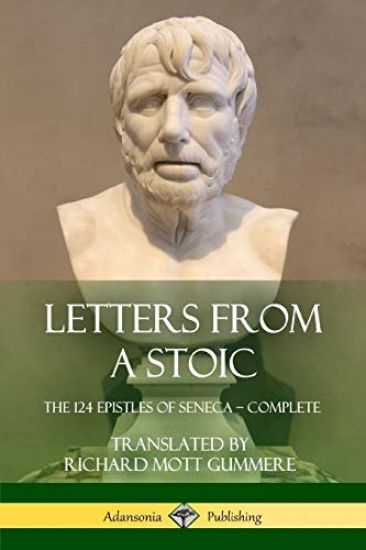
This edition of Seneca's Epistles unites all 124 of the letters in a single volume, complete with thorough explanatory notes, an appendix, and an index of the names referred to in the text. The entirety of this compendium was penned by Seneca during his retirement and sent to his friend Lucilius Junior, a procurator of Sicily. At this late stage of life, Seneca held great experience in matters of both philosophy and governance, having served under the Emperor Nero for fifteen years. Despite the conversational tone present in many of Seneca's epistles, it isn't entirely clear whether Seneca actually corresponded with Lucilius. It is possible that Seneca simply wished to write fictional correspondence so as to experiment with the form, possibly recreating how he wisely explained ideas or concepts to individuals. The quotation: Vita sine litteris mors - 'Life without learning [is] death' - is derived from the 82nd epistle, and remains the motto for several educational institutions around the world.
Spectacular verse drama.Seneca is a figure of first importance in both Roman politics and literature: a leading adviser to Nero who attempted to restrain the emperor’s megalomania; a prolific moral philosopher; and the author of verse tragedies that strongly influenced Shakespeare and other Renaissance dramatists.Seneca’s plays depict intense passions and interactions in rhetoric that is equally strong. Their perspective is much bleaker than that adopted in his prose writings. His plots are based on mythical episodes, in keeping with classical tradition. But the political realities of imperial Rome are also reflected in an obsessive concern with power and dominion over others. The Octavia is our sole surviving example of a Roman historical play; set at Nero’s court, it was probably written by an admirer of Seneca as statesman and dramatist.John G. Fitch has thoroughly revised his two-volume edition of Seneca’s Tragedies to take account of the textual and interpretive scholarship that has appeared since its initial publication. His translation conveys the force of Seneca’s dramatic language and the lyric quality of his choral odes.
Spectacular verse drama.Seneca is a figure of first importance in both Roman politics and literature: a leading adviser to Nero who attempted to restrain the emperor’s megalomania; a prolific moral philosopher; and the author of verse tragedies that strongly influenced Shakespeare and other Renaissance dramatists.Seneca’s plays depict intense passions and interactions in rhetoric that is equally strong. Their perspective is much bleaker than that adopted in his prose writings. His plots are based on mythical episodes, in keeping with classical tradition. But the political realities of imperial Rome are also reflected in an obsessive concern with power and dominion over others. The Octavia is our sole surviving example of a Roman historical play; set at Nero’s court, it was probably written by an admirer of Seneca as statesman and dramatist.John G. Fitch has thoroughly revised his two-volume edition of Seneca’s Tragedies to take account of the textual and interpretive scholarship that has appeared since its initial publication. His translation conveys the force of Seneca’s dramatic language and the lyric quality of his choral odes.
Ajankohtaista puhetta suoraan nykyajan ihmisen sieluun.Juhana Torkin suomentamat roomalaisen Senecan elämäntaidolliset tekstit puhuttelevat vuosituhansien takaa vahvasti nykyihmistä. Miten käyttää aika järkevästi? Miksi kiire on vahingollista? Miksi nautinnon tavoittelu ei johda onneen? Miksi hyville ihmisille tapahtuu pahoja asioita, ja mikä on paras tapa suhtautua epäonneen?Senecan vastaukset piirtävät eloisan kuvan antiikin Rooman elämästä, mutta ovat samalla ajattomia opetuksia kenelle tahansa meistä.
On the Happy Life is a dialogue written by Seneca the Younger around the year 58 AD, intended for his older brother Gallio. It is divided into 28 chapters that present the moral thoughts of Seneca at their most mature. Seneca explains that the pursuit of happiness is the pursuit of reason reason meant not only using logic, but also understanding the processes of nature.
On the Happy Life is a dialogue written by Seneca the Younger around the year 58 AD, intended for his older brother Gallio. It is divided into 28 chapters that present the moral thoughts of Seneca at their most mature. Seneca explains that the pursuit of happiness is the pursuit of reason reason meant not only using logic, but also understanding the processes of nature.
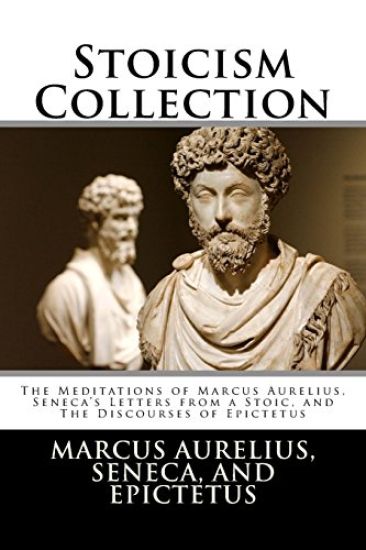
This Stoicism Collection contains three of the most notable Stoic pieces, The Meditations of Marcus Aurelius, Seneca's Letters from a Stoic, and The Discourses of Epictetus. These three pieces are the foundations of Stoicism.
A two-thousand year old classic that continues to find new fans in the digital age, On the Shortness of Life is a Stoic Philosophy masterpiece and, perhaps, the first and greatest of self-help books. Packed with pithy timeless wisdom, Seneca s famous collection of letters to his father-in-law Paulinus is a short but powerful work, one of Western literature s finest and most enduring answers to the eternal question, How should I best live my life?
A two-thousand year old classic that continues to find new fans in the digital age, On the Shortness of Life is a Stoic Philosophy masterpiece and, perhaps, the first and greatest of self-help books. Packed with pithy timeless wisdom, Seneca's famous collection of letters to his father-in-law Paulinus is a short but powerful work, one of Western literature's finest and most enduring answers to the eternal question, How should I best live my life?
THE BOOK"On the Shortness of Life" (De Brevitate Vitae) is a moral essay written by Seneca the Younger, a Roman Stoic philosopher, sometime around the year 49 AD, to his father-in-law Paulinus. The philosopher brings up many Stoic principles on the nature of time, namely that people waste much of it in meaningless pursuits.According to the essay, nature gives man enough time to do what is really important and the individual must allot it properly. In general, time can be best used in the study of philosophy, according to Seneca. THE AUTHORAs "a major philosophical figure of the Roman Imperial Period", Seneca 's lasting contribution to philosophy has been to the school of Stoicism. His writing is highly accessible and was the subject of attention from the Renaissance onwards by writers such as Michel de Montaigne. He has been described as "a towering and controversial figure of antiquity" and "the world 's most interesting Stoic".Seneca wrote a number of books on Stoicism, mostly on ethics, with one work (Naturales Quaestiones) on the physical world. Seneca built on the writings of many of the earlier Stoics: he often mentions Zeno, Cleanthes, and Chrysippus; and frequently cites Posidonius, with whom Seneca shared an interest in natural phenomena. He frequently quotes Epicurus, especially in his Letters. His interest in Epicurus is mainly limited to using him as a source of ethical maxims. Likewise Seneca shows some interest in Platonist metaphysics, but never with any clear commitment. His moral essays are based on Stoic doctrines, Stoicism was a popular philosophy in this period, and many upper-class Romans found in it a guiding ethical framework for political involvement. It was once popular to regard Seneca as being very eclectic in his Stoicism, but modern scholarship views him as a fairly orthodox Stoic, albeit a free-minded one.His works discuss both ethical theory and practical advice, and Seneca stresses that both parts are distinct but interdependent.WORKSWorks attributed to Seneca include a dozen philosophical essays, one hundred and twenty-four letters dealing with moral issues, nine tragedies, and a satire, the attribution of which is disputed.Seneca's TragediesTragedies with Greek subjects: - The Madness of Hercules- The Trojan Women- The Phoenician Women- Medea- Phaedra- Oedipus- Agamemnon- ThyestesEssaysEssays Traditionally given in the following order: 1. On Providence - addressed to Lucilius2. On the Firmness of the Wise Person - addressed to Serenus3. On Anger - A study on the consequences and the control of anger - addressed to his brother Novatus4. To Marcia, On Consolation - Consoles her on the death of her son5. On the Happy Life - addressed to Gallio6. On Leisure - addressed to Serenus7. On Tranquillity of Mind - addressed to Serenus8. On the Shortness of Life - Essay expounding that any length of life is sufficient if lived wisely - addressed to Paulinus9. To Polybius, On Consolation - Consoling him on the death of his brother.10. To Helvia, On Consolation - Letter to his mother consoling her on his absence during exile.Other Essays- On Clemency - written to Nero on the need for clemency as a virtue in an emperor.- On Benefits seven books]- On Superstition - lost, but quoted from in Saint Augustine's City of God 6.10-6.11.
Continue to act thus, my dear Lucilius - set yourself free for your own sake; gather and save your time, which till lately has been forced from you, or filched away, or has merely slipped from your hands. Make yourself believe the truth of my words, - that certain moments are torn from us, that some are gently removed, and that others glide beyond our reach. The most disgraceful kind of loss, however, is that due to carelessness. Furthermore, if you will pay close heed to the problem, you will find that the largest portion of our life passes while we are doing ill, a goodly share while we are doing nothing, and the whole while we are doing that which is not to the purpose. What man can you show me who places any value on his time, who reckons the worth of each day, who understands that he is dying daily? For we are mistaken when we look forward to death; the major portion of death has already passed. Whatever years be behind us are in death's hands.
Lucio Anneo S neca (4 a. C. - 65 d. C.) ejerce una influencia permanente en la literatura y filosof a occidentales. Su amplia obra contiene una formulaci n incisiva y relevante de las ideas del estoicismo, y desde la Antig edad constituye uno de los modelos m s destacados del canon ensay stico de las letras universales. Este volumen re ne tres tratados-De brevitate vitae, compuesto en el a o 49, De vita beata, escrito hacia 58, y De otio, datado alrededor de 62-que examinan algunas de las cuestiones cruciales de la tica de todos los tiempos: la relaci n del placer con la virtud, la b squeda de la felicidad, el concepto de naturaleza aplicado al ideal humano, la supremac a de la raz n, el empleodel tiempo y la dignidad del retiro. El estilo senequiano representa un momento cumbre del di logo en la tradici n filos fica y literaria, donde el lector es invitado a ser interlocutor de una particular conversaci n sobre el arte de vivir que fue objeto de admiraci n para autores como Erasmo, Montaigne, Schopenhauer, Nietzsche o Cioran