Kirjojen hintavertailu. Mukana 12 595 353 kirjaa ja 12 kauppaa.

Kirjailija

Sergio Carrera

Kirjat ja teokset yhdessä paikassa: 5 kirjaa, julkaisuja vuosilta 2009-2024, suosituimpien joukossa Policing Humanitarianism. Vertaile teosten hintoja ja tarkista saatavuus suomalaisista kirjakaupoista.

5 kirjaa

Kirjojen julkaisuhaarukka 2009-2024.

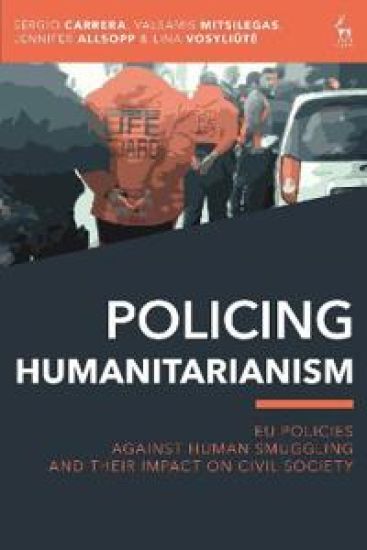
Policing Humanitarianism

Policing Humanitarianism

Sergio Carrera; Valsamis Mitsilegas; Jennifer Allsopp; Lina Vosyliute

Hart Publishing
2020
nidottu
Policing Humanitarianism examines the ways in which European Union policies aimed at countering the phenomenon of migrant smuggling affects civil society actors’ activities in the provision of humanitarian assistance, access to rights for irregular immigrants and asylum seekers. It explores the effects of EU policies, laws and agencies’ operations in anti-migrant smuggling actions and their implementation in the following EU Member States: Italy, Greece, Hungary and the UK.The book critically studies policies designed and implemented since 2015, during the so called ‘European refugee humanitarian crisis’. Building upon the existing academic literature covering the ‘criminalisation of migration ’ in the EU, the book examines the wider set of punitive, coercive or control-oriented dynamics affecting Civil Society Actors’ work and activities through the lens of the notion of ‘ policing the mobility society’. This concept seeks to provide a framework of analysis that allows for an examination of a wider set of practices, mechanisms and tools driven by a logic of policing in the context of the EU Schengen border framework: those which affect not only people, who move (qualified as third-country nationals for the purposes of EU law), but also people who mobilise in a rights-claiming capacity on behalf of and with immigrants and asylum-seekers.
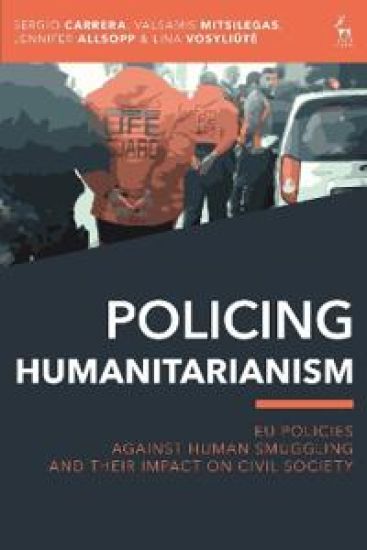
Policing Humanitarianism

Policing Humanitarianism

Sergio Carrera; Valsamis Mitsilegas; Jennifer Allsopp; Lina Vosyliute

Hart Publishing
2019
sidottu
Policing Humanitarianism examines the ways in which European Union policies aimed at countering the phenomenon of migrant smuggling affects civil society actors’ activities in the provision of humanitarian assistance, access to rights for irregular immigrants and asylum seekers. It explores the effects of EU policies, laws and agencies’ operations in anti-migrant smuggling actions and their implementation in the following EU Member States: Italy, Greece, Hungary and the UK.The book critically studies policies designed and implemented since 2015, during the so called ‘European refugee humanitarian crisis’. Building upon the existing academic literature covering the ‘criminalisation of migration ’ in the EU, the book examines the wider set of punitive, coercive or control-oriented dynamics affecting Civil Society Actors’ work and activities through the lens of the notion of ‘ policing the mobility society’. This concept seeks to provide a framework of analysis that allows for an examination of a wider set of practices, mechanisms and tools driven by a logic of policing in the context of the EU Schengen border framework: those which affect not only people, who move (qualified as third-country nationals for the purposes of EU law), but also people who mobilise in a rights-claiming capacity on behalf of and with immigrants and asylum-seekers.
Irregularising Human Mobility

Irregularising Human Mobility

Sergio Carrera; Davide Colombi

Springer International Publishing AG
2024
nidottu
This is an open access book. What is the history and current state of play of EU law and policy covering irregularised human mobility? What has been the role and contributions of the 2019-2024 European Commission as regards EU migration policy? This book investigates how migration policies have been problematised at the EU institutional level, in particular by the European Commission. It critically assesses the assumptions lying behind the Commission’s political priorities, agendas and policy outputs. Through the concept of irregularity assemblages, the book examines how EU policy professionals and bureaucracies in the relevant Commission services problematise their respective mandates/portfolios; how they interact with each other and even compete; and how they frame certain forms of human mobility as being an ‘irregular migration problem’ or not. After retracing key historical developments in the framing of irregularised human mobilities at the EU level, the book identifies six policy approaches in the work and structures of the 2019-2024 European Commission. It finds that a home affairs and criminalisation approach that prioritises a law enforcement understanding of cross-border and intra-EU mobility, and pursuing a Ministry of Interior-like agenda, has prevailed. This approach stands at odds with human dignity and other legitimate public policy approaches, such as those giving priority to employment and social inclusion, non-discrimination, and fundamental rights, where the administrative migration status of the individual is not the entry point. The overriding priority driving EU migration policy has been the expulsion, policing and criminalisation of people framed or categorised as ‘irregular migrants’. The analysis shows how Commission has failed to effectively perform its role as guardian of the Treaties and unequivocally enforce and comply with EU Treaty constitutive values, EU law and Better Regulation commitments in migration policies.
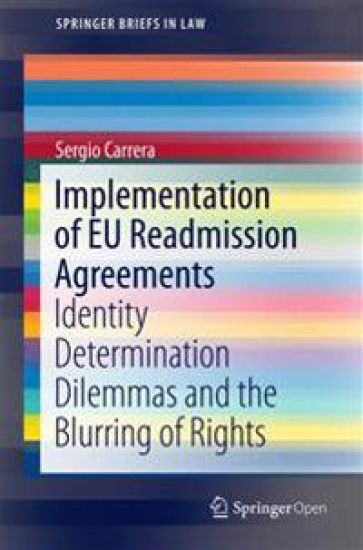
Implementation of EU Readmission Agreements

Implementation of EU Readmission Agreements

Sergio Carrera

Springer International Publishing AG
2016
nidottu
By examining the implementation dynamics of EU Readmission Agreements (EURAs), this book addresses the practical reasons why irregular immigrants cannot be expelled. EURAs are one of the vital legal instruments framing EU external migration law with regard to the expulsion of irregular immigrants, yet their implementation has met with various obstacles. Above all, the process of determining an individual’s legal identity has proven to be one of the most controversial aspects in the implementation of EURAs.The analysis shows that the process of identifying who is whose national in the context of readmission creates two existential dilemmas: first from the perspective of the sovereignty of third countries of origin and the legal standards laid out in international instruments as regards states’ powers in determining nationality, and second regarding the agency of the individual as a holder of fundamental human rights. How do the EURAs deal with or aim at alleviating these identity determination dilemmas? The book provides a comparative analysis of the administrative procedures and rules envisaged by EURAs aimed at proving or presuming the nationality of the persons to be readmitted to their country of origin. It focuses on the ways in which nationality is to be determined or presumed in the scope of the 2010 EURA with Pakistan, and compares it with those foreseen in the EURAs with Armenia, Azerbaijan, Cape Verde, Georgia, and Turkey. As such, the book provides a unique and up-to-date study of EURAs and their implementation challenges in the broader context of EU external migration law and policy.
In Search of the Perfect Citizen?
This book studies the normative intersection between integration, immigration and nationality in the European Union (EU). It examines the relationship between integration and the legal frameworks of admission, stay and access to nationality by third country nationals at national and European levels. Integration is being subject to multifaceted processes transforming its traditional policy and legal settings, as well as its classical theoretical premises and approaches. The Europeanisation of immigration policy has provoked the emergence of distinctive European approaches on integration. The legal elements of integration are being developed through two parallel settings: the EU Framework on Integration and European immigration law. These venues constitute two of the main pillars upon which the common EU immigration policy is being constructed, and their nexus raises several elements in need of reflection and study. This book examines the processes through which integration becomes a norm in nationality and immigration law and policy at the national and EU levels, and the implications of these processes for the legal status of third country nationals and the overall coherency of the common EU immigration policy.