Kirjojen hintavertailu. Mukana 12 495 401 kirjaa ja 12 kauppaa.

Kirjailija

Sergio González Varela

Kirjat ja teokset yhdessä paikassa: 5 kirjaa, julkaisuja vuosilta 2017-2026, suosituimpien joukossa Not-Knowing. Vertaile teosten hintoja ja tarkista saatavuus suomalaisista kirjakaupoista.

5 kirjaa

Kirjojen julkaisuhaarukka 2017-2026.

Not-Knowing

Not-Knowing

Diana Espírito Santo; Sergio González Varela

Cambridge University Press
2026
pokkari
Ethnographers of socio-cultural phenomena routinely face moments in the field that evoke no answers for our interlocutors, or in which answers come in entirely different forms from those anthropologists and other scholars expect. The over-emphasis on structure and meaning in social science, and anthropology in particular, has inhibited the study of a-conceptual “darker” spaces of cultural phenomena. In this book, Diana Espírito Santo and Sergio González Varela explore areas of social life often neglected by traditional ethnographers, analytically described as spaces of negation, of not-knowing, where bodies, environments and realities resist explanation or description, and where there are ultimately no answers – either for interlocutors or researchers. Examining fields as diverse as divination, parapsychology, monsterology, Brazilian capoeira, tattoo artistry, Afrofuturism, Umbanda, ufology, and Cuban Spiritism, they argue that radical uncertainty should propel novel forms of theory.

Not-Knowing

Not-Knowing

Diana Espírito Santo; Sergio González Varela

Cambridge University Press
2026
sidottu
Ethnographers of socio-cultural phenomena routinely face moments in the field that evoke no answers for our interlocutors, or in which answers come in entirely different forms from those anthropologists and other scholars expect. The over-emphasis on structure and meaning in social science, and anthropology in particular, has inhibited the study of a-conceptual “darker” spaces of cultural phenomena. In this book, Diana Espírito Santo and Sergio González Varela explore areas of social life often neglected by traditional ethnographers, analytically described as spaces of negation, of not-knowing, where bodies, environments and realities resist explanation or description, and where there are ultimately no answers – either for interlocutors or researchers. Examining fields as diverse as divination, parapsychology, monsterology, Brazilian capoeira, tattoo artistry, Afrofuturism, Umbanda, ufology, and Cuban Spiritism, they argue that radical uncertainty should propel novel forms of theory.
Capoeira, Mobility, and Tourism

Capoeira, Mobility, and Tourism

Sergio González Varela

BLOOMSBURY PUBLISHING PLC
2023
nidottu
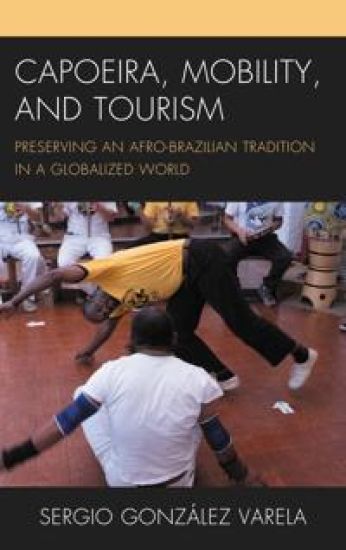
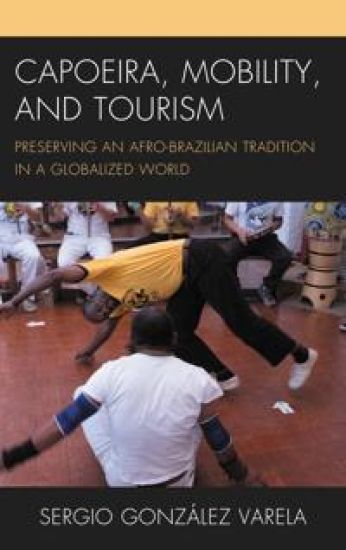
In Capoeira, Mobility, and Tourism: Preserving an Afro-Brazilian Tradition in a Globalized World, Sergio González Varela examines the mobility of capoeira leaders and practitioners. He analyzes their motivations and spirituality as well as their ability to reconfigure social practices. Varela draws on tourism mobilities, multisited ethnography, global networks, heritage, and the anthropology of ritual and religion in order to stress the commitment, dedication, and value that international practitioners bring to capoeira.For more information, check out A Conversation with Sergio González Varela.
Capoeira, Mobility, and Tourism

Capoeira, Mobility, and Tourism

Sergio González Varela

Lexington Books
2019
sidottu
In Capoeira, Mobility, and Tourism: Preserving an Afro-Brazilian Tradition in a Globalized World, Sergio González Varela examines the mobility of capoeira leaders and practitioners. He analyzes their motivations and spirituality as well as their ability to reconfigure social practices. Varela draws on tourism mobilities, multi-sited ethnography, global networks, heritage, and the anthropology of ritual and religion in order to stress the commitment, dedication, and value that international practitioners bring to capoeira.
Power in Practice

Power in Practice

Sergio González Varela

Berghahn Books
2017
sidottu
Considering the concept of power in capoeira, an Afro-Brazilian ritual art form, Varela describes ethnographically the importance that capoeira leaders (mestres) have in the social configuration of a style called Angola in Bahia, Brazil. He analyzes how individual power is essential for an understanding of the modern history of capoeira, and for the themes of embodiment, play, cosmology, and ritual action. The book also emphasizes the great significance that creativity and aesthetic expression have for capoeira’s practice and performance.