Kirjojen hintavertailu. Mukana 12 595 353 kirjaa ja 12 kauppaa.

Kirjailija

Sergius Bulgakov

Kirjat ja teokset yhdessä paikassa: 17 kirjaa, julkaisuja vuosilta 2002-2023, suosituimpien joukossa The The Sophiology of Death. Vertaile teosten hintoja ja tarkista saatavuus suomalaisista kirjakaupoista.

17 kirjaa

Kirjojen julkaisuhaarukka 2002-2023.

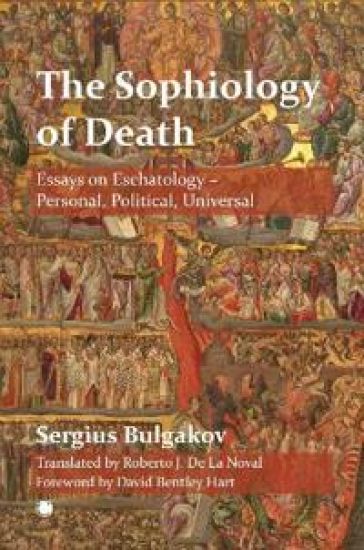
The The Sophiology of Death

The The Sophiology of Death

Sergius Bulgakov

JAMES CLARKE CO LTD
2023
nidottu
What will be the final destiny of humanity? At God's final judgement, will all be saved, or only a few? How does Christian eschatology affect Christian political action in the here and now? And what is the destiny of each individual facing the prospect of earthly death? In these essays, Sergius Bulgakov brings the resources of scripture and tradition to bear on these vital questions, arguing for the magnificent final restoration of all creatures to union with God in a universal salvation worthy of the infinite scope of Christ's redemption. Combining practical theology with doctrinal questions, Bulgakov provides on the one hand insight into how Christians can strive to bring God's kingdom to earth in anticipation of the peace and justice of the heavenly Jerusalem. On the other, he offers profound theological reflections on the nature of human death and Christ's accompaniment of all humans in their dying, based on his own near-death experience. Although originating firmly within the Russian Orthodox tradition, Bulgakov's sensitive and incisive writing will shed new light for all on eschatology in all its facets: personal, political, and universal.
The Eucharistic Sacrifice

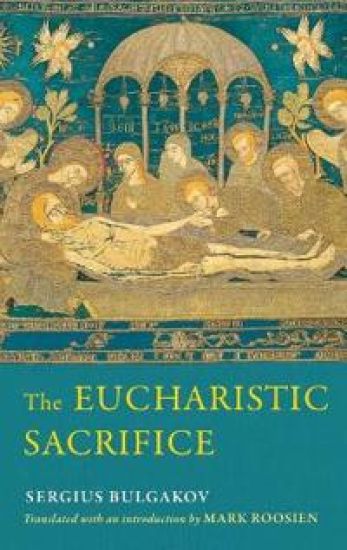
The Eucharistic Sacrifice

Sergius Bulgakov

University of Notre Dame Press
2021
sidottu
This first English translation represents Sergius Bulgakov's final, fully developed word on the Eucharist. The debate around the controversial doctrine of the Eucharist as sacrifice has dogged relations between Catholic, Orthodox, and Protestant churches since the Reformation. In The Eucharistic Sacrifice, the famous Russian theologian Sergius Bulgakov cuts through long-standing polemics surrounding the notion of the Eucharist as sacrifice and offers a stunningly original intervention rooted in his distinctive theological vision. This work, written in 1940, belongs to Bulgakov's late period and is his last, and most discerning, word on eucharistic theology. His primary thesis is that the Eucharist is an extension of the sacrificial, self-giving love of God in the Trinity, or what he famously refers to as kenosis. Throughout the book, Bulgakov points to the fact that, although the eucharistic sacrifice at the Last Supper took place in time before the actual crucifixion of Christ, both events are part of a single act that occurs outside of time. This is Bulgakov's concluding volume of three works on the Eucharist. The other two, The Eucharistic Dogma and The Holy Grail, were translated and published together in 1997. This third volume was only first published in the original Russian version in 2005 and has remained unavailable in English until now. The introduction provides a brief history of Bulgakov's theological career and a description of the structure of The Eucharistic Sacrifice. This clear and accessible translation will appeal to scholars and students of theology, ecumenism, and Russian religious thought.
The Eucharistic Sacrifice

The Eucharistic Sacrifice

Sergius Bulgakov

University of Notre Dame Press
2021
nidottu
This first English translation represents Sergius Bulgakov's final, fully developed word on the Eucharist. The debate around the controversial doctrine of the Eucharist as sacrifice has dogged relations between Catholic, Orthodox, and Protestant churches since the Reformation. In The Eucharistic Sacrifice, the famous Russian theologian Sergius Bulgakov cuts through long-standing polemics surrounding the notion of the Eucharist as sacrifice and offers a stunningly original intervention rooted in his distinctive theological vision. This work, written in 1940, belongs to Bulgakov's late period and is his last, and most discerning, word on eucharistic theology. His primary thesis is that the Eucharist is an extension of the sacrificial, self-giving love of God in the Trinity, or what he famously refers to as kenosis. Throughout the book, Bulgakov points to the fact that, although the eucharistic sacrifice at the Last Supper took place in time before the actual crucifixion of Christ, both events are part of a single act that occurs outside of time. This is Bulgakov's concluding volume of three works on the Eucharist. The other two, The Eucharistic Dogma and The Holy Grail, were translated and published together in 1997. This third volume was only first published in the original Russian version in 2005 and has remained unavailable in English until now. The introduction provides a brief history of Bulgakov's theological career and a description of the structure of The Eucharistic Sacrifice. This clear and accessible translation will appeal to scholars and students of theology, ecumenism, and Russian religious thought.
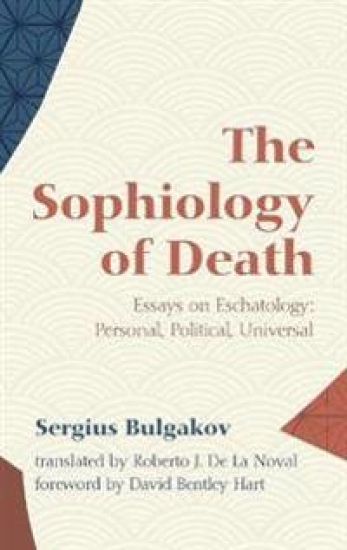
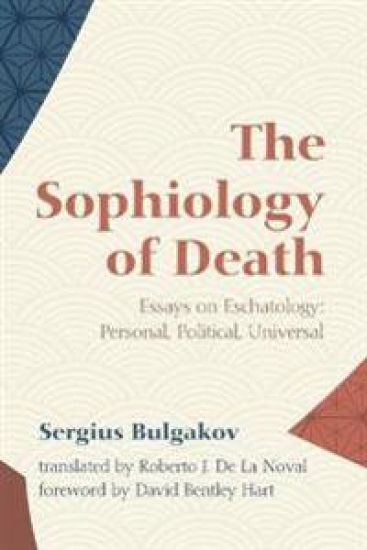
The Sophiology of Death

The Sophiology of Death

Sergius Bulgakov; David Bentley Hart

Wipf Stock Publishers
2021
pokkari
What will be the final destiny of the human race at God's eschatological judgment? Will all be saved, or only a few? How does Christian eschatology impact Christian political action in the here and now? And what is the destiny of each individual facing the prospect of earthly death? In these essays, Russian Orthodox theologian Sergius Bulgakov (1871-1944) brings the resources of Scripture and tradition to bear on these vital questions, arguing for the magnificent final restoration of all creatures to union with God in a universal salvation worthy of the infinite scope of Christ's redemption. Bulgakov also provides insight into how Christians can strive to bring God's kingdom to earth in anticipation of the peace and justice of the heavenly Jerusalem. The reader will also find in these pages profound theological reflections on the nature of human death and Christ's accompaniment of all humans in their dying, based on Bulgakov's own near-death experience. Together, these essays shed new light on eschatology in all its facets: personal, political, and universal.
The Sophiology of Death

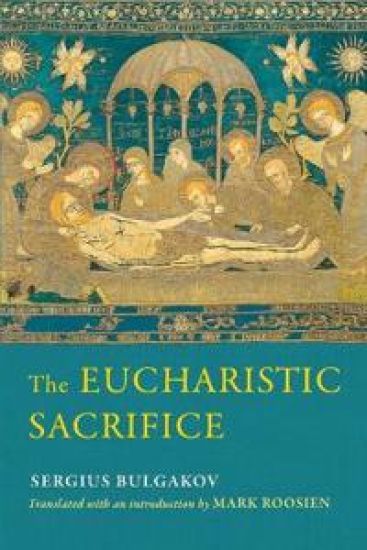
The Sophiology of Death

Sergius Bulgakov; David Bentley Hart

Wipf Stock Publishers
2021
sidottu
What will be the final destiny of the human race at God's eschatological judgment? Will all be saved, or only a few? How does Christian eschatology impact Christian political action in the here and now? And what is the destiny of each individual facing the prospect of earthly death? In these essays, Russian Orthodox theologian Sergius Bulgakov (1871-1944) brings the resources of Scripture and tradition to bear on these vital questions, arguing for the magnificent final restoration of all creatures to union with God in a universal salvation worthy of the infinite scope of Christ's redemption. Bulgakov also provides insight into how Christians can strive to bring God's kingdom to earth in anticipation of the peace and justice of the heavenly Jerusalem. The reader will also find in these pages profound theological reflections on the nature of human death and Christ's accompaniment of all humans in their dying, based on Bulgakov's own near-death experience. Together, these essays shed new light on eschatology in all its facets: personal, political, and universal.
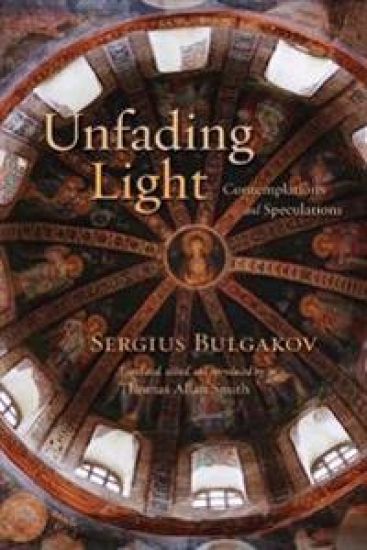
Unfading Light

Unfading Light

Sergius Bulgakov

William B Eerdmans Publishing Co
2012
nidottu
With its scholarly discussions of myth, German idealist philosophy, negative theology, and mysticism, shot through with reflections on personal religious experiences, Unfading Light documents what a life in Orthodoxy came to mean for Sergius Bulgakov on the tumultuous eve of the 1917 October Revolution. Written in the final decade of the Russian Silver Age, the book is a typical product of that era of experimentation in all fields of culture and life. Bulgakov referred to the book as miscellanies, a patchwork of chapters articulating in symphonic form the ideas and personal experiences that he and his entire generation struggled to comprehend. Readers may be reminded of St. Augustine's Confessions and City of God as they follow Bulgakov through the challenges and opportunities presented to Orthodoxy by modernity.
Sergius Bulgakov

Sergius Bulgakov

Sergius Bulgakov

Wipf Stock Publishers
2012
sidottu
This anthology begins with Bulgakov's own ""Autobiographical Notes""--moving first-person accounts of his experiences. Then follow sections on economic ideals, religion, philosophy, and sociology. The closing section presents five sermons, all emphasizing the theme of joy. Bulgakov himself is part of a distinct development of Russion religious philosophy which began with Alexei Khomiakov in the first half of the nineteenth century and which includes other important figures, such as Soloviev and Berdyaev. The developing tradition is both a reaction to certain themes and methods of Western philosophy and theology and an attempt to devise new interpretations of Eastern Orthodox Christianity, especially in the context of its historical development in Russian across the centuries. This developing school is characterized by its creativity, imagination, and daring. Its critical encounter with Marxism and the Russian revolution gives it peculiarly contemporary significance. Since few of Bulgakov's writings have been available in English, this selection will interest all concerned with Russian secular and religious thought, and students of modern Christian movements.
Sergius Bulgakov

Sergius Bulgakov

Sergius Bulgakov

Wipf Stock Publishers
2012
nidottu
This anthology begins with Bulgakov's own ""Autobiographical Notes""--moving first-person accounts of his experiences. Then follow sections on economic ideals, religion, philosophy, and sociology. The closing section presents five sermons, all emphasizing the theme of joy. Bulgakov himself is part of a distinct development of Russion religious philosophy which began with Alexei Khomiakov in the first half of the nineteenth century and which includes other important figures, such as Soloviev and Berdyaev. The developing tradition is both a reaction to certain themes and methods of Western philosophy and theology and an attempt to devise new interpretations of Eastern Orthodox Christianity, especially in the context of its historical development in Russian across the centuries. This developing school is characterized by its creativity, imagination, and daring. Its critical encounter with Marxism and the Russian revolution gives it peculiarly contemporary significance. Since few of Bulgakov's writings have been available in English, this selection will interest all concerned with Russian secular and religious thought, and students of modern Christian movements.
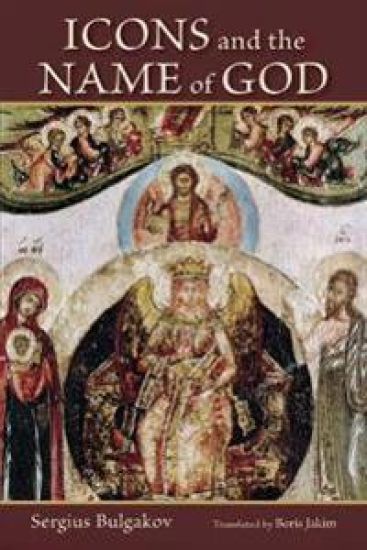
Icons and the Name of God

Icons and the Name of God

Sergius Bulgakov

William B Eerdmans Publishing Co
2012
nidottu
In Orthodox theology both the icon and the name of God transmit divine energies, theophanies, or revelations that imprint God's image within us. In Icons and the Name of God renowned Orthodox theologian Sergius Bulgakov explains the theology behind the Orthodox veneration of icons and the glorification of the name of God. In the process Bulgakov covers two major controversies -- the iconoclastic controversy (sixth to eighth centuries) and the -Name of God- controversy (early twentieth century) -- and explains his belief that an icon stops being merely a religious painting and becomes sacred when it is named. This translation of two essays -The Icon and Its Veneration- and -The Name of God- -- available in English for the first time -- makes Bulgakov's rich thinking on these key theological concepts available to a wider audience than ever before.
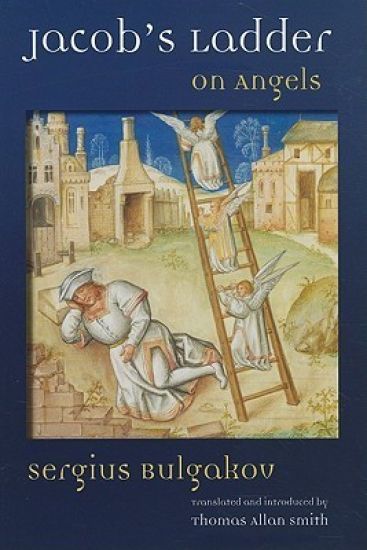
Jacob's Ladder

Jacob's Ladder

Sergius Bulgakov

William B Eerdmans Publishing Co
2010
nidottu
Few of Sergius Bulgakov's professional writings achieve the lyrical heights of Jacob's Ladder. In it he discusses the doctrine of angels and their importance for contemporary humanity. He includes reflections on the meaning of love, the sexes, death, and the Christian hope of resurrection, meditating on the Wisdom of God in the creation. This work completes the word picture of divinized and Sophianic creation begun in The Burning Bush and The Friend of the Bridegroom, which together constitute what scholars call Bulgakov's -major, - or first, trilogy.
Burning Bush

Burning Bush

Sergius Bulgakov

William B Eerdmans Publishing Co
2009
nidottu
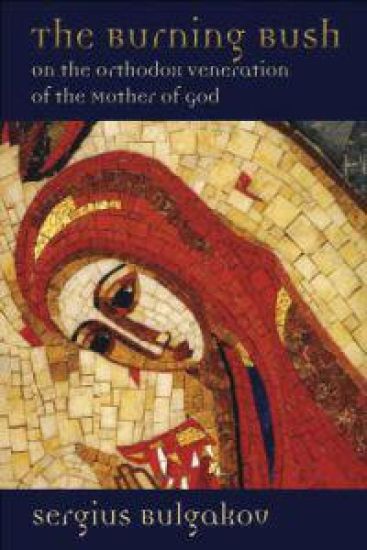
Translated by Thomas Allan Smith In The Burning Bush -- the first component of his -minor theological trilogy- -- the great Russian Orthodox theologian Sergius Bulgakov explores the place of Mary the Mother of God in Orthodox theology and devotional practice, in the process critiquing certain aspects of Roman Catholic Mariology. Drawing heavily on the Orthodox Church's liturgical texts and iconography and on his own developing Sophiology, Bulgakov offers a rich explanation of the unique, mysterious role played by the Mother of God as the realization of the human capacity for divinization.
Churchly Joy

Churchly Joy

Sergius Bulgakov

William B Eerdmans Publishing Co
2008
nidottu
Translated by Boris Jakim -There are two worlds for the Christian and two lives in them: one of these lives belongs to this world of sorrow and suffering, while the other is lived in a hidden manner in the Kingdom of God, in the joyful city of heaven. All of the events, both of the Gospel and of the Church, which are celebrated at different times of the Church Year are not only remembered but are also accomplished in us, insofar as our souls touch this heavenly world. These events become for us a higher reality, a source of unceasing celebration, of perfect joy.- -- Sergius Bulgakov (from preface) This distinctive book contains spiritual orations and edifying discourses rooted in the Orthodox tradition. In Churchly Joy Sergius Bulgakov takes readers through the joyous mysteries of the church year as reflected in the Orthodox Church's major feasts, including celebrations of the Annunciation, the Birth of Christ, the Epiphany, the Transfiguration, the Triumphal Entry, Easter, and more. Churchly Joy reflects Bulgakov's transcendent vision for the church and will provide spiritual growth and edification for all Christians.
The Lamb of God

The Lamb of God

Sergius Bulgakov

William B Eerdmans Publishing Co
2008
nidottu
What is our participation in the divine humanity? In explaining this important doctrine, Sergius Bulgakov begins by surveying the field of Christology with special reference to the divine humanity. He considers the role of the Divine Sophia, examines the foundations of the Incarnation, explores the nature of Christ's divine consciousness, and ponders Christ's ministries while on earth. A profound discussion of Christ's kenosis as a model for humanity rounds out this comprehensive and valuable study. "The Lamb of God" is one of the greatest works of Christology in the twentieth century and a crowning achievement in the examination of the theology of divine humanity.
Comforter

Comforter

Sergius Bulgakov

William B Eerdmans Publishing Co
2004
nidottu
Sergius Bulgakov is widely considered to be the twentieth century's foremost Orthodox theologian, and his book The Comforter is an utterly comprehensive and profound study of the Holy Spirit. Encyclopedic in scope, The Comforter explores all aspects of the doctrine of the Holy Spirit, as they are viewed in the Orthodox tradition and throughout church history. The book has sections on the development of the doctrine of the Spirit in early Christianity and on the development of the doctrine of procession in the patristic and later Byzantine periods. It also touches on the place of the Holy Spirit in the Trinity and explores Old and New Testament notions of the Spirit of God. A concluding chapter deals with the mystical revelation of the Holy Spirit. Made available in English through the work of Boris Jakim, today's premier translator of Russian theology and philosophy into English, Bulgakov's Comforter in this edition is a major publishing event.
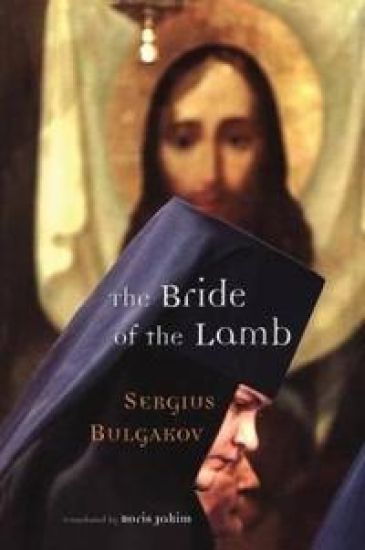
Bride of the Lamb

Bride of the Lamb

Sergius Bulgakov

Continuum International Publishing Group Ltd.
2002
nidottu
Sergius Bulgakov (1871-1944) was the 20th-century's foremost Russian Orthodox theologian. "The Bride of the Lamb" is widely regarded as Bulgakov's magnum opus and one of the greatest works produced in the modern Orthodox church. The book is available in an English translation by Boris Jakim, complete with an introduction to Bulgakov and his theological context. For readers new to Russian religious thought, the book presents a new approach to Christian doctrine. Bulgakov examines issues of ecclesiology and eschatology from a sophiological perspective. This distinctive Russian approach, based on the doctrine of Sophia, the wisdom of God, sees the Creator and creation intimately linked as divine-humanity. The book explores the nature of created beings, the relationship between God and the world, the role of the church, and such eschatological themes as the second coming of Jesus, resurrection and judgment, and the afterlife.