Kirjojen hintavertailu. Mukana 12 595 353 kirjaa ja 12 kauppaa.

Kirjailija

Seth Benardete

Kirjat ja teokset yhdessä paikassa: 15 kirjaa, julkaisuja vuosilta 1992-2024, suosituimpien joukossa 05 Achilles and Hector – Homeric Hero. Vertaile teosten hintoja ja tarkista saatavuus suomalaisista kirjakaupoista.

15 kirjaa

Kirjojen julkaisuhaarukka 1992-2024.

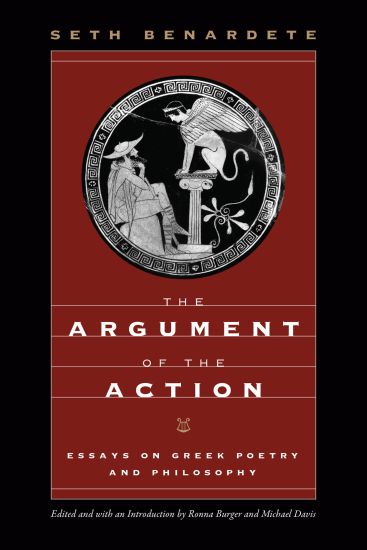
The Argument of the Action

The Argument of the Action

Seth Benardete

THE UNIVERSITY OF CHICAGO PRESS
2024
nidottu
This volume brings together Seth Benardete’s studies of Hesiod, Homer, and Greek tragedy, eleven Platonic dialogues, and Aristotle’s Metaphysics.The Argument of the Action spans four decades of Seth Benardete’s work, documenting its impressive range. Benardete’s philosophic reading of the poets and his poetic reading of the philosophers share a common ground, guided by the key he found in the Platonic dialogue: probing the meaning of speeches embedded in deeds, he uncovers the unifying intention of the work by tracing the way it unfolds through a movement of its own. Benardete’s original interpretations of the classics are the fruit of this discovery of the “argument of the action.”
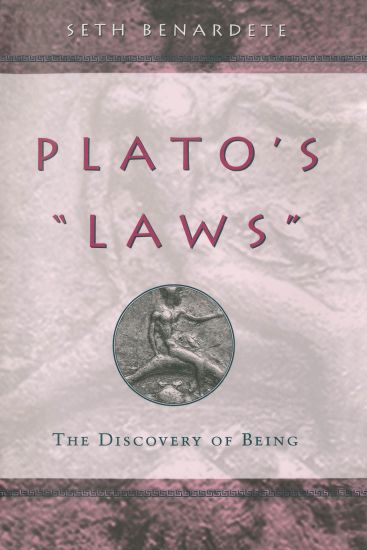
Plato's "Laws"

Plato's "Laws"

Seth Benardete

THE UNIVERSITY OF CHICAGO PRESS
2024
nidottu
An insightful commentary on Plato’s Laws, his complex final work. The Laws was Plato’s last work, his longest, and one of his most difficult. In contrast to the Republic, which presents an abstract ideal, the Laws appears to provide practical guidelines for the establishment and maintenance of political order in the real world. Classicist Seth Benardete offers a rich analysis of each of the twelve books of the Laws, which illuminates Plato’s major themes and arguments concerning theology, the soul, justice, and education. Most importantly, Benardete shows how music in a broad sense, including drama, epic poetry, and even puppetry, mediates between reason and the city in Plato’s philosophy of law. Benardete also uncovers the work’s concealed ontological dimension, explaining why it is hidden and how it can be brought to light. In establishing the coherence and underlying organization of Plato’s last dialogue, Benardete makes a significant contribution to Platonic studies.
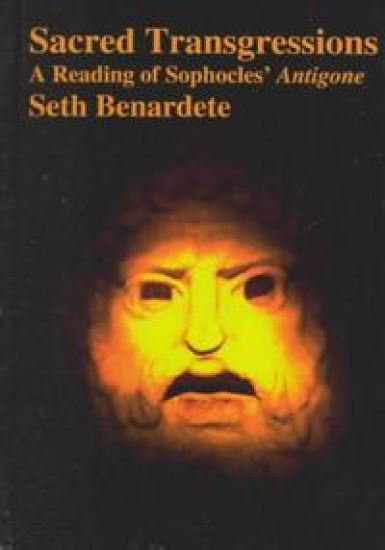
Sacred Transgressions

Sacred Transgressions

Seth Benardete

St Augustine's Press
2019
sidottu
This detailed commentary on the action and argument of Sophocles' Antigone is meant to be a reflection on and response to Hegel's interpretation in the Phenomenology (VI.A.a-b). It thus moves within the principles Hegel discovers in the play but reinserts them into the play as they show themselves across the eccentricities of its plot. Wherever plot and principles do not match, there is a glimmer of the argument: Haemon speaks up for the city and Tiresias for the divine law but neither for Antigone. The guard who reports the burial and presents Antigone to Creon is as important as Antigone or Creon for understanding Antigone. The Chorus too in their inconsistent thoughtfulness have to be taken into account, and in particular how their understanding of the canniness of man reveals Antigone in their very failure to count her as a sign of man's uncanniness: She who is below the horizon of their awareness is at the heart of their speech. Megareus, the older son of Creon, who sacrificed his life for the city, looms as large as Eurydice, whose suicide has nothing in common with Antigone's. She is 'all-mother'; Antigone is anti-generation.
Sacred Transgressions – A Reading of Sophocles` Antigone
This detailed commentary on the action and argument of Sophocles' Antigone is meant to be a reflection on and response to Hegel's interpretation in the Phenomenology (VI.A.a-b). It thus moves within the principles Hegel discovers in the play but reinserts them into the play as they show themselves across the eccentricities of its plot. Wherever plot and principles do not match, there is a glimmer of the argument: Haemon speaks up for the city and Tiresias for the divine law but neither for Antigone. The guard who reports the burial and presents Antigone to Creon is as important as Antigone or Creon for understanding Antigone. The Chorus too in their inconsistent thoughtfulness have to be taken into account, and in particular how their understanding of the canniness of man reveals Antigone in their very failure to count her as a sign of man's uncanniness: She who is below the horizon of their awareness is at the heart of their speech. Megareus, the older son of Creon, who sacrificed his life for the city, looms as large as Eurydice, whose suicide has nothing in common with Antigone's. She is "all-mother"; Antigone is anti-generation.
The Rhetoric of Morality and Philosophy

The Rhetoric of Morality and Philosophy

Seth Benardete

University of Chicago Press
2009
nidottu
"The Rhetoric of Morality and Philosophy", one of the most groundbreaking works of twentieth-century Platonic studies, is now back in print for a new generation of students and scholars to discover. In this volume, distinguished classicist Seth Benardete interprets and pairs two important Platonic dialogs, the Gorgias and the Phaedrus, illuminating Socrates' notion of rhetoric and Plato's conception of morality and eros in the human soul. Following his discussion of the Gorgias as a dialog about the rhetoric of morality, Benardete turns to the Phaedrus as a discourse about genuine rhetoric, namely the science of eros, or true philosophy. This novel interpretation addresses numerous issues in Plato studies: the relation between the structure of the Gorgias and the image of soul/city in the Republic, the relation between the structure of Phaedrus and the concept of eros, and Socrates' notion of ignorance, among others.
The Bow and the Lyre

The Bow and the Lyre

Seth Benardete

Rowman Littlefield Publishers
2008
nidottu
In this exciting interpretation of the Odyssey, the late renowned scholar Seth Benardete suggests that Homer may have been the first to philosophize in a Platonic sense. He argues that the Odyssey concerns precisely the relation between philosophy and poetry and, more broadly, the rational and the irrational in human beings. In light of this possibility, Bernardete works back and forth from Homer to Plato to examine the relation between wisdom and justice and tries to recover an original understanding of philosophy that Plato, too, recovered by reflecting on the wisdom of the poet. At stake in his argument is no less than the history of philosophy and the ancient understanding of poetry. The Bow and the Lyre is a book that every classicist and historian of philosophy should have.
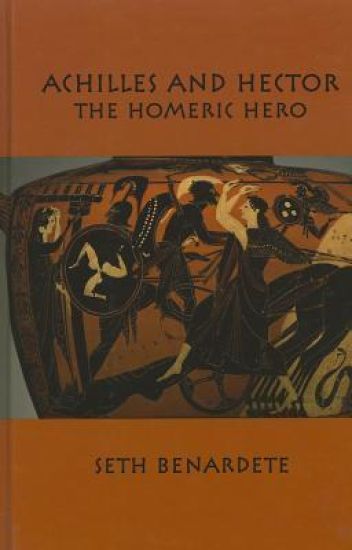
05 Achilles and Hector – Homeric Hero

05 Achilles and Hector – Homeric Hero

Seth Benardete

St Augustine's Press
2005
sidottu
Benardete's 1955 doctoral dissertation in social thought for the University of Chicago was published in two parts in the St. John's Review in the spring and summer of 1985. The parts do not take the opposing hero's of Homer's Iliad in turn, as might be expected, but discuss first the style and then the plot. There is no index. Annotation 2005 Book
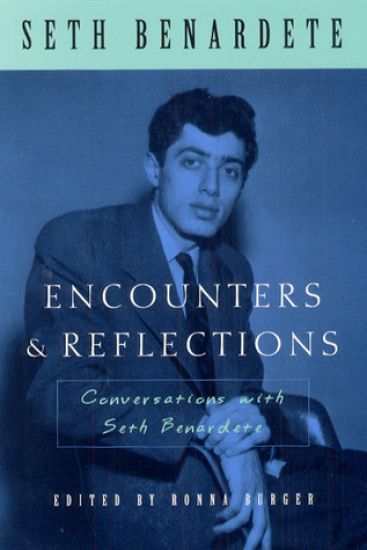
Encounters and Reflections

Encounters and Reflections

Seth Benardete

University of Chicago Press
2003
sidottu
By turns wickedly funny and profoundly illuminating, "Encounters and Reflections" presents a captivating and unconventional portrait of the life and works of Seth Benardete. One of the leading scholars of ancient thought, Benardete here reflects on both the people he knew and the topics that fascinated him throughout his career in a series of candid, freewheeling conversations with Robert Berman, Ronna Burger and Michael Davis. The first part of the book discloses vignettes about fellow students, colleagues and acquaintances of Benardete's who later became major figures in the academic and intellectual life of 20th-century America. We glimpse the student days of Allan Bloom, Stanley Rosen and George Steiner, and we discover the life of the mind as lived by well-known scholars such as David Grene, Jacob Klein and Benardete's mentor Leo Strauss. We also encounter a number of other learned and sometimes eccentric luminaries, including T.S. Eliot, James Baldwin, Werner Jaeger, John Davidson Beazley and Willard Quine. In the book's second part, Benardete reflects on his own intellectual growth and on his ever-evolving understanding of the texts and ideas he spent a life-time studying. Revisiting some of his recurrent themes - among them eros and the beautiful, the city and the law, and the gods and the human soul - Benardete shares his views on thinkers such as Plato, Homer and Heidegger, as well as the relations between philosophy and science and between Christianity and ancient Roman thought. Engaging and informative, "Encounters and Reflections" brings Benardetes's thought to life to enlighten and inspire a new generation of thinkers.
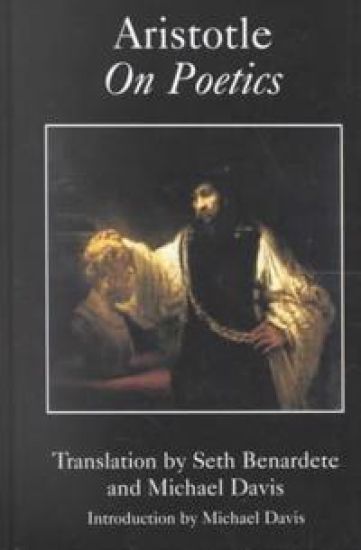
Aristotle On Poetics

Aristotle On Poetics

Seth Benardete; Michael Davis

St Augustine's Press
2002
sidottu
Aristotle's much-translated On Poetics is the earliest and arguably the best treatment that we possess of tragedy as a literary form. Seth Benardete and Michael Davis have translated it anew with a view to rendering Aristotle’s text into English as precisely as possible. A literal translation has long been needed, for in order to excavate the argument of On Poetics one has to attend not simply to what is said on the surface but also to the various puzzles, questions, and peculiarities that emerge only on the level of how Aristotle says what he says and thereby leads one to revise and deepen one’s initial understanding of the intent of the argument. As On Poetics is about how tragedy ought to be composed, it should not be surprising that it turns out to be a rather artful piece of literature in its own right.Benardete and Davis supplement their edition of On Poetics with extensive notes and appendices. They explain nuances of the original that elude translation, and they provide translations of passages found elsewhere in Aristotle’s works as well as in those of other ancient authors that prove useful in thinking through the argument of On Poetics both in terms of its treatment of tragedy and in terms of its broader concerns. By following the connections Aristotle plots between On Poetics and his other works, readers will be in a position to appreciate the centrality of this little book for his thought on the whole.In an introduction that sketches the overall interpretation of On Poetics presented in his The Poetry of Philosophy (St. Augustine’s Press, 1999), Davis argues that, while On Poetics is certainly about tragedy, it has a further concern extending beyond poetry to the very structure of the human soul in its relation to what is, and that Aristotle reveals in the form of his argument the true character of human action.
Aristotle On Poetics

Aristotle On Poetics

Seth Benardete; Michael Davis

St Augustine's Press
2002
nidottu
Aristotle's much-translated On Poetics is the earliest and arguably the best treatment that we possess of tragedy as a literary form. Seth Benardete and Michael Davis have translated it anew with a view to rendering Aristotle’s text into English as precisely as possible. A literal translation has long been needed, for in order to excavate the argument of On Poetics one has to attend not simply to what is said on the surface but also to the various puzzles, questions, and peculiarities that emerge only on the level of how Aristotle says what he says and thereby leads one to revise and deepen one’s initial understanding of the intent of the argument. As On Poetics is about how tragedy ought to be composed, it should not be surprising that it turns out to be a rather artful piece of literature in its own right.Benardete and Davis supplement their edition of On Poetics with extensive notes and appendices. They explain nuances of the original that elude translation, and they provide translations of passages found elsewhere in Aristotle’s works as well as in those of other ancient authors that prove useful in thinking through the argument of On Poetics both in terms of its treatment of tragedy and in terms of its broader concerns. By following the connections Aristotle plots between On Poetics and his other works, readers will be in a position to appreciate the centrality of this little book for his thought on the whole.In an introduction that sketches the overall interpretation of On Poetics presented in his The Poetry of Philosophy (St. Augustine’s Press, 1999), Davis argues that, while On Poetics is certainly about tragedy, it has a further concern extending beyond poetry to the very structure of the human soul in its relation to what is, and that Aristotle reveals in the form of his argument the true character of human action.
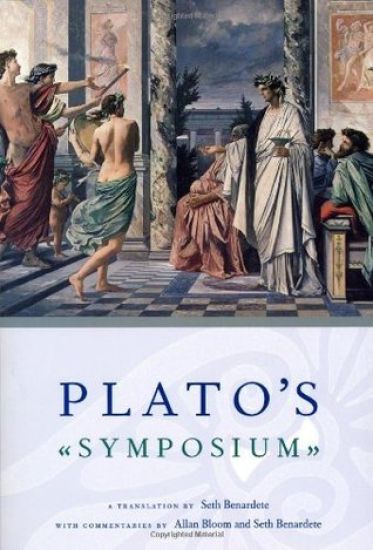
Plato`s Symposium – A Translation by Seth Benardete with Commentaries by Allan Bloom and Seth Benardete
Plato, Allan Bloom wrote, is "the most erotic of philosophers," and his Symposium is one of the greatest works on the nature of love ever written. This new edition brings together the English translation of the renowned Plato scholar and translator, Seth Benardete, with two illuminating commentaries on it: Benardete's "On Plato's Symposium" and Allan Bloom's provocative essay, "The Ladder of Love." In the Symposium, Plato recounts a drinking party following an evening meal, where the guests include the poet Aristophanes, the drunken Alcibiades, and, of course, the wise Socrates. The revelers give their views on the timeless topics of love and desire, all the while addressing many of the major themes of Platonic philosophy: the relationship of philosophy and poetry, the good, and the beautiful.
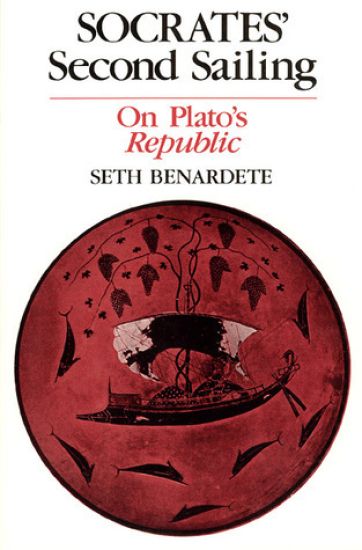
Socrates' Second Sailing

Socrates' Second Sailing

Seth Benardete

University of Chicago Press
1992
nidottu
In this section-by-section commentary, Benardete argues that Plato's Republic is a holistic analysis of the beautiful, the good, and the just. This book provides a fresh interpretation of the Republic and a new understanding of philosophy as practiced by Plato and Socrates. "Cryptic allusions, startling paradoxes, new questions ...all work to give brilliant new insights into the Platonic text."--Arlene W. Saxonhouse, Political Theory