Kirjojen hintavertailu. Mukana 12 152 606 kirjaa ja 12 kauppaa.
Kirjailija
Seth G. Jones
Kirjat ja teokset yhdessä paikassa: 43 kirjaa, julkaisuja vuosilta 2001-2026, suosituimpien joukossa America's Security Deficit. Vertaile teosten hintoja ja tarkista saatavuus suomalaisista kirjakaupoista.
This report analyzes defense options available to the United States in responding to current and emerging threats to U.S. security and interests in Europe, the Middle East, and Asia. It focuses on ways that the United States might adapt military instruments to meet these emerging challenges, assessing in broad terms the cost of defense investments commensurate with the interests at stake.
Defining "nation-building" as the use of armed forces after a conflict to promote democracy, a practice outlined in two earlier volumes including The UN's Role in Nation-Building, a critical assessment of America's failure to nation-build in Iraq makes recommendations for economic stabilization, relief efforts, civil administration, and more. Original.
One-liner: A framework for intelligence analysts to use to think systematically about the potential for the rise of a peer competitor to the United States. The potential emergence of a peer competitor is probably the most important long-term planning challenge for the Department of Defense. This report addresses the issue by developing a conceptual framework of how a proto-peer (meaning a state that is not yet a peer but has the potential to become one) might interact with the hegemon (the dominant global power). The central aspect of the framework is an interaction between the main strategies for power aggregation available to the proto-peer and the main strategies for countering the rise of a peer available to the hegemon. Then, using exploratory modeling techniques, the pathways of the various proto-peer and hegemon interactions are modeled to identify the specific patterns and combinations of actions that might lead to rivalries. The dominant power has an array of options available to limit the growth of its rivals or to change their ultimate intentions.Too confrontational a strategy, however, risks making a potential neutral power into a foe, while too conciliatory a stance may speed the growth of a competitor. Exploratory modeling suggests which attributes of the countries are most important and the sensitivity of the dominant power to perception errors.
To regain its capacity to effectively deter China and retain its unmatched global status, the United States must deepen its partnership with the nation's most innovative tech companies. In The American Edge, Seth G. Jones explains how the industrial bases of the world's great military powers have risen, fallen, and evolved relative to each other over the past century, from Imperial Germany and Japan during World War II, to the United States and Soviet Union during the Cold War, to the recent rise of China. In doing so, Jones reveals how the US is on a trajectory toward failure-a failure to effectively deter major adversaries, and to fight and win a great power war if necessary. China is on a wartime footing. It is rapidly building its defense industrial base to deter and-if deterrence fails-to fight the United States. During periods of wartime, the US defense industrial base has always needed to maximize production capacity, minimize excessive regulations, and provide incentives to the private sector for innovation. Today, though, the US military industrial base is operating on a peacetime footing despite China's massive military buildup and Russia's total war in Ukraine. Set in its ways and trapped in outdated procurement systems, it lacks the capacity, responsiveness, flexibility, and surge capability to meet the military requirements to deter China. However, the US does have a tremendously innovative private sector, from companies like SpaceX to Microsoft and Anduril, and this private sector can be leveraged. If the US can regain its capacity to respond flexibly and deter China in the current struggle for global power, it will need to come through the partnership with and utilization of these private companies. Along with providing a deep history of the economic foundations of how America's ascent to military superpower, this book shows how these innovative firms are helping the US military regain its edge and thereby retain its status as the world's paramount military force.
Russia's February 2022 invasion of Ukraine triggered the bloodiest war in Europe since World War II and raised significant questions about the United States' role in Europe. This CSIS report examines the U.S. force posture in Europe---including the military capabilities, personnel, infrastructure, and agreements that support defense operations and plans---and makes recommendations for future U.S. posture. It finds that the United States needs a robust, long-term military force posture in Europe, focused on the North Atlantic Treaty Organization's (NATO) eastern flank, to deter future Russian aggression.
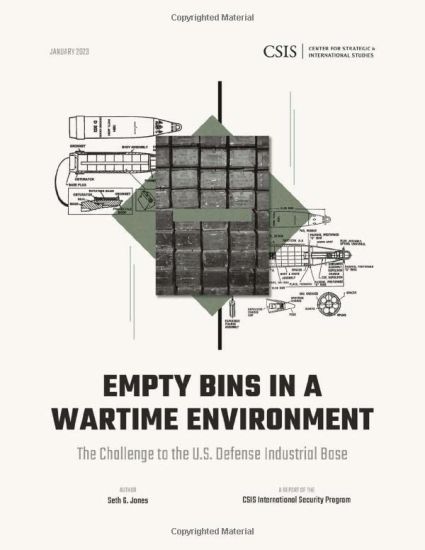
China's defense industrial base is operating on a wartime footing, while the U.S. defense industrial base is largely operating on a peacetime footing. Overall, the U.S. defense industrial ecosystem lacks the capacity, responsiveness, flexibility, and surge capability to meet the U.S. military's production and warfighting needs. Unless there are urgent changes, the United States risks weakening deterrence and undermining its wartime capabilities. China is heavily investing in munitions and acquiring high-end weapons systems and equipment five to six times faster than the United States. China is also the world's largest shipbuilder and has a shipbuilding capacity that is roughly 230 times larger than the United States. One of China's large shipyards, such as Jiangnan Shipyard, has more capacity than all U.S. shipyards combined.
This CSIS report asks two main questions. How is the Russian military thinking about the future of warfare? How is the Russian military thinking about force design over the next five years? The report has several findings. First, Russian military thinking is dominated by a view that the United States is—and will remain—Moscow’s main enemy (??????? ????) for the foreseeable future. This sentiment will likely drive Moscow’s desire to reconstitute its military as rapidly as possible, as well as strengthen nuclear and conventional deterrence. Second, Russian analyses generally conclude that while the nature of warfare is unchanging, the character of future warfare will rapidly evolve. Adapting will require Russia’s cooperation with other countries, such as China, in areas like long-range, high-precision weapons; unmanned systems; emerging technologies, such as artificial intelligence; and the utility of hybrid and irregular warfare. Third, Russian political and military leaders are committed to a major reconstitution of the Russian military—including the army—over the next several years.
China is conducting an unprecedented campaign below the threshold of armed conflict to expand the influence of the Chinese Communist Party and weaken the United States and its partners. The scale of China’s actions in the United States is unparalleled. This CSIS report offers one of the most comprehensive analyses to date of Chinese political warfare activities and examines China’s main actions, primary goals, and options for the United States and its partners.
The U.S. defense industrial base is not adequately prepared for the international security environment that now exists. In a major regional conflict—such as a war with China in the Taiwan Strait—the U.S. use of munitions would likely exceed the current stockpiles of the U.S. Department of Defense. According to the results of a series of CSIS war games, the United States would likely run out of some munitions—such as long-range, precision-guided munitions—in less than one week in a Taiwan Strait conflict. The war in Ukraine has also exposed serious deficiencies in the U.S. defense industrial base and serves as a stark reminder that a protracted conflict is likely to be an industrial war that requires a defense industry able to manufacture enough munitions, weapons systems, and matériel to replace depleted stockpiles.As timelines for a possible conflict in Asia shrink, the goal should be to support the production capacity required to enable the United States and its allies and partners to deter and, if deterrence fails, fight and win at least one major theater war—if not two. “Just in time” and lean manufacturing operations must be balanced with carrying added capacity. The U.S. Department of Defense, in coordination with Congress, should develop a plan now that involves taking steps to streamline and improve production, acquisitions, replenishment, Foreign Military Sales, ITAR, and other policies and procedures. A revitalization of the defense industrial base will not happen overnight for the United States or its allies and partners. It is time to prepare for the era of competition that now exists.
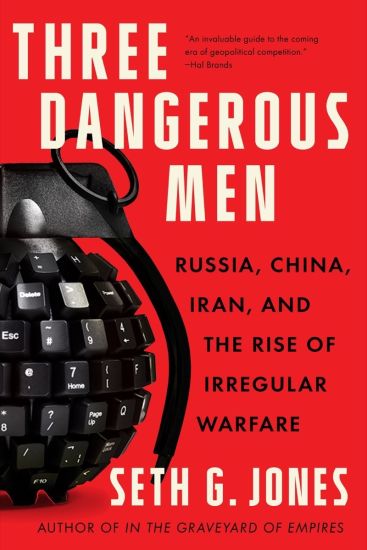
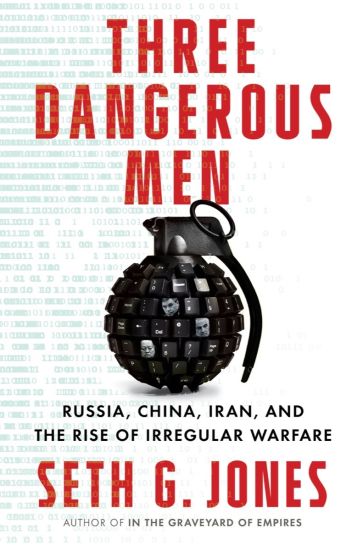
In Three Dangerous Men, defence expert Seth Jones argues that the US is woefully unprepared for the future of global competition. While America has focused on building fighter jets, missiles and conventional warfighting capabilities, its three principal rivals—Russia, China and Iran—have increasingly adopted irregular warfare: cyber-attacks, the use of proxy forces, propaganda, espionage and disinformation to undermine American power. Jones profiles three pioneers of irregular warfare in Moscow, Beijing and Tehran who adapted American techniques and made huge gains without waging traditional warfare: Russian Chief of Staff Valery Gerasimov; the deceased Iranian Major General Qassem Soleimani; and vice chairman of China’s Central Military Commission Zhang Youxia. Each has spent his career studying American power and devised techniques to avoid a conventional or nuclear war with the US. Gerasimov helped oversee a resurgence of Russian irregular warfare, which included attempts to undermine the 2016 and 2020 US presidential elections and the SolarWinds cyber-attack. Soleimani was so effective in expanding Iranian power in the Middle East that Washington targeted him for assassination. Zhang Youxia presents the most alarming challenge because China has more power and potential at its disposal. Drawing on interviews with dozens of US military, diplomatic and intelligence officials, as well as hundreds of documents translated from Russian, Farsi and Mandarin, Jones shows how America’s rivals have bloodied its reputation and seized territory worldwide. Instead of standing up to autocratic regimes, Jones demonstrates that the United States has largely abandoned the kind of information, special operations, intelligence and economic and diplomatic action that helped win the Cold War. In a powerful conclusion, Jones details the key steps the United States must take to alter how it thinks about—and engages in—competition before it is too late.
Unmanned aircraft systems (UASs) have played an important role in warfare over the past two decades, including to conduct counterterrorism operations. To better understand the utility of UASs, this latest report from CSIS adopts a comparative case study approach and examines the Nagorno-Karabakh war in 2020, Ukraine war in 2022, and Northern Edge-21 exercise in the Indo-Pacific in 2021. These cases demonstrate that UASs have been increasingly integrated into combined arms warfare, a major change from the past. In addition, UASs are likely to play an increasingly important role in several types of missions as part of strategic competition and warfare with such countries as China and Russia.
In this follow-on report to Europe's High-End Military Challenges: The Future of European Capabilities and Missions, the CSIS Europe, Russia, and Eurasia Program and International Security Program examine the other side of the coin of European military effectiveness: the political will of European countries to conduct military missions and operations. The report identifies the endogenous and exogenous factors constraining or increasing political will and maps them onto six country case studies. Four prototypes of political will emerged from the analysis: global partners, international activists, constrained partners, and minimalists. The report then assesses the political will of European allies and partners to conduct fifteen types of military missions and operations worldwide, from peacekeeping to large-scale combat. It concludes with a summary of key findings. First, it finds that internal and external factors—such as strategic culture and alliance dependence, respectively—will continue to constrain European political will in many cases, even after the Russian invasion of Ukraine. Second, European states are more likely to have the political will to engage in military missions at the lower end of the conflict spectrum (such as maritime patrol missions) and less likely at the higher ends of the spectrum, except in cases of significant collective or national defense.
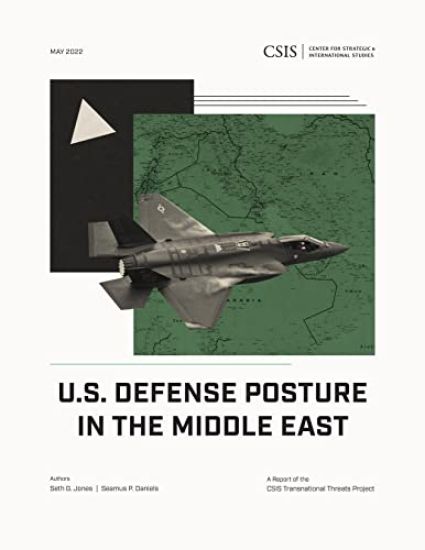
There are growing calls for a decrease in the U.S. military presence in the Middle East. This CSIS report assesses three posture options for U.S. forces in the region to inform the debate over the United States' military presence in the Middle East. The report finds that the United States should keep a notable but tailored presence in the Middle East to contain the further expansion of Chinese and Russian military power and to check the actions of Iran and terrorist organizations that threaten the United States and its allies and partners.
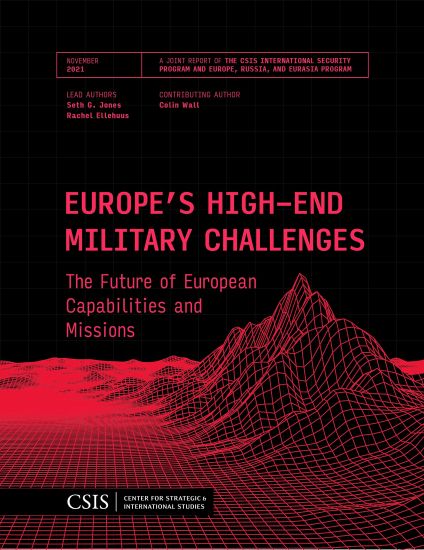
This CSIS report examines the evolution of European military capabilities over the next decade. It asks two main questions. What military capabilities might European allies and partners of the United States possess by 2030? And what types of military missions will these states be able (and unable) to effectively perform by 2030? First, European militaries—including the largest and most capable European NATO members—will continue to struggle to conduct several types of missions without significant U.S. assistance. Second, European militaries will face significant challenges in the Indo-Pacific. Third, Europe’s major powers will likely have the capability to conduct most types of missions at the lower end of the conflict continuum without significant U.S. military aid. To sustain progress and overcome remaining challenges, NATO will have to revise its burden-sharing metrics, modernize defense planning and procurement practices, and address lagging political will.
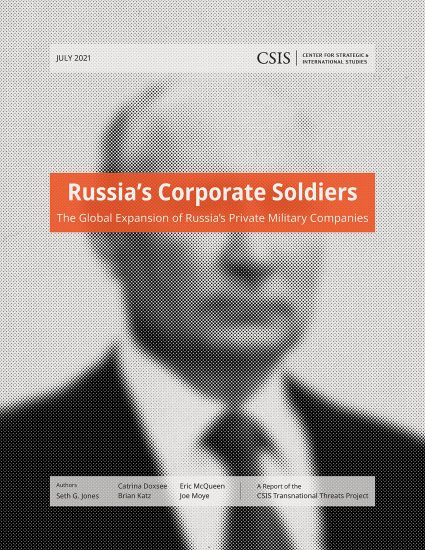
This report examines Russia’s growing use of private military companies (PMCs) to increase its influence through irregular means. In recent years, Moscow has expanded its overseas use of PMCs to countries such as Ukraine, Syria, Libya, Sudan, the Central African Republic, Madagascar, and Mozambique. Many of the PMCs operating in these countries, such as the Wagner Group, frequently cooperate with the Russian government—including the Kremlin, Ministry of Defense (particularly the Main Intelligence Directorate, or GRU), Foreign Intelligence Service (SVR), and Federal Security Service (FSB)—and perform a variety of combat, paramilitary, security, and intelligence tasks. However, many of these PMCs have a poor track record—including operational failures and human rights abuses—and there are opportunities to exploit PMC vulnerabilities. Although Russian PMCs present only one of a variety of national security threats and challenges facing the United States, this report assesses that they warrant a more substantive and coordinated response from the United States and its partners.
Conventional warfare—clashes between large military forces—defined twentieth-century power. But today, facing a dominant American military, principal adversaries Russia, China and Iran, have adopted a new style of competition. Cyber attacks, covert action, proxy conflicts, information and disinformation campaigns, espionage and economic coercion—these are the tools of irregular or asymmetric warfare, which will increasingly reshape international politics. In Three Dangerous Men, defence expert Seth G. Jones profiles pioneers of irregular warfare in Moscow, Beijing and Tehran who adapted American techniques and made huge gains without waging traditional warfare. Drawing on interviews with dozens of US military, diplomatic and intelligence officials, such as CIA directors Michael Hayden and David Petraeus, the author demonstrates why the US abandoned its own irregular capabilities and is thus steadily losing ground to its global adversaries. Jones argues the US must significantly alter how it thinks about—and engages in—competition before it is too late.
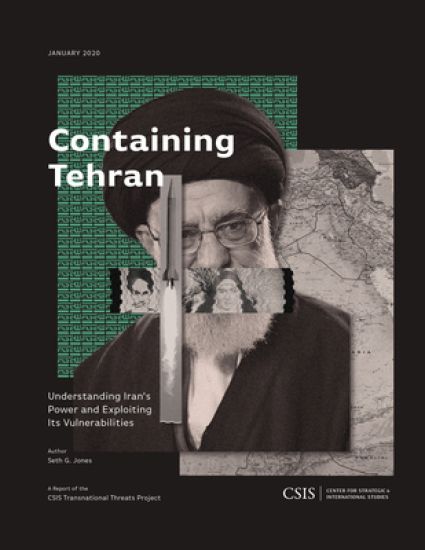
Following the U.S. killing of Qasem Soleimani, head of the Islamic Revolutionary Guard Corps-Quds Force (IRGC-QF), the United States and Iran are involved in an escalating conflict. What is badly needed now is a coherent long-term U.S. strategy to deal with Iran in ways that protect U.S. national security and leverage U.S. partners. The United States’ “maximum pressure” campaign has not led to a change in Iran’s behavior—at least not yet—though U.S. sanctions have severely damaged Iran’s economy. As this CSIS report highlights with new data and analysis, the IRGC-QF has supported a growing number of non-state fighters in Yemen, Syria, Iraq, Lebanon, Afghanistan, and Pakistan—including nearly a 50 percent increase since 2016. Thanks to Iran, these forces are better equipped with more sophisticated weapons and systems. This report also uses satellite imagery to identify an expansion of IRGC-QF-linked bases in countries like Iran and Lebanon to train non-state fighters. Iran has constructed more sophisticated and longer-range ballistic and cruise missiles and conducted missile attacks against countries like Saudi Arabia. In addition, Iran has developed offensive cyber capabilities and used them against the United States and its partners. In the nuclear arena, Iran has ended commitments it made to limit uranium enrichment, production, research, and expansion—raising the prospect of Iranian nuclear weapons. Moving forward, the United States should implement a containment strategy against Iran that attempts to de-escalate the current military situation and work toward achieving several goals: Prevent Iran from becoming a regional hegemon capable of dominating other states in the Middle East.Stop nuclear proliferation in the region and prevent Iran from developing nuclear weapons, including thwarting Iran from pursuing weapons-grade uranium enrichment, warhead development, and plutonium reprocessing.Curb significant Iranian military, political, and ideological expansion in the region, including the export of Iran’s revolutionary ideology.Encourage a process of change inside Iran toward a more pluralistic political and economic system in which the power of the clerical establishment is gradually reduced. This report highlights a range of weaknesses that make Iran vulnerable to containment and lays out the political, military, economic, and informational components of such a strategy. The United States needs to credibly demonstrate that its policy toward Iran is not a blueprint for an endless struggle, but instead an effort to encourage Iran to be more democratic and open, as political and economic change must be driven by Iranians themselves.
In 1981, the Soviet-backed Polish government declared martial law to crush a budding democratic opposition movement. Moscow and Washington were on a collision course. It was the most significant crisis of Ronald Reagan's fledgling presidency. Reagan authorized a covert CIA operation codenamed QRHELPFUL to support dissident groups, particularly the trade union Solidarity. The CIA provided money that helped Solidarity print newspapers, broadcast radio programs, and conduct an information campaign against the government.This gripping narrative reveals the little-known history of one of America's most successful covert operations through its most important characters--spymaster Bill Casey, CIA officer Richard Malzahn, Solidarity leader Lech Walesa, Pope John Paul II, and the Polish patriots who were instrumental to the success of the program. Based on in- depth interviews and recently declassified evidence, A Covert Action celebrates a decisive victory over tyranny for US intelligence behind the Iron Curtain, one that prefigured the Soviet collapse.
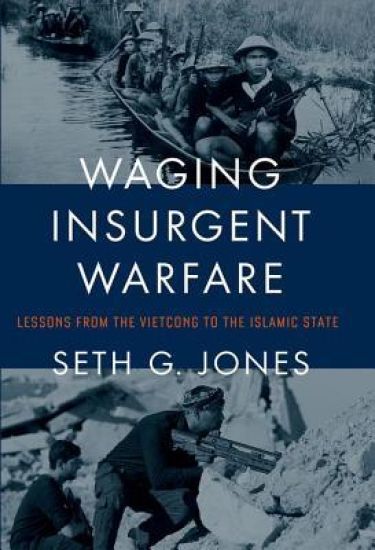
Since the end of World War II, there have been 181 insurgencies around the world. In fact, most modern warfare occurs in the form of insurgencies, including in such high-profile countries as Iraq, Syria, Libya, Afghanistan, and Ukraine. However, in spite of their prevalence, we still know relatively little about how insurgencies function. With more than three dozen violent insurgencies currently taking place today, a deeper understanding of insurgent groups is more important than ever. In Waging Insurgent Warfare, Seth G. Jones offers new insights into the dynamics of insurgent groups. Jones weaves together examples from current events and recent history to identify the factors that contribute to the rise of an insurgency, the key components involved in conducting an insurgency, from selecting an organizational structure to securing aid from an outside source, and the elements that contribute to the end of insurgencies. Through examining the strategies, tactics, and campaigns that insurgents use, as well as how these factors relate to each other on the ground, Jones provides a comprehensive understanding of the ways in which insurgent groups operate. Empirically rich and historically informed, Waging Insurgent Warfare features data on over one hundred factors for every insurgency that has taken place between 1946 and 2015. While the primary emphasis revolves around insurgency, the findings in this book also have important implications for waging counterinsurgent warfare. Bringing together the existing body of knowledge on insurgencies, Jones provides a practical, accessible resource to help understand insurgent warfare. The definitive resource on insurgency, Waging Insurgent Warfare will appeal to anyone with an interest in insurgency, counterinsurgency, or modern war.
December, 1981--the CIA receives word that the Polish government has cut telephone communications with the West and closed the Polish border. The agency's leaders quickly inform President Ronald Reagan, who is enjoying a serene weekend at Camp David. Within hours, Prime Minister Wojciech Jaruzelski has appeared on Polish national television to announce the establishment of martial law. A new era in Cold War politics has begun: Washington and Moscow are on a collision course.In this gripping narrative history, Seth G. Jones reveals the little-known story of the CIA's subsequent operations in Poland, which produced a landmark victory for democracy during the Cold War. While the Soviet-backed Polish government worked to crush a budding liberal opposition movement, the CIA began a sophisticated intelligence campaign, code-named QRHELPFUL, that supported dissident groups. The most powerful of these groups was Solidarity, a trade union that swelled to a membership of ten million and became one of the first legitimate anti-Communist opposition movements in Eastern Europe. With President Reagan's support, the CIA provided money that helped Solidarity print newspapers, broadcast radio programs, and conduct a wide-ranging information warfare campaign against the Soviet-backed government. QRHELPFUL proved vital in establishing a free and democratic Poland.Long overlooked by CIA historians and Reagan biographers, the story of QRHELPFUL features an extraordinary cast of characters--including spymaster Bill Casey, CIA officer Richard Malzahn, Polish-speaking CIA case officer Celia Larkin, Solidarity leader Lech Walesa, and Pope John Paul II. Based on in-depth interviews and recently declassified evidence, A Covert Action celebrates a decisive victory over tyranny for U.S. intelligence behind the Iron Curtain, one that prefigured the Soviet collapse.