Kirjojen hintavertailu. Mukana 12 595 353 kirjaa ja 12 kauppaa.

Kirjailija

Setha Low

Kirjat ja teokset yhdessä paikassa: 7 kirjaa, julkaisuja vuosilta 2003-2025, suosituimpien joukossa Behind the Gates. Vertaile teosten hintoja ja tarkista saatavuus suomalaisista kirjakaupoista.

7 kirjaa

Kirjojen julkaisuhaarukka 2003-2025.

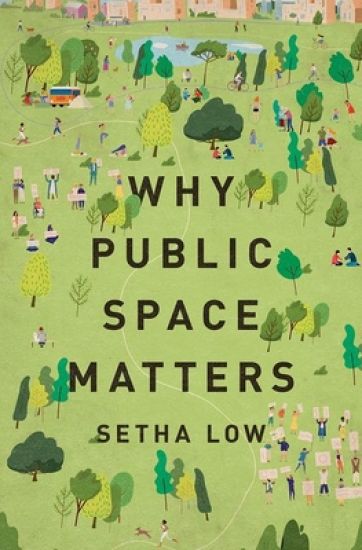
Why Public Space Matters

Why Public Space Matters

Setha Low

OXFORD UNIVERSITY PRESS INC
2025
nidottu
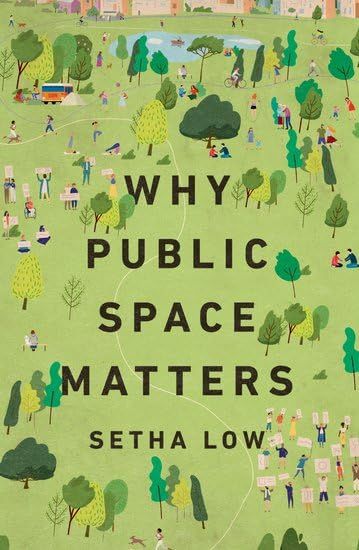
Drawing from decades of research, Setha Low shows how public space contributes to a flourishing society through promoting social justice and democratic practices. Thriving public spaces also enhance creativity, health, urban resilience, and environmental sustainability. Yet more than ever, public spaces across the world are threatened by urban development, privatization and neglect. Public spaces -- where people from all walks of life play, work, meet, talk, read, think, debate, and protest -- are vital to a healthy civic life. And, as the eminent scholar of public space Setha Low argues in Why Public Space Matters, even fleeting moments of visibility and encounter in these spaces tend to foster a broader worldview and our willingness to accept difference. Such experiences also enhance flexible thinking, problem solving, creativity, and inclusiveness. There are many such spaces, but they all enhance social life. Sidewalks and plazas offer business opportunities for small-scale entrepreneurs who cannot afford store space. Public parks have long provided major cultural attractions, from plays to concerts, at little or no cost to the public. Central squares have a storied tradition as arenas for demonstrations and political protests. Parks and waterways create sustainable greenways, and during disasters, all manner of public spaces become centers for food delivery and shelter. To illustrate their value, Low draws from decades of research in public spaces across the Americas, from New York to Costa Rica. Yet we are losing public spaces to accelerated urban development and the belief that public spaces are expendable. Just as important is the broad-scale and ongoing privatization of public space by corporate actors. Low explores why public spaces matter today, how they are at risk, and what we can do about protecting these essential places that support our everyday lives. Finally, she shows how we can work to promote public space protection and expansion at both the grassroots and global levels. Throughout, she focuses on real public spaces and the people who use them in cities and regions across the Americas, from New Jersey to Costa Rica. A powerful, defining statement on a foundational contributor to healthy civic life, Low's book not only details what we are at risk of losing, but shows us how we can not only stop the losses, but work to expand the number of spaces available to the public.

Trapped

Trapped

Mark Maguire; Setha Low

STANFORD UNIVERSITY PRESS
2024
pokkari
Exploring the pernicious influence of security capitalism on neighborhoods, airports, cities, and states. Calls to defund the police or to stop brutal police violence, argue Mark Maguire and Setha Low, will never succeed as long as there are those who enjoy and take comfort in security capitalism. Security capitalism can be recognized by the marks it leaves on society, remaking public space in its own image—privatized, fortified, unequal, striated, and access-controlled. With a global and comparative lens that takes readers from Nairobi to New York City, Maguire and Low offer intimate portraits of the people behind security capitalism—the police, policy makers, and private contractors who agree that a price must be paid in blood to maintain public safety—and critique phenomena like the transfer of public funds to arms dealers via the militarization of police, securitized housing developments, and ineffectual counterterrorism efforts. But more than just an exposé of the nefarious corporations, corrupt agencies, and incompetent governments, this book uniquely shines the spotlight on the ordinary citizens whose desires for safety drive these phenomena. Angela Davis has written of the challenge of persuading people that "safety, safeguarded by violence, is not really safety." Maguire and Low aid us in thinking through the challenge, providing a common language to discuss security capitalism and offering ways to escape its clutches.
Why Public Space Matters

Why Public Space Matters

Setha Low

OXFORD UNIVERSITY PRESS INC
2023
sidottu
Drawing from decades of research, Setha Low shows how public space contributes to a flourishing society through promoting social justice and democratic practices. Thriving public spaces also enhance creativity, health, urban resilience, and environmental sustainability. Yet more than ever, public spaces across the world are threatened by urban development, privatization and neglect. Public spaces -- where people from all walks of life play, work, meet, talk, read, think, debate, and protest -- are vital to a healthy civic life. And, as the eminent scholar of public space Setha Low argues in Why Public Space Matters, even fleeting moments of visibility and encounter in these spaces tend to foster a broader worldview and our willingness to accept difference. Such experiences also enhance flexible thinking, problem solving, creativity, and inclusiveness. There are many such spaces, but they all enhance social life. Sidewalks and plazas offer business opportunities for small-scale entrepreneurs who cannot afford store space. Public parks have long provided major cultural attractions, from plays to concerts, at little or no cost to the public. Central squares have a storied tradition as arenas for demonstrations and political protests. Parks and waterways create sustainable greenways, and during disasters, all manner of public spaces become centers for food delivery and shelter. To illustrate their value, Low draws from decades of research in public spaces across the Americas, from New York to Costa Rica. Yet we are losing public spaces to accelerated urban development and the belief that public spaces are expendable. Just as important is the broad-scale and ongoing privatization of public space by corporate actors. Low explores why public spaces matter today, how they are at risk, and what we can do about protecting these essential places that support our everyday lives. Finally, she shows how we can work to promote public space protection and expansion at both the grassroots and global levels. Throughout, she focuses on real public spaces and the people who use them in cities and regions across the Americas, from New Jersey to Costa Rica. A powerful, defining statement on a foundational contributor to healthy civic life, Low's book not only details what we are at risk of losing, but shows us how we can not only stop the losses, but work to expand the number of spaces available to the public.
Spatializing Culture

Spatializing Culture

Setha Low

Routledge
2016
nidottu
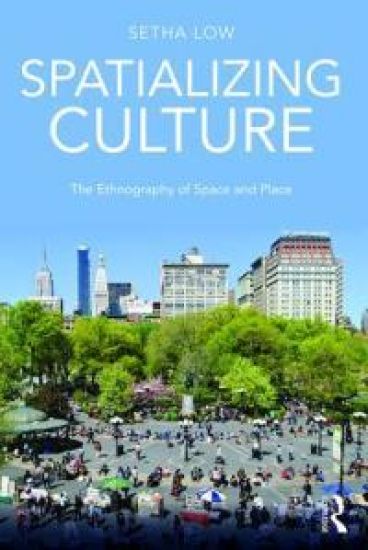
This book demonstrates the value of ethnographic theory and methods in understanding space and place, and considers how ethnographically-based spatial analyses can yield insight into prejudices, inequalities and social exclusion as well as offering people the means for understanding the places where they live, work, shop and socialize. In developing the concept of spatializing culture, Setha Low draws on over twenty years of research to examine social production, social construction, embodied, discursive, emotive and affective, as well as translocal approaches. A global range of fieldwork examples are employed throughout the text to highlight not just the theoretical development of the idea of spatializing culture, but how it can be used in undertaking ethnographies of space and place. The volume will be valuable for students and scholars from a number of disciplines who are interested in the study of culture through the lens of space and place.
Spatializing Culture

Spatializing Culture

Setha Low

Routledge
2016
sidottu
This book demonstrates the value of ethnographic theory and methods in understanding space and place, and considers how ethnographically-based spatial analyses can yield insight into prejudices, inequalities and social exclusion as well as offering people the means for understanding the places where they live, work, shop and socialize. In developing the concept of spatializing culture, Setha Low draws on over twenty years of research to examine social production, social construction, embodied, discursive, emotive and affective, as well as translocal approaches. A global range of fieldwork examples are employed throughout the text to highlight not just the theoretical development of the idea of spatializing culture, but how it can be used in undertaking ethnographies of space and place. The volume will be valuable for students and scholars from a number of disciplines who are interested in the study of culture through the lens of space and place.
Behind the Gates

Behind the Gates

Setha Low

Routledge
2004
nidottu
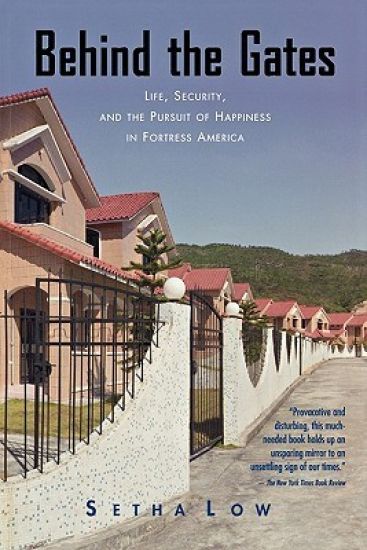
In the last twenty years, thousands upon thousands of the upper and middle classes have retreated into gated communities. In 2002 it is estimated that one in eight Americans will live in these exclusive neighborhoods. What has sparked this alarming trend?Behind the Gates is Low's revealing account of what life is like inside these suburban fortresses. After years researching and interviewing families in Long Island, New York and San Antonio, Texas, Low provides an inside view of gated communities to help explain why people flee to these enclaves. Parents with children, young married couples, "empty-nesters," and retirees express their need for safety, their secret fears of a more ethnically diverse America, and their desire to recapture the close-knit, picket-fenced communities of their childhood. Ironically, she shows, gated neighborhoods are in fact no safer than other suburbs, and many who move there are disheartened by the insularity and restrictive rules of the community.Low probes the hopes, dreams, and fears of her subjects to portray the subtle change in American middle-class values marked by the emergence of enclosed communities in the suburbs.
Behind the Gates

Behind the Gates

Setha Low

Routledge
2003
sidottu
In the last twenty years, thousands upon thousands of the upper and middle classes have retreated into gated communities. In 2002 it is estimated that one in eight Americans will live in these exclusive neighborhoods. What has sparked this alarming trend?Behind the Gates is Low's revealing account of what life is like inside these suburban fortresses. After years researching and interviewing families in Long Island, New York and San Antonio, Texas, Low provides an inside view of gated communities to help explain why people flee to these enclaves. Parents with children, young married couples, "empty-nesters," and retirees express their need for safety, their secret fears of a more ethnically diverse America, and their desire to recapture the close-knit, picket-fenced communities of their childhood. Ironically, she shows, gated neighborhoods are in fact no safer than other suburbs, and many who move there are disheartened by the insularity and restrictive rules of the community.Low probes the hopes, dreams, and fears of her subjects to portray the subtle change in American middle-class values marked by the emergence of enclosed communities in the suburbs.