Kirjojen hintavertailu. Mukana 12 595 353 kirjaa ja 12 kauppaa.

Kirjailija

Seyla Benhabib

Kirjat ja teokset yhdessä paikassa: 32 kirjaa, julkaisuja vuosilta 1987-2025, suosituimpien joukossa Glänta 3-4(2014) Migration 3. Vertaile teosten hintoja ja tarkista saatavuus suomalaisista kirjakaupoista.

32 kirjaa

Kirjojen julkaisuhaarukka 1987-2025.

Glänta 3-4(2014) Migration 3

Glänta 3-4(2014) Migration 3

Trifa Shakely; Mara Lee; Leila Brännström; Fabrizio Gatti; Lawrence Abu Hamdan; UKON; Seyla Benhabib; Peo Hansen; Stefan Jonsson; Ann-Marie Tung Hermelin; Lene Myong; Néstor Verdinelli; Malin Nord; Trinidad Carrillo; Axel Andersson; Jazra Khaleed; Paula Urbano; Lidija Praizovic; Doug Saunders; Klas Lundström; Klaus Ronneberger; Vassilis Tsianos; Shahram Khosravi; Samira Motazedi; Khashayar Naderehvandi; Imogen Tyler; Alejandro Leiva Wenger

Glänta
2015
lehtivihko, moniste
I det sista av tre migrationsnummer pratar Trifa Shakely och Mara Lee med löständer i munnen, Fabrizio Gatti blickar tillbaka på tio års flyktingkatastrofer, Lawrence Abu Hamdan kartlägger språktester, Seyla Benhabib kritiserar det humanitära förnuftet, Ann-Marie Tung Hermelin läser sin mammas brev, Lene Myong utvärderar dansk kärlek, Lidija Praizovic söker jobb som aerobicsinstruktör, Doug Saunders rapporterar från historiens största migration, Leila Brännström söker den svenska rasismens hjärta och Alejandro Leiva Wenger frågar sig om han måste ställa frågor. Med mera.
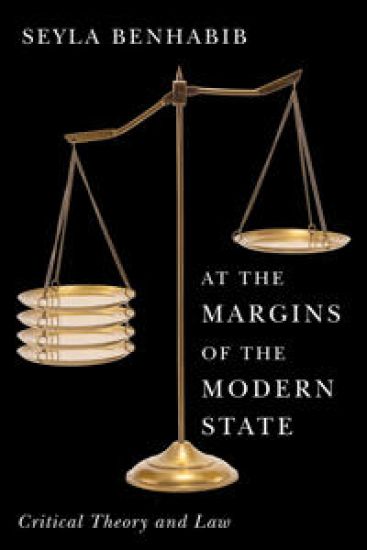
At the Margins of the Modern State

At the Margins of the Modern State

Seyla Benhabib

JOHN WILEY AND SONS LTD
2025
sidottu
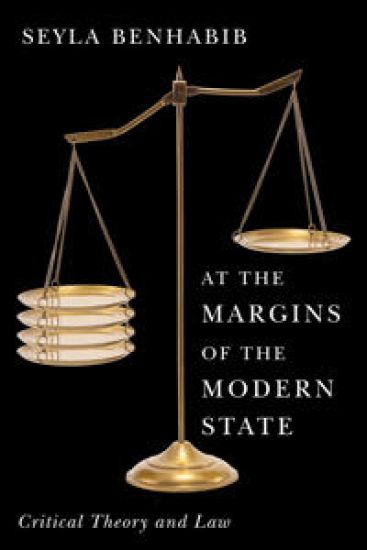
The international order of the post-WW II period is in disarray. The sounds of war can be heard all around us, from Ukraine to Gaza, from Darfur to the Congo, and there is growing skepticism towards human rights and democracy, the rule of law and peace among peoples.Facile expressions such as “Eurocentrism” and “demise of the West and the rise of the rest” miss the real challenge in this situation: how to extend moral, legal and political universalism to address the experiences of the multitude of humanity for whom western modernity has brought not only equality but also subordination, not only emancipation but also domination. Benhabib argues that rethinking this universalist project and participating in world-building together can be achieved by reconstructing and retrieving the best insights of critical social theory in the Frankfurt tradition and the liberal Kantianism of Rawls and Dworkin. In that spirit, this volume addresses state and popular sovereignty, Third World approaches to International Law, the 1951 Refugee Convention, and climate change legislation, while focusing on the changing fortunes of the European Union and cosmopolitanism. Benhabib engages with postcolonial thinkers and argues that, although validity claims and relations of domination and inequality are often intermixed, it is possible to reconstruct the insights of international law to serve a more inclusive universalism and world-building. This vibrant defense of human rights and universal norms in an age of political skepticism and extremism will appeal to a wide readership and will be of particular interest to students and scholars in political theory, critical theory and law.
At the Margins of the Modern State

At the Margins of the Modern State

Seyla Benhabib

JOHN WILEY AND SONS LTD
2025
nidottu
The international order of the post-WW II period is in disarray. The sounds of war can be heard all around us, from Ukraine to Gaza, from Darfur to the Congo, and there is growing skepticism towards human rights and democracy, the rule of law and peace among peoples.Facile expressions such as “Eurocentrism” and “demise of the West and the rise of the rest” miss the real challenge in this situation: how to extend moral, legal and political universalism to address the experiences of the multitude of humanity for whom western modernity has brought not only equality but also subordination, not only emancipation but also domination. Benhabib argues that rethinking this universalist project and participating in world-building together can be achieved by reconstructing and retrieving the best insights of critical social theory in the Frankfurt tradition and the liberal Kantianism of Rawls and Dworkin. In that spirit, this volume addresses state and popular sovereignty, Third World approaches to International Law, the 1951 Refugee Convention, and climate change legislation, while focusing on the changing fortunes of the European Union and cosmopolitanism. Benhabib engages with postcolonial thinkers and argues that, although validity claims and relations of domination and inequality are often intermixed, it is possible to reconstruct the insights of international law to serve a more inclusive universalism and world-building. This vibrant defense of human rights and universal norms in an age of political skepticism and extremism will appeal to a wide readership and will be of particular interest to students and scholars in political theory, critical theory and law.
Exile, Statelessness, and Migration

Exile, Statelessness, and Migration

Seyla Benhabib

Princeton University Press
2018
pokkari
An examination of the intertwined lives and writings of a group of prominent twentieth-century Jewish thinkers who experienced exile and migrationExile, Statelessness, and Migration explores the intertwined lives, careers, and writings of a group of prominent Jewish intellectuals during the mid-twentieth century—in particular, Theodor Adorno, Hannah Arendt, Walter Benjamin, Isaiah Berlin, Albert Hirschman, and Judith Shklar, as well as Hans Kelsen, Emmanuel Levinas, Gershom Scholem, and Leo Strauss. Informed by their Jewish identity and experiences of being outsiders, these thinkers produced one of the most brilliant and effervescent intellectual movements of modernity. Political philosopher Seyla Benhabib’s starting point is that these thinkers faced migration, statelessness, and exile because of their Jewish origins, even if they did not take positions on specifically Jewish issues personally. The sense of belonging and not belonging, of being “eternally half-other,” led them to confront essential questions: What does it mean for the individual to be an equal citizen and to wish to retain one’s ethnic, cultural, and religious differences, or perhaps even to rid oneself of these differences altogether in modernity? Benhabib isolates four themes in their works: dilemmas of belonging and difference; exile, political voice, and loyalty; legality and legitimacy; and pluralism and the problem of judgment.Surveying the work of influential intellectuals, Exile, Statelessness, and Migration recovers the valuable plurality of their Jewish voices and develops their universal insights in the face of the crises of this new century.
Exile, Statelessness, and Migration

Exile, Statelessness, and Migration

Seyla Benhabib

PRINCETON UNIVERSITY PRESS
2018
sidottu
An examination of the intertwined lives and writings of a group of prominent twentieth-century Jewish thinkers who experienced exile and migrationExile, Statelessness, and Migration explores the intertwined lives, careers, and writings of a group of prominent Jewish intellectuals during the mid-twentieth century—in particular, Theodor Adorno, Hannah Arendt, Walter Benjamin, Isaiah Berlin, Albert Hirschman, and Judith Shklar, as well as Hans Kelsen, Emmanuel Levinas, Gershom Scholem, and Leo Strauss. Informed by their Jewish identity and experiences of being outsiders, these thinkers produced one of the most brilliant and effervescent intellectual movements of modernity. Political philosopher Seyla Benhabib’s starting point is that these thinkers faced migration, statelessness, and exile because of their Jewish origins, even if they did not take positions on specifically Jewish issues personally. The sense of belonging and not belonging, of being “eternally half-other,” led them to confront essential questions: What does it mean for the individual to be an equal citizen and to wish to retain one’s ethnic, cultural, and religious differences, or perhaps even to rid oneself of these differences altogether in modernity? Benhabib isolates four themes in their works: dilemmas of belonging and difference; exile, political voice, and loyalty; legality and legitimacy; and pluralism and the problem of judgment.Surveying the work of influential intellectuals, Exile, Statelessness, and Migration recovers the valuable plurality of their Jewish voices and develops their universal insights in the face of the crises of this new century.
Feminist Contentions

Feminist Contentions

Seyla Benhabib

Routledge
2017
sidottu
First published in 1995. This volume presents a debate between four of the top feminist theorists in the United States. Seyla Benhabib, Judith Butler, Drucilla Cornell and Nancy Fraser discuss some of the key questions facing feminist theory. Each articulates her own position in an initial essay, then responds to the others in a follow-up essay, making possible a conversation between these influential feminist thinkers. Begun as a symposium on the issue of feminism and postmodernism, the volume evolved into a discussion of broader issues such as the usefulness of postmodernism as a theoretical concept; the role of philosophy in social criticism; how historical narrative is best conceptualized; the status of the subject of feminism; and the political effects of different formulations of all these issues. Unlike many collections which assume a given topic and ask various thinkers to respond to it, this format enables the contributors themselves to articulate their own views on the key questions facing feminist theory and distinguish their views from others.
Att läsa Arendt

Att läsa Arendt

Étienne Balibar; Judith Butler; Julia Kristeva; Bonnie Honig; Jürgen Habermas; Seyla Benhabib; Paul Ricoeur

Tankekraft Förlag
2017
nidottu
Hannah Arendt framstår med allt större tydlighet som en av det förra århundradets mest egensinniga och användbara teoretiker. Föreliggande antologi samlar nio essäer och artiklar om hennes politiska tänkande. Ett par av texterna är skrivna av författare som primärt kan karakteriseras som Arendtforskare medan de övriga är skrivna av mer namnkunniga politiska tänkare och filosofer för vilka Arendt blir en dialogpartner i det kontinuerliga utvecklandet av deras egna teorier. Genomgående handlar det om författare som tänker med Arendt mot Arendt och som visar att det med utgångspunkt i hennes verk fortfarande är möjligt att ställa de riktigt stora frågorna om politikens mening, våld och makt, mänskliga rättigheter och människans villkor. Parallellt med den här boken publiceras Rätten till rättigheter: Politiska texter i urval som innehåller essäer, fragment och intervjuer av och med Hannah Arendt. Redaktör för båda volymerna är Anders Burman, idéhistoriker verksam vid Södertörns högskola som på TankeKraft förlag tidigare gett ut Att läsa Hegel (tillsammans med Anders Bartonek) och Flykten från Hegel.
Gleichheit und Differenz

Gleichheit und Differenz

Seyla Benhabib

Mohr Siebeck
2013
sidottu
Sind kosmopolitische Ideale heute frommes Wunschdenken? Historisch und begrifflich nähert sich Seyla Benhabib der Paradoxie von Gleichheit und Differenz im Denken der westlichen Moderne. Ausgehend von autobiographischen Reflexionen präsentiert sie Episoden der kulturellen und politischen Erfahrungen des deutschsprachigen Judentums und seine Antworten auf die Dilemmata von Gleichheit und Differenz, Souveränität und Assimilation. Die unterschiedlichen Reflexionen Leopold Lucas' oder Moritz Goldsteins, Hans Kelsens, Leo Strauss' oder Hannah Arendts helfen, die paradoxe politische Erfahrung im modernen Nationalstaat angesichts der Hybridität kultureller Identitäten und Leistungen zu reflektieren. Benhabibs zentrale Konzepte hierbei sind "Hospitalität" als Verweis auf unsere eigene Fremdheit und problematische Vielfalt, die jurisgenerative Kraft kosmopolitischer Normen und die Idee demokratischer Iterationen als Prozesse der Ausformung des Politischen durch Recht.
Et annet verdensborgerskap

Et annet verdensborgerskap

Seyla Benhabib

Cappelen Damm akademisk
2011
nidottu
Filosofen Seyla Benhabib er opptatt av problemstillinger knyttet til flerkulturalitet og kosmopolitisme, hun mener at ingen kultur er «ren», men formes og omformes i kontakt med andre kulturer. I to essay i denne boka diskuterer hun begrepet verdensborgerskap. Synet på det å være en borger er i ferd med å forandre seg. Siden FNs menneskerettighetserklæring kom i 1948, har vi fått et globalt sivilt samfunn som er styrt av verdensborgerlige verdier og universelle rettigheter. Men slike verdier er vanskelige for noen å akseptere som legitime, fordi de er i konflikt med nasjonale idealer. Like fullt er Benhabib optimistisk på fremtidens vegne og mener at normer om menneskeretter vil opprettholdes og utvides ved gjentatte brytninger og revurderinger av nasjonalstaters identitet og grenser. Seyla Benhabib er født i 1950 i Istanbul av jødiske foreldre og er i dag professor i politisk filosofi ved Yale i USA. Nr. 64 i Cappelens upopulære skrifter.
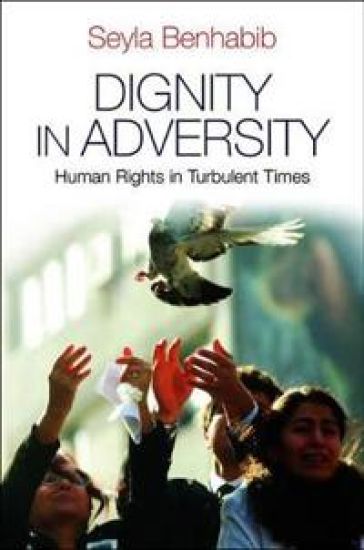
Dignity in Adversity

Dignity in Adversity

Seyla Benhabib

Polity Press
2011
sidottu
The language of human rights has become the public vocabulary of our contemporary world. Ironically, as the political influence of human rights has grown, their philosophical justification has become ever more controversial. Building on a theory of discourse ethics and communicative rationality, this book addresses the politics and philosophy of human rights against the background of the broader social transformations that are shaping the modern world. Rejecting the reduction of international human rights to the Trojan horse of a neo-liberal empire's bid for world power, as well as the conservative objections to legal cosmopolitanism as encroachments upon democratic sovereignty, Benhabib develops two key concepts to move beyond these false antitheses. International human rights norms need contextualization in specific polities through processes of what she calls 'democratic iterations.' Furthermore, such norms have a 'jurisgenerative power,' in that they enable new actors to enter fields of social and political contestation; they promote new vocabularies for public claim-making and anticipate a justice to come. Ranging over themes such as sovereignty, citizenship, genocide, European anti-semitism, the crisis of the nation-state, and the 'scarf affair' in contemporary Europe and Turkey, this major new book by one of our leading political theorists reflects upon the political transformations of our times and makes a compelling case for a cosmopolitanism without illusions.
Dignity in Adversity

Dignity in Adversity

Seyla Benhabib

Polity Press
2011
nidottu
The language of human rights has become the public vocabulary of our contemporary world. Ironically, as the political influence of human rights has grown, their philosophical justification has become ever more controversial. Building on a theory of discourse ethics and communicative rationality, this book addresses the politics and philosophy of human rights against the background of the broader social transformations that are shaping the modern world. Rejecting the reduction of international human rights to the Trojan horse of a neo-liberal empire's bid for world power, as well as the conservative objections to legal cosmopolitanism as encroachments upon democratic sovereignty, Benhabib develops two key concepts to move beyond these false antitheses. International human rights norms need contextualization in specific polities through processes of what she calls 'democratic iterations.' Furthermore, such norms have a 'jurisgenerative power,' in that they enable new actors to enter fields of social and political contestation; they promote new vocabularies for public claim-making and anticipate a justice to come. Ranging over themes such as sovereignty, citizenship, genocide, European anti-semitism, the crisis of the nation-state, and the 'scarf affair' in contemporary Europe and Turkey, this major new book by one of our leading political theorists reflects upon the political transformations of our times and makes a compelling case for a cosmopolitanism without illusions.
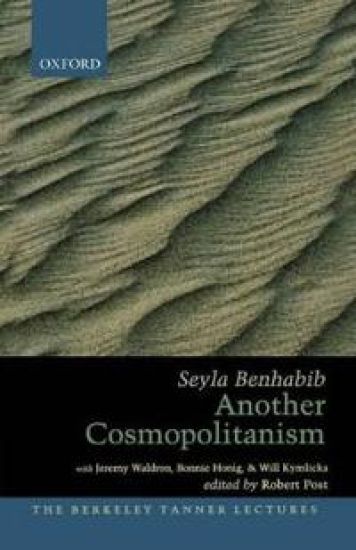
Another Cosmopolitanism

Another Cosmopolitanism

Seyla Benhabib

Oxford University Press Inc
2008
nidottu
In these two important lectures, distinguished political philosopher Seyla Benhabib argues that since the UN Declaration of Human Rights in 1948, we have entered a phase of global civil society which is governed by cosmopolitan norms of universal justice -- norms which are difficult for some to accept as legitimate since they are in conflict with democratic ideals. In her first lecture, Benhabib argues that this tension can never be fully resolved, but it can be mitigated through the renegotiation of the dual commitments to human rights and sovereign self-determination. Her second lecture develops this idea in detail, with special reference to recent developments in Europe (for example, the banning of Muslim head scarves in France). The EU has seen the replacement of the traditional unitary model of citizenship with a new model that disaggregates the components of traditional citizenship, making it possible to be a citizen of multiple entities at the same time. The volume also contains a substantive introduction by Robert Post, the volume editor, and contributions by Bonnie Honig (Northwestern University), Will Kymlicka (Queens University), and Jeremy Waldron (Columbia School of Law).
Another Cosmopolitanism

Another Cosmopolitanism

Seyla Benhabib

Oxford University Press Inc
2006
sidottu
In these two important lectures, distinguished political philosopher Seyla Benhabib argues that since the UN Declaration of Human Rights in 1948, we have entered a phase of global civil society which is governed by cosmopolitan norms of universal justice--norms which are difficult for some to accept as legitimate since they are sometimes in conflict with democratic ideals. In her first lecture, Benhabib argues that this tension can never be fully resolved, but it can be mitigated through the renegotiation of the dual commitments to human rights and sovereign self-determination. Her second lecture develops this idea in detail, with special reference to recent developments in Europe (for example, the banning of Muslim head scarves in France). The EU has seen the replacement of the traditional unitary model of citizenship with a new model that disaggregates the components of traditional citizenship, making it possible to be a citizen of multiple entities at the same time. The volume also contains a substantive introduction by Robert Post, the volume editor, and contributions by Bonnie Honig (Northwestern University), Will Kymlicka (Queens University), and Jeremy Waldron (Columbia School of Law).
Hannah Arendt

Hannah Arendt

Seyla Benhabib

SUHRKAMP VERLAG
2006
pokkari
Die amerikanische Politikwissenschaftlerin Seyla Benhabib legt eine Rekonstruktion der politischen Theorie Hannah Arendts vor, die sich deren Werk gerade von ihren weniger bekannten Schriften her nähert. Dabei gelingt es Benhabib, die Spuren einer alternativen Genealogie der Moderne freizulegen. Über die Untersuchung des Spannungsverhältnisses zwischen Totalitarismusanalyse, den Einflüssen der Existenzphilosophie und der genuinen Methode Arendts findet Benhabib einen kritischen Zugang zu ihren Schriften, der auch deren Anschlußmöglichkeiten an aktuelle Debatten aufzeigt. Diese gibt es immer dort, wo es um Bürger- und Menschenrechte, Zivilgesellschaft und politische Öffentlichkeit geht.
The Rights of Others

The Rights of Others

Seyla Benhabib

Cambridge University Press
2004
sidottu
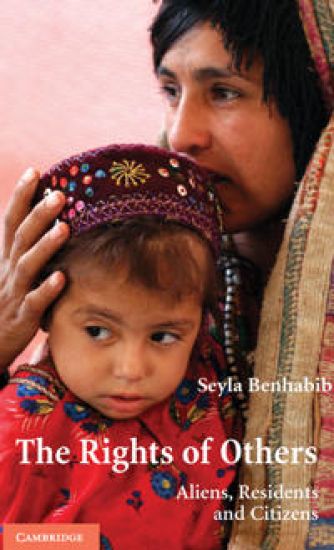
The Rights of Others examines the boundaries of political community by focusing on political membership - the principles and practices for incorporating aliens and strangers, immigrants and newcomers, refugees and asylum seekers into existing polities. Boundaries define some as members, others as aliens. But when state sovereignty is becoming frayed, and national citizenship is unravelling, definitions of political membership become much less clear. Indeed few issues in world politics today are more important, or more troubling. In her Seeley Lectures, the distinguished political theorist Seyla Benhabib makes a powerful plea, echoing Immanuel Kant, for moral universalism and cosmopolitan federalism. She advocates not open but porous boundaries, recognising both the admittance rights of refugees and asylum seekers, but also the regulatory rights of democracies. The Rights of Others is a major intervention in contemporary political theory, of interest to large numbers of students and specialists in politics, law, philosophy and international relations.