Kirjojen hintavertailu. Mukana 12 390 323 kirjaa ja 12 kauppaa.
Kirjailija
Seymour B. Sarason
Kirjat ja teokset yhdessä paikassa: 11 kirjaa, julkaisuja vuosilta 1993-2013, suosituimpien joukossa Centers for Ending. Vertaile teosten hintoja ja tarkista saatavuus suomalaisista kirjakaupoista.
As people live longer and health care costs continue to rise and fewer doctors choose to specialize in geriatrics, how prepared is the United States to care for its sick and elderly? According to veteran psychologist Seymour Sarason’s eloquent and compelling new book, the answer is: inadequately at best. And rarely discussed among the grim statistics is the psychosocial price paid by nursing home patients, from loneliness and isolation to depression and dependency.In Centers for Ending, Dr. Sarason uses his firsthand experience as both practitioner and patient in senior facilities to reveal wide-ranging professional and moral issues affecting this seemingly familiar terrain. Insensitive medical personnel, poorly trained nurses and aides, indifferent administrators, and a prevailing culture content with treating “bodies” instead of human beings are identified as contributing factors. Drawing on America’s rich history of large-scale solutions to social problems, Dr. Sarason offers penetrating insights and bold suggestions in such areas as:The widening care gap between haves and have-nots.Why professional caregivers fail to understand patients.The nursing home resident as immigrant.Why previous reform efforts have not worked.The need for a Presidential commission for the elderly.The scenario if conditions are allowed to remain as they are or worsen.This concise volume is essential reading for researchers, graduate students, professionals, practitioners, and policy makers across such fields as geriatric medicine, health psychology, social work, public health, and public policy. Centers for Ending is a clarion call to be ignored at great cost to our elders and ourselves.
This work probes the topic of teaching as a performing art, focusing on the role of teachers in galvanizing an audience - their students. It argues that teachers will better engage learners if they are prepared in the ""artistry"" of doing so. The author sees teachers as actors and thus uses the traditions of stage performance to inspire ways to foster connections between teachers and students. Sarason elucidates how the rehearsal processes actors undergo and the direction they receive, for example, would be similarly beneficial for educators. Recognizing that implementing his ideas would require a profound rethinking of teacher training programmes, Sarason urges why they are crucial to excellence in education.
Once again, Sarason leads the way, with a unique and provocative perspective on organizational collaboration. In this penetrating work, Sarason and Lorenz tackle the problem of decreased in schools and health and social service agencies. They show how collaboration between organizations can work, and how this pooling of resources can add up to more than the sum of parts. The authors the role of networks for maximizing the use of resources, the special role and characteristics of a network coordinator, and the energy and sense of community that will result.
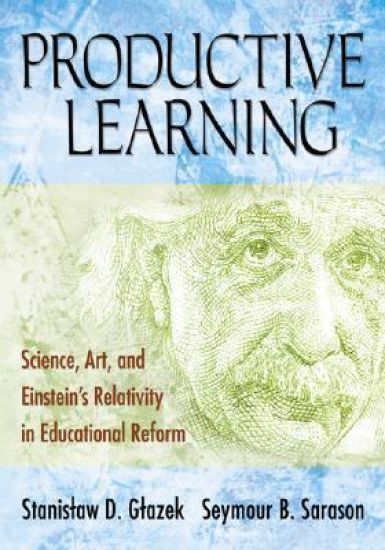
Sarason challenges educators to understand that to continue tostruggle for 'power over' rather than 'power with' overlooks themutual interest of all parties that will stifle any real progressin education reform. In a classroom utilizing effective teachingpractices students would respond to the question, 'How do you ratethis book?' with all thumbs up. ?Choice
'Fans and disciples of Seymour Sarason all know that education reform needs a change in course. Indeed, the daily practices of schools, education research, and US educational policy all need such a change. Neither Professors Glazek and Sarason, nor anyone else, can give yet a complete description of what these changes would involve. But when the change happens, the leaders of the change will all acknowledge their considerable debt to this book. The reason is that the needed change in school classrooms will be very hard to recognize as such unless these leaders are thoroughly familiar with the concept of 'a context of productive learning.' In this book, Glazek and Sarason collaborated on an extraordinarily daunting attempt to create and analyze a context of productive learning in which, simultaneously, Sarason was the student and Glazek the teacher and vice versa. They attempted what must surely be a 'Mt Everest' example of the concept: explanation of Einstein's famous formula, E=mc².áThe result should be of intense interest to a broad audience concerned with the present problems of science education as well as the nature of a context of productive learning.' -Kenneth G. Wilson, H. C. Youngberg Trustees Distinguished Professor Nobel Laureate for Physics, 1982 Department of Physics, The Ohio State University 'By making accessible and intelligible Einstein's theory of relativity, this remarkable book reveals to its readers the power and possibility of their own learning and, in doing so, brilliantly demonstrates the power and necessity of productive learning for everyone.' -Andy Hargreaves, Thomas More Brennan Chair in Education Lynch School of Education, Boston College 'Professors Glazek and Sarason have written a creative and instructive book that will be read for years to come. Drawing upon their backgrounds in physics and psychology, they support EinsteinÆs recommendations as to the importance of the humanities. The authors' purpose is to help readers acquire a substantive grasp of how Einstein accomplished what he did and the implications of this for educational reform. The reader's view of teaching and learning will be forever changed by the authors' insights.' -Dale L. Brubaker, Professor University of North Carolina 'This is an interesting and provocative book, written by a psychologist with several thousands of hours of observation and analysis of classroom teaching in public schools and a physicist. The book starts with a critique of teaching in our schools and explains why educational reform has been so minimal in its effects. The movie 'Mr. Holland's Opus' is used as a distinguisher between good and bad teaching methodology. These chapters are followed by physics chapters on the foundation of Einstein's E=mc¦. The authors follow Einstein's thinking and use the features of light as a vehicle for their discussion. They fold in stories and shy away from formulas, which they leave for appendices. The book ends with a chapter on the philosophy of teaching. The book is well written and eminently readable; the arguments are easy to follow. I recommend the book to anyone interested in the basis of modern physics and Einstein's role in it.' -Ernest M. Henley, Professor Emeritus of Physics University of Washington Use the concept of productive learning to reframe school reform!áWhy do people, college-bound or even in college, stay away in droves from courses in science, especially physics? Why do people know so little about the significance of Einstein's contributions which require dramatic changes in how we understand ourselves, our world, and the entire universe? Why have educational reforms failed? In this book, two professors, one a particle physicist and the other a psychologist, confront these questions in a unique way based on the assumption that people can grasp on a non-superficial level what Einstein did in 1905 if, and only if, the features of productive learning are taken seriously. The authors make clear that those features are applicable in teaching any subject matter by devoting two chapters to music and other arts. In the case of science, they chose Einstein's work precisely because of the general belief that it cannot be assimilated by 'ordinary mortals' whose brains are not 'wired' to comprehend the ways in which time, mass, energy, and the speed of light are seamlessly interrelated. But this book is not an attempt to popularize Einstein. Its goal is to demonstrate that features of the context of productive learning are applicable to any teacher-student relationship, regardless of whether the student is in first grade, in high school, or in college. Einstein's work was about alignment of frames of reference of observers in physics. A similar process of alignment between the minds of a student and a teacher is the vehicle of productive learning. The book explains the analogy. The authors discuss and emphasize that educational reform will continue to fail as long as the concept of learning is fuzzy and provides no direction to the teacher-student relationship. Reform efforts will continue to fail unless and until they are based on a clear distinction between contexts of productive and unproductive learning.
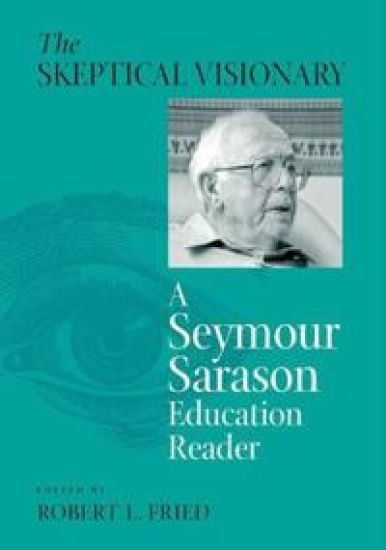
Seymour Sarason, in the words of Carl Glickman, is 'one of America's seminal thinkers about public education'. For over four decades his has been a voice of much-needed skepticism about our plans for school reform, teacher training, and educational psychology. Now, for the first time, Sarason's essential writings on these and other issues are collected together, offering student and researcher alike with the range, depth, and originality of Sarason's contributions to American thinking on schooling. As we go from debate to debate on issues such as school choice, charter schools, inclusive education, national standards, and other problems that seem to drag on without solution, Sarason's critical stance on the folly of many of our attempts to fix schools has always had at the center a concern for the main players in our educational institutions: the students, the teachers and the parents.Any plans that cannot account for their well-being are doomed to failure. And in the face of such failure, the clarity of Sarason's vision for real educational success is a much-needed antidote to much of the rhetoric that currently passes for substantial debate. A wide-ranging and comprehensive selection of Sarason's most significant writings, "The Skeptical Visionary" should find a prized space on any student's or teacher's bookshelf. Author note: Robert Fried is Associate Professor in the School of Education at Northeastern University, and is the author of "The Passionate Teacher: A Practical Guide" and "The Passionate Learner: How Teachers and Parents Can Help Children Reclaim the Joy of Discovery". Seymour Sarason is Professor Emeritus in the Department of Psychology at Yale University. He is the author of over forty books and is considered to be one of the most significant researchers in education and educational psychology in the country.
You Are Thinking of Teaching? is a lovely essay on the consideration of teachin. It asks those who are thinking of teaching to ask questions, to ponder their decision, and to pursue the information they need to make a reasoned choice. There is nothing like it in the professional literature, which makes it all the more valuable.?Pat Walsey, senior researcher for change, Coalition of Essential Schools