Kirjojen hintavertailu. Mukana 12 595 353 kirjaa ja 12 kauppaa.
Kirjailija
Shahram Khosravi
Kirjat ja teokset yhdessä paikassa: 8 kirjaa, julkaisuja vuosilta 2009-2023, suosituimpien joukossa Irreguljär migration i Sverige : rättigheter, vardagserfarenheter, motstånd och statliga kategoriseringar. Vertaile teosten hintoja ja tarkista saatavuus suomalaisista kirjakaupoista.
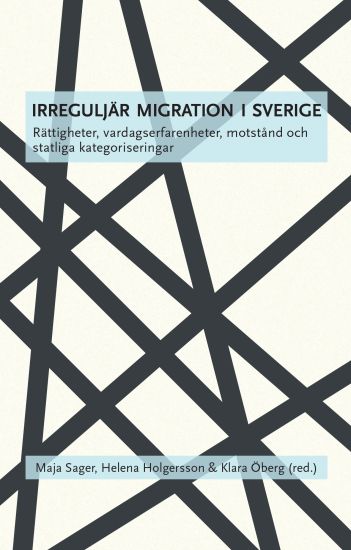
Antalet människor som lever under hot om utvisning har ökat under de senaste decennierna. Samtidigt har det vuxit fram en medvetenhet om att dessa människor är ? och kommer att vara ? invånare i Sverige. En bred social rörelse med fokus på irreguljära migranters rättigheter har formerats och bidragit till att lagstiftningen på området förändrats. Människor utan uppehållstillstånd har idag rätt till sjukvård ?som inte kan anstå? och deras barn har rätt att gå i skolan. Utvecklingen är dock dubbel. Över hela Europa stängs gränserna. Och politiska krav på en närmast total exkludering av irreguljära migranter har vunnit gehör. Det som länge framstod som en utveckling mot ökade rättigheter för dessa människor har visat sig handla om återkommande förhandlingar där utgången är oviss. ?I denna antologi analyserar 19 svenska forskare hur tillståndet irregularitet skapas, återskapas och upplevs. Irregularitet förstås som präglat av föränderlighet, pluralism och temporalitet, och inte som en fast identitet eller egenskap. De olika texterna uppmärksammar hur detta tillstånd synliggör en rad dramatiska paradoxer, särskilt i den svenska välfärdsstaten. Texterna diskuterar främst det komplicerade förhållandet mellan medborgerliga och mänskliga rättigheter och verklighetsglappet mellan föreställningen om Sverige som ?världsbäst? på humanitet, jämställdhet och solidaritet och den våldsamma exkludering som sker i den inkluderande välfärdsstatens geografiska och rättsliga marginaler. Maja Sager är biträdande lektor på Genusvetenskapliga institutionen, Lunds universitet. Helena Holgersson är sociolog och arbetar som lektor på Institutionen för kulturvetenskap vid Göteborgs universitet. Klara Öberg är antropolog och affilierad vid IRIS, Écoles des hautes études en science sociales i Paris. Hon undervisar i migration, genus och globalisering vid institutionen för globala studier vid Göteborgs universitet. Utöver redaktörerna medverkar Henry Ascher, Maria Bexelius, Carin Björnberg Cuadra, Pouran Djampour, Sofi Jansson, Shahram Khosravi, Anna Lundberg, Heidi Moksnes, Amanda Nielsen, Vanna Nordling, Anette Rosengren, Erika Sigvardsdotter, Niklas Selberg, Mikael Spång, Emma Söderberg och Åsa Smith Wahlström.
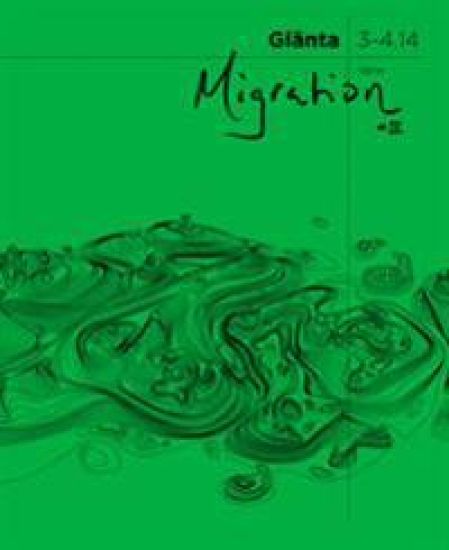
I det sista av tre migrationsnummer pratar Trifa Shakely och Mara Lee med löständer i munnen, Fabrizio Gatti blickar tillbaka på tio års flyktingkatastrofer, Lawrence Abu Hamdan kartlägger språktester, Seyla Benhabib kritiserar det humanitära förnuftet, Ann-Marie Tung Hermelin läser sin mammas brev, Lene Myong utvärderar dansk kärlek, Lidija Praizovic söker jobb som aerobicsinstruktör, Doug Saunders rapporterar från historiens största migration, Leila Brännström söker den svenska rasismens hjärta och Alejandro Leiva Wenger frågar sig om han måste ställa frågor. Med mera.
In Precarious Lives, Shahram Khosravi attempts to reconcile the paradoxes of Iranians' everyday life in the first decade of the twenty-first century. On the one hand, multiple circumstances of precarity give rise to a sense of hopelessness, shared visions of a futureless tomorrow, widespread home(land)lessness, intense individualism, and a growth of incivilities. On the other, daydreaming and hope, as well as civility and solidarity in political protests, street carnivals, and social movements, continue to persist. Young Iranians describe themselves as being stuck in purposelessness and forced to endure endless waiting, and they are also aware that they are perceived as unproductive and a burden on their society. Despite the aspirations and inspiration they possess, they find themselves forced into petrifying social and spatial immobility. Uncertainty in the present, a seemingly futureless tomorrow: these are the circumstances that Khosravi explores in Precarious Lives. Creating an intricate and moving portrait of contemporary Iranian life, Khosravi weaves together individual stories, government reports, statistics, and cultural analysis of art and literature to depict how Iranians react to the experience of precarity and the possibility of hope. Drawing on extensive ethnographic engagement with youth in Tehran and Isfahan as well as with migrant workers in rural areas, Khosravi examines the complexities and contradictions of everyday life in Iran. Precarious Lives is a vital work of contemporary anthropology that serves as a testament to the shared hardship and hope of the Iranian people.
Ett av de stora verken om rasism och kolonialismFrantz Fanon skrev sin klassiska uppgörelse med kolonialismen mitt under kriget i Algeriet [1954-1962], där han själv aktivt tog del i motståndsrörelsens väpnade kamp. Jordens fördömda är en appell för en helt ny värld, en total revolution där de förtrycktas motvåld är en nödvändig väg till frihet. Fanon visar hur kolonialt förtryck och mentalsjukdom hänger ihop och diskuterar betydelsen av klass, ras, nationalism och våld. Frihetskampen, menade Fanon, måste kombineras med att en ny, avkoloniserad kultur byggs upp. Befrielserörelser, gerillaarméer och politiska rörelser världen över har inspirerats av hans klara och ursinniga analys.I svensk översättning av Per-Olov Zennström, med ett nyskrivet förord av Shahram Khosravi, professor i socialantropologi på Stockholms universitet.FRANTZ FANON föddes på Martinique i Västindien 1925. Efter att ha utbildat sig till psykiatriker i Frankrike deltog han i Algeriets befrielsekrig. Han var motståndsrörelsen FNL:s ambassadör i Ghana, men avled i USA 1961 - där han vårdades för leukemi - bara veckan efter att Jordens fördömda publicerades och samma dag som den beslagtogs i Frankrike.»Århundradets viktigaste teoretiker inom rasism och kolonialism.« Angela Davis»Malcolm X, Eldridge Cleaver, Amiri Baraka och ledarna för de Svarta Pantrarna - samtligas texter visar hur djupt berörda de blivit av Frantz Fanon.« Boston Globe
Waiting is an inescapable part of life in modern societies. We all wait, albeit differently and for different reasons. What does it mean to wait for a long period of time? How do people narrate their waiting? Waiting is about the senses. If you do not sense it, there is no waiting. We sense waiting in the form of boredom, despair, anxiety and restlessness, but also anticipation and hope. Prolonged waiting is like insomnia – a state of wakefulness, a kind of mood, an emotional state. But it is also about politics; affecting and affected by gender, citizenship, class, and race.Blending ethnography, philosophy, poetry, art, and fiction, this book is a collection of works by scholars, visual artists, writers, architects and curators, exploring different forms of waiting in diverse geographical contexts, and the enduring effects of history, power, class, and coloniality.
In Precarious Lives, Shahram Khosravi attempts to reconcile the paradoxes of Iranians' everyday life in the first decade of the twenty-first century. On the one hand, multiple circumstances of precarity give rise to a sense of hopelessness, shared visions of a futureless tomorrow, widespread home(land)lessness, intense individualism, and a growth of incivilities. On the other, daydreaming and hope, as well as civility and solidarity in political protests, street carnivals, and social movements, continue to persist. Young Iranians describe themselves as being stuck in purposelessness and forced to endure endless waiting, and they are also aware that they are perceived as unproductive and a burden on their society. Despite the aspirations and inspiration they possess, they find themselves forced into petrifying social and spatial immobility. Uncertainty in the present, a seemingly futureless tomorrow: these are the circumstances that Khosravi explores in Precarious Lives. Creating an intricate and moving portrait of contemporary Iranian life, Khosravi weaves together individual stories, government reports, statistics, and cultural analysis of art and literature to depict how Iranians react to the experience of precarity and the possibility of hope. Drawing on extensive ethnographic engagement with youth in Tehran and Isfahan as well as with migrant workers in rural areas, Khosravi examines the complexities and contradictions of everyday life in Iran. Precarious Lives is a vital work of contemporary anthropology that serves as a testament to the shared hardship and hope of the Iranian people.
Tehran, Delhi, Salvador The present volume emanates from three studies of youngsters and young adults in three urban contexts in the world: in Tehran in Iran, Delhi in India, and Salvador in Brazil. To them, global as well as local ideas about modernization, traditionalism and authenticity provide frames for interpreting the development of society and evaluating one’s own life. The young people that this volume is concerned with were all born in the 1980s. Today they are adults. They all relate to a globalized market of recognition, but also one of potential resources such as attractive commodities, international jobs, local jobs with an international touch, or international support for local activities through the NGO world. Their rod of reference for judging their own life is global. Their sense of time and progress is related to the important developments of their own countries - internally and in relation to the global context - during their own lifespan and possibly that of their parents. Yet, cultural identity is in all the three cases also marked by a relation to ideas about tradition. Becoming modern may also entail redescribing, reinventing and reviving pasts in which the parents’ generation saw little value. The volume as a whole endeavours to give a contribution to the ethnography of varying cultural conceptualisations of modernity.
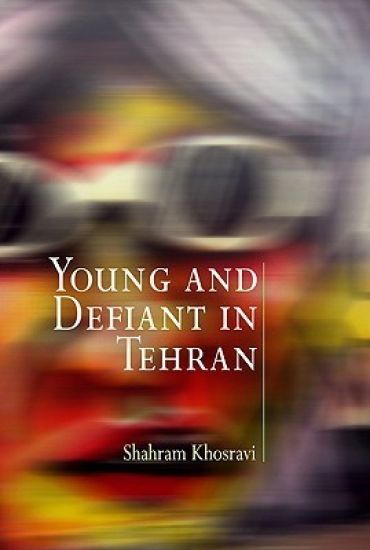
With more than half its population under twenty years old, Iran is one of the world's most youthful nations. The Iranian state characterizes its youth population in two ways: as a homogeneous mass, "an army of twenty millions" devoted to the Revolution, and as alienated, inauthentic, Westernized consumers who constitute a threat to the society. Much of the focus of the Islamic regime has been on ways to protect Iranian young people from moral hazards and to prevent them from providing a gateway for cultural invasion from the West. Iranian authorities express their anxieties through campaigns that target the young generation and its lifestyle and have led to the criminalization of many of the behaviors that make up youth culture. In this ethnography of contemporary youth culture in Iran's capital, Shahram Khosravi examines how young Tehranis struggle for identity in the battle over the right to self-expression. Khosravi looks closely at the strictures confronting Iranian youth and the ways transnational cultural influences penetrate and flourish. Focusing on gathering places such as shopping centers and coffee shops, Khosravi examines the practices of everyday life through which young Tehranis demonstrate defiance against the official culture and parental dominance. In addition to being sites of opposition, Khosravi argues, these alternative spaces serve as creative centers for expression and, above all, imagination. His analysis reveals the transformative power these spaces have and how they enable young Iranians to develop their own culture as well as individual and generational identities. The text is enriched by examples from literature and cinema and by livid reports from the author's fieldwork.