Kirjojen hintavertailu. Mukana 12 459 402 kirjaa ja 12 kauppaa.

Kirjailija

Shahrukh Rafi Khan

Kirjat ja teokset yhdessä paikassa: 13 kirjaa, julkaisuja vuosilta 2014-2025, suosituimpien joukossa Development Economics. Vertaile teosten hintoja ja tarkista saatavuus suomalaisista kirjakaupoista.

13 kirjaa

Kirjojen julkaisuhaarukka 2014-2025.

Ethnicity and Development

Ethnicity and Development

Shahrukh Rafi Khan

TAYLOR FRANCIS LTD
2025
nidottu
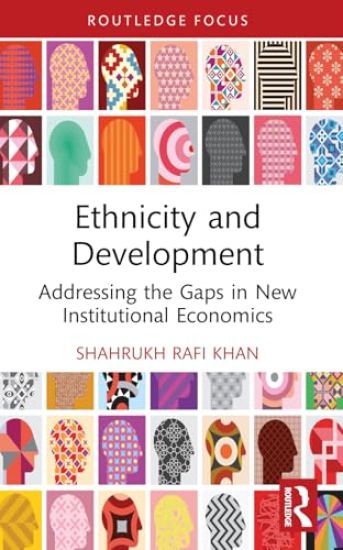
Ethnicity and Development explores the impact of ethnic fragmentation on the success or failure of nations and uses case studies of Bangladesh and Pakistan to illustrate this. It analyzes the role of institutions in engendering economic and social progress and challenges the New Institutional Economics (NIE) narrative.The book argues that the NIE narrative has some gaps, particularly that it is blind to ethnic fragmentation and therefore does not account for the construction of institutions that can build national cohesion in low- and low-middleincome countries (L/LMICs). It shows that L/LMICs have a different cultural context and that they need to first build national cohesion on a foundation of horizontal – across ethnic groups – and vertical – across classes – equity. The author’s analysis also examines other novel issues, such as the boost that is provided by nations acquiring the right of self-determination. Other novelties are the distinction between prime causes (triggers) for economic development and approaches for economic development. More important for this book is the distinction between natural and constructed nations and the conceptual framework presented to analyze their performance. Finally, the study examines the creation of national cohesion in ethnically diverse nations.Addressing a gap in the literature, this book will be of interest to researchers in development economics, political science and sociology and specialists in comparative politics/political theory with a focus on Area Studies.
Economic Successes in South Asia

Economic Successes in South Asia

Shahrukh Rafi Khan

TAYLOR FRANCIS LTD
2024
nidottu
This book analyses economic successes in South Asia and the reasons why they emerge by offering an in-depth analysis of a few case studies against the backdrop of overall policy context and economic performance of these countries. Offering a brief comparative review of South Asia in a global context, the book shows that the region remains an economically and socially lagging region. The author argues that within South Asia, most countries demonstrate examples of economic or social success. This book explores such successes that provide lessons for other South Asian countries and beyond. Case studies include the textile industry and microcredit in Bangladesh, information technology in India, forestry management in Nepal, surgical and sports goods in Pakistan, and human development in Sri Lanka. At the macro level, the book discusses India’s catch-up growth first given the country’s global importance and because of the prominence of the debate on its catch-up growth to development economics. A novel addition to the literature with its focus on successful initiatives with broad policy implications, this book will be of interest to researchers in the field of development economics, development studies and South Asian Studies, in particular South Asian policy.
Ethnicity and Development

Ethnicity and Development

Shahrukh Rafi Khan

TAYLOR FRANCIS LTD
2023
sidottu
Ethnicity and Development explores the impact of ethnic fragmentation on the success or failure of nations and uses case studies of Bangladesh and Pakistan to illustrate this. It analyzes the role of institutions in engendering economic and social progress and challenges the New Institutional Economics (NIE) narrative.The book argues that the NIE narrative has some gaps, particularly that it is blind to ethnic fragmentation and therefore does not account for the construction of institutions that can build national cohesion in low- and low-middleincome countries (L/LMICs). It shows that L/LMICs have a different cultural context and that they need to first build national cohesion on a foundation of horizontal – across ethnic groups – and vertical – across classes – equity. The author’s analysis also examines other novel issues, such as the boost that is provided by nations acquiring the right of self-determination. Other novelties are the distinction between prime causes (triggers) for economic development and approaches for economic development. More important for this book is the distinction between natural and constructed nations and the conceptual framework presented to analyze their performance. Finally, the study examines the creation of national cohesion in ethnically diverse nations.Addressing a gap in the literature, this book will be of interest to researchers in development economics, political science and sociology and specialists in comparative politics/political theory with a focus on Area Studies.
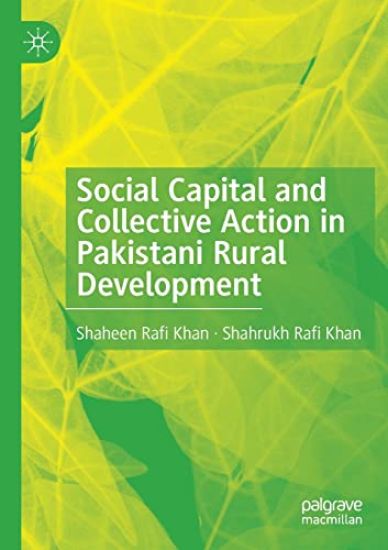
Social Capital and Collective Action in Pakistani Rural Development

Social Capital and Collective Action in Pakistani Rural Development

Shaheen Rafi Khan; Shahrukh Rafi Khan

Springer Nature Switzerland AG
2022
nidottu
This book distinguishes conceptually between indigenous and constructed social capital and the associated spontaneous and induced collective action for rural development and natural resource preservation. While some of the case studies in this book show that induced collective action can lead to cost-effective, community-centric and empirically grounded rural development initiatives, other case studies show that spontaneous collective action, based on indigenous social capital, can result in resource preservation, positive development outcomes, and resistance to the excesses engendered by conventional development. The authors also explore a hybrid form whereby spontaneous collective action is given a more effective and sustainable shape by an outside organization with experience of induced collective action. Exploring alternative community-centric paths to development, especially those attuned with sustainability imperatives, is part of a global search for solutions. While the volume draws on the Pakistani case, the problem with conventional development approaches and the need for complementary alternatives is not unique to only this country; and the volume has broader relevance to students and researchers across the fields of social policy and development.
Economic Successes in South Asia

Economic Successes in South Asia

Shahrukh Rafi Khan

TAYLOR FRANCIS LTD
2022
sidottu
This book analyses economic successes in South Asia and the reasons why they emerge by offering an in-depth analysis of a few case studies against the backdrop of overall policy context and economic performance of these countries. Offering a brief comparative review of South Asia in a global context, the book shows that the region remains an economically and socially lagging region. The author argues that within South Asia, most countries demonstrate examples of economic or social success. This book explores such successes that provide lessons for other South Asian countries and beyond. Case studies include the textile industry and microcredit in Bangladesh, information technology in India, forestry management in Nepal, surgical and sports goods in Pakistan, and human development in Sri Lanka. At the macro level, the book discusses India’s catch-up growth first given the country’s global importance and because of the prominence of the debate on its catch-up growth to development economics. A novel addition to the literature with its focus on successful initiatives with broad policy implications, this book will be of interest to researchers in the field of development economics, development studies and South Asian Studies, in particular South Asian policy.
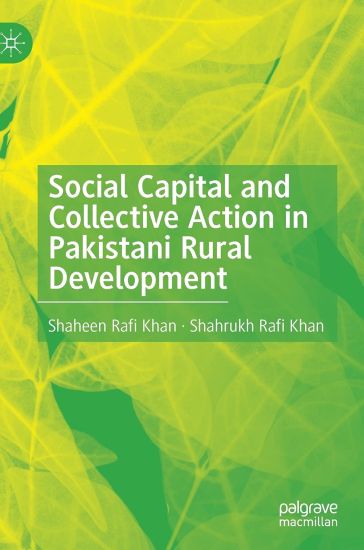
Social Capital and Collective Action in Pakistani Rural Development

Social Capital and Collective Action in Pakistani Rural Development

Shaheen Rafi Khan; Shahrukh Rafi Khan

Springer Nature Switzerland AG
2021
sidottu
This book distinguishes conceptually between indigenous and constructed social capital and the associated spontaneous and induced collective action for rural development and natural resource preservation. While some of the case studies in this book show that induced collective action can lead to cost-effective, community-centric and empirically grounded rural development initiatives, other case studies show that spontaneous collective action, based on indigenous social capital, can result in resource preservation, positive development outcomes, and resistance to the excesses engendered by conventional development. The authors also explore a hybrid form whereby spontaneous collective action is given a more effective and sustainable shape by an outside organization with experience of induced collective action. Exploring alternative community-centric paths to development, especially those attuned with sustainability imperatives, is part of a global search for solutions. While the volume draws on the Pakistani case, the problem with conventional development approaches and the need for complementary alternatives is not unique to only this country; and the volume has broader relevance to students and researchers across the fields of social policy and development.
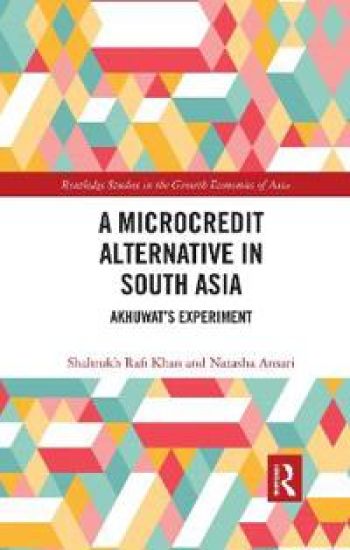
A Microcredit Alternative in South Asia

A Microcredit Alternative in South Asia

Shahrukh Rafi Khan; Natasha Ansari

Routledge
2020
nidottu
Microcredit took the development world by storm as a tool for poverty alleviation in the 1980s. After being hailed as a panacea, a few decades on it started being forcefully criticised based on its practice. This book explores Akhuwat (literally brotherhood), a rapidly growing Pakistani NGO formed in 2001, which addresses the shortcomings of conventional microfinance. Its vision is of a society built on empathy and social solidarity and its mission is that of creating self-sufficiency among the entrepreneurial poor. This book examines whether Akhuwat fulfils its promises of not pushing loans or encouraging clients to get on a debt treadmill and helping them to avoid high debt burdens by charging no interest and easing repayment terms. Conventional microcredit organizations are criticised for losing sight of the original mission of poverty alleviation by engaging in empire building and Akhuwat’s goal is to avoid this by embracing an alternative strategy of scaling up. Finally, this book also analyses Akhuwat’s approach as being gender sensitive and embracing all religions, castes and ethnicities. Based on fieldwork designed to assess if Akhuwat is the microcredit alternative it claims to be, this book will be of interest to scholars of poverty and development studies in general and microcredit in particular.
A History of Development Economics Thought
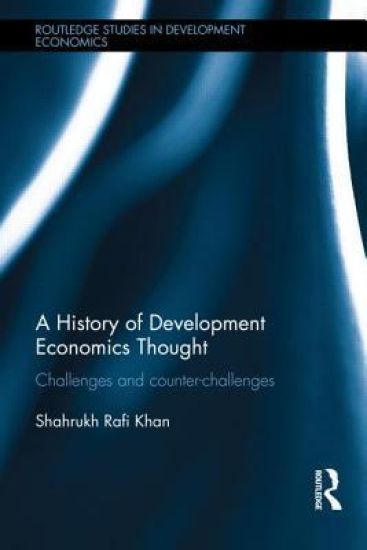
This book explores the history of economic development thought, with an emphasis on alternative approaches in macro development economics. Given that the pioneers of development economics in the 1940s and 1950s drew inspiration from classical political economists, this book opens with a review of key classical scholars who wrote about the progress of the wealth of nations. In reviewing the thinking of the pioneers and those that followed, both their theories of development and underdevelopment are discussed. Overall, the book charts the evolution of development economic thought from the early developmentalists and structuralists, through to the neo-Marxist approach and radical development theory, the neo-liberal counter revolution, and the debate between new developmentalists and neo-liberal scholars. It ends with an assessment of the state of the field today. This book will be of interest to all scholars and students interested in the evolution of development economics.
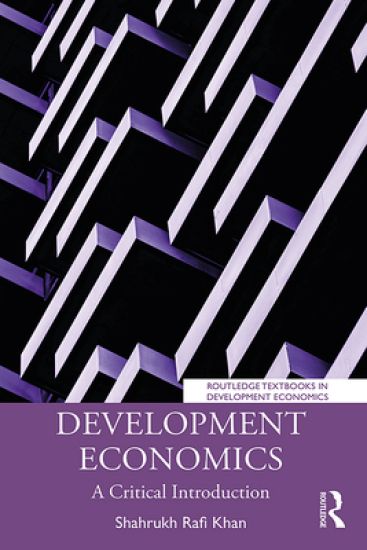
Development Economics

Development Economics

Shahrukh Rafi Khan

Routledge
2019
nidottu
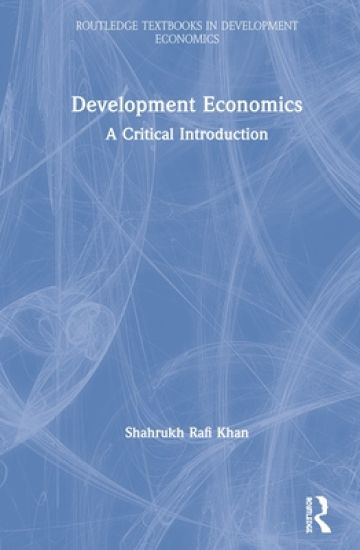
Following the 2007–2009 financial and economic crises, there has been an unprecedented demand among economics students for an alternative approach, which offers a historical, institutional and multidisciplinary treatment of the discipline. Economic development lends itself ideally to meet this demand, yet most undergraduate textbooks do not reflect this.This book will fill this gap, presenting all the core material needed to teach development economics in a one semester course, while also addressing the need for a new economics and offering flexibility to instructors. Rather than taking the typical approach of organizing by topic, the book uses theories and debates to guide its structure. This will allow students to see different perspectives on key development questions, and therefore to understand more fully the contested nature of many key areas of development economics.The book can be used as a standalone textbook on development economics, or to accompany a more traditional text.
Development Economics

Development Economics

Shahrukh Rafi Khan

Routledge
2019
sidottu
Following the 2007–2009 financial and economic crises, there has been an unprecedented demand among economics students for an alternative approach, which offers a historical, institutional and multidisciplinary treatment of the discipline. Economic development lends itself ideally to meet this demand, yet most undergraduate textbooks do not reflect this.This book will fill this gap, presenting all the core material needed to teach development economics in a one semester course, while also addressing the need for a new economics and offering flexibility to instructors. Rather than taking the typical approach of organizing by topic, the book uses theories and debates to guide its structure. This will allow students to see different perspectives on key development questions, and therefore to understand more fully the contested nature of many key areas of development economics.The book can be used as a standalone textbook on development economics, or to accompany a more traditional text.
A Microcredit Alternative in South Asia

A Microcredit Alternative in South Asia

Shahrukh Rafi Khan; Natasha Ansari

CRC Press Inc
2018
sidottu
Microcredit took the development world by storm as a tool for poverty alleviation in the 1980s. After being hailed as a panacea, a few decades on it started being forcefully criticised based on its practice. This book explores Akhuwat (literally brotherhood), a rapidly growing Pakistani NGO formed in 2001, which addresses the shortcomings of conventional microfinance. Its vision is of a society built on empathy and social solidarity and its mission is that of creating self-sufficiency among the entrepreneurial poor. This book examines whether Akhuwat fulfils its promises of not pushing loans or encouraging clients to get on a debt treadmill and helping them to avoid high debt burdens by charging no interest and easing repayment terms. Conventional microcredit organizations are criticised for losing sight of the original mission of poverty alleviation by engaging in empire building and Akhuwat’s goal is to avoid this by embracing an alternative strategy of scaling up. Finally, this book also analyses Akhuwat’s approach as being gender sensitive and embracing all religions, castes and ethnicities. Based on fieldwork designed to assess if Akhuwat is the microcredit alternative it claims to be, this book will be of interest to scholars of poverty and development studies in general and microcredit in particular.
The Military and Denied Development in the Pakistani Punjab

The Military and Denied Development in the Pakistani Punjab

Shahrukh Rafi Khan; Aasim Sajjad Akhtar

Anthem Press
2014
sidottu
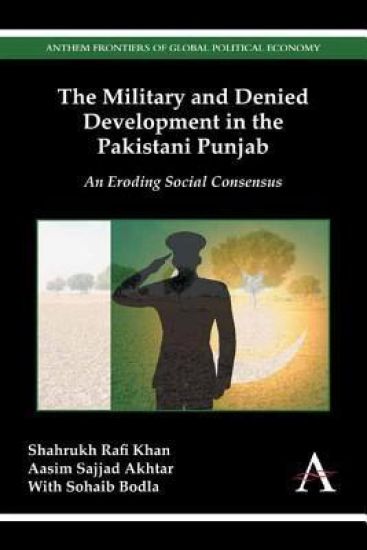
This book focuses on the retrogressive agrarian interventions by the Pakistani military in rural Punjab and explores the social resentment and resistance it triggered, potentially undermining the consensus on a security state in Pakistan. Set against the overbearing and socially unjust role of the military in Pakistan’s economy, this book documents a breakdown in the accepted function of the military beyond its constitutionally mandated role of defence. Accompanying earlier work on military involvement in industry, commerce, finance and real estate, the authors’ research contributes to a wider understanding of military intervention, revealing its hand in various sectors of the economy and, consequently, its gains in power and economic autonomy.
A History of Development Economics Thought
This book explores the history of economic development thought, with an emphasis on alternative approaches in macro development economics. Given that the pioneers of development economics in the 1940s and 1950s drew inspiration from classical political economists, this book opens with a review of key classical scholars who wrote about the progress of the wealth of nations. In reviewing the thinking of the pioneers and those that followed, both their theories of development and underdevelopment are discussed. Overall, the book charts the evolution of development economic thought from the early developmentalists and structuralists, through to the neo-Marxist approach and radical development theory, the neo-liberal counter revolution, and the debate between new developmentalists and neo-liberal scholars. It ends with an assessment of the state of the field today. This book will be of interest to all scholars and students interested in the evolution of development economics.