Kirjojen hintavertailu. Mukana 12 390 323 kirjaa ja 12 kauppaa.

Kirjailija

Shane R. Jimerson

Kirjat ja teokset yhdessä paikassa: 19 kirjaa, julkaisuja vuosilta 2000-2022, suosituimpien joukossa Identifying, Assessing, and Treating PTSD at School. Vertaile teosten hintoja ja tarkista saatavuus suomalaisista kirjakaupoista.

19 kirjaa

Kirjojen julkaisuhaarukka 2000-2022.

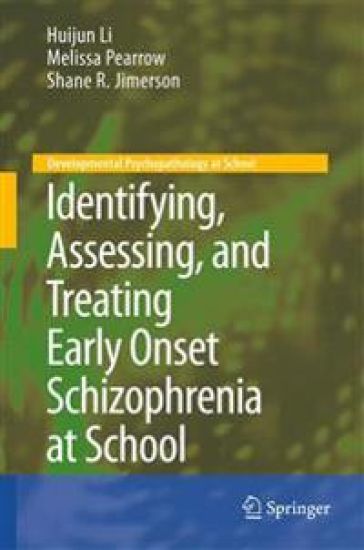
Identifying, Assessing, and Treating Early Onset Schizophrenia at School

Identifying, Assessing, and Treating Early Onset Schizophrenia at School

Huijun Li; Melissa Pearrow; Shane R. Jimerson

Springer-Verlag New York Inc.
2012
nidottu
By itself or in combination with an affective disorder, early onset schizophrenia (EOS) — the onset of symptoms before 18 years of age — can create severe deficits in young people’s academic performance, family and peer relationships, and even the ability to acquire new skills. The relative rarity of the condition, meanwhile, can leave school personnel unsure of how to meet — or even recognize — student needs.Identifying, Assessing, and Treating Early Onset Schizophrenia at School emphasizes the importance of providing teachers and students alike with the support needed to enhance academic performance and improve social skills of children and adolescents with EOS within educational settings. In addition, its evidence-based framework enables school professionals to achieve greater confidence and accuracy in identifying students with EOS and provide appropriate services, both in special education and general classes.In this authoritative and accessible volume, experts offer the most salient information on early onset schizophrenia, including:Contributing factors and risk factors.Prevalence and epidemiology.Screening and assessment procedures.Guidelines for determining eligibility for special education programs under IDEIA and Section 504.Latest findings on school-based and off-campus interventions for EOS.A useful resource appendix.Identifying, Assessing, and Treating Early Onset Schizophrenia at School gives school psychologists and allied education professionals both a practical understanding of this disabling condition and the most up-to-date strategies for providing earlier and effective interventions.
Identifying, Assessing, and Treating PTSD at School

Identifying, Assessing, and Treating PTSD at School

Amanda B. Nickerson; Melissa A. Reeves; Stephen E. Brock; Shane R. Jimerson

Springer-Verlag New York Inc.
2010
nidottu
By age 16, significant – one might even say “alarming” – numbers of students are demonstrating signs of posttraumatic stress disorder (PTSD). Students with PTSD are more likely to develop a range of problems, from delinquent behavior to eating disorders to substance abuse to dropping out. For the school-based professional, the ability to recognize these symptoms and warning signs is essential. Emphasizing prevention as well as intervention, Identifying, Assessing, and Treating PTSD at School clearly defines PTSD, explains its adverse affects on children’s academic and social-emotional skills, and offers expert guidance on how to recognize student needs and provide appropriate services. This volume, designed as a practical, easy-to-use reference for school psychologists and other educational professionals: (1) Makes the case for why school psychologists and their colleagues need to be more prepared, willing, and able to identify and serve students with PTSD. (2) Identifies the causes, prevalence, and associated conditions of PTSD. (3) Provides a review of screening, referral, and diagnostic assessment processes. (4) Reviews appropriate treatments for students with PTSD. Today’s youth live in an increasingly uncertain world, and school psychologists, counselors, social workers, and general and special education personnel will find Identifying, Assessing, and Treating PTSD at School an invaluable resource in their practices.
Identifying, Assessing, and Treating Early Onset Schizophrenia at School

Identifying, Assessing, and Treating Early Onset Schizophrenia at School

Huijun Li; Melissa Pearrow; Shane R. Jimerson

Springer-Verlag New York Inc.
2010
sidottu
By itself or in combination with an affective disorder, early onset schizophrenia (EOS) — the onset of symptoms before 18 years of age — can create severe deficits in young people’s academic performance, family and peer relationships, and even the ability to acquire new skills. The relative rarity of the condition, meanwhile, can leave school personnel unsure of how to meet — or even recognize — student needs.Identifying, Assessing, and Treating Early Onset Schizophrenia at School emphasizes the importance of providing teachers and students alike with the support needed to enhance academic performance and improve social skills of children and adolescents with EOS within educational settings. In addition, its evidence-based framework enables school professionals to achieve greater confidence and accuracy in identifying students with EOS and provide appropriate services, both in special education and general classes.In this authoritative and accessible volume, experts offer the most salient information on early onset schizophrenia, including:Contributing factors and risk factors.Prevalence and epidemiology.Screening and assessment procedures.Guidelines for determining eligibility for special education programs under IDEIA and Section 504.Latest findings on school-based and off-campus interventions for EOS.A useful resource appendix.Identifying, Assessing, and Treating Early Onset Schizophrenia at School gives school psychologists and allied education professionals both a practical understanding of this disabling condition and the most up-to-date strategies for providing earlier and effective interventions.
Identifying, Assessing, and Treating PTSD at School

Identifying, Assessing, and Treating PTSD at School

Amanda B. Nickerson; Melissa A. Reeves; Stephen E. Brock; Shane R. Jimerson

Springer-Verlag New York Inc.
2008
sidottu
By age 16, significant – one might even say “alarming” – numbers of students are demonstrating signs of posttraumatic stress disorder (PTSD). Students with PTSD are more likely to develop a range of problems, from delinquent behavior to eating disorders to substance abuse to dropping out. For the school-based professional, the ability to recognize these symptoms and warning signs is essential. Emphasizing prevention as well as intervention, Identifying, Assessing, and Treating PTSD at School clearly defines PTSD, explains its adverse affects on children’s academic and social-emotional skills, and offers expert guidance on how to recognize student needs and provide appropriate services. This volume, designed as a practical, easy-to-use reference for school psychologists and other educational professionals: (1) Makes the case for why school psychologists and their colleagues need to be more prepared, willing, and able to identify and serve students with PTSD. (2) Identifies the causes, prevalence, and associated conditions of PTSD. (3) Provides a review of screening, referral, and diagnostic assessment processes. (4) Reviews appropriate treatments for students with PTSD. Today’s youth live in an increasingly uncertain world, and school psychologists, counselors, social workers, and general and special education personnel will find Identifying, Assessing, and Treating PTSD at School an invaluable resource in their practices.
An Academic's Guide to Social Media

An Academic's Guide to Social Media

Kelly-Ann Allen; Shane R. Jimerson; Daniel S. Quintana; Lara McKinley

TAYLOR FRANCIS LTD
2022
sidottu
Are you an academic who struggles to know what to post on social media and how to disseminate your research effectively on different social media platforms? Social media serves as a powerful communication tool, yet while most academics are aware of the benefits of social media, many are unsure of what to post, and how to do it in a way that is authentic, engaging, and above all, comfortable! This user-friendly practical guide is designed for all academics who aim to engage in social media platforms in an effective and productive way. This book explains how academics can build their reputation, develop networks, and disseminate their research. It includes 365 useful post prompts applicable to all mainstream social media platforms which help guide academics on what to post on the platforms they choose to engage with. The book is designed for all academics at all levels and can be applied across various social media platforms including Facebook, Linkedin, Twitter, and Instagram.
An Academic's Guide to Social Media

An Academic's Guide to Social Media

Kelly-Ann Allen; Shane R. Jimerson; Daniel S. Quintana; Lara McKinley

TAYLOR FRANCIS LTD
2022
nidottu
Are you an academic who struggles to know what to post on social media and how to disseminate your research effectively on different social media platforms? Social media serves as a powerful communication tool, yet while most academics are aware of the benefits of social media, many are unsure of what to post, and how to do it in a way that is authentic, engaging, and above all, comfortable! This user-friendly practical guide is designed for all academics who aim to engage in social media platforms in an effective and productive way. This book explains how academics can build their reputation, develop networks, and disseminate their research. It includes 365 useful post prompts applicable to all mainstream social media platforms which help guide academics on what to post on the platforms they choose to engage with. The book is designed for all academics at all levels and can be applied across various social media platforms including Facebook, Linkedin, Twitter, and Instagram.
Teens Together Grief Support Group Curriculum

Teens Together Grief Support Group Curriculum

Linda Lehmann; Shane R. Jimerson; Ann Gaasch

Routledge
2017
sidottu
The texts focus on preschool-aged children, children in kindergarten through grade two, children in grades three through six, and teenagers.Each curriculum contains ten ninety-minute sessions that should be implemented over a period of ten weeks. By employing age-appropriate themes to engage the child and provide continuity throughout the sessions, the division of material within the curricula assures that the activities reflect the developmental level of the grieving child or adolescent. Each person grieves differently, and Grief Support Group Curriculum addresses the issues related to mourning while recognizing the importance of individuality in grieving.
Identifying, Assessing, and Treating Autism at School

Identifying, Assessing, and Treating Autism at School

Stephen E. Brock; Shane R. Jimerson; Robin L. Hansen

Springer-Verlag New York Inc.
2014
nidottu
As the rate of autism diagnosis continues to escalate, awareness and recognition of this developmental brain disorder – as well as a demand for services – are also mushrooming. School districts, already struggling under the weight of withering budgets and increasing enrollments, are now scrambling to strike a balance between the types of services and treatments parents want for their children and what the school system can afford to provide. Consequently, a broad cross-section of professionals and parents are searching for the means and methods by which to identify and address the wide-ranging educational needs of the children with autism spectrum disorder. Identifying, Assessing, and Treating Autism at School provides a one-stop resource that enables school psychologists to coordinate efforts between students and parents as well as other educators, administrators, and social services providers to determine which interventions are likely to be most effective in meeting the unique needs of children with autism. This volume, designed as a practical, easy-to-use reference for school psychologists and other educational professionals: Makes the case for why school psychologists and their colleagues need to be more prepared, willing, and able to identify and serve students with autism. Identifies the causes, prevalence, and associated conditions of autism spectrum disorders. Provides a review of screening, referral, and diagnostic assessment processes. Offers much-needed guidance on conducting psychoeducational assessments. Reviews appropriate treatments for students with autism. School psychologists, general and special educators, counselors, and social workers will find Identifying, Assessing, and Treating Autism at School an invaluable resource.
Identifying, Assessing, and Treating Conduct Disorder at School

Identifying, Assessing, and Treating Conduct Disorder at School

Tammy L. Hughes; Laura M. Crothers; Shane R. Jimerson

Springer-Verlag New York Inc.
2010
nidottu
Concern continues to ripple throughout society over the escalating incidents of youth violence and aggression. School professionals confront daily the challenges resulting from conduct disorders, which threaten to disrupt the learning process and compromise the well-being, security, and safety of students and faculty. With the ongoing emphasis on high-stakes academic testing, schools are struggling to pinpoint effective strategies and secure the resources needed to identify, assess, and treat students with conduct problems so that all children can succeed at school. Identifying, Assessing, and Treating Conduct Disorder at School bridges the gap between science and practice, providing school professionals with the information they need to coordinate efforts and enhance communication between parents, other educators, administrators, and social services providers. In addition, it offers guidance on the interventions that are likely to be most effective in meeting the unique needs of youths with conduct disorder. This volume: Emphasizes why school psychologists and their colleagues need to be prepared and able to identify and serve students with conduct disorder; Identifies the prevalence, influences, and associated conditions; Provides a review of screening, referral, and diagnostic assessment processes; Offers guidance on conducting psychoeducational assessments; Reviews evidence-based treatments; Provides practical guidance on setting up programs that address individual, classroom, and schoolwide issues. School psychologists and other education and mental health professionals will find this volume an invaluable resource in working to enhance the mental health and educational development of students.
Identifying, Assessing, and Treating ADHD at School

Identifying, Assessing, and Treating ADHD at School

Stephen E. Brock; Shane R. Jimerson; Robin L. Hansen

Springer-Verlag New York Inc.
2009
nidottu
ADHD is the most commonly diagnosed childhood behavioral disorder. Moreover, many students receiving special education assistance are reported to have ADHD. Children with ADHD may experience significant school adjustment difficulties and achievement problems. Problem behaviors associated with attention deficits and hyperactivity often have a negative impact on the classroom, and, therefore, may compromise the learning environment for many, if not all, students. There is a critical need for school professionals to identify, assess, and treat students with ADHD. Identifying, Assessing, and Treating ADHD at School brings science to practice, providing school professionals invaluable information to meet the needs of children with ADHD. This volume, designed as a practical, easy-to-use reference for school psychologists and other mental health and educational professionals: Explains why school psychologists and their colleagues need to be prepared and able to identify and serve students with ADHD. Identifies the prevalence, influences, and associated conditions. Provides a review of screening, referral, and diagnostic assessment processes. Offers guidance on conducting psychoeducational assessments. Reviews evidence-based treatments. Offers practical guidance on setting up programs that address individual and classroom issues. School psychologists and other education and mental health professionals will find Identifying, Assessing, and Treating ADHD at School an exceptional resource in working to enhance the mental health and academic development of students.
Identifying, Assessing, and Treating ADHD at School

Identifying, Assessing, and Treating ADHD at School

Stephen E. Brock; Shane R. Jimerson; Robin L. Hansen

Springer-Verlag New York Inc.
2009
sidottu
ADHD is the most commonly diagnosed childhood behavioral disorder. Moreover, many students receiving special education assistance are reported to have ADHD. Children with ADHD may experience significant school adjustment difficulties and achievement problems. Problem behaviors associated with attention deficits and hyperactivity often have a negative impact on the classroom, and, therefore, may compromise the learning environment for many, if not all, students. There is a critical need for school professionals to identify, assess, and treat students with ADHD. Identifying, Assessing, and Treating ADHD at School brings science to practice, providing school professionals invaluable information to meet the needs of children with ADHD. This volume, designed as a practical, easy-to-use reference for school psychologists and other mental health and educational professionals: Explains why school psychologists and their colleagues need to be prepared and able to identify and serve students with ADHD. Identifies the prevalence, influences, and associated conditions. Provides a review of screening, referral, and diagnostic assessment processes. Offers guidance on conducting psychoeducational assessments. Reviews evidence-based treatments. Offers practical guidance on setting up programs that address individual and classroom issues. School psychologists and other education and mental health professionals will find Identifying, Assessing, and Treating ADHD at School an exceptional resource in working to enhance the mental health and academic development of students.
Identifying, Assessing, and Treating Conduct Disorder at School

Identifying, Assessing, and Treating Conduct Disorder at School

Tammy L. Hughes; Laura M. Crothers; Shane R. Jimerson

Springer-Verlag New York Inc.
2007
sidottu
Concern continues to ripple throughout society over the escalating incidents of youth violence and aggression. School professionals confront daily the challenges resulting from conduct disorders, which threaten to disrupt the learning process and compromise the well-being, security, and safety of students and faculty. With the ongoing emphasis on high-stakes academic testing, schools are struggling to pinpoint effective strategies and secure the resources needed to identify, assess, and treat students with conduct problems so that all children can succeed at school. Identifying, Assessing, and Treating Conduct Disorder at School bridges the gap between science and practice, providing school professionals with the information they need to coordinate efforts and enhance communication between parents, other educators, administrators, and social services providers. In addition, it offers guidance on the interventions that are likely to be most effective in meeting the unique needs of youths with conduct disorder. This volume: Emphasizes why school psychologists and their colleagues need to be prepared and able to identify and serve students with conduct disorder; Identifies the prevalence, influences, and associated conditions; Provides a review of screening, referral, and diagnostic assessment processes; Offers guidance on conducting psychoeducational assessments; Reviews evidence-based treatments; Provides practical guidance on setting up programs that address individual, classroom, and schoolwide issues. School psychologists and other education and mental health professionals will find this volume an invaluable resource in working to enhance the mental health and educational development of students.
Identifying, Assessing, and Treating Autism at School

Identifying, Assessing, and Treating Autism at School

Stephen E. Brock; Shane R. Jimerson; Robin L. Hansen

Springer-Verlag New York Inc.
2006
sidottu
As the rate of autism diagnosis continues to escalate, awareness and recognition of this developmental brain disorder – as well as a demand for services – are also mushrooming. School districts, already struggling under the weight of withering budgets and increasing enrollments, are now scrambling to strike a balance between the types of services and treatments parents want for their children and what the school system can afford to provide. Consequently, a broad cross-section of professionals and parents are searching for the means and methods by which to identify and address the wide-ranging educational needs of the children with autism spectrum disorder. Identifying, Assessing, and Treating Autism at School provides a one-stop resource that enables school psychologists to coordinate efforts between students and parents as well as other educators, administrators, and social services providers to determine which interventions are likely to be most effective in meeting the unique needs of children with autism. This volume, designed as a practical, easy-to-use reference for school psychologists and other educational professionals: Makes the case for why school psychologists and their colleagues need to be more prepared, willing, and able to identify and serve students with autism. Identifies the causes, prevalence, and associated conditions of autism spectrum disorders. Provides a review of screening, referral, and diagnostic assessment processes. Offers much-needed guidance on conducting psychoeducational assessments. Reviews appropriate treatments for students with autism. School psychologists, general and special educators, counselors, and social workers will find Identifying, Assessing, and Treating Autism at School an invaluable resource.
Grief Support Group Curriculum

Grief Support Group Curriculum

Judith Kolberg; Shane R. Jimerson; Ann Gaasch; Linda Lehmann-Norquist; Kathleen G. Nadeau

Brunner-Mazel Inc
2000
muu
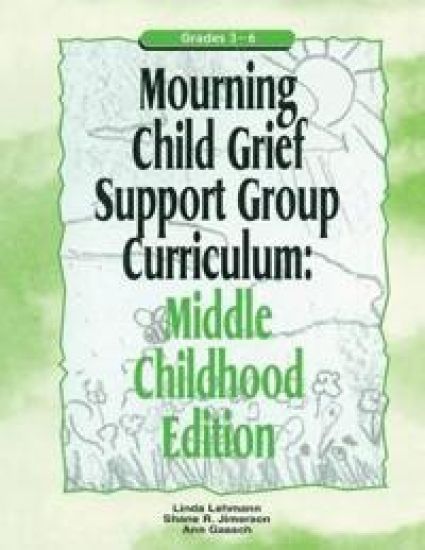
The Grief Support Group Curriculum provides a basis for assisting children and teenagers as they learn about mourning through facing death of a close or special friend. The aim of this curriculum is to facilitate healthy variations of mourning and positive adaptations following the death of a friend or family member. The work illustrates mourning in four stages of development and is accordingly divided into four separate texts. The texts focus on preschool-aged children, children in kindergarten through grade two, children in grades three through six, and teenagers.
Teens Together Grief Support Group Curriculum

Teens Together Grief Support Group Curriculum

Linda Lehmann; Shane R. Jimerson; Ann Gaasch

Brunner-Routledge
2000
nidottu
The Grief Support Group Curriculum provides a basis for assisting children and teenagers as they learn about mourning through facing death of a close or special friend. The aim of this curriculum is to facilitate healthy variations of mourning and positive adaptations following the death of a friend or family member.
Grief Support Group Curriculum

Grief Support Group Curriculum

Linda Lehmann; Shane R. Jimerson; Ann Gaasch

Brunner-Routledge
2000
nidottu
The Grief Support Group Curriculum provides a basis for assisting children and teenagers as they learn about mourning through facing death of a close friend. The aim of this curriculum is to facilitate healthy variations of mourning and positive adaptations following the death of a friend.