Kirjojen hintavertailu. Mukana 12 390 323 kirjaa ja 12 kauppaa.

Kirjailija

Shannon Bell

Kirjat ja teokset yhdessä paikassa: 7 kirjaa, julkaisuja vuosilta 1994-2017, suosituimpien joukossa Trilogy: Series 3: essays to enlighten and entertain. Vertaile teosten hintoja ja tarkista saatavuus suomalaisista kirjakaupoista.

7 kirjaa

Kirjojen julkaisuhaarukka 1994-2017.

Bad Attitude(s) on Trial

Bad Attitude(s) on Trial

Shannon Bell; Brenda Cossman; Lise Gotell; Becki Ross

University of Toronto Press
2017
pokkari
Bad Attitude(s) on Trial is a critical analysis of pornography in the context of contemporary Canada. The notion that pornography both reflects sexual domination and 'victimizes' women has recently found expression in law in the landmark Canadian Supreme Court decision of R. v. Butler (1992). Many feminists embrace this new law as progressive, but in the post-Butler years, straight, mainstream pornography is still flourishing, while sexual representations that challenge conventional notions of sexuality, such as those centering on gay and lesbian sex and s/m sex, are the focus of censorship. It is the censorship of sexual others that the authors critique from a legal, cultural, gay, and philosophical standpoint. Lise Gotell examines the intervention of the Women's Legal Education and Action Fund (LEAF) in the Butler decision and provides an overview of socio-legal debates on pornography and censorship. Brenda Cossman examines the Butler decision itself and challenges the dominant reading of this case as a feminist victory. Becki Ross critically examines the expert testimony she delivered in defense of Bad Attitude, an American lesbian sex magazine seized by police from Glad Day Bookshop in Toronto in 1992. She details the difficulties she encountered in explicating and contextualizing the specificities, nuances, and complexities of lesbian s/m fantasy in a court of law. In the final chapter, Shannon Bell advances a conception of pornography that is not distinguishable from philosophy, using philosophy to make pornography. Bad Attitude(s) on Trial provides a new debate on pornography and feminism. It will be of particular interest to students of both women's, and gay and lesbian issues, but will also be relevant for scholars of law, political science, and philosophy, as well as for anyone interested in a different, provocative view of the Butler decision.

Trilogy: Series 3: essays to enlighten and entertain

Trilogy: Series 3: essays to enlighten and entertain

Shannon Bell

Createspace Independent Publishing Platform
2014
nidottu
Trilogy, Series 3: essays to enlighten and entertain. In series 1, I explore how Sophocles uses imagery in Oedipus, how crime and punishment are related in Dante's Inferno, and why Frankenstein offers a critique of the human condition. Series 2 investigates the storytelling traditions portrayed in Samuel Taylor Coleridge's 'The Rime of the Ancyent Marinere', and how they might represent a narrative of modernity; Bram Stoker's novel, Dracula, is discussed in terms of how it conveys the anxieties of an emerging modernity at the fin-de-si cle, how tensions between tradition and modernity are revealed in the novel, and how the significance of new forms of transport and technology (e.g. trains, photography, typewriters) play a major role in the narrative; and series 2 concludes with an essay on the horrors of honesty in Joseph Conrad's Heart of Darkness. Series 3 begins by questioning the ideology behind Daniel Defoe's Robinson Crusoe. The following essay discusses Charlotte Bront 's Jane Eyre and Thornfield's significance as the physical and ideological setting where the development/deterioration in the characters of Jane, Bertha and Mr Rochester takes place. To end the trilogy, F. W. Murnau's 1922 film Nosferatu and the very nature of cinema is assessed, in Nosferatu: the ghost of cinema itself. The author sincerely hopes that this trilogy of essays will be read with enjoyment, since they have been written to entertain as well as to enlighten.
Trilogy: Series 1: Essays to enlighten and entertain

Trilogy: Series 1: Essays to enlighten and entertain

Shannon Bell

Createspace Independent Publishing Platform
2014
nidottu
Trilogy, Series 1: essays to enlighten and entertain. In this series, I explore how Sophocles uses imagery in Oedipus, how crime and punishment are related in Dante's Inferno, and why Frankenstein offers a critique of the human condition. Series 2 investigates the storytelling traditions portrayed in Samuel Taylor Coleridge's 'The Rime of the Ancyent Marinere', and how they might represent a narrative of modernity; Bram Stoker's novel, Dracula, is discussed in terms of how it conveys the anxieties of an emerging modernity at the fin-de-si cle, how tensions between tradition and modernity are revealed in the novel, and how the significance of new forms of transport and technology (e.g. trains, photography, typewriters) play a major role in the narrative; and series 2 concludes with an essay on the horrors of honesty in Joseph Conrad's Heart of Darkness. Series 3 begins by questioning the ideology behind Daniel Defoe's Robinson Crusoe. The following essay discusses Charlotte Bront 's Jane Eyre and Thornfield's significance as the physical and ideological setting where the development/deterioration in the characters of Jane, Bertha and Mr Rochester takes place. To end the trilogy, F. W. Murnau's 1922 film Nosferatu and the very nature of cinema is assessed, in Nosferatu: the ghost of cinema itself. The author sincerely hopes that this trilogy of essays will be read with enjoyment, since they have been written to entertain as well as to enlighten.
Trilogy: Series 2: essays to enlighten and entertain

Trilogy: Series 2: essays to enlighten and entertain

Shannon Bell

Createspace Independent Publishing Platform
2014
nidottu
Trilogy, Series 2: essays to enlighten and entertain. In series 1, I explore how Sophocles uses imagery in Oedipus, how crime and punishment are related in Dante's Inferno, and why Frankenstein offers a critique of the human condition. This second series investigates the storytelling traditions portrayed in Samuel Taylor Coleridge's 'The Rime of the Ancyent Marinere', and how they might represent a narrative of modernity; Bram Stoker's novel, Dracula, is discussed in terms of how it conveys the anxieties of an emerging modernity at the fin-de-si cle, how tensions between tradition and modernity are revealed in the novel, and how the significance of new forms of transport and technology (e.g. trains, photography, typewriters) play a major role in the narrative; and series 2 concludes with an essay on the horrors of honesty in Joseph Conrad's Heart of Darkness. Series 3 begins by questioning the ideology behind Daniel Defoe's Robinson Crusoe. The following essay discusses Charlotte Bront 's Jane Eyre and Thornfield's significance as the physical and ideological setting where the development/deterioration in the characters of Jane, Bertha and Mr Rochester takes place. To end the trilogy, F. W. Murnau's 1922 film Nosferatu and the very nature of cinema is assessed, in Nosferatu: the ghost of cinema itself. The author sincerely hopes that this trilogy of essays will be read with enjoyment, since they have been written to entertain as well as to enlighten.
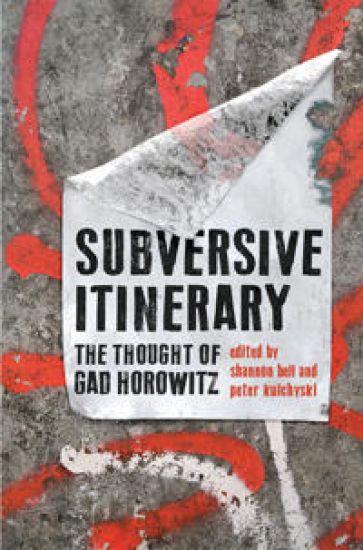
Subversive Itinerary

Subversive Itinerary

Shannon Bell; Peter Kulchyski

University of Toronto Press
2013
sidottu
Subversive Itinerary investigates the theoretical evolution of the influential political theorist Gad Horowitz, as well as the historical impact of his ideas on Canadian life and letters. Bringing together dynamic new works by both established and emerging scholars, along with three new articles by Horowitz himself, this volume examines the concepts he developed and extends his approach beyond the current historical moment. The book includes a history of Horowitz’s engagements as a public intellectual through appraisals of his early, mid, and late-career contributions, from the sixties to the present day. Along the way, the contributors present innovative new work in Canadian political thought, continental theory, Jewish philosophy, Buddhism, and radical general semantics. Subversive Itinerary demonstrates how Horowitz’s itinerary delivers invaluable tools for understanding issues of critical importance today.
Bad Attitude(s) on Trial

Bad Attitude(s) on Trial

Shannon Bell; Brenda Cossman; Lise Gotell; Becki Ross

University of Toronto Press
1997
pokkari
Bad Attitude(s) on Trial is a critical analysis of pornography in the context of contemporary Canada. The notion that pornography both reflects sexual domination and 'victimizes' women has recently found expression in law in the landmark Canadian Supreme Court decision of R. v. Butler (1992). Many feminists embrace this new law as progressive, but in the post-Butler years, straight, mainstream pornography is still flourishing, while sexual representations that challenge conventional notions of sexuality, such as those centering on gay and lesbian sex and s/m sex, are the focus of censorship. It is the censorship of sexual others that the authors critique from a legal, cultural, gay, and philosophical standpoint. Lise Gotell examines the intervention of the Women's Legal Education and Action Fund (LEAF) in the Butler decision and provides an overview of socio-legal debates on pornography and censorship. Brenda Cossman examines the Butler decision itself and challenges the dominant reading of this case as a feminist victory. Becki Ross critically examines the expert testimony she delivered in defense of Bad Attitude, an American lesbian sex magazine seized by police from Glad Day Bookshop in Toronto in 1992. She details the difficulties she encountered in explicating and contextualizing the specificities, nuances, and complexities of lesbian s/m fantasy in a court of law. In the final chapter, Shannon Bell advances a conception of pornography that is not distinguishable from philosophy, using philosophy to make pornography. Bad Attitude(s) on Trial provides a new debate on pornography and feminism. It will be of particular interest to students of both women's, and gay and lesbian issues, but will also be relevant for scholars of law, political science, and philosophy, as well as for anyone interested in a different, provocative view of the Butler decision.
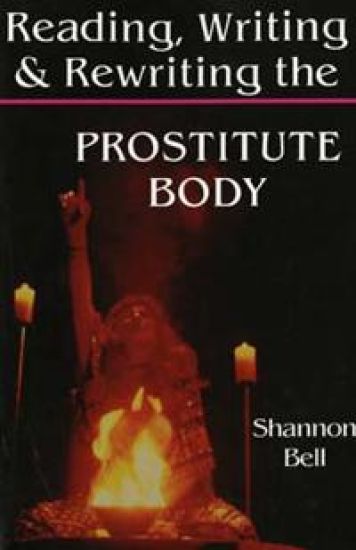
Reading, Writing, and Rewriting the Prostitute Body

Reading, Writing, and Rewriting the Prostitute Body

Shannon Bell

Indiana University Press
1994
pokkari
"I found this a fascinating book: wide-ranging, readable." —Alison Jaggar Bell shows how the flesh-and-blood female body engaged in sexual interaction for payment has no inherent meaning and is signified differently in different cultures or discourses. The author contends that modernity has produced "the prostitute" as the other within the categorial other: woman.