Kirjojen hintavertailu. Mukana 12 390 323 kirjaa ja 12 kauppaa.

Kirjailija

Sharae Deckard

Kirjat ja teokset yhdessä paikassa: 6 kirjaa, julkaisuja vuosilta 2009-2024, suosituimpien joukossa Combined and Uneven Development. Vertaile teosten hintoja ja tarkista saatavuus suomalaisista kirjakaupoista.

6 kirjaa

Kirjojen julkaisuhaarukka 2009-2024.

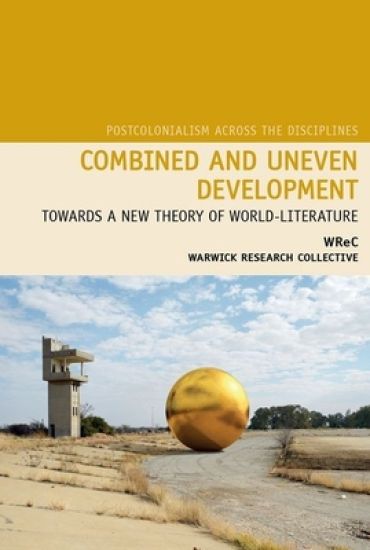
Combined and Uneven Development

Combined and Uneven Development

Sharae Deckard; Nicholas Lawrence; Neil Lazarus; Graeme Macdonald; Upamanyu Pablo Mukherjee; Benita Parry; Stephen Shapiro

Liverpool University Press
2015
sidottu
The ambition of this book is to resituate the problem of ‘world literature’, considered as a revived category of theoretical enquiry, by pursuing the literary-cultural implications of the theory of combined and uneven development. This theory has a long pedigree in the social sciences, where it continues to stimulate debate. But its implications for cultural analysis have received less attention, even though the theory might be said to draw attention to a central – perhaps the central – arc or trajectory of modern(ist) production in literature and the other arts worldwide. It is in the conjuncture of combined and uneven development, on the one hand, and the recently interrogated and expanded categories of ‘world literature’ and ‘modernism’, on the other, that this book looks for its specific contours. In the two theoretical chapters that frame the book, the authors argue for a single, but radically uneven world-system; a singular modernity, combined and uneven; and a literature that variously registers this combined unevenness in both its form and content to reveal itself as, properly speaking, world-literature. In the four substantive chapters that then follow, the authors explore a selection of modern-era fictions in which the potential of their method of comparativism seems to be most dramatically highlighted. They treat the novel paradigmatically, not exemplarily, as a literary form in which combined and uneven development is manifested with particular salience, due in no small part to its fundamental association with the rise of capitalism and its status in peripheral and semi-peripheral societies as a ‘modernising’ import. The peculiar plasticity and hybridity of the novel form enables it to incorporate not only multiple literary levels, genres and modes, but also other non-literary and archaic cultural forms – so that, for example, realist elements might be mixed with more experimental modes of narration, or older literary devices might be reactivated in juxtaposition with more contemporary frames.
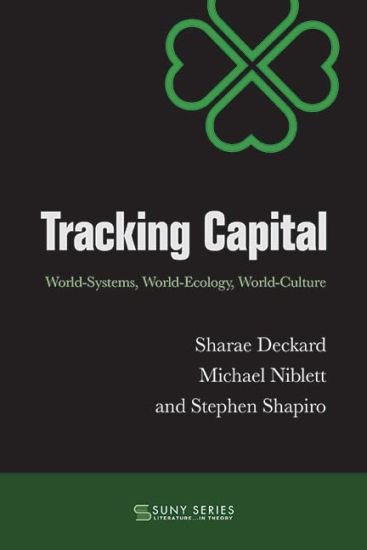
Tracking Capital

Tracking Capital

Sharae Deckard; Michael Niblett; Stephen Shapiro

STATE UNIVERSITY OF NEW YORK PRESS
2024
pokkari
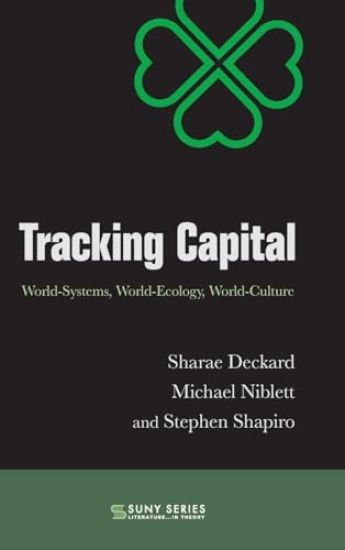
Offers new ways to read the relationship between culture, ecology, and capitalism.Tracking Capital introduces new ways to understand the entanglement of cultural forms and practices in economic, social, and ecological crises and struggles. Building on the fundamental insights of world-systems analysis, the book offers readers a series of rubrics, keywords, and concepts-such as zemiperiphery, registration, and commodity chains-to enable more integrated, transdisciplinary methods of literary and cultural study. Throughout, Sharae Deckard, Michael Niblett, and Stephen Shapiro foreground the role of culture in both consolidating and contesting the classism, racism, sexism, and ecocide constitutive of the modern world-system. In the context of capitalism's ongoing bloody war against the poor, the powerless, and the planet, Tracking Capital provides tools with which to diagnose the morbid symptoms of the present, as well as to plot possible steps on the road to a better future.
Tracking Capital

Tracking Capital

Sharae Deckard; Michael Niblett; Stephen Shapiro

STATE UNIVERSITY OF NEW YORK PRESS
2024
sidottu
Offers new ways to read the relationship between culture, ecology, and capitalism.Tracking Capital introduces new ways to understand the entanglement of cultural forms and practices in economic, social, and ecological crises and struggles. Building on the fundamental insights of world-systems analysis, the book offers readers a series of rubrics, keywords, and concepts-such as zemiperiphery, registration, and commodity chains-to enable more integrated, transdisciplinary methods of literary and cultural study. Throughout, Sharae Deckard, Michael Niblett, and Stephen Shapiro foreground the role of culture in both consolidating and contesting the classism, racism, sexism, and ecocide constitutive of the modern world-system. In the context of capitalism's ongoing bloody war against the poor, the powerless, and the planet, Tracking Capital provides tools with which to diagnose the morbid symptoms of the present, as well as to plot possible steps on the road to a better future.
Combined and Uneven Development

Combined and Uneven Development

Sharae Deckard; Nicholas Lawrence; Neil Lazarus; Graeme Macdonald; Upamanyu Pablo Mukherjee; Benita Parry; Stephen Shapiro

Liverpool University Press
2015
nidottu
The ambition of this book is to resituate the problem of ‘world literature’, considered as a revived category of theoretical enquiry, by pursuing the literary-cultural implications of the theory of combined and uneven development. This theory has a long pedigree in the social sciences, where it continues to stimulate debate. But its implications for cultural analysis have received less attention, even though the theory might be said to draw attention to a central – perhaps the central – arc or trajectory of modern(ist) production in literature and the other arts worldwide. It is in the conjuncture of combined and uneven development, on the one hand, and the recently interrogated and expanded categories of ‘world literature’ and ‘modernism’, on the other, that this book looks for its specific contours. In the two theoretical chapters that frame the book, the authors argue for a single, but radically uneven world-system; a singular modernity, combined and uneven; and a literature that variously registers this combined unevenness in both its form and content to reveal itself as, properly speaking, world-literature. In the four substantive chapters that then follow, the authors explore a selection of modern-era fictions in which the potential of their method of comparativism seems to be most dramatically highlighted. They treat the novel paradigmatically, not exemplarily, as a literary form in which combined and uneven development is manifested with particular salience, due in no small part to its fundamental association with the rise of capitalism and its status in peripheral and semi-peripheral societies as a ‘modernising’ import. The peculiar plasticity and hybridity of the novel form enables it to incorporate not only multiple literary levels, genres and modes, but also other non-literary and archaic cultural forms – so that, for example, realist elements might be mixed with more experimental modes of narration, or older literary devices might be reactivated in juxtaposition with more contemporary frames.
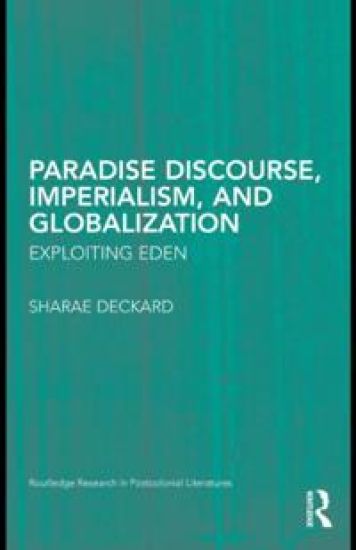
Paradise Discourse, Imperialism, and Globalization
This comparative study, the first of its kind, discusses paradise discourse in a wide range of writing from Mexico, Zanzibar, and Sri Lanka, including novels by authors such as Malcolm Lowry, Leonard Woolf, Juan Rulfo, Wilson Harris, Abdulrazak Gurnah, and Romesh Gunesekera. Tracing dialectical tropes of paradise across the "long modernity" of the capitalist world-system, Deckard reads literature from postcolonial nations in context with colonial discourse in order to demonstrate how paradise begins as a topos motivating European exploration and colonization, shifts into an ideological myth justifying imperial exploitation, and finally becomes a literary motif used by contemporary writers to critique neocolonial representations and conditions in the age of globalization. Combining a range of critical perspectives—cultural materialist, ecocritical, and postcolonial—the volume opens up a deeper understanding of the relation between paradise discourse and the destructive dynamics of plantation, tourism, and global capital. Deckard uncovers literature from East Africa and South Asia which has been previously overlooked in mainstream postcolonial criticism, and gestures to how the utopian dimensions of the paradise myth might be reclaimed to promote cultural resistance.
Paradise Discourse, Imperialism, and Globalization
This comparative study, the first of its kind, discusses paradise discourse in a wide range of writing from Mexico, Zanzibar, and Sri Lanka, including novels by authors such as Malcolm Lowry, Leonard Woolf, Juan Rulfo, Wilson Harris, Abdulrazak Gurnah, and Romesh Gunesekera. Tracing dialectical tropes of paradise across the "long modernity" of the capitalist world-system, Deckard reads literature from postcolonial nations in context with colonial discourse in order to demonstrate how paradise begins as a topos motivating European exploration and colonization, shifts into an ideological myth justifying imperial exploitation, and finally becomes a literary motif used by contemporary writers to critique neocolonial representations and conditions in the age of globalization. Combining a range of critical perspectives—cultural materialist, ecocritical, and postcolonial—the volume opens up a deeper understanding of the relation between paradise discourse and the destructive dynamics of plantation, tourism, and global capital. Deckard uncovers literature from East Africa and South Asia which has been previously overlooked in mainstream postcolonial criticism, and gestures to how the utopian dimensions of the paradise myth might be reclaimed to promote cultural resistance.