Kirjojen hintavertailu. Mukana 12 595 353 kirjaa ja 12 kauppaa.

Kirjailija

Sharon L. Lohr

Kirjat ja teokset yhdessä paikassa: 7 kirjaa, julkaisuja vuosilta 2019-2021, suosituimpien joukossa SAS® Software Companion for Sampling. Vertaile teosten hintoja ja tarkista saatavuus suomalaisista kirjakaupoista.

7 kirjaa

Kirjojen julkaisuhaarukka 2019-2021.

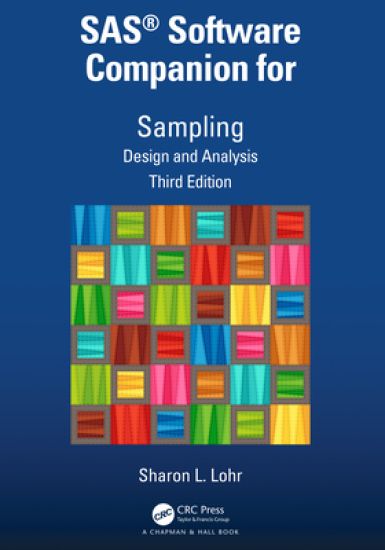
SAS® Software Companion for Sampling
The SAS® Software Companion for Sampling: Design and Analysis, designed to be read alongside Sampling: Design and Analysis, Third Edition by Sharon L. Lohr (SDA; 2022, CRC Press), shows how to use the survey selection and analysis procedures of SAS® software to perform calculations for the examples in SDA.No prior experience with SAS software is needed. Chapter 1 tells you how to access the software, introduces basic features, and helps you get started with analyzing data.Each subsequent chapter provides step-by-step guidance for working through the data examples in the corresponding chapter of SDA, with code, output, and interpretation. Tips and warnings help you develop good programming practices and avoid common survey data analysis errors.Features of the SAS software procedures are introduced as they are needed so you can see how each type of sample is selected and analyzed. Each chapter builds on the knowledge developed earlier for simpler designs; after finishing the book, you will know how to use SAS software to select and analyze almost any type of probability sample.All code is available on the book website and is easily adapted for your own survey data analyses. The website also contains all data sets from the examples and exercises in SDA to help you develop your skills through analyzing survey data from social and public opinion research, public health, crime, education, business, agriculture, and ecology
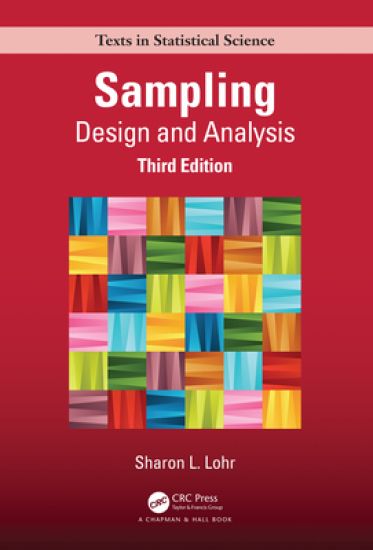
Sampling

Sampling

Sharon L. Lohr

CRC Press
2021
sidottu
"The level is appropriate for an upper-level undergraduate or graduate-level statistics major. Sampling: Design and Analysis (SDA) will also benefit a non-statistics major with a desire to understand the concepts of sampling from a finite population. A student with patience to delve into the rigor of survey statistics will gain even more from the content that SDA offers. The updates to SDA have potential to enrich traditional survey sampling classes at both the undergraduate and graduate levels. The new discussions of low response rates, non-probability surveys, and internet as a data collection mode hold particular value, as these statistical issues have become increasingly important in survey practice in recent years… I would eagerly adopt the new edition of SDA as the required textbook." (Emily Berg, Iowa State University)What is the unemployment rate? What is the total area of land planted with soybeans? How many persons have antibodies to the virus causing COVID-19? Sampling: Design and Analysis, Third Edition shows you how to design and analyze surveys to answer these and other questions. This authoritative text, used as a standard reference by numerous survey organizations, teaches the principles of sampling with examples from social sciences, public opinion research, public health, business, agriculture, and ecology. Readers should be familiar with concepts from an introductory statistics class including probability and linear regression; optional sections contain statistical theory for readers familiar with mathematical statistics.Key Features:Has been thoroughly revised to incorporate recent research and applications.Includes a new chapter on nonprobability samples, and more than 200 new examples and exercises have been added.Teaches the principles of sampling with examples from social sciences, public opinion research, public health, business, agriculture, and ecology. SDA’s companion website contains data sets, computer code, and links to two free downloadable supplementary books (also available in paperback) that provide step-by-step guides—with code, annotated output, and helpful tips—for working through the SDA examples. Instructors can use either R or SAS® software.SAS® Software Companion for Sampling: Design and Analysis, Third Edition by Sharon L. Lohr (2022, CRC Press)R Companion for Sampling: Design and Analysis, Third Edition by Yan Lu and Sharon L. Lohr (2022, CRC Press)
SAS® Software Companion for Sampling
The SAS® Software Companion for Sampling: Design and Analysis, designed to be read alongside Sampling: Design and Analysis, Third Edition by Sharon L. Lohr (SDA; 2022, CRC Press), shows how to use the survey selection and analysis procedures of SAS® software to perform calculations for the examples in SDA.No prior experience with SAS software is needed. Chapter 1 tells you how to access the software, introduces basic features, and helps you get started with analyzing data.Each subsequent chapter provides step-by-step guidance for working through the data examples in the corresponding chapter of SDA, with code, output, and interpretation. Tips and warnings help you develop good programming practices and avoid common survey data analysis errors.Features of the SAS software procedures are introduced as they are needed so you can see how each type of sample is selected and analyzed. Each chapter builds on the knowledge developed earlier for simpler designs; after finishing the book, you will know how to use SAS software to select and analyze almost any type of probability sample.All code is available on the book website and is easily adapted for your own survey data analyses. The website also contains all data sets from the examples and exercises in SDA to help you develop your skills through analyzing survey data from social and public opinion research, public health, crime, education, business, agriculture, and ecology
R Companion for Sampling

R Companion for Sampling

Yan Lu; Sharon L. Lohr

Taylor Francis Ltd
2021
nidottu
The R Companion for Sampling: Design and Analysis, designed to be read alongside Sampling: Design and Analysis, Third Edition by Sharon L. Lohr (SDA; 2022, CRC Press), shows how to use functions in base R and contributed packages to perform calculations for the examples in SDA.No prior experience with R is needed. Chapter 1 tells you how to obtain R and RStudio, introduces basic features of the R statistical software environment, and helps you get started with analyzing data.Each subsequent chapter provides step-by-step guidance for working through the data examples in the corresponding chapter of SDA, with code, output, and interpretation. Tips and warnings help you develop good programming practices and avoid common survey data analysis errors.R features and functions are introduced as they are needed so you can see how each type of sample is selected and analyzed. Each chapter builds on the knowledge developed earlier for simpler designs; after finishing the book, you will know how to use R to select and analyze almost any type of probability sample. All R code and data sets used in this book are available online to help you develop your skills analyzing survey data from social and public opinion research, public health, crime, education, business, agriculture, and ecology.
R Companion for Sampling

R Companion for Sampling

Yan Lu; Sharon L. Lohr

Taylor Francis Ltd
2021
sidottu
The R Companion for Sampling: Design and Analysis, designed to be read alongside Sampling: Design and Analysis, Third Edition by Sharon L. Lohr (SDA; 2022, CRC Press), shows how to use functions in base R and contributed packages to perform calculations for the examples in SDA.No prior experience with R is needed. Chapter 1 tells you how to obtain R and RStudio, introduces basic features of the R statistical software environment, and helps you get started with analyzing data.Each subsequent chapter provides step-by-step guidance for working through the data examples in the corresponding chapter of SDA, with code, output, and interpretation. Tips and warnings help you develop good programming practices and avoid common survey data analysis errors.R features and functions are introduced as they are needed so you can see how each type of sample is selected and analyzed. Each chapter builds on the knowledge developed earlier for simpler designs; after finishing the book, you will know how to use R to select and analyze almost any type of probability sample. All R code and data sets used in this book are available online to help you develop your skills analyzing survey data from social and public opinion research, public health, crime, education, business, agriculture, and ecology.
Measuring Crime

Measuring Crime

Sharon L. Lohr

CRC Press
2019
sidottu
Every day, newspapers, magazines, web sites, and social media feature articles about the prevalence of crime. Some of these contradict each other; others use inaccurate statistics. Many people who see wildly diverging statistics conclude that no statistics should be trusted. However, the essence of the statistical discipline is that all statistics should be accompanied by a measure of their accuracy. This book looks at crime statistics from a statistical point of view, and evaluates the different sources of crime statistics with respect to completeness (i.e. missing data), measurement error, and sampling variability. The goal of the book is to promote statistical reasoning about statistics.
Measuring Crime

Measuring Crime

Sharon L. Lohr

CRC Press
2019
nidottu
Every day, newspapers, magazines, web sites, and social media feature articles about the prevalence of crime. Some of these contradict each other; others use inaccurate statistics. Many people who see wildly diverging statistics conclude that no statistics should be trusted. However, the essence of the statistical discipline is that all statistics should be accompanied by a measure of their accuracy. This book looks at crime statistics from a statistical point of view, and evaluates the different sources of crime statistics with respect to completeness (i.e. missing data), measurement error, and sampling variability. The goal of the book is to promote statistical reasoning about statistics.