Kirjojen hintavertailu. Mukana 12 595 353 kirjaa ja 12 kauppaa.

Kirjailija

Shaul Bar

Kirjat ja teokset yhdessä paikassa: 14 kirjaa, julkaisuja vuosilta 2013-2023, suosituimpien joukossa Isaac. Vertaile teosten hintoja ja tarkista saatavuus suomalaisista kirjakaupoista.

14 kirjaa

Kirjojen julkaisuhaarukka 2013-2023.

Here Comes the Dreamer: The Joseph Story

Here Comes the Dreamer: The Joseph Story

Shaul Bar

Wipf Stock Publishers
2023
sidottu
The Joseph story starts when he was seventeen years old and ends with his death at one hundred and ten. These years included near death experiences, hatred among brothers, jealousy, a bizarre world of dreams, temptation, imprisonment, and his rise to power as grand vizier of Egypt. All of these events led to a change--once an arrogant young man with grandiose dreams, now he became a down to earth man with a sense of humility and a basic sentiment of religion. There was no more hatred among brothers, but love, which led to their eventual reconciliation. Joseph's life as portrayed in the book of Genesis was the starting point of many legends and commentaries found in the Talmud, Midrashim, and medieval commentaries. His behavior was an exemplary prototype of a righteous man; it served as a model for how a person should conduct himself.
Samuel

Samuel

Shaul Bar

Wipf Stock Publishers
2022
pokkari
Samuel, the man of God, was instrumental in the transition of a loose confederacy of Hebrew tribes to a centralized monarchy. The book of Samuel starts with his birth and ends with Saul's death on Mount Gilboa. The character of Samuel, who has been equally compared to Moses and Aaron, serves as a link between the various stories. In two major speeches Samuel rejects the idea of monarchy; still, as a loyal servant of the Lord, he anoints Saul as the first king of Israel and later, he anoints David. Why did Samuel vehemently reject the idea of kingship? Did Samuel have his own agenda, and was his opposition to the monarchy motivated by his own personal aspiration? There are several titles that label him: priest, prophet, seer, judge, and "the man of God." Who was Samuel? Nowhere else in the Hebrew Bible is there a description of a person such as Samuel, who was raised from the grave and delivered a message of doom. Readers of this volume will rediscover Samuel through a better understanding of achievements and failures.
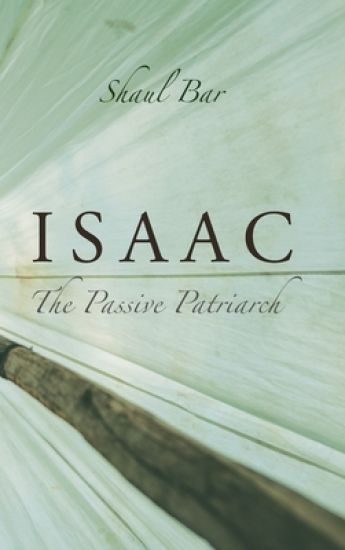
Isaac

Isaac

Shaul Bar

Wipf Stock Publishers
2020
pokkari
Throughout his life, Isaac remained a passive tent dweller. He did not go to find a wife; his servant brought a wife to him. He did not go to war; and when conflict arose, he withdrew. In the story of his binding, he was passive, and it appears as though he was bound forever on the altar. Isaac was dominated by his father Abraham, his wife Rebecca, Abimelech king of Gerar, and his sons Jacob and Esau. For most of his life, he is led by others, and his actions are reactions to the developing situations. He appears to have little personality and is better known as the son of his father Abraham, or the father of his sons Jacob and Esau.
A Nation Is Born

A Nation Is Born

Shaul Bar

Wipf Stock Publishers
2016
sidottu
A life's journey that started with a struggle and deception continues into adulthood. Jacob's life was full of drama--feuding with his brother Esau, wrestling with an angel, and jealousy between his wives Rachel and Leah. One beloved wife who is barren at first and one unloved wife who is blessed with sons. Fathering children who formed the twelve tribes of Israel. The Jacob story invites the reader into tensions between settling and wandering, hope and despair, trickery and fidelity, faith and doubt. These stories reflect Jacob's life and his struggles with people and God. Regarding the Jacob stories, the question of their composition and historical value has captured the attention of Biblical scholars for centuries. Some view these accounts as myths or literary epics. So what is behind these stories? To answer these questions the author examines the patriarch's beliefs, customs, and daily life. In this book the author provides provocative and useful answers regarding who the father of the nation of Israel was. ""Professor Bar's latest work will be of extreme value to all people seriously interested in the Hebrew Bible. Bar makes available contemporary scholarship and traditional Jewish interpretation."" --S. David Sperling, Julian Morgenstern Professor of Bible and Ancient Near Eastern Literature, Hebrew Union College-Jewish Institute of Religion, New York; Editor of the Bible Division of the Encyclopedia Judaica 2007 Shaul Bar is the director of the Bornblum Judaic Studies Program at the University of Memphis. He is the author of A Letter Has Not Been Read: Dreams in the Hebrew Bible (2001), I Deal Death and Give Life: Biblical Perspectives on Death (2010), God's First King: The Story of Saul (2013), and Daily Life of the Patriarchs: The Way It Was (2014).
A Letter That Has Not Been Read

A Letter That Has Not Been Read

Shaul Bar

Hebrew Union College Press,U.S.
2015
nidottu
Since Freud, the study of dreams has typically involved inquiry into past and present emotional states. The ancients, unfamiliar with the intricate byways of the human soul revealed by modern psychology, typically saw dreams as channels of communication between human beings and external sources. Shaul Bar explores the etymology of key terms for dreams in the Hebrew Bible, presents dozens of examples of biblical dreams and visions, and categorizes them as prophetic, symbolic, or incubation. He studies biblical dreams and visions in the context of similar phenomena in the literature of neighboring cultures and analyzes the functions of dream reports in the biblical corpus. The literature of dream interpretation in Egypt and Mesopotamia informs Bar's treatment of the structure of dream accounts as conforming to the three-part model (setting, message, response) proposed for ancient Near Eastern dream accounts in A. Leo Oppenheim's classic work on dream interpretation. Symbolic dreams, whether or not God is their source, contain no divine appearance and require interpretation to be understood. While oneiro-criticism was a significant profession in ancient Near Eastern cultures, the Hebrew Bible presents only two such experts, Joseph and Daniel. Both were active in royal courts, and the success of both in interpreting the rulers' dreams served to confirm the superiority of the God of Israel. Ambivalence characterizes the attitude toward dreams and visions in prophetic literature. Joel and Job allow that they have some value. But Jeremiah, Zechariah, Isaiah, and Ecclesiates find no religious significance in them and even treat them as tools of deceit. The Talmud presents no consensus about whether dreams are a legitimate form of communication from God. Although a guild of professional interpreters existed in Jerusalem and the Talmud includes a short dream book, many Sages expressed skepticism about such alleged divine messages. Dreams also serve important functions within the literary world of the Hebrew Bible. Bar shows how Jacob's dream at Bethel serves to explain the sanctity of the place and detach it from its Canaanite context, how the dreams in the Joseph cycle show the hand of divine providence in the descent to Egypt followed by the ascent to the Promised Land, how Solomon's dream at Gibeon serves to legitimate Solomon's rule, and how Nebuchadnezzar's dreams served to emphasize once again that it is the Lord who guides universal history.
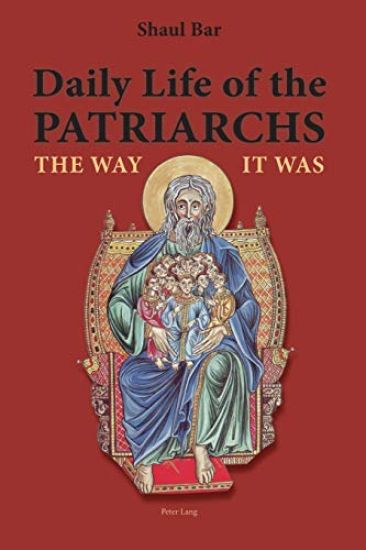
Daily Life of the Patriarchs

Daily Life of the Patriarchs

Shaul Bar

Peter Lang AG, Internationaler Verlag der Wissenschaften
2014
nidottu
While the literature of the ancient Near East portrays legendary heroes, this is not the case with the biblical narrative, which portrays the patriarchs and matriarchs as fallible human beings. Their story is a multigenerational one of family and the dynamics that exist within. Reading these stories is like hearing the echo of family feuds, which is what makes them timeless. Were the patriarchs real people? Or can we say that many details in the Book of Genesis are fictions that project later romantic ideals of life and faith? To answer these questions the author examines the patriarchs’ daily life, beliefs, and customs to provide provocative and useful insights into the life of the Patriarchs.
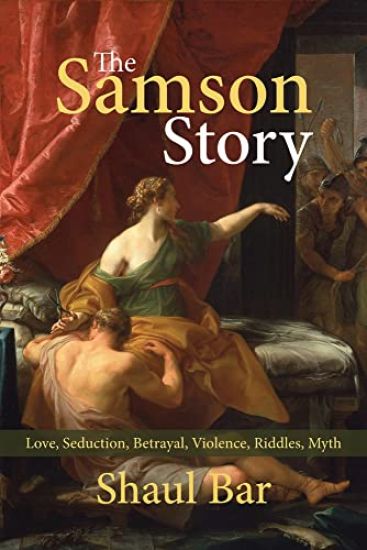
The Samson Story

The Samson Story

Shaul Bar

Wipf Stock Publishers
2018
pokkari
Love, seduction, betrayal, violence, riddles, and myth all find their place in the biblical story of Samson. Samson is the last of the judges, with 20 percent of the book devoted to him--more than any other judge. From the beginning, Samson is unlike any other judge, which the author suggests when narrating Samson's birth. Samson is destined, even before his birth, to deliver Israel. He doesn't lead his people into battle, he acts alone; his battles are personal vendettas. Samson fights with a lion, defeats the Philistines with the jawbone of an ass, captures foxes, sets Philistine fields on fire, and carries the Gates of Gaza on his shoulders. So what stands behind these stories? Was Samson a mythological hero like Hercules and Gilgamesh? Like other men in the Hebrew Bible, Samson can't resist foreign women. Time after time, he follows Philistine women who eventually betray him. Samson is defeated not by physical strength, but by the powers of seduction, making this story a tragedy. Who were these women and how did they defeat Samson? Readers of this volume will rediscover Samson and better understand his achievements and failures. This study will afford a provocative and useful insight into the character of Samson. ""Both a superhuman and sinner, Samson will continue to captivate the imagination of generations to come. With his careful attention to biblical nuance, Dr. Bar has managed to bring to life the intriguing story of the most controversial and eccentric judge of the Old Testament. This book untangles both the multifaceted narrative and the complex character of its hero. Bible lovers will much appreciate this detailed study."" --DR. SHMUEL SHEPKARU, Professor of Jewish Intellectual and Religious History at the University of Oklahoma and author of Jewish Martyrs in the Pagan and Christian Worlds Dr. Shaul Bar, Director of the Bornblum Judaic Studies Program at the University of Memphis. He is the author of A Letter Has Not Been Read: Dreams in the Hebrew Bible (2001), I Deal Death and Give Life: Biblical Perspectives on Death (2010), God's First King: The Story of Saul (2013), Daily Life of the Patriarchs: The Way It Was (2014), and A Nation Is Born: The Jacob Story (2016).