Kirjojen hintavertailu. Mukana 12 390 323 kirjaa ja 12 kauppaa.

Kirjailija

Shaul Bartal

Kirjat ja teokset yhdessä paikassa: 6 kirjaa, julkaisuja vuosilta 2011-2026, suosituimpien joukossa Jihad in Palestine. Vertaile teosten hintoja ja tarkista saatavuus suomalaisista kirjakaupoista.

6 kirjaa

Kirjojen julkaisuhaarukka 2011-2026.

Jihad in Palestine

Jihad in Palestine

Shaul Bartal

Routledge
2019
nidottu
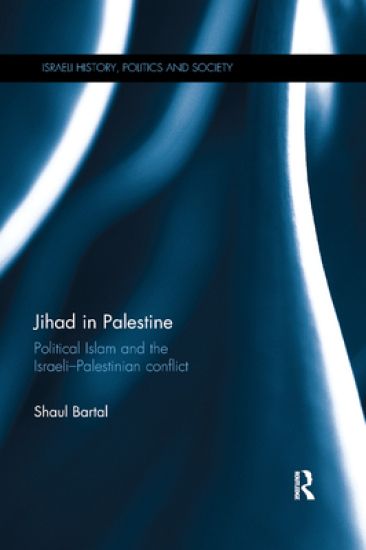
The 21st century exists in the shadow of the return of extremist Islam to the center of the world’s political stage, a process that began at the end of the previous century. While researchers have focused on the rise of Hamas, this return has in fact manifested itself in a range of independent Islamic extremist groups with their own philosophies. Jihad in Palestine provides a comprehensive study of the variety of Islamic extremist groups operating inside Israel/Palestine today, examining their philosophies and views concerning martyrdom, as well as their attitudes to the Israeli-Palestinian conflict. These ideologies are presented in their own words, thanks to the author’s extensive translations and commentary of primary sources in Arabic, including the writings of the Islamic Jihad, al-Jama’a al-Islamiya, Hizbal-Tahrir al-Islami, Hamas and the Islamic Movement. The book studies the attitudes of these organisations towards the fundamental issues surrounding Jihad, including the concept of personal obligation, the relationship of the movement to the peace agreements and attitudes towards Jews expressed in the movement’s writings. Exploring the basic theories of sacrifice and analysing modern day Palestinian society, it promotes a greater understanding of the religious angle of the Israeli-Palestinian conflict.The book will be of interest to students and scholars of Middle East Studies, Jewish Studies, Political Islam and Terrorism & Political Violence.
Jihad in Palestine

Jihad in Palestine

Shaul Bartal

Routledge
2015
sidottu
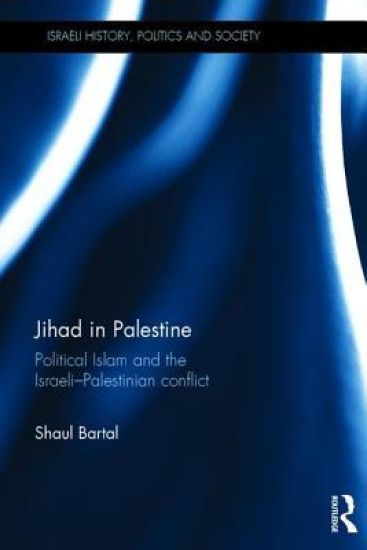
The 21st century exists in the shadow of the return of extremist Islam to the center of the world’s political stage, a process that began at the end of the previous century. While researchers have focused on the rise of Hamas, this return has in fact manifested itself in a range of independent Islamic extremist groups with their own philosophies. Jihad in Palestine provides a comprehensive study of the variety of Islamic extremist groups operating inside Israel/Palestine today, examining their philosophies and views concerning martyrdom, as well as their attitudes to the Israeli-Palestinian conflict. These ideologies are presented in their own words, thanks to the author’s extensive translations and commentary of primary sources in Arabic, including the writings of the Islamic Jihad, al-Jama’a al-Islamiya, Hizbal-Tahrir al-Islami, Hamas and the Islamic Movement. The book studies the attitudes of these organisations towards the fundamental issues surrounding Jihad, including the concept of personal obligation, the relationship of the movement to the peace agreements and attitudes towards Jews expressed in the movement’s writings. Exploring the basic theories of sacrifice and analysing modern day Palestinian society, it promotes a greater understanding of the religious angle of the Israeli-Palestinian conflict.The book will be of interest to students and scholars of Middle East Studies, Jewish Studies, Political Islam and Terrorism & Political Violence.
Hamas and Ideology

Hamas and Ideology

Shaul Bartal; Nesya Rubinstein-Shemer

Routledge
2019
nidottu
Sheikh Yusuf al- Qara?awi is regarded as the most influential contemporary Muslim religious figure. His best-selling book, Al-?alal wal-?aram fi al-Islam ("The Forbidden and the Permitted in Islam") is perhaps one of the most widely read Islamic works, after the Qur’an. The subject of jihad in Palestine is a salient feature of Qara?awi’s thought and is addressed frequently in his books. His views on Israel and on the Jews shape those of many Muslims throughout the world. This book paints al- Qara?awi’s portrait within the context of the subject of the struggle for Palestine and assesses why he is committed so fervently to the Palestinian course. It also sheds light on another important aspect of al-Qaradawi’s thought, namely the marked contrast between his ideas regarding the Muslim world and his views on relations with other religions and countries. Whereas al- Qara?awi is considered to be a moderate in Islamic matters, his attitude toward the Jews and to Israel is one of abiding hatred and uncompromising struggle. The book aims to classify Qara?awi’s thought along the axis of moderation and extremism by drawing comparisons between Qara?awi’s teachings and those of other Muslim jurists. Furthermore, it compares the features of antisemitic writing with that of Qara?awi in order to answer the question as to whether Qara?awi’s teachings actually constitute an expression of anti-semitism.Despite the subject of jihad in Palestine being so central to Qara?awi’s thought, there has not been a comprehensive and systematic academic study of this to date. The book therefore represents a major contribution to the field and will appeal to anyone studying the Israel-Palestine conflict, Islamic Studies, Jewish Studies, Terrorism and Political Violence.
Hamas and Ideology

Hamas and Ideology

Shaul Bartal; Nesya Rubinstein-Shemer

Routledge
2017
sidottu
Sheikh Yusuf al- Qara?awi is regarded as the most influential contemporary Muslim religious figure. His best-selling book, Al-?alal wal-?aram fi al-Islam ("The Forbidden and the Permitted in Islam") is perhaps one of the most widely read Islamic works, after the Qur’an. The subject of jihad in Palestine is a salient feature of Qara?awi’s thought and is addressed frequently in his books. His views on Israel and on the Jews shape those of many Muslims throughout the world. This book paints al- Qara?awi’s portrait within the context of the subject of the struggle for Palestine and assesses why he is committed so fervently to the Palestinian course. It also sheds light on another important aspect of al-Qaradawi’s thought, namely the marked contrast between his ideas regarding the Muslim world and his views on relations with other religions and countries. Whereas al- Qara?awi is considered to be a moderate in Islamic matters, his attitude toward the Jews and to Israel is one of abiding hatred and uncompromising struggle. The book aims to classify Qara?awi’s thought along the axis of moderation and extremism by drawing comparisons between Qara?awi’s teachings and those of other Muslim jurists. Furthermore, it compares the features of antisemitic writing with that of Qara?awi in order to answer the question as to whether Qara?awi’s teachings actually constitute an expression of anti-semitism.Despite the subject of jihad in Palestine being so central to Qara?awi’s thought, there has not been a comprehensive and systematic academic study of this to date. The book therefore represents a major contribution to the field and will appeal to anyone studying the Israel-Palestine conflict, Islamic Studies, Jewish Studies, Terrorism and Political Violence.
The Resurgence of Hamas

The Resurgence of Hamas

Shaul Bartal; Teresa de Almeida e Silva

TAYLOR FRANCIS LTD
2026
sidottu
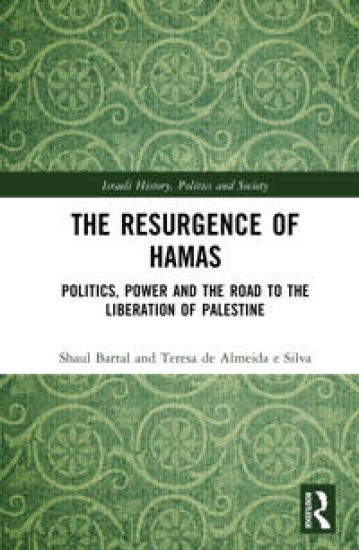
The Resurgence of Hamas: Politics, Power and the Road to the Liberation of Palestine offers a comprehensive and controversial analysis of Hamas’s ideology, evolution, and enduring strategic vision. Tracing the movement’s trajectory from its origins as a local offshoot of the Muslim Brotherhood in Gaza to its emergence as a dominant political, military, and social force, the book argues that the 1988 Hamas Charter remains the foundational framework shaping its actions, including the events of October 7, 2023. Drawing extensively on Hamas’s own publications, sermons, and internal documents, it examines the movement’s Islamist worldview, its conception of resistance, its relationship with Iran and the broader “axis of resistance,” and its efforts to fuse Palestinian nationalism with religious ideology. The study also situates Hamas within wider currents of militant Islamism, analysing ideological overlaps and strategic parallels with transnational jihadist movements, while highlighting the specificities of the Palestinian context. This book will be of interest to scholars and students of Middle East politics, political Islam, security studies, and conflict resolution, as well as policymakers and analysts seeking a deeper understanding of one of the most consequential actors in the Israeli–Palestinian conflict.