Kirjojen hintavertailu. Mukana 12 432 446 kirjaa ja 12 kauppaa.

Kirjailija

Shaun Moores

Kirjat ja teokset yhdessä paikassa: 10 kirjaa, julkaisuja vuosilta 1993-2018, suosituimpien joukossa Communications/Media/Geographies. Vertaile teosten hintoja ja tarkista saatavuus suomalaisista kirjakaupoista.

10 kirjaa

Kirjojen julkaisuhaarukka 1993-2018.

Communications/Media/Geographies

Communications/Media/Geographies

Paul C. Adams; Julie Cupples; Kevin Glynn; André Jansson; Shaun Moores

Routledge
2016
sidottu
Although there are human geographers who have previously written on matters of media and communication, and those in media and communication studies who have previously written on geographical issues, this is the first book-length dialogue in which experienced theorists and researchers from these different fields address each other directly and engage in conversation across traditional academic boundaries. The result is a compelling discussion, with the authors setting out statements of their positions before responding to the arguments made by others.One significant aspect of this discussion is a spirited debate about the sort of interdisciplinary area that might emerge as a focus for future work. Does the already-established idea of communication geography offer the best way forward? If so, what would applied or critical forms of communication geography be concerned to do? Could communication geography benefit from the sorts of conjunctural analysis that have been developed in contemporary cultural studies? Might a further way forward be to imagine an interdisciplinary field of everyday-life studies, which would draw critically on non-representational theories of practice and movement?Readers of Communications/Media/Geographies are invited to join the debate, thinking through such questions for themselves, and the themes that are explored in this book (for example, of space, place, meaning, power, and ethics) will be of interest not only to academics in human geography and in media and communication studies, but also to a wider range of scholars from across the humanities and social sciences.
Communications/Media/Geographies

Communications/Media/Geographies

Paul C. Adams; Julie Cupples; Kevin Glynn; André Jansson; Shaun Moores

Routledge
2018
nidottu
Although there are human geographers who have previously written on matters of media and communication, and those in media and communication studies who have previously written on geographical issues, this is the first book-length dialogue in which experienced theorists and researchers from these different fields address each other directly and engage in conversation across traditional academic boundaries. The result is a compelling discussion, with the authors setting out statements of their positions before responding to the arguments made by others.One significant aspect of this discussion is a spirited debate about the sort of interdisciplinary area that might emerge as a focus for future work. Does the already-established idea of communication geography offer the best way forward? If so, what would applied or critical forms of communication geography be concerned to do? Could communication geography benefit from the sorts of conjunctural analysis that have been developed in contemporary cultural studies? Might a further way forward be to imagine an interdisciplinary field of everyday-life studies, which would draw critically on non-representational theories of practice and movement?Readers of Communications/Media/Geographies are invited to join the debate, thinking through such questions for themselves, and the themes that are explored in this book (for example, of space, place, meaning, power, and ethics) will be of interest not only to academics in human geography and in media and communication studies, but also to a wider range of scholars from across the humanities and social sciences.
The Politics of Domestic Consumption

The Politics of Domestic Consumption

Stevi Jackson; Shaun Moores

Routledge
2018
sidottu
This Reader brings together a broad range of critical work on on the everday practices and power relations of domestic consumption -drawing on material from sociology, women's studies and media and cultural studies. The book is divided into five main sections - on economics, food and clothing, leisure and media reception, household technologies, and the construction of home - and its selected contributions examine the social dynamics of gender: generation, class and ethnicity.
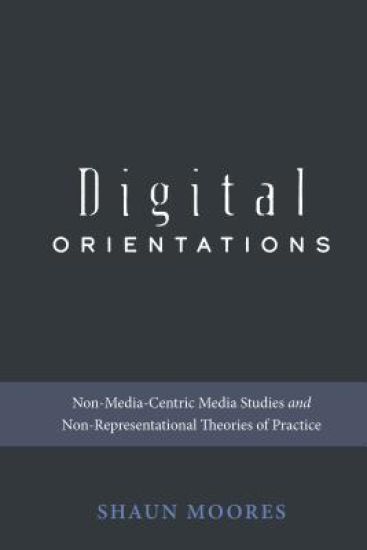
Digital Orientations

Digital Orientations

Shaun Moores

Peter Lang Publishing Inc
2017
nidottu
Might it be possible to rearticulate the term digital in digital media, so that it refers at least as much to the deft movements or orientations of hands and fingers (of digits) as it does to the new media technologies themselves? What if digital media are understood as manual media? Has the academic field of media studies tended to focus too much on media, and not enough on the practices and experiences of daily living that help to give media their meaningfulness? What if media researchers were to pay more attention to knowledge-in-movement or to matters of orientation and habitation, and rather less to those of symbolic representation and cognitive interpretation? Digital Orientations is a bold call for non-media-centric media studies (and ultimately for everyday-life studies) with a non-representational theoretical emphasis. The author engages here with a broad range of work from across the humanities and social sciences, drawing on Merleau-Ponty’s phenomenological philosophy, Ingold’s anthropology, the geographies of Massey, Seamon and Thrift, and the sociologies of Bourdieu, Sudnow and Urry.
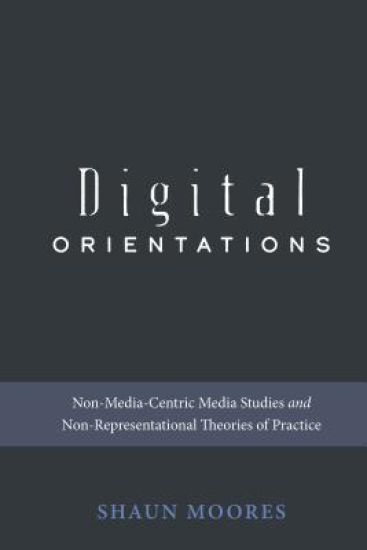
Digital Orientations

Digital Orientations

Shaun Moores

Peter Lang Publishing Inc
2017
sidottu
Might it be possible to rearticulate the term digital in digital media, so that it refers at least as much to the deft movements or orientations of hands and fingers (of digits) as it does to the new media technologies themselves? What if digital media are understood as manual media? Has the academic field of media studies tended to focus too much on media, and not enough on the practices and experiences of daily living that help to give media their meaningfulness? What if media researchers were to pay more attention to knowledge-in-movement or to matters of orientation and habitation, and rather less to those of symbolic representation and cognitive interpretation? Digital Orientations is a bold call for non-media-centric media studies (and ultimately for everyday-life studies) with a non-representational theoretical emphasis. The author engages here with a broad range of work from across the humanities and social sciences, drawing on Merleau-Ponty’s phenomenological philosophy, Ingold’s anthropology, the geographies of Massey, Seamon and Thrift, and the sociologies of Bourdieu, Sudnow and Urry.
Media/Theory

Media/Theory

Shaun Moores

Routledge
2005
sidottu
From an established author with a growing international profile in media studies, Media/Theory is an accessible yet challenging guide to ways of thinking about media and communications in modern life.Shaun Moores draws on ideas from a range of disciplines in the humanities and social sciences, and expertly connects the analysis of media and communications with key themes in contemporary social theory.Examining core issues of time and space, Moores also examines matters of interactions, signification and identity, and argues that media studies is bound up in the wider processes of the modern world and not just about studying the media.This book makes a distinctive contribution towards rethinking the shape and direction of media studies today, and for students at advanced undergraduate or postgraduate level.
Media/Theory

Media/Theory

Shaun Moores

Routledge
2005
nidottu
From an established author with a growing international profile in media studies, Media/Theory is an accessible yet challenging guide to ways of thinking about media and communications in modern life.Shaun Moores draws on ideas from a range of disciplines in the humanities and social sciences, and expertly connects the analysis of media and communications with key themes in contemporary social theory.Examining core issues of time and space, Moores also examines matters of interactions, signification and identity, and argues that media studies is bound up in the wider processes of the modern world and not just about studying the media.This book makes a distinctive contribution towards rethinking the shape and direction of media studies today, and for students at advanced undergraduate or postgraduate level.
Media and Everyday Life in Modern Society

Media and Everyday Life in Modern Society

Shaun Moores

Edinburgh University Press
2000
nidottu
What position have television, radio and other electronic media like telephones and computers come to occupy in people's day-to-day lives and social relationships? How do these communication and information technologies get used and made sense of in local settings such as the household and the urban neighbourhood? How have they helped to construct new arrangements of time, space and place in a culture with globalising tendencies? What types of identity, experience and interaction do the electronic media make available to their different audiences or users? In this accessibly written book, Shaun Moores offers a particular set of answers to these general questions for media and cultural studies, drawing on a range of his investigations and reflections on media and everyday life in modern society. Combining theory with empirical research, he engages with the ideas of key thinkers - such as Giddens, Goffman, Hall and Williams - whilst also referring to detailed ethnographic and historical data. Specific topics discussed by the author include the domestic consumption of broadcasting, the formation of imagined communities and the presentation of self in mediated encounters.
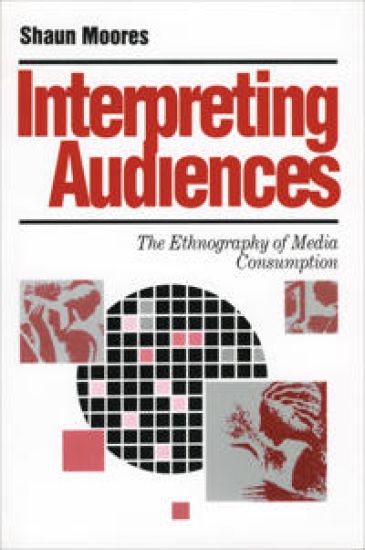
Interpreting Audiences

Interpreting Audiences

Shaun Moores

SAGE Publications Ltd
1993
nidottu
In this comprehensive guide to important new developments in the study of media reception, Shaun Moores reviews a wide range of qualitative audience research and charts the emergence of a critical ethnographic perspective on everyday consumer practices. The author considers the distinctive features of audience ethnography and outlines its applications in communication and cultural analysis. Four main areas of inquiry are discussed: the power of media texts to determine the meanings made by their readers; the relationship between media genres and the social patterns of taste; the day-to-day settings and dynamic social situations of reception; and the cultural uses and interpretations of communication technologies in the home. Assessing the theories of Bourdieu, De Certeau and others, as well as drawing on his own investigations of new media technologies in domestic contexts, Moores advances a model of creativity and constraint in everyday life.