Kirjojen hintavertailu. Mukana 12 188 098 kirjaa ja 12 kauppaa.

Kirjailija

Shaun Nichols

Kirjat ja teokset yhdessä paikassa: 7 kirjaa, julkaisuja vuosilta 2003-2021, suosituimpien joukossa Philosophy. Vertaile teosten hintoja ja tarkista saatavuus suomalaisista kirjakaupoista.

7 kirjaa

Kirjojen julkaisuhaarukka 2003-2021.

Rational Rules

Rational Rules

Shaun Nichols

Oxford University Press
2021
sidottu
Moral systems, like normative systems more broadly, involve complex mental representations. Rational Rules proposes that moral learning can be understood in terms of general-purpose rational learning procedures. Nichols argues that statistical learning can help answer a wide range of questions about moral thought: Why do people think that rules apply to actions rather than consequences? Why do people expect new rules to be focused on actions rather than consequences? How do people come to believe a principle of liberty, according to which whatever is not expressly prohibited is permitted? How do people decide that some normative claims hold universally while others hold only relative to some group? The resulting account has both empiricist and rationalist features: since the learning procedures are domain-general, the result is an empiricist theory of a key part of moral development, and since the learning procedures are forms of rational inference, the account entails that crucial parts of our moral system enjoy rational credentials. Moral rules can also be rational in the sense that they can be effective for achieving our ends, given our ecological settings. Rational Rules argues that at least some central components of our moral systems are indeed ecologically rational: they are good at helping us attain common goals. Nichols argues that the account might be extended to capture moral motivation as a special case of a much more general phenomenon of normative motivation. On this view, a basic form of rule representation brings motivation along automatically, and so part of the explanation for why we follow moral rules is that we are built to follow rules quite generally.
Bound

Bound

Shaun Nichols

Oxford University Press
2017
nidottu
The problem of free will arises from ordinary, commonsense reflection. Shaun Nichols examines these ordinary attitudes from a naturalistic perspective. He offers a psychological account of the origins of the problem of free will. According to his account the problem arises because of two naturally emerging ways of thinking about ourselves and the world, one of which makes determinism plausible while the other makes determinism implausible. Although contemporary cognitive science does not settle whether choices are determined, Nichols argues that our belief in indeterminist choice is grounded in faulty inference and should be regarded as unjustified. However, even if our belief in indeterminist choice is false, it's a further substantive question whether that means that free will doesn't exist. Nichols argues that, because of the flexibility of reference, there is no single answer to whether free will exists. In some contexts, it will be true to say 'free will exists'; in other contexts, it will be false to say that. With this substantive background in place, Bound promotes a pragmatic approach to prescriptive issues. In some contexts, the prevailing practical considerations suggest that we should deny the existence of free will and moral responsibility; in other contexts the practical considerations suggest that we should affirm free will and moral responsibility. This allows for the possibility that in some contexts, it is morally apt to exact retributive punishment; in other contexts, it can be apt to take up the exonerating attitude of hard incompatibilism.
Bound

Bound

Shaun Nichols

Oxford University Press
2015
sidottu
The problem of free will arises from ordinary, commonsense reflection. Shaun Nichols examines these ordinary attitudes from a naturalistic perspective. He offers a psychological account of the origins of the problem of free will. According to his account the problem arises because of two naturally emerging ways of thinking about ourselves and the world, one of which makes determinism plausible while the other makes determinism implausible. Although contemporary cognitive science does not settle whether choices are determined, Nichols argues that our belief in indeterminist choice is grounded in faulty inference and should be regarded as unjustified. However, even if our belief in indeterminist choice is false, it's a further substantive question whether that means that free will doesn't exist. Nichols argues that, because of the flexibility of reference, there is no single answer to whether free will exists. In some contexts, it will be true to say 'free will exists'; in other contexts, it will be false to say that. With this substantive background in place, Bound promotes a pragmatic approach to prescriptive issues. In some contexts, the prevailing practical considerations suggest that we should deny the existence of free will and moral responsibility; in other contexts the practical considerations suggest that we should affirm free will and moral responsibility. This allows for the possibility that in some contexts, it is morally apt to exact retributive punishment; in other contexts, it can be apt to take up the exonerating attitude of hard incompatibilism.
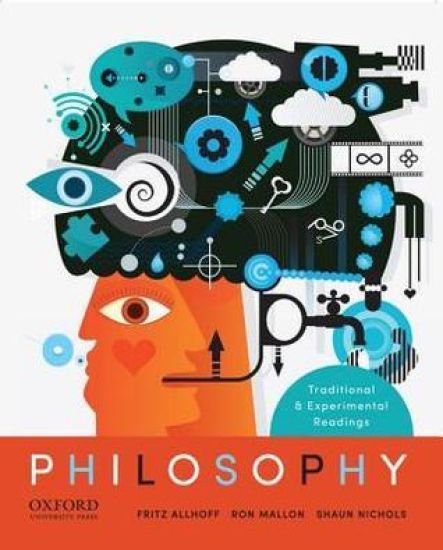
Philosophy

Philosophy

Ron Mallon; Shaun Nichols

Oxford University Press Inc
2012
nidottu
Recently, the fields of empirical and experimental philosophy have generated tremendous excitement, due to unexpected results that have challenged philosophical dogma. Responding to this trend, Philosophy: Traditional and Experimental Readings is the first introductory philosophy reader to integrate cutting-edge work in empirical and experimental philosophy with traditional philosophy. Featuring coverage that is equal parts historical, contemporary, and empirical/experimental, this topically organized reader provides students with a unique introduction to both the core and the vanguard of philosophy. The text is enhanced by pedagogical tools including commentary on each reading and chapter, study questions, suggested further readings, and a glossary. An Instructor's Manual and Companion Website at www.oup.com/us/allhoff provide additional resources.
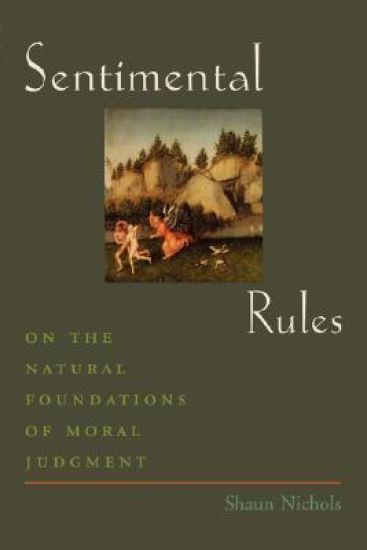
Sentimental Rules

Sentimental Rules

Shaun Nichols

Oxford University Press Inc
2007
nidottu
Sentimental Rules is an ambitious and highly interdisciplinary work, which proposes and defends a new theory about the nature and evolution of moral judgment. In it, philosopher Shaun Nichols develops the theory that emotions play a critical role in both the psychological and the cultural underpinnings of basic moral judgment. Nichols argues that our norms prohibiting the harming of others are fundamentally associated with our emotional responses to those harms, and that such "sentimental rules" enjoy an advantage in cultural evolution, which partly explains the success of certain moral norms. This has sweeping and exciting implications for philosophical ethics. Nichols builds on an explosion of recent intriguing experimental work in psychology on our capacity for moral judgment and shows how this empirical work has broad import for enduring philosophical problems. The result is an account that illuminates fundamental questions about the character of moral emotions and the role of sentiment and reason in how we make our moral judgments. This work should appeal widely across philosophy and the other disciplines that comprise cognitive science.
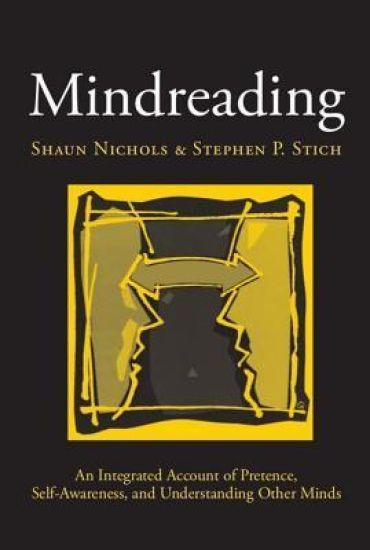
Mindreading

Mindreading

Shaun Nichols; Stephen P. Stich

Clarendon Press
2003
nidottu
The everyday capacity to understand the mind, fancifully dubbed 'mindreading', plays an enormous role in our lives. In the latter half of the 20th century mindreading became the object of sustained scientific and theoretical research, capturing the attention of a wide range of disciplines, including philosophy, developmental psychology, behavioral ecology, anthropology, and cognitive psychopathology. What has been missing is a detailed and integrated account of the mental components that underlie this remarkable capacity. Nichols and Stich develop and defend a new account of the psychological mechanisms underlying mindreading. They maintain that it is, as common sense would suggest, vital to distinguish between reading others' minds and reading one's own. In reading other minds, the imagination plays a central role. As a result, the authors begin with an explicit and systematic account of pretence and imagination which proposes that pretence representations are contained in a separate mental workspace, the 'Possible World Box', which is part of the basic architecture of the human mind. The mechanisms underlying pretence get recruited when people attempt to understand others and predict their behaviour. In some cases, we use our own mental mechanisms to simulate the mental processes of another, as suggested by the 'simulation theory' of mindreading. However, mindreading also implicates very different kinds of mechanisms that rely on rich bodies of information, as suggested by information-based accounts of mindreading. In addition, the authors argue, reading other minds involves important processes that don't fit into either category. None of these mechanisms, though, explain how we read our own minds, which, according to the authors, requires invoking an entirely independent set of mechanisms. What we find, then, is an intricate web of mental components to explain our fascinating and multifarious knack of understanding minds. This account provides a valuable framework for future work on mindreading and has broad implications for philosophical debates that have surrounded the issue for the last quarter century.
Mindreading

Mindreading

Shaun Nichols; Stephen P. Stich

Clarendon Press
2003
sidottu
The everyday capacity to understand the mind, or "mindreading", plays an enormous role in our ordinary lives. Shaun Nichols and Stephen Stich provide a detailed and integrated account of the intricate web of mental components underlying this fascinating and multifarious skill. The imagination, they argue, is essential to understanding others, and there are special cognitive mechanisms for understanding oneself. The account that emerges has broad implications for longstanding philosophical debates over the status of folk psychology.