Kirjojen hintavertailu. Mukana 12 390 323 kirjaa ja 12 kauppaa.

Kirjailija

Shauna Reilly

Kirjat ja teokset yhdessä paikassa: 10 kirjaa, julkaisuja vuosilta 2010-2023, suosituimpien joukossa The Trifecta in Voting Barrier Causation. Vertaile teosten hintoja ja tarkista saatavuus suomalaisista kirjakaupoista.

10 kirjaa

Kirjojen julkaisuhaarukka 2010-2023.

The Trifecta in Voting Barrier Causation

The Trifecta in Voting Barrier Causation

Shauna Reilly

BLOOMSBURY PUBLISHING PLC
2022
nidottu
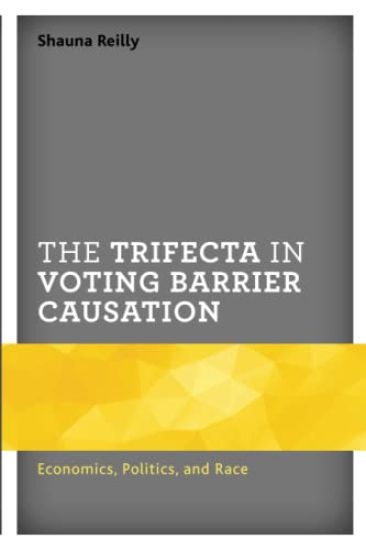
This book examines the voting restrictions that have been implemented across the United States in the post-2008 recession era. Navigating the literature and conventional wisdom, this book navigates the fiscal, partisan and racial influences on voting rights laws in a post-recession era. Reilly explores the role each of these three influences have had on policy and culminate in a trifecta of effects. This is the first contribution to the literature that explores fiscal impacts with the interaction of race and partisanship.
Place-Based Service Learning in Higher Education

Place-Based Service Learning in Higher Education

Shauna Reilly; Mark Neikirk; Samantha Langley-Turnbaugh

BLOOMSBURY PUBLISHING PLC
2023
sidottu
This book looks at the intersection of student research and community-based learning in a concentrated location over a period of ten years. This study examines the use of an urban neighborhood as a place-based source for engagement partners and opportunities. With a sustained, programmatic commitment to the neighborhood, Northern Kentucky University sought to build trust over a period of ten years with residents, nonprofit agencies serving them, and other stakeholders, who in turn could generate a steady stream engagement opportunities valued by the neighborhood and valuable to students’ learning. Our analysis found that this sustained, programmatic commitment indeed built trust with partners and produced mutually beneficial opportunities. This has resulted in tremendous benefits to the university by creating lasting relationships, impactful work in the community and by retaining faculty and students.
The Intersection of High-Impact Practices

The Intersection of High-Impact Practices

Shauna Reilly; Samantha Langley-Turnbaugh

Lexington Books
2021
sidottu
The Intersection of High-Impact Practices: What’s Next for Higher Education? examines high-impact practices and their impacts individually and collectively to demonstrate the added value of connecting high-impact practices. The research presented by Drs. Reilly and Turnbaugh-Langley illustrates that student success is not just a function of participation in one or many high-impact practices, but rather the order, timing, and interaction of these practices that yields the highest impact. These chapters discuss various high-impact practices such as study abroad experiences, student research initiatives, and internships to explore how these kinds of activities augment and enrich the success of students. The authors also speculate on where schools could increase the funding for these high-impact practices to maximize the institution’s return on investment. Ultimately, this book strongly advocates for not only the benefits of high-impact practices, but making sure students have multiple experiences with them.
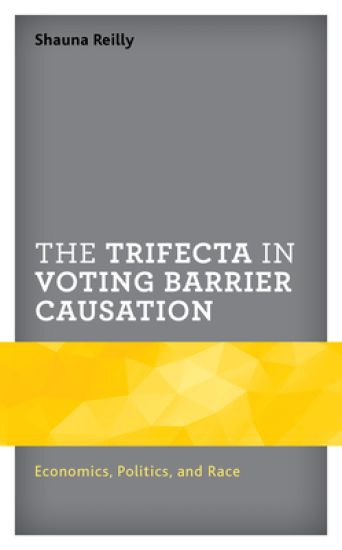
The Trifecta in Voting Barrier Causation

The Trifecta in Voting Barrier Causation

Shauna Reilly

Lexington Books
2020
sidottu
This book examines the voting restrictions that have been implemented across the United States in the post-2008 recession era. Navigating the literature and conventional wisdom, this book navigates the fiscal, partisan and racial influences on voting rights laws in a post-recession era. Reilly explores the role each of these three influences have had on policy and culminate in a trifecta of effects. This is the first contribution to the literature that explores fiscal impacts with the interaction of race and partisanship.
The Resilient Voter

The Resilient Voter

Shauna Reilly; Stacy G. Ulbig

Lexington Books
2019
nidottu
The Resilient Voter: Stressful Polling Places and Voting Behavior provides a new perspective on the role voting barriers play, demonstrating that they not only discourage participation but also affect the quality of votes cast. Offering an interesting and unique approach to the study of voting barriers, Shauna Reilly and Stacy G. Ulbig investigate the possibility that complicated ballot language, provisional voting, and long polling place lines cause some voters to cast ballots in a manner contradictory to their preferences. Building on arguments that stressful polling place conditions subject citizens to stress that can prevent them from casting complete ballots or even choosing to vote at all, the authors ask whether those who endure polling place frustrations and persevere to cast a ballot might become so stressed by their experience that they are unable to mark their ballots in a manner consistent with their standing policy preferences. Using a creative experimental design, the authors examine the ways in which complex ballot language, registration difficulties, and long polling place lines affect voters’ stress levels, and how such anxieties translate into the willingness to cast a complete ballot and the ability to vote in a manner conforming to previously expressed preferences. The authors demonstrate that even though most voters prove remarkably resilient in the face of some potentially stressful polling place barriers, they are not immune to all polling place conditions. Further, they illustrate that some segments of the electorate tend to be more vulnerable to polling place stressors than others and illustrate the ways in which the compound effects of multiple barriers can exert an even wider impact.
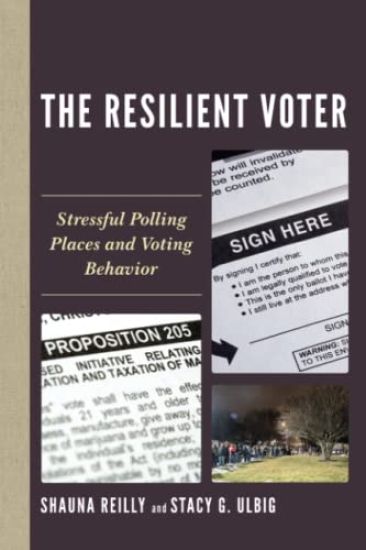
The Resilient Voter

The Resilient Voter

Shauna Reilly; Stacy G. Ulbig

Lexington Books
2018
sidottu
The Resilient Voter: Stressful Polling Places and Voting Behavior provides a new perspective on the role voting barriers play, demonstrating that they not only discourage participation but also affect the quality of votes cast. Offering an interesting and unique approach to the study of voting barriers, Shauna Reilly and Stacy G. Ulbig investigate the possibility that complicated ballot language, provisional voting, and long polling place lines cause some voters to cast ballots in a manner contradictory to their preferences. Building on arguments that stressful polling place conditions subject citizens to stress that can prevent them from casting complete ballots or even choosing to vote at all, the authors ask whether those who endure polling place frustrations and persevere to cast a ballot might become so stressed by their experience that they are unable to mark their ballots in a manner consistent with their standing policy preferences. Using a creative experimental design, the authors examine the ways in which complex ballot language, registration difficulties, and long polling place lines affect voters’ stress levels, and how such anxieties translate into the willingness to cast a complete ballot and the ability to vote in a manner conforming to previously expressed preferences. The authors demonstrate that even though most voters prove remarkably resilient in the face of some potentially stressful polling place barriers, they are not immune to all polling place conditions. Further, they illustrate that some segments of the electorate tend to be more vulnerable to polling place stressors than others and illustrate the ways in which the compound effects of multiple barriers can exert an even wider impact.
Language Assistance under the Voting Rights Act
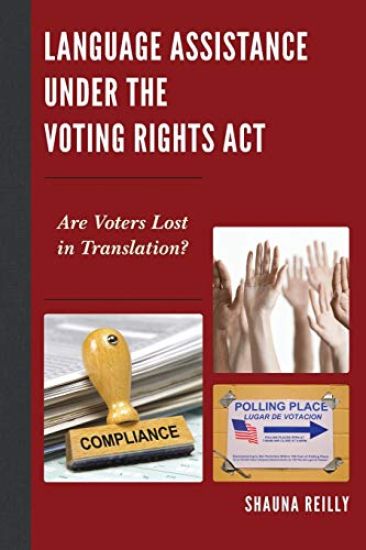
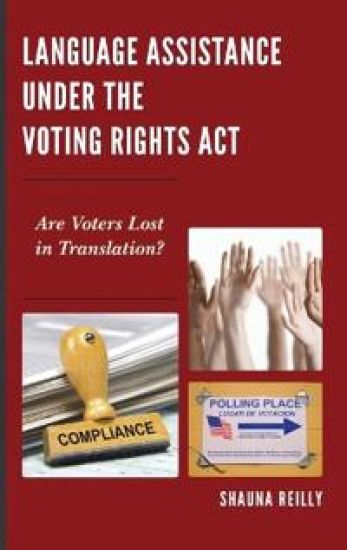
Language Assistance under the Voting Rights Act provides an interesting and unique approach to the problem of translating minority language ballots and evaluating the causes and effects of differences in the translated ballot language. As a whole, this book demonstrates the strong relationship between accessibility, state policy, and the role this has on participation among minority language voters, particularly in the area of direct democracy. This offers insight into the complex relationship that has evolved into the current state of governance across the United States, as well as how covered jurisdictions interact with federally mandated language assistance. By looking at this relationship from a variety of standpoints—including historical and policy analysis, interviews, and statistical analysis—this book shows a new perspective of the translation process and the implications for minority voters and their efficacy.
Design, Meaning and Choice in Direct Democracy
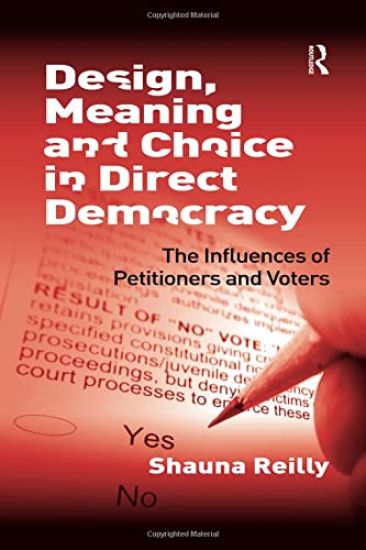
Design, Meaning and Choice in Direct Democracy examines the link between political knowledge and participation in direct democracy in the United States. Presenting insights on the different behaviours of the petitioner, the ballot and the voter and using quantitative, qualitative and experimental methodological approaches, Shauna Reilly evaluates the use of direct democracy and why, despite the power of these measures, there is such low turnout in these elections. She demonstrates the varied approaches to ballot measures and citizens particularly when dealing with citizen comprehension which can account for the variety of language that appears on the ballot. A rigorous and highly original analysis of direct democracy in the United States, this book guarantees that readers will be shocked at the findings and question the future of governance through ballot measures.
Language Assistance under the Voting Rights Act
Language Assistance under the Voting Rights Act provides an interesting and unique approach to the problem of translating minority language ballots and evaluating the causes and effects of differences in the translated ballot language. As a whole, this book demonstrates the strong relationship between accessibility, state policy, and the role this has on participation among minority language voters, particularly in the area of direct democracy. This offers insight into the complex relationship that has evolved into the current state of governance across the United States, as well as how covered jurisdictions interact with federally mandated language assistance. By looking at this relationship from a variety of standpoints—including historical and policy analysis, interviews, and statistical analysis—this book shows a new perspective of the translation process and the implications for minority voters and their efficacy.
Design, Meaning and Choice in Direct Democracy

Design, Meaning and Choice in Direct Democracy

Shauna Reilly

Ashgate Publishing Limited
2010
sidottu
Design, Meaning and Choice in Direct Democracy examines the link between political knowledge and participation in direct democracy in the United States. Presenting insights on the different behaviours of the petitioner, the ballot and the voter and using quantitative, qualitative and experimental methodological approaches, Shauna Reilly evaluates the use of direct democracy and why, despite the power of these measures, there is such low turnout in these elections. She demonstrates the varied approaches to ballot measures and citizens particularly when dealing with citizen comprehension which can account for the variety of language that appears on the ballot. A rigorous and highly original analysis of direct democracy in the United States, this book guarantees that readers will be shocked at the findings and question the future of governance through ballot measures.