Kirjojen hintavertailu. Mukana 12 390 323 kirjaa ja 12 kauppaa.

Kirjailija

Shayler David

Kirjat ja teokset yhdessä paikassa: 10 kirjaa, julkaisuja vuosilta 2000-2009, suosituimpien joukossa Russia's Cosmonauts. Vertaile teosten hintoja ja tarkista saatavuus suomalaisista kirjakaupoista.

10 kirjaa

Kirjojen julkaisuhaarukka 2000-2009.

Space Rescue

Space Rescue

Shayler David

Springer-Verlag New York Inc.
2009
nidottu
In Space Rescue: Ensuring the Safety of Manned Spacecraft, author David J. Shayler reviews the development of crew survival and escape methods from the earliest designs of manned spacecraft to the current discussions of systems for ISS and on to the future prospect of sending men and women out towards Mars. David Shayler reviews the numerous proposed systems of crew rescue and also analyses the adopted systems of ejection seats, escape towers and abort profiles during the ascent from Earth to space, including the safety requirements and contingency procedures available during various mission profiles to get the crew safely back to Earth. The author also examines the various wilderness training programs and abort simulations used to help prepare the crews for almost any unplanned and emergency contingency they may face during their mission.

Praxis Manned Spaceflight Log 1961-2006

Praxis Manned Spaceflight Log 1961-2006

Tim Furniss; Shayler David; Michael D. Shayler

Springer-Verlag New York Inc.
2007
nidottu
Praxis Log of Manned Spaceflight 1961-2006 will open with a section entitled: Quest for Space, which will provide an explanation of the methods employed to get in and out of orbit and brief overviews of the different international space programmes. It will be a complete chronological log of all attempted orbital manned spaceflights, including the X-15 "astroflights" of the 1960s that only achieved an altitude of c. 50 miles and the two 1961 Mercury and Redstone missions which were non-orbital. There will be an image depicting each manned spaceflight, and data boxes containing brief biographies of all the space travellers and basic flight data. The main text will be a narrative of each mission, its highlights and accomplishments, including those strange facts and humorous stories that are connected to every mission. By targeting publication in September 2006, the return to flight of the Shuttle, two more Soyuz TMA launches and, quite possibly, a second Chinese manned mission. The resulting book will be a handy reference to all manned spaceflights, the names astronauts and cosmonauts who flew on each mission, and their roles and accomplishments. Recent announcements of a return to the Moon and eventual manned flights to Mars, as new hardware and procedures are developed to support these long-range programs, emphasizes the case for future updates of this book.
NASA's Scientist-Astronauts

NASA's Scientist-Astronauts

Shayler David; Colin Burgess

Springer-Verlag New York Inc.
2006
nidottu
Mounting pressure in the early 1960s from the National Academy of Sciences (NAS) to study ways of expanding the role of astronauts to conduct science on future space missions led to NASA’s conclusion that flying scientifically trained crewmembers would generate greater returns from each mission. NASA and industry studies continued investigating possibilities that could lead to the eventual creation of the first space stations using surplus Apollo hardware, through the Apollo Applications Programme (AAP). There was also a growing interest within the military to create their own manned space station programme, conducting on-orbit experiments and research with strategic advantages for national security. In October 1964 the Soviets launched Voskhod 1 whose 3-man crew were identified as the first ‘scientific passengers’ in space. A few days later NASA and the NAS had completed joint studies into the possibility of using scientists in the manned space programme, and invited scientists to apply for astronaut training. In selecting the first group of scientist-astronauts, NASA had one firm requirement; any person accepted into the programme would have to qualify as a military jet pilot. While the second group of scientists were completing their academic, survival and flight training programme, the remaining members of the first scientist-astronaut group were involved in supporting the developing Apollo Applications programme and the Apollo lunar programme.
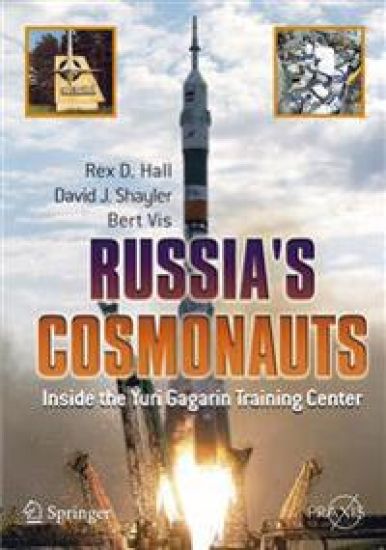
Russia's Cosmonauts

Russia's Cosmonauts

Rex D. Hall; Shayler David; Bert Vis

Springer-Verlag New York Inc.
2005
nidottu
With the aid of unique photographs, first-hand interviews and historical resources, Rex Hall, Dave Shayler and Bert Vis explain, for the very first time, how Russian citizens have been selected and trained to fly in space, and how these procedures have changed during the past 40 years. The authors also describe the evolution of the often overlooked ground support infrastructure and how the role of cosmonauts has changed from the very earliest days of the Gagarin era, through the demise of the Soviet Union, to the era of international co-operation and collaboration on programmes such as the International Space Station. The book will provide much important background information and insight to the operational Soviet/Russian manned space programme, already covered in other Springer-Praxis titles, but revealing information and facts not covered elsewhere, and providing a unique reference source for all those who wish to understand the changing role of Russian cosmonauts in today’s global space programme.
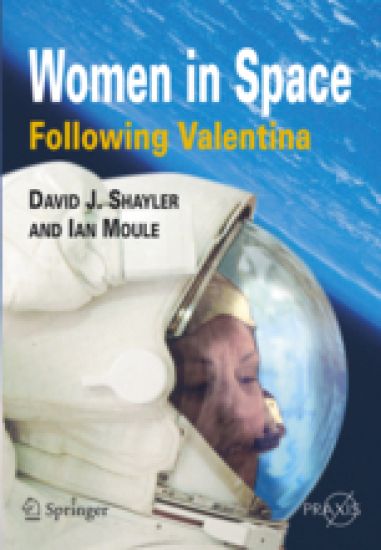
Women in Space - Following Valentina

Women in Space - Following Valentina

Shayler David; Ian A. Moule

Springer London Ltd
2005
nidottu
Space exploration has developed from early, unmanned space probes through the pioneering years of the ‘Manned’ Mercury, Gemini, and Apollo missions, to missions that now include women in the crew as a matter of course. Dave Shayler tells the story of the first woman balloonist in 1784 to their breakthrough as astronauts and cosmonauts in a range of professional roles. He covers the contribution women have made to space exploration and draws on interviews with Shuttle and Mir crew members who were women. These interviews detail the achievements of the first female Shuttle commander and the first female resident crew member of the International Space Station. These and many other events are presented in a detailed and highly readable account that recalls the difficult path to space exploration by women.
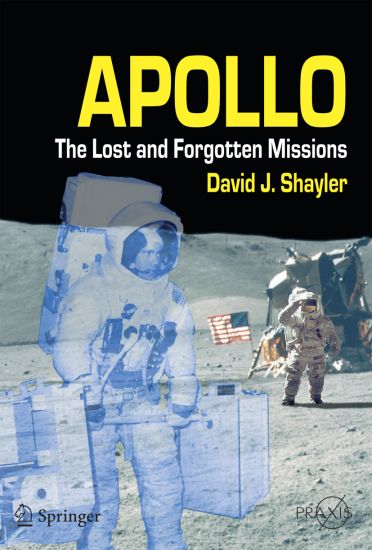
Apollo

Apollo

Shayler David

Springer London Ltd
2002
nidottu
The structure of Apollo - The Lost and Forgotten Missions follows the development and in flight testing of the Apollo lunar spacecraft prior to Apollo 11 as well as missions planned following that first landing. Drawing upon combinations of archival documentation from the first four manned Apollo missions and future mission plans evolved in the summer of 1969 Apollo - The Lost and Forgotten Missions will fill this void. The text explains how the machines and the men were prepared for the landing on the moon and what would have followed the initial landings.
Gemini - Steps to the Moon

Gemini - Steps to the Moon

Shayler David

Springer London Ltd
2001
nidottu
In Gemini - Steps to the Moon, author David Shayler unfolds the story of the origin and development of the programme and the spacecraft from the perspective of the engineers, flight controllers and astronauts involved. It includes chapters on flight tests, Extra Vehicular Activity (EVA) and rendezvous and docking.
Skylab

Skylab

Shayler David

Springer London Ltd
2001
nidottu
Skylab is not just a story of space hardware and space science, but also of space explorers and pioneers. Using official NASA documentation and interviews with the astronauts and key personnel, the inside story of Skylab is presented as the story unfolds. An evaluation of the lessons learnt from the programme and how these were, or were not, incorporated into the Space Shuttle and Space Station programme is also offered to present the value of Skylab in the context of the current programme, 25 years after the last crew came home.
The Rocket Men

The Rocket Men

Rex Hall; Shayler David

Springer London Ltd
2001
nidottu
In The Rocket Men authors Rex Hall and Dave Shayler review this Soviet demonstration of technological progress from both the developmental and operational aspects which were clouded in secrecy and in direct contrast to the high profile American programme.As the one-man Mercury spacecraft gave way to the two-man series on the American road to the Moon with Apollo, the multi-crewed Voskhod series which followed the single-seat Vostok was expected to compete with the Gemini programme. By developing the experience and techniques required to send cosmonauts to the Moon the series was planned as a stepping stone to the Soyuz and Zond lunar programmes then under development which would race Apollo to the Moon.
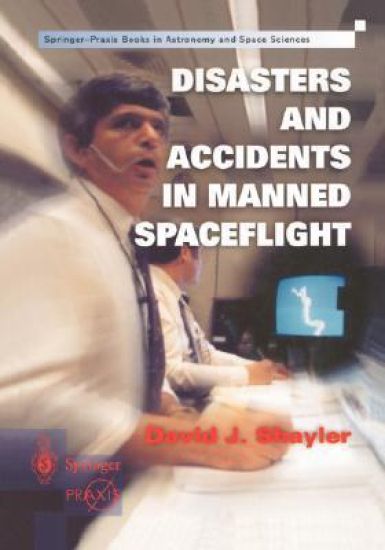
Disasters and Accidents in Manned Spaceflight

Disasters and Accidents in Manned Spaceflight

Shayler David

Springer London Ltd
2000
nidottu
In Disasters and Accidents in Manned Spaceflight, David Shayler examines the challenges that face all crews as they prepare and execute their missions. The book covers all aspects that make up spaceflight by a human crew - training, launch to space, survival in space and return from space - followed by a series of case histories which tell of the major incidents in each of those categories over the past 40 years. The sixth section looks at the International Space Station and how it is planned, to try and prevent, as far as possible, major incidents occuring during the lifetime of the space station, and at the difficulties facing a settlement on the Moon or Mars during the next 40 years.