Kirjojen hintavertailu. Mukana 12 393 489 kirjaa ja 12 kauppaa.

Kirjailija

Sheila Fitzpatrick

Kirjat ja teokset yhdessä paikassa: 26 kirjaa, julkaisuja vuosilta 1990-2026, suosituimpien joukossa Lost Souls. Vertaile teosten hintoja ja tarkista saatavuus suomalaisista kirjakaupoista.

26 kirjaa

Kirjojen julkaisuhaarukka 1990-2026.

A Researcher's Guide to Sources on Soviet Social History in the 1930s
The Stalin era has been less accessible to researchers than either the preceding decade or the postwar era. The basic problem is that during the Stalin years censorship restricted the collection and dissemination of information (and introduced bias and distortion into the statistics that were published), while in the post-Stalin years access to archives and libraries remained tightly controlled. Thus it is not surprising that one of the main manifestations of glasnost has been the effort to open up records of the 1930s. In this volume Western and Soviet specialists detail the untapped potential of sources on this period of Soviet social history and also the hidden traps that abound. The full range of sources is covered, from memoirs to official documents, from city directories to computerized data bases.
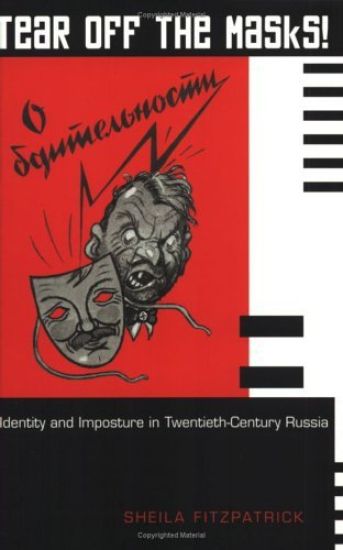
Tear Off the Masks!

Tear Off the Masks!

Sheila Fitzpatrick

Princeton University Press
2005
pokkari
When revolutions happen, they change the rules of everyday life--both the codified rules concerning the social and legal classifications of citizens and the unwritten rules about how individuals present themselves to others. This occurred in Russia after the Bolshevik Revolution of 1917, which laid the foundations of the Soviet state, and again in 1991, when that state collapsed. Tear Off the Masks! is about the remaking of identities in these times of upheaval. Sheila Fitzpatrick here brings together in a single volume years of distinguished work on how individuals literally constructed their autobiographies, defended them under challenge, attempted to edit the "file-selves" created by bureaucratic identity documentation, and denounced others for "masking" their true social identities. Marxist class-identity labels--"worker," "peasant," "intelligentsia," "bourgeois"--were of crucial importance to the Soviet state in the 1920s and 1930s, but it turned out that the determination of a person's class was much more complicated than anyone expected. This in turn left considerable scope for individual creativity and manipulation. Outright imposters, both criminal and political, also make their appearance in this book. The final chapter describes how, after decades of struggle to construct good Soviet socialist personae, Russians had to struggle to make themselves fit for the new, post-Soviet world in the 1990s--by "de-Sovietizing" themselves. Engaging in style and replete with colorful detail and characters drawn from a wealth of sources, Tear Off the Masks! offers unique insight into the elusive forms of self-presentation, masking, and unmasking that made up Soviet citizenship and continue to resonate in the post-Soviet world.
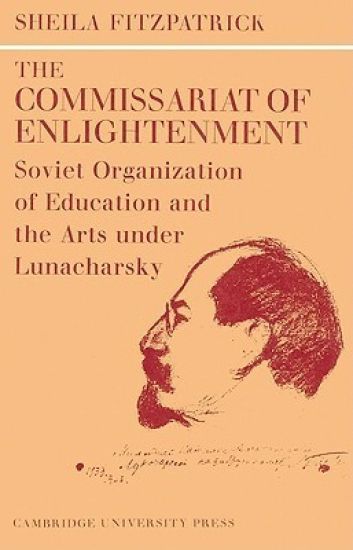
The Commissariat of Enlightenment

The Commissariat of Enlightenment

Sheila Fitzpatrick

Cambridge University Press
2002
pokkari
A study in the formation and development of a Soviet government institution after the Revolution of October 1917. The commissariat - which was responsible both for education and the arts - was the main channel of communication between the government and Bolshevik party on the one hand, and the Russian intelligentsia on the other. The commissar, Anatoly Vasilyevich Lunacharsky, was, in his own words, 'a Bolshevik among intellectuals and an intellectual among Bolsheviks'; his closest colleagues were Lenin's wife Krupskaya and the historian Pokrovsky.
Education and Social Mobility in the Soviet Union 1921–1934

Education and Social Mobility in the Soviet Union 1921–1934

Sheila Fitzpatrick

Cambridge University Press
2002
pokkari
This is a history of Soviet education policy 1921–34 that places special emphasis upon the theme of social mobility through education. One of the hitherto untold stories of Soviet history is the making of the ‘Brezhnev generation’, a cohort of young workers and Communists sent to higher education during the First Five-Year Plan (1928–1932) and subsequently catapulted into leadership positions in the wake of the Great Purge of 1937/38. A focal point of this book is the educational policies which not only produced the ‘Brezhnev generation’, but also linked Stalin’s regime with the massive upward mobility of the industrializing 1930s. The book is the first comprehensive history of Soviet education in the 1920s and early 1930s, and provides a sequel to the author’s highly praised Commissariat of Enlightenment. In this, as in the earlier study, the author has used Soviet archival sources not previously available to Western scholars.
The Cultural Front

The Cultural Front

Sheila Fitzpatrick

Cornell University Press
1992
pokkari
When Lenin asked, "Who will beat whom?" (Kto kogo?), he had no plan to wage revolutionary class war in culture. Many young Communists thought differently, however. Seeking in the name of the proletariat to wrest "cultural hegemony" from the intelligentsia, they turned culture into a battlefield in the 1920s. But was this, as Communist militants thought, a genuine class struggle between "proletarian" Communists and the "bourgeois" intelligentsia? Or was it, as the intelligentsia believed, an onslaught by the ruling Communist Party on the eternal principles of cultural autonomy and intellectual freedom? In this volume, one of the foremost historians of the Soviet Union chronicles the fierce battle on "the cultural front" from the October Revolution through the Stalinist 1930s. Sheila Fitzpatrick brings together ten of her essays—two previously unpublished and all revised for inclusion here—which illuminate key arenas of the prolonged struggle over cultural values and institutional control. Individual essays deal with such major issues as the Cultural Revolution, the formation of the new Stalinist elite, and socialist realism, as well as recounting colorful episodes including the uproar over Shostakovich's opera Lady Macbeth of the Mtsensk District, arguments over sexual mores, and the new consumerism of the 1930s. Closely examining the cultural elites and orthodoxies that developed under Stalin, Fitzpatrick offers a provocative reinterpretation of the struggle's final outcome in which the intelligentsia, despite its loss of autonomy and the debasement of its culture, emerged as a partial victor. The Cultural Front is essential reading for anyone interested in the formative history of the Soviet Union and the dynamic relationship between culture and politics.
A Researcher's Guide to Sources on Soviet Social History in the 1930s
The Stalin era has been less accessible to researchers than either the preceding decade or the postwar era. The basic problem is that during the Stalin years censorship restricted the collection and dissemination of information (and introduced bias and distortion into the statistics that were published), while in the post-Stalin years access to archives and libraries remained tightly controlled. Thus it is not surprising that one of the main manifestations of glasnost has been the effort to open up records of the 1930s. In this volume Western and Soviet specialists detail the untapped potential of sources on this period of Soviet social history and also the hidden traps that abound. The full range of sources is covered, from memoirs to official documents, from city directories to computerized data bases.