Kirjojen hintavertailu. Mukana 12 152 606 kirjaa ja 12 kauppaa.

Kirjailija

Sheila McManus

Kirjat ja teokset yhdessä paikassa: 4 kirjaa, julkaisuja vuosilta 2005-2025, suosituimpien joukossa Challenging Borders. Vertaile teosten hintoja ja tarkista saatavuus suomalaisista kirjakaupoista.

4 kirjaa

Kirjojen julkaisuhaarukka 2005-2025.

Challenging Borders

Challenging Borders

Paul McKenzie-Jones; Sheila McManus; Julie Young

Au Press
2025
pokkari
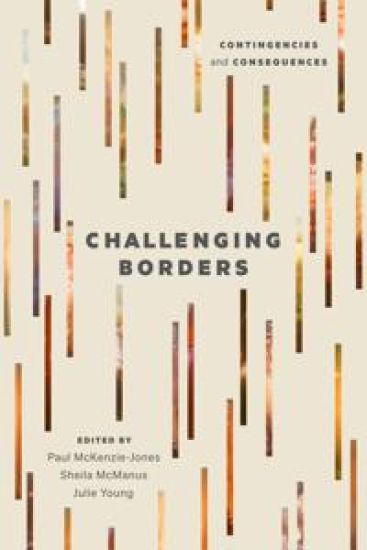
Borders are known for their paradoxical qualities. Sometimes they are shifting and porous, lines in the sand constituted more by subjective experience than by legal definition; at other times they harden into walls, are heavily securitized, and their primary function becomes keeping the unwanted out. Challenging Borders: Contingencies and Consequences sets out to explore the concrete, complex effects of borders on human aspirations and lives, while at the same time underscoring the diversity of individual encounters with these deceptively invisible lines.Drawing on insights from history, geography, Indigenous studies, political science, refugee and migration studies, the visual arts, and even physics, contributors to the collection examine the role of borders in the ongoing negotiation of national identities, in contested claims of sovereignty and belonging, in the tensions between freedom of movement and restrictions on entry, and in the use of violence in the name of security. As the essays illustrate, in the context of migration, borders are inherently a site of struggle—at once a source of hope for those seeking sanctuary and an excuse for others to deny it. Indigenous nations, migrants, and refugees have long known how destructive colonial boundaries can be, and this volume offers compelling new angles from which to map the geographies of oppression and resistance.
Both Sides Now

Both Sides Now

Sheila McManus

TEXAS A M UNIVERSITY PRESS
2022
sidottu
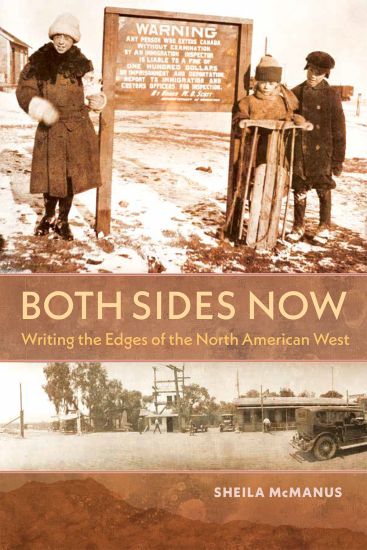
How do borderlands work? How do they maintain their distinctive features in the face of concerted efforts on the part of nation-states to make each of their borderlines into a harsh demarcation? According to most contemporary political discourse and popular perceptions, the two borders of the United States West have little in common but understanding their borderlands’ similarities can help us understand some of the most powerful forces shaping human history and the world around us; understanding their historiographies gives us insight into borderlands historians’ unique methodology.Both Sides Now: Writing the Edges of the North American West brings together leading scholarship in a focused, synthetic survey of five themes in the history of the northern and southern borderlands: the borderlands as aboriginal homelands and the persistence of Indigenous territories and ways of being; imperial and national efforts to create binary notions of territory and identity; regulatory efforts aimed at stopping or limiting the movement of certain people across their borders; the weakening of those efforts by cross-border movement of capital, goods, and people, usually aided by state power, and the complex, binary-refusing identities that persist in borderlands communities.Historian Sheila McManus uses these themes to highlight the commonalities between the two borderlands’ histories and provides an overview and a starting point for experts and newcomers in the field of North American borderlands history to address new questions. By conceptualizing both borders together and focusing particular attention on race and gender as well as empire and nation, Both Sides Now provides a unique methodology in North American scholarship that emphasizes the connections between these borderlands and others around the world.
The Line Which Separates

The Line Which Separates

Sheila McManus

University of Nebraska Press
2005
pokkari
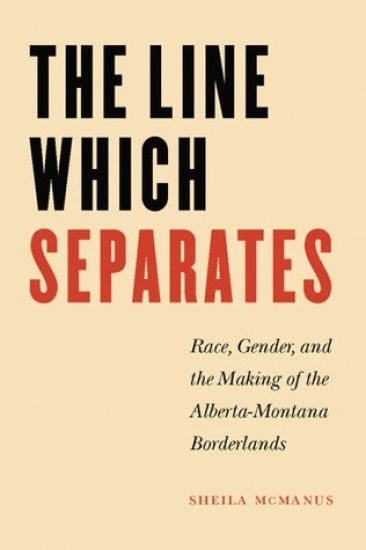
Nations are made and unmade at their borders, and the forty-ninth parallel separating Montana and Alberta in the late nineteenth century was a pivotal Western site for both the United States and Canada. Blackfoot country was a key site of Canadian and American efforts to shape their nations and national identities. The region's landscape, aboriginal people, newcomers, railroads, and ongoing cross-border ties all challenged the governments' efforts to create, colonize, and nationalize the Alberta-Montana borderlands. The Line Which Separates makes an important and useful comparison between American and Canadian government policies and attitudes regarding race, gender, and homesteading. Federal visions of the West in general and the borderlands in particular rested on overlapping sets of assumptions about space, race, and gender; those same assumptions would be used to craft the policies that were supposed to turn national visions into local realities. The growth of a white female population in the region, which should have "whitened" and "easternized" the region, merely served to complicate emerging categories. Both governments worked hard to enforce the lines that were supposed to separate "good" land from "bad," whites from aboriginals, different groups of newcomers from each other, and women's roles from men's roles. The lines and categories they depended on were used to distinguish each West, and thus each nation, from the other. Drawing on a range of sources, from government maps and reports to oral testimony and personal papers, The Line Which Separates explores the uneven way in which the borderlands were superimposed on Blackfoot country in order to divide a previously cohesive region in the late nineteenth century.
The Line Which Separates

The Line Which Separates

Sheila McManus

University of Nebraska Press
2005
sidottu
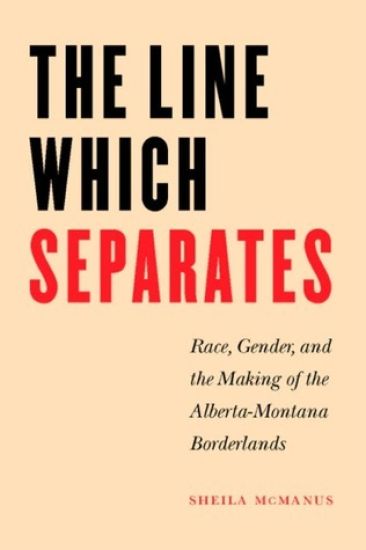
Nations are made and unmade at their borders, and the forty-ninth parallel separating Montana and Alberta in the late nineteenth century was a pivotal Western site for both the United States and Canada. Blackfoot country was a key site of Canadian and American efforts to shape their nations and national identities. The region’s landscape, aboriginal people, newcomers, railroads, and ongoing cross-border ties all challenged the governments’ efforts to create, colonize, and nationalize the Alberta-Montana borderlands. The Line Which Separates makes an important and useful comparison between American and Canadian government policies and attitudes regarding race, gender, and homesteading. Federal visions of the West in general and the borderlands in particular rested on overlapping sets of assumptions about space, race, and gender; those same assumptions would be used to craft the policies that were supposed to turn national visions into local realities. The growth of a white female population in the region, which should have “whitened” and “easternized” the region, merely served to complicate emerging categories. Both governments worked hard to enforce the lines that were supposed to separate "good" land from "bad," whites from aboriginals, different groups of newcomers from each other, and women's roles from men's roles. The lines and categories they depended on were used to distinguish each West, and thus each nation, from the other. Drawing on a range of sources, from government maps and reports to oral testimony and personal papers, The Line Which Separates explores the uneven way in which the borderlands were superimposed on Blackfoot country in order to divide a previously cohesive region in the late nineteenth century.