Kirjojen hintavertailu. Mukana 12 390 323 kirjaa ja 12 kauppaa.

Kirjailija

Sheila Murnaghan

Kirjat ja teokset yhdessä paikassa: 9 kirjaa, julkaisuja vuosilta 1997-2020, suosituimpien joukossa Remaking the Classics. Vertaile teosten hintoja ja tarkista saatavuus suomalaisista kirjakaupoista.

9 kirjaa

Kirjojen julkaisuhaarukka 1997-2020.

Remaking the Classics

Remaking the Classics

Lorna Hardwick; Stephen Harrison; Ruth Hazel; Leanne Hunnings; Sheila Murnaghan; Deborah Roberts; Chris Stray; Elizabeth Vandiver; Amanda Wrigley

Bristol Classical Press
2007
sidottu
This important collection of essays both contributes to the expanding field of classical reception studies and seeks to extend it. Focusing on nineteenth- and twentieth-century Britain, it looks at a range of different genres (epic, novel, lyric, tragedy, political pamphlet). Within the published texts considered, the usual range of genres dealt with elsewhere is extended by chapters on books for children, and those in which childhood and memories of childhood are informed by antiquity; and also by a multi-genre case study of a highly unusual subject, Spartacus. "Remaking the Classics" also goes beyond books to dramatic performance, and beyond the theatre to radio - a medium of enormous power and influence from the 1920s to the 1960s, whose role in the reception of classics is largely unexplored. The variety of genres and of media considered in the book is balanced both by the focus on Britain in a specific time period, and by an overlap of subject-matter between chapters: the three chapters on twentieth-century drama, for example, range from performance strategies to post-colonial contexts. The book thus combines the consolidation of a field with an attempt to push it in new and exciting directions.
Childhood and the Classics

Childhood and the Classics

Sheila Murnaghan; Deborah H. Roberts

Oxford University Press
2020
nidottu
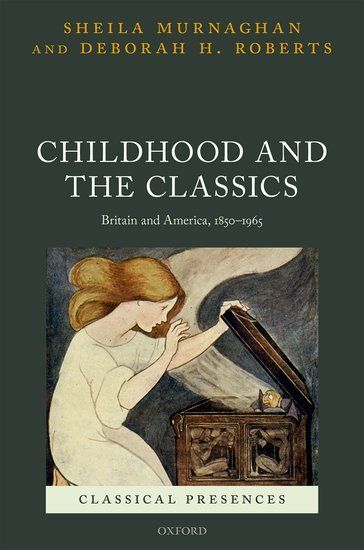
The dissemination of classical material to children has long been a major form of popularization with far-reaching effects, although until very recently it has received almost no attention within the growing field of classical reception studies. This volume explores the ways in which children encountered the world of ancient Greece and Rome in Britain and the United States over a century-long period beginning in the 1850s, as well as adults' literary responses to their own childhood encounters with antiquity. Rather than discussing the role of classics in education, it focuses on books read for enjoyment, and on two genres of children's literature in particular: the myth collection and the historical novel. The tradition of myths retold as children's stories is traced in the work of writers and illustrators from Nathaniel Hawthorne and Charles Kingsley to Roger Lancelyn Green and Ingri and Edgar Parin D'Aulaire, while the discussion of historical fiction focuses particularly on the roles of nationality and gender in the construction of an ancient world for modern children. The book concludes with an investigation of the connections between childhood and antiquity made by writers for adults, including James Joyce, Virginia Woolf, and H.D. Recognition of the fundamental role in children's literature of adults' ideas about what children want or need is balanced throughout by attention to the ways in which child readers have made such works their own. The formative experiences of antiquity discussed throughout help to explain why despite growing uncertainty about the appeal of antiquity to modern children, the classical past remains perennially interesting and inspiring.
Hip Sublime

Hip Sublime

Sheila Murnaghan

Ohio State University Press
2018
sidottu
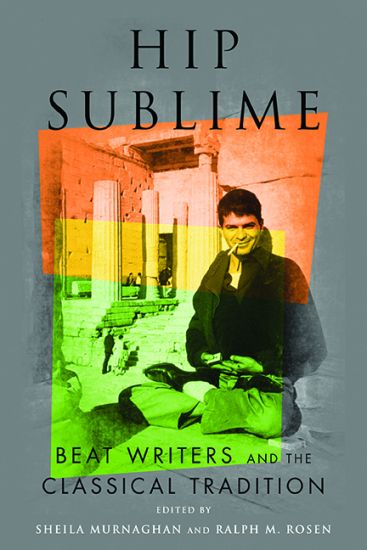
Despite their self-presentation as iconoclasts, the writers of the Beat Generation were deeply engaged with the classical tradition. Many of them were university-trained and highly conscious of their literary forebears, and they frequently incorporated their knowledge of Greco-Roman literature into their own subversive, experimental practice. Seeking to transcend the superficiality, commercialism, and precariousness of life in post-World War II America, the Beat writers found in their classical models both a venerable literary heritage and a discourse of sublimity through which to articulate their desire for purity. In this volume, a diverse group of contributors explore for the first time the fascinating tensions and paradoxes that arose from interactions between these avant-garde writers and a literary tradition often seen as conservative and culturally hegemonic. With essays that cover the canonical Beat authors-such as Allen Ginsberg, Jack Kerouac, and William Burroughs-along with less well-known figures-including Kenneth Rexroth, Ed Sanders, and Diane di Prima-Hip Sublime: Beat Writers and the Classical Tradition brings long overdue attention to the Beat movement's formative appropriation of the Greek and Latin classics.
Hip Sublime

Hip Sublime

Sheila Murnaghan

Ohio State University Press
2018
pokkari
Despite their self-presentation as iconoclasts, the writers of the Beat Generation were deeply engaged with the classical tradition. Many of them were university-trained and highly conscious of their literary forebears, and they frequently incorporated their knowledge of Greco-Roman literature into their own subversive, experimental practice. Seeking to transcend the superficiality, commercialism, and precariousness of life in post-World War II America, the Beat writers found in their classical models both a venerable literary heritage and a discourse of sublimity through which to articulate their desire for purity. In this volume, a diverse group of contributors explore for the first time the fascinating tensions and paradoxes that arose from interactions between these avant-garde writers and a literary tradition often seen as conservative and culturally hegemonic. With essays that cover the canonical Beat authors-such as Allen Ginsberg, Jack Kerouac, and William Burroughs-along with less well-known figures-including Kenneth Rexroth, Ed Sanders, and Diane di Prima-Hip Sublime: Beat Writers and the Classical Tradition brings long overdue attention to the Beat movement's formative appropriation of the Greek and Latin classics.
Childhood and the Classics

Childhood and the Classics

Sheila Murnaghan; Deborah H. Roberts

Oxford University Press
2018
sidottu
The dissemination of classical material to children has long been a major form of popularization with far-reaching effects, although until very recently it has received almost no attention within the growing field of classical reception studies. This volume explores the ways in which children encountered the world of ancient Greece and Rome in Britain and the United States over a century-long period beginning in the 1850s, as well as adults' literary responses to their own childhood encounters with antiquity. Rather than discussing the role of classics in education, it focuses on books read for enjoyment, and on two genres of children's literature in particular: the myth collection and the historical novel. The tradition of myths retold as children's stories is traced in the work of writers and illustrators from Nathaniel Hawthorne and Charles Kingsley to Roger Lancelyn Green and Ingri and Edgar Parin D'Aulaire, while the discussion of historical fiction focuses particularly on the roles of nationality and gender in the construction of an ancient world for modern children. The book concludes with an investigation of the connections between childhood and antiquity made by writers for adults, including James Joyce, Virginia Woolf, and H.D. Recognition of the fundamental role in children's literature of adults' ideas about what children want or need is balanced throughout by attention to the ways in which child readers have made such works their own. The formative experiences of antiquity discussed throughout help to explain why despite growing uncertainty about the appeal of antiquity to modern children, the classical past remains perennially interesting and inspiring.
Disguise and Recognition in the Odyssey

Disguise and Recognition in the Odyssey

Sheila Murnaghan

Lexington Books
2011
sidottu
Disguise and Recognition in the Odyssey reveals the significance of the Odyssey's plot, in particular the many scenes of recognition that make up the hero's homecoming and dramatize the cardinal values of Homeric society, an aristocratic culture organized around recognition in the broader senses of honor, privilege, status, and fame. Odysseus' identity is seen to be rooted in his family relations, geographical origins, control of property, participation in the social institutions of hospitality and marriage, past actions, and ongoing reputation. At the same time, Odysseus' dependence on the acknowledgement of others ensures attention to multiple viewpoints, which makes the Odyssey more than a simple celebration of one man's preeminence and accounts in part for the poem's vigorous afterlife. The theme of disguise, which relies on plausible lies, highlights the nature of belief and the power of falsehood and creates the mixture of realism and fantasy that gives the Odyssey its distinctive texture. The book contains a pioneering analysis of the role of Penelope and the questions of female agency and human limitation raised by the critical debate about when exactly she recognizes that Odysseus has come home.
Iliad

Iliad

Homer; Sheila Murnaghan

Hackett Publishing Co, Inc
1997
sidottu
Gripping...Lombardo's achievement is all the more striking when you consider the difficulties of his task...[He] manages to be respectful of Homer's dire spirit while providing on nearly every page some wonderfully fresh refashioning of his Greek. The result is a vivid and disarmingly hardbitten reworking of a great classic. --Daniel Mendelsohn, The New York Times Book Review