Kirjojen hintavertailu. Mukana 12 595 353 kirjaa ja 12 kauppaa.

Kirjailija

Shein-Chung Chow

Kirjat ja teokset yhdessä paikassa: 26 kirjaa, julkaisuja vuosilta 1993-2023, suosituimpien joukossa Statistical Design and Analysis of Stability Studies. Vertaile teosten hintoja ja tarkista saatavuus suomalaisista kirjakaupoista.

26 kirjaa

Kirjojen julkaisuhaarukka 1993-2023.

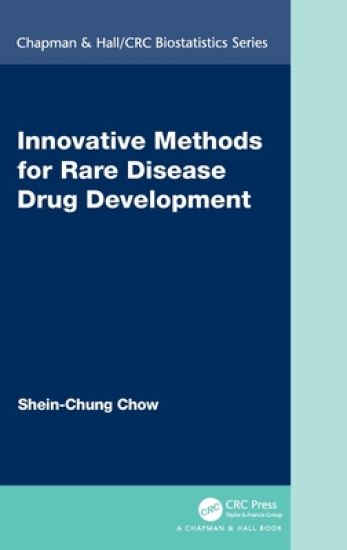
Innovative Methods for Rare Disease Drug Development

Innovative Methods for Rare Disease Drug Development

Shein-Chung Chow

TAYLOR FRANCIS LTD
2022
nidottu
In the United States, a rare disease is defined by the Orphan Drug Act as a disorder or condition that affects fewer than 200,000 persons. For the approval of "orphan" drug products for rare diseases, the traditional approach of power analysis for sample size calculation is not feasible because there are only limited number of subjects available for clinical trials. In this case, innovative approaches are needed for providing substantial evidence meeting the same standards for statistical assurance as drugs used to treat common conditions. Innovative Methods for Rare Disease Drug Development focuses on biostatistical applications in terms of design and analysis in pharmaceutical research and development from both regulatory and scientific (statistical) perspectives. Key Features: Reviews critical issues (e.g., endpoint/margin selection, sample size requirements, and complex innovative design). Provides better understanding of statistical concepts and methods which may be used in regulatory review and approval. Clarifies controversial statistical issues in regulatory review and approval accurately and reliably. Makes recommendations to evaluate rare diseases regulatory submissions. Proposes innovative study designs and statistical methods for rare diseases drug development, including n-of-1 trial design, adaptive trial design, and master protocols like platform trials. Provides insight regarding current regulatory guidance on rare diseases drug development like gene therapy.
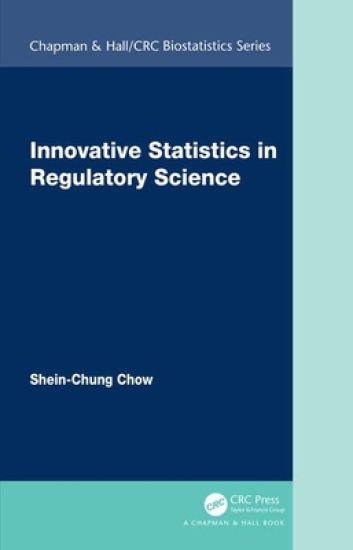
Innovative Statistics in Regulatory Science

Innovative Statistics in Regulatory Science

Shein-Chung Chow

Taylor Francis Ltd
2021
nidottu
Statistical methods that are commonly used in the review and approval process of regulatory submissions are usually referred to as statistics in regulatory science or regulatory statistics. In a broader sense, statistics in regulatory science can be defined as valid statistics that are employed in the review and approval process of regulatory submissions of pharmaceutical products. In addition, statistics in regulatory science are involved with the development of regulatory policy, guidance, and regulatory critical clinical initiatives related research. This book is devoted to the discussion of statistics in regulatory science for pharmaceutical development. It covers practical issues that are commonly encountered in regulatory science of pharmaceutical research and development including topics related to research activities, review of regulatory submissions, recent critical clinical initiatives, and policy/guidance development in regulatory science. Devoted entirely to discussing statistics in regulatory science for pharmaceutical development. Reviews critical issues (e.g., endpoint/margin selection and complex innovative design such as adaptive trial design) in the pharmaceutical development and regulatory approval process. Clarifies controversial statistical issues (e.g., hypothesis testing versus confidence interval approach, missing data/estimands, multiplicity, and Bayesian design and approach) in review/approval of regulatory submissions. Proposes innovative thinking regarding study designs and statistical methods (e.g., n-of-1 trial design, adaptive trial design, and probability monitoring procedure for sample size) for rare disease drug development. Provides insight regarding current regulatory clinical initiatives (e.g., precision/personalized medicine, biomarker-driven target clinical trials, model informed drug development, big data analytics, and real world data/evidence). This book provides key statistical concepts, innovative designs, and analysis methods that are useful in regulatory science. Also included are some practical, challenging, and controversial issues that are commonly seen in the review and approval process of regulatory submissions.About the authorShein-Chung Chow, Ph.D. is currently a Professor at Duke University School of Medicine, Durham, NC. He was previously the Associate Director at the Office of Biostatistics, Center for Drug Evaluation and Research, United States Food and Drug Administration (FDA). Dr. Chow has also held various positions in the pharmaceutical industry such as Vice President at Millennium, Cambridge, MA, Executive Director at Covance, Princeton, NJ, and Director and Department Head at Bristol-MyersSquibb, Plainsboro, NJ. He was elected Fellow of the American Statistical Association and an elected member of the ISI (International Statistical Institute). Dr. Chow is Editor-in-Chief of the Journal of Biopharmaceutical Statistics and Biostatistics Book Series, Chapman and Hall/CRC Press, Taylor & Francis, New York. Dr. Chow is the author or co-author of over 300 methodology papers and 30 books.
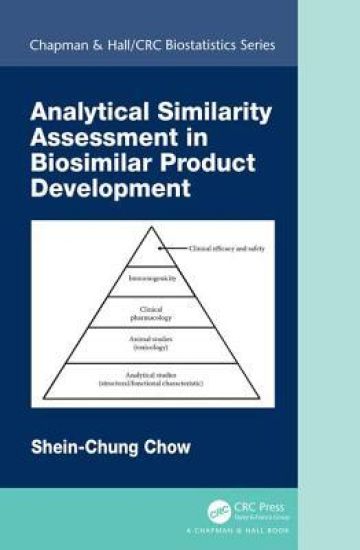
Analytical Similarity Assessment in Biosimilar Product Development
This book focuses on analytical similarity assessment in biosimilar product development following the FDA’s recommended stepwise approach for obtaining totality-of-the-evidence for approval of biosimilar products. It covers concepts such as the tiered approach for assessment of similarity of critical quality attributes in the manufacturing process of biosimilar products, models/methods like the statistical model for classification of critical quality attributes, equivalence tests for critical quality attributes in Tier 1 and the corresponding sample size requirements, current issues, and recent developments in analytical similarity assessment.
Innovative Methods for Rare Disease Drug Development
In the United States, a rare disease is defined by the Orphan Drug Act as a disorder or condition that affects fewer than 200,000 persons. For the approval of "orphan" drug products for rare diseases, the traditional approach of power analysis for sample size calculation is not feasible because there are only limited number of subjects available for clinical trials. In this case, innovative approaches are needed for providing substantial evidence meeting the same standards for statistical assurance as drugs used to treat common conditions. Innovative Methods for Rare Disease Drug Development focuses on biostatistical applications in terms of design and analysis in pharmaceutical research and development from both regulatory and scientific (statistical) perspectives. Key Features: Reviews critical issues (e.g., endpoint/margin selection, sample size requirements, and complex innovative design). Provides better understanding of statistical concepts and methods which may be used in regulatory review and approval. Clarifies controversial statistical issues in regulatory review and approval accurately and reliably. Makes recommendations to evaluate rare diseases regulatory submissions. Proposes innovative study designs and statistical methods for rare diseases drug development, including n-of-1 trial design, adaptive trial design, and master protocols like platform trials. Provides insight regarding current regulatory guidance on rare diseases drug development like gene therapy.
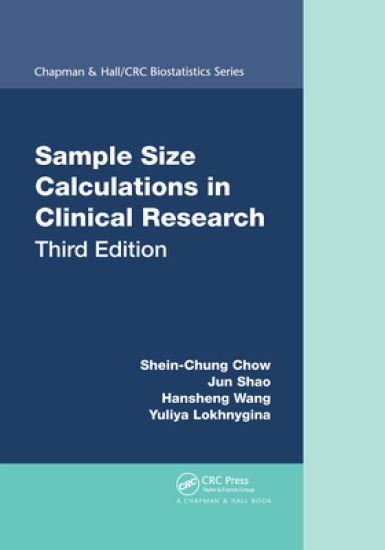
Sample Size Calculations in Clinical Research

Sample Size Calculations in Clinical Research

Shein-Chung Chow; Jun Shao; Hansheng Wang; Yuliya Lokhnygina

CRC Press
2020
nidottu
Praise for the Second Edition:"… this is a useful, comprehensive compendium of almost every possible sample size formula. The strong organization and carefully defined formulae will aid any researcher designing a study." -Biometrics"This impressive book contains formulae for computing sample size in a wide range of settings. One-sample studies and two-sample comparisons for quantitative, binary, and time-to-event outcomes are covered comprehensively, with separate sample size formulae for testing equality, non-inferiority, and equivalence. Many less familiar topics are also covered …" – Journal of the Royal Statistical SocietySample Size Calculations in Clinical Research, Third Edition presents statistical procedures for performing sample size calculations during various phases of clinical research and development. A comprehensive and unified presentation of statistical concepts and practical applications, this book includes a well-balanced summary of current and emerging clinical issues, regulatory requirements, and recently developed statistical methodologies for sample size calculation.Features: Compares the relative merits and disadvantages of statistical methods for sample size calculations Explains how the formulae and procedures for sample size calculations can be used in a variety of clinical research and development stages Presents real-world examples from several therapeutic areas, including cardiovascular medicine, the central nervous system, anti-infective medicine, oncology, and women’s health Provides sample size calculations for dose response studies, microarray studies, and Bayesian approaches This new edition is updated throughout, includes many new sections, and five new chapters on emerging topics: two stage seamless adaptive designs, cluster randomized trial design, zero-inflated Poisson distribution, clinical trials with extremely low incidence rates, and clinical trial simulation.
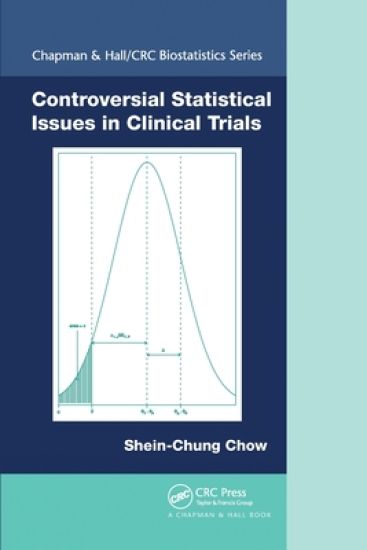
Controversial Statistical Issues in Clinical Trials
In clinical trial practice, controversial statistical issues inevitably occur regardless of the compliance with good statistical practice and good clinical practice. But by identifying the causes of the issues and correcting them, the study objectives of clinical trials can be better achieved. Controversial Statistical Issues in Clinical Trials covers commonly encountered controversial statistical issues in clinical trials and, whenever possible, makes recommendations to resolve these problems.The book focuses on issues occurring at various stages of clinical research and development, including early-phase clinical development (such as bioavailability/bioequivalence), bench-to-bedside translational research, and late-phase clinical development. Numerous examples illustrate the impact of these issues on the evaluation of the safety and efficacy of the test treatment under investigation. The author also offers recommendations regarding possible resolutions of the problems.Written by one of the preeminent experts in the field, this book provides a useful desk reference and state-of-the art examination of problematic issues in clinical trials for scientists in the pharmaceutical industry, medical/statistical reviewers in government regulatory agencies, and researchers and students in academia.
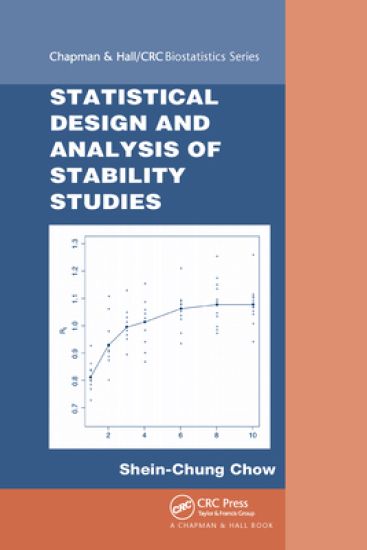
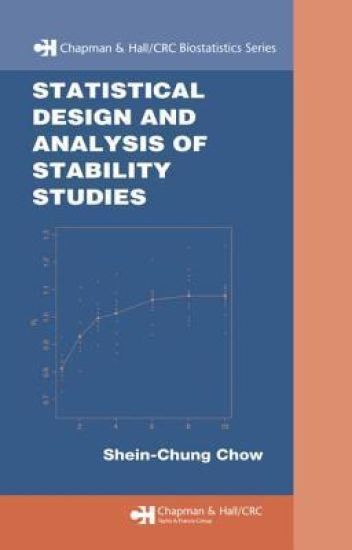
Statistical Design and Analysis of Stability Studies
The US Food and Drug Administration's Report to the Nation in 2004 and 2005 indicated that one of the top reasons for drug recall was that stability data did not support existing expiration dates. Pharmaceutical companies conduct stability studies to characterize the degradation of drug products and to estimate drug shelf life. Illustrating how stability studies play an important role in drug safety and quality assurance, Statistical Design and Analysis of Stability Studies presents the principles and methodologies in the design and analysis of stability studies.After introducing the basic concepts of stability testing, the book focuses on short-term stability studies and reviews several methods for estimating drug expiration dating periods. It then compares some commonly employed study designs and discusses both fixed and random batch statistical analyses. Following a chapter on the statistical methods for stability analysis under a linear mixed effects model, the book examines stability analyses with discrete responses, multiple components, and frozen drug products. In addition, the author provides statistical methods for dissolution testing and explores current issues and recent developments in stability studies.To ensure the safety of consumers, professionals in the field must carry out stability studies to determine the reliability of drug products during their expiration period. This book provides the material necessary for you to perform stability designs and analyses in pharmaceutical research and development.
Innovative Statistics in Regulatory Science
Statistical methods that are commonly used in the review and approval process of regulatory submissions are usually referred to as statistics in regulatory science or regulatory statistics. In a broader sense, statistics in regulatory science can be defined as valid statistics that are employed in the review and approval process of regulatory submissions of pharmaceutical products. In addition, statistics in regulatory science are involved with the development of regulatory policy, guidance, and regulatory critical clinical initiatives related research. This book is devoted to the discussion of statistics in regulatory science for pharmaceutical development. It covers practical issues that are commonly encountered in regulatory science of pharmaceutical research and development including topics related to research activities, review of regulatory submissions, recent critical clinical initiatives, and policy/guidance development in regulatory science. Devoted entirely to discussing statistics in regulatory science for pharmaceutical development. Reviews critical issues (e.g., endpoint/margin selection and complex innovative design such as adaptive trial design) in the pharmaceutical development and regulatory approval process. Clarifies controversial statistical issues (e.g., hypothesis testing versus confidence interval approach, missing data/estimands, multiplicity, and Bayesian design and approach) in review/approval of regulatory submissions. Proposes innovative thinking regarding study designs and statistical methods (e.g., n-of-1 trial design, adaptive trial design, and probability monitoring procedure for sample size) for rare disease drug development. Provides insight regarding current regulatory clinical initiatives (e.g., precision/personalized medicine, biomarker-driven target clinical trials, model informed drug development, big data analytics, and real world data/evidence).This book provides key statistical concepts, innovative designs, and analysis methods that are useful in regulatory science. Also included are some practical, challenging, and controversial issues that are commonly seen in the review and approval process of regulatory submissions.About the authorShein-Chung Chow, Ph.D. is currently a Professor at Duke University School of Medicine, Durham, NC. He was previously the Associate Director at the Office of Biostatistics, Center for Drug Evaluation and Research, United States Food and Drug Administration (FDA). Dr. Chow has also held various positions in the pharmaceutical industry such as Vice President at Millennium, Cambridge, MA, Executive Director at Covance, Princeton, NJ, and Director and Department Head at Bristol-MyersSquibb, Plainsboro, NJ. He was elected Fellow of the American Statistical Association and an elected member of the ISI (International Statistical Institute). Dr. Chow is Editor-in-Chief of the Journal of Biopharmaceutical Statistics and Biostatistics Book Series, Chapman and Hall/CRC Press, Taylor & Francis, New York. Dr. Chow is the author or co-author of over 300 methodology papers and 30 books.
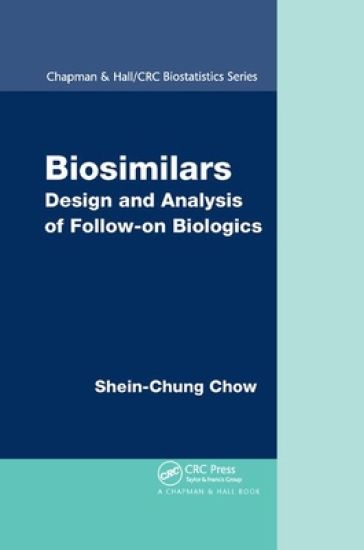
Biosimilars

Biosimilars

Shein-Chung Chow

CRC Press
2019
nidottu
As many biological products face losing their patents in the next decade, the pharmaceutical industry needs an abbreviated regulatory pathway for approval of biosimilar drug products, which are cost-effective, follow-on/subsequent versions of the innovator’s biologic products. But scientific challenges remain due to the complexity of both the manufacturing process and the structures of biosimilar products.Written by a top biostatistics researcher, Biosimilars: Design and Analysis of Follow-on Biologics is the first book entirely devoted to the statistical design and analysis of biosimilarity and interchangeability of biosimilar products. It includes comparability tests of important quality attributes at critical stages of the manufacturing processes of biologic products. Connecting the pharmaceutical/biotechnology industry, government regulatory agencies, and academia, this state-of-the-art book focuses on the scientific factors and practical issues related to the design and analysis of biosimilar studies. It covers most of the statistical questions encountered in various study designs at different stages of research and development of biological products.
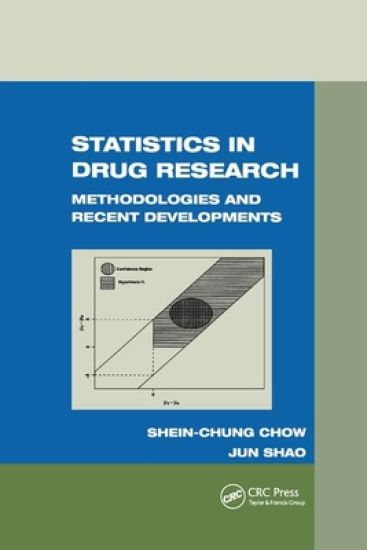
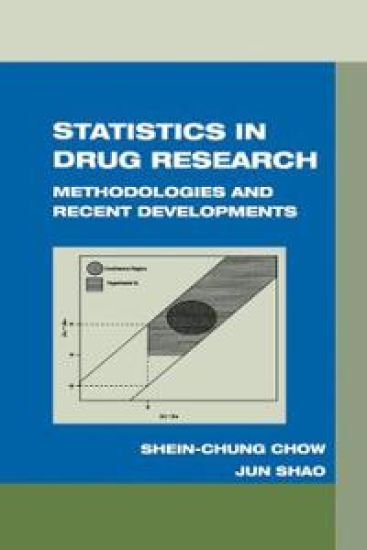
Statistics in Drug Research

Statistics in Drug Research

Shein-Chung Chow; Jun Shao

CRC Press
2019
nidottu
Emphasizing the role of good statistical practices (GSP) in drug research and formulation, this book outlines important statistics applications for each stage of pharmaceutical development to ensure the valid design, analysis, and assessment of drug products under investigation and establish the safety and efficacy of pharmaceutical compounds. Coverage include statistical techniques for assay validation and evaluation of drug performance characteristics, testing population/individual bioequivalence and in vitro bioequivalence according to the most recent FDA guidelines, basic considerations for the design and analysis of therapeutic equivalence and noninferiority trials.
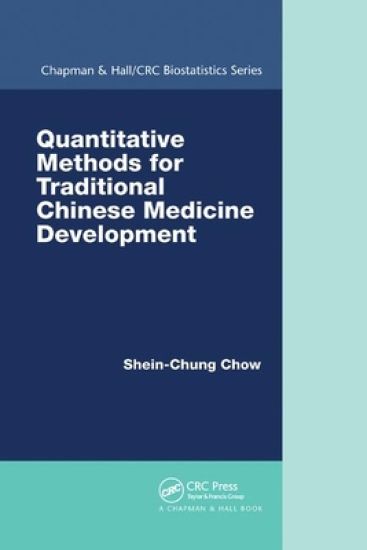
Quantitative Methods for Traditional Chinese Medicine Development
A Western-Based Approach to Analyzing TCMsIn recent years, many pharmaceutical companies and clinical research organizations have been focusing on the development of traditional Chinese (herbal) medicines (TCMs) as alternatives to treating critical or life-threatening diseases and as pathways to personalized medicine.Quantitative Methods for Traditional Chinese Medicine Development is the first book entirely devoted to the design and analysis of TCM development from a Western perspective, i.e., evidence-based clinical research and development. The book provides not only a comprehensive summary of innovative quantitative methods for developing TCMs but also a useful desk reference for principal investigators involved in personalized medicine. Written by one of the world’s most prominent biostatistics researchers, the book connects the pharmaceutical industry, regulatory agencies, and academia. It presents a state-of-the-art examination of the subject for:Scientists and researchers who are engaged in pharmaceutical/clinical research and development of TCMsThose in regulatory agencies who make decisions in the review and approval process of TCM regulatory submissions Biostatisticians who provide statistical support to assess clinical safety and effectiveness of TCMs and related issues regarding quality control and assurance as well as to test for consistency in the manufacturing processes for TCMsThis book covers all of the statistical issues encountered at various stages of pharmaceutical/clinical development of a TCM. It explains regulatory requirements; product specifications and standards; and various statistical techniques for evaluation of TCMs, validation of diagnostic procedures, and testing consistency. It also contains an entire chapter of case studies and addresses critical issues in TCM development and FAQs from a
Analytical Similarity Assessment in Biosimilar Product Development
This book focuses on analytical similarity assessment in biosimilar product development following the FDA’s recommended stepwise approach for obtaining totality-of-the-evidence for approval of biosimilar products. It covers concepts such as the tiered approach for assessment of similarity of critical quality attributes in the manufacturing process of biosimilar products, models/methods like the statistical model for classification of critical quality attributes, equivalence tests for critical quality attributes in Tier 1 and the corresponding sample size requirements, current issues, and recent developments in analytical similarity assessment.
Sample Size Calculations in Clinical Research

Sample Size Calculations in Clinical Research

Shein-Chung Chow; Jun Shao; Hansheng Wang; Yuliya Lokhnygina

CRC Press
2017
sidottu
Praise for the Second Edition:"… this is a useful, comprehensive compendium of almost every possible sample size formula. The strong organization and carefully defined formulae will aid any researcher designing a study." -Biometrics"This impressive book contains formulae for computing sample size in a wide range of settings. One-sample studies and two-sample comparisons for quantitative, binary, and time-to-event outcomes are covered comprehensively, with separate sample size formulae for testing equality, non-inferiority, and equivalence. Many less familiar topics are also covered …" – Journal of the Royal Statistical SocietySample Size Calculations in Clinical Research, Third Edition presents statistical procedures for performing sample size calculations during various phases of clinical research and development. A comprehensive and unified presentation of statistical concepts and practical applications, this book includes a well-balanced summary of current and emerging clinical issues, regulatory requirements, and recently developed statistical methodologies for sample size calculation.Features: Compares the relative merits and disadvantages of statistical methods for sample size calculations Explains how the formulae and procedures for sample size calculations can be used in a variety of clinical research and development stages Presents real-world examples from several therapeutic areas, including cardiovascular medicine, the central nervous system, anti-infective medicine, oncology, and women’s health Provides sample size calculations for dose response studies, microarray studies, and Bayesian approachesThis new edition is updated throughout, includes many new sections, and five new chapters on emerging topics: two stage seamless adaptive designs, cluster randomized trial design, zero-inflated Poisson distribution, clinical trials with extremely low incidence rates, and clinical trial simulation.
Quantitative Methods for Traditional Chinese Medicine Development
A Western-Based Approach to Analyzing TCMsIn recent years, many pharmaceutical companies and clinical research organizations have been focusing on the development of traditional Chinese (herbal) medicines (TCMs) as alternatives to treating critical or life-threatening diseases and as pathways to personalized medicine.Quantitative Methods for Traditional Chinese Medicine Development is the first book entirely devoted to the design and analysis of TCM development from a Western perspective, i.e., evidence-based clinical research and development. The book provides not only a comprehensive summary of innovative quantitative methods for developing TCMs but also a useful desk reference for principal investigators involved in personalized medicine. Written by one of the world’s most prominent biostatistics researchers, the book connects the pharmaceutical industry, regulatory agencies, and academia. It presents a state-of-the-art examination of the subject for:Scientists and researchers who are engaged in pharmaceutical/clinical research and development of TCMsThose in regulatory agencies who make decisions in the review and approval process of TCM regulatory submissions Biostatisticians who provide statistical support to assess clinical safety and effectiveness of TCMs and related issues regarding quality control and assurance as well as to test for consistency in the manufacturing processes for TCMsThis book covers all of the statistical issues encountered at various stages of pharmaceutical/clinical development of a TCM. It explains regulatory requirements; product specifications and standards; and various statistical techniques for evaluation of TCMs, validation of diagnostic procedures, and testing consistency. It also contains an entire chapter of case studies and addresses critical issues in TCM development and FAQs from a
Biosimilars

Biosimilars

Shein-Chung Chow

CRC Press Inc
2013
sidottu
As many biological products face losing their patents in the next decade, the pharmaceutical industry needs an abbreviated regulatory pathway for approval of biosimilar drug products, which are cost-effective, follow-on/subsequent versions of the innovator’s biologic products. But scientific challenges remain due to the complexity of both the manufacturing process and the structures of biosimilar products.Written by a top biostatistics researcher, Biosimilars: Design and Analysis of Follow-on Biologics is the first book entirely devoted to the statistical design and analysis of biosimilarity and interchangeability of biosimilar products. It includes comparability tests of important quality attributes at critical stages of the manufacturing processes of biologic products. Connecting the pharmaceutical/biotechnology industry, government regulatory agencies, and academia, this state-of-the-art book focuses on the scientific factors and practical issues related to the design and analysis of biosimilar studies. It covers most of the statistical questions encountered in various study designs at different stages of research and development of biological products.
Adaptive Design Methods in Clinical Trials

Adaptive Design Methods in Clinical Trials

Shein-Chung Chow; Mark Chang

Taylor Francis Inc
2011
sidottu
With new statistical and scientific issues arising in adaptive clinical trial design, including the U.S. FDA’s recent draft guidance, a new edition of one of the first books on the topic is needed. Adaptive Design Methods in Clinical Trials, Second Edition reflects recent developments and regulatory positions on the use of adaptive designs in clinical trials. It unifies the vast and continuously growing literature and research activities on regulatory requirements, scientific and practical issues, and statistical methodology.New to the Second EditionAlong with revisions throughout the text, this edition significantly updates the chapters on protocol amendment and clinical trial simulation to incorporate the latest changes. It also includes five entirely new chapters on two-stage adaptive design, biomarker adaptive trials, target clinical trials, sample size and power estimation, and regulatory perspectives.Following in the tradition of its acclaimed predecessor, this second edition continues to offer an up-to-date resource for clinical scientists and researchers in academia, regulatory agencies, and the pharmaceutical industry. Written in an intuitive style at a basic mathematical and statistical level, the book maintains its practical approach with an emphasis on concepts via numerous examples and illustrations.
Controversial Statistical Issues in Clinical Trials

Controversial Statistical Issues in Clinical Trials

Shein-Chung Chow

Taylor Francis Inc
2011
sidottu
In clinical trial practice, controversial statistical issues inevitably occur regardless of the compliance with good statistical practice and good clinical practice. But by identifying the causes of the issues and correcting them, the study objectives of clinical trials can be better achieved. Controversial Statistical Issues in Clinical Trials covers commonly encountered controversial statistical issues in clinical trials and, whenever possible, makes recommendations to resolve these problems.The book focuses on issues occurring at various stages of clinical research and development, including early-phase clinical development (such as bioavailability/bioequivalence), bench-to-bedside translational research, and late-phase clinical development. Numerous examples illustrate the impact of these issues on the evaluation of the safety and efficacy of the test treatment under investigation. The author also offers recommendations regarding possible resolutions of the problems.Written by one of the preeminent experts in the field, this book provides a useful desk reference and state-of-the art examination of problematic issues in clinical trials for scientists in the pharmaceutical industry, medical/statistical reviewers in government regulatory agencies, and researchers and students in academia.
Statistical Design and Analysis of Stability Studies
The US Food and Drug Administration's Report to the Nation in 2004 and 2005 indicated that one of the top reasons for drug recall was that stability data did not support existing expiration dates. Pharmaceutical companies conduct stability studies to characterize the degradation of drug products and to estimate drug shelf life. Illustrating how stability studies play an important role in drug safety and quality assurance, Statistical Design and Analysis of Stability Studies presents the principles and methodologies in the design and analysis of stability studies.After introducing the basic concepts of stability testing, the book focuses on short-term stability studies and reviews several methods for estimating drug expiration dating periods. It then compares some commonly employed study designs and discusses both fixed and random batch statistical analyses. Following a chapter on the statistical methods for stability analysis under a linear mixed effects model, the book examines stability analyses with discrete responses, multiple components, and frozen drug products. In addition, the author provides statistical methods for dissolution testing and explores current issues and recent developments in stability studies.To ensure the safety of consumers, professionals in the field must carry out stability studies to determine the reliability of drug products during their expiration period. This book provides the material necessary for you to perform stability designs and analyses in pharmaceutical research and development.
Statistics in Drug Research

Statistics in Drug Research

Shein-Chung Chow; Jun Shao

CRC Press Inc
2002
sidottu
Emphasizing the role of good statistical practices (GSP) in drug research and formulation, this book outlines important statistics applications for each stage of pharmaceutical development to ensure the valid design, analysis, and assessment of drug products under investigation and establish the safety and efficacy of pharmaceutical compounds. Coverage include statistical techniques for assay validation and evaluation of drug performance characteristics, testing population/individual bioequivalence and in vitro bioequivalence according to the most recent FDA guidelines, basic considerations for the design and analysis of therapeutic equivalence and noninferiority trials.