Kirjojen hintavertailu. Mukana 12 390 323 kirjaa ja 12 kauppaa.

Kirjailija

Sheldon Krimsky

Kirjat ja teokset yhdessä paikassa: 15 kirjaa, julkaisuja vuosilta 1988-2021, suosituimpien joukossa Biotechnology in Our Lives. Vertaile teosten hintoja ja tarkista saatavuus suomalaisista kirjakaupoista.

15 kirjaa

Kirjojen julkaisuhaarukka 1988-2021.

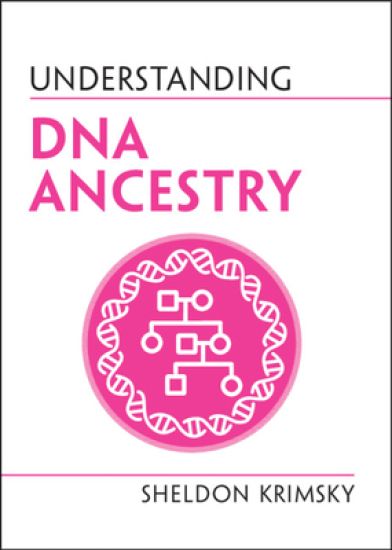
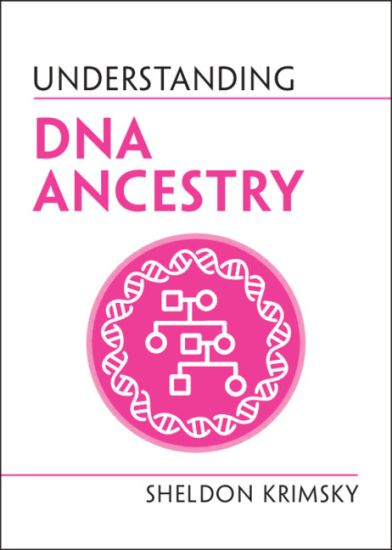
Understanding DNA Ancestry

Understanding DNA Ancestry

Sheldon Krimsky

Cambridge University Press
2021
sidottu
DNA ancestry companies generate revenues in the region of $1bn a year, and the company 23andMe is said to have sold 10 million DNA ancestry kits to date. Although evidently popular, the science behind how DNA ancestry tests work is mystifying and difficult for the general public to interpret and understand. In this accessible and engaging book, Sheldon Krimsky, a leading researcher, investigates the methods that different companies use for DNA ancestry testing. He also discusses what the tests are used for, from their application in criminal investigations to discovering missing relatives. With a lack of transparency from companies in sharing their data, absent validation of methods by independent scientists, and currently no agreed-upon standards of accuracy, this book also examines the ethical issues behind genetic genealogy testing, including concerns surrounding data privacy and security. It demystifies the art and science of DNA ancestry testing for the general reader.
Understanding DNA Ancestry

Understanding DNA Ancestry

Sheldon Krimsky

Cambridge University Press
2021
pokkari
DNA ancestry companies generate revenues in the region of $1bn a year, and the company 23andMe is said to have sold 10 million DNA ancestry kits to date. Although evidently popular, the science behind how DNA ancestry tests work is mystifying and difficult for the general public to interpret and understand. In this accessible and engaging book, Sheldon Krimsky, a leading researcher, investigates the methods that different companies use for DNA ancestry testing. He also discusses what the tests are used for, from their application in criminal investigations to discovering missing relatives. With a lack of transparency from companies in sharing their data, absent validation of methods by independent scientists, and currently no agreed-upon standards of accuracy, this book also examines the ethical issues behind genetic genealogy testing, including concerns surrounding data privacy and security. It demystifies the art and science of DNA ancestry testing for the general reader.
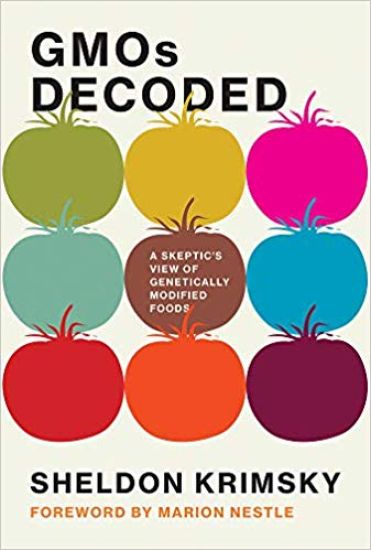
GMOs Decoded

GMOs Decoded

Sheldon Krimsky; Marion Nestle

MIT Press
2019
sidottu
The debate over genetically modified organisms: health and safety concerns, environmental impact, and scientific opinions.Since they were introduced to the market in the late 1990s, GMOs (genetically modified organisms, including genetically modified crops), have been subject to a barrage of criticism. Agriculture has welcomed this new technology, but public opposition has been loud and scientific opinion mixed. In GMOs Decoded, Sheldon Krimsky examines the controversies over GMOs-health and safety concerns, environmental issues, the implications for world hunger, and the scientific consensus (or lack of one). He explores the viewpoints of a range of GMO skeptics, from public advocacy groups and nongovernmental organizations to scientists with differing views on risk and environmental impact.Krimsky explains the differences between traditional plant breeding and "molecular breeding" through genetic engineering (GE); describes early GMO products, including the infamous Flavr Savr tomato; and discusses herbicide-, disease-, and insect-resistant GE plants. He considers the different American and European approaches to risk assessment, dueling scientific interpretations of plant genetics, and the controversy over labeling GMO products. He analyzes a key 2016 report from the National Academies of Sciences on GMO health effects and considers the controversy over biofortified rice (Golden Rice)-which some saw as a humanitarian project and others as an exercise in public relations. Do GMO crops hold promise or peril? By offering an accessible review of the risks and benefits of GMO crops, and a guide to the controversies over them, Krimsky helps readers judge for themselves.
Stem Cell Dialogues

Stem Cell Dialogues

Sheldon Krimsky

Columbia University Press
2017
pokkari
Stem cells and the emerging field of regenerative medicine are at the frontiers of modern medicine. These areas of scientific inquiry suggest that in the future, damaged tissue and organs might be repaired through personalized cell therapy as easily as the body repairs itself, revolutionizing the treatment of numerous diseases. Yet the use of stem cells is fraught with ethical and public policy dilemmas that challenge scientists, clinicians, the public health community, and people of good will everywhere. How shall we deal with these amazing biomedical advances, and how can we talk about potential breakthroughs with both moral and scientific intelligence? This book provides an innovative look at these vexing issues through a series of innovative Socratic dialogues that elucidate key scientific and ethical points in an approachable manner. Addressing the cultural and value issues underlying stem cell research while also educating readers about stem cells' biological function and medical applications, Stem Cell Dialogues features fictional characters engaging in compelling inquiry and debate. Participants investigate the scientific, political, and socioethical dimensions of stem cell science using actual language, analysis, and arguments taken from scientific, philosophical, and popular literature. Each dialogue centers on a specific, recognizable topic, such as the policies implemented by the George W. Bush administration restricting the use of embryonic stem cells; the potential role of stem cells in personalized medicine; the ethics of cloning; and the sale of eggs and embryos. Additionally, speakers debate the use of stem cells to treat paralysis, diabetes, stroke effects, macular degeneration, and cancer. Educational, entertaining, and rigorously researched (with 300 references to scientific literature), Stem Cell Dialogues should be included in any effort to help the public understand the science, ethics, and policy concerns of this promising field.
Stem Cell Dialogues

Stem Cell Dialogues

Sheldon Krimsky

Columbia University Press
2015
sidottu
Stem cells and the emerging field of regenerative medicine are at the frontiers of modern medicine. These areas of scientific inquiry suggest that in the future, damaged tissue and organs might be repaired through personalized cell therapy as easily as the body repairs itself, revolutionizing the treatment of numerous diseases. Yet the use of stem cells is fraught with ethical and public policy dilemmas that challenge scientists, clinicians, the public health community, and people of good will everywhere. How shall we deal with these amazing biomedical advances, and how can we talk about potential breakthroughs with both moral and scientific intelligence? This book provides an innovative look at these vexing issues through a series of innovative Socratic dialogues that elucidate key scientific and ethical points in an approachable manner. Addressing the cultural and value issues underlying stem cell research while also educating readers about stem cells' biological function and medical applications, Stem Cell Dialogues features fictional characters engaging in compelling inquiry and debate. Participants investigate the scientific, political, and socioethical dimensions of stem cell science using actual language, analysis, and arguments taken from scientific, philosophical, and popular literature. Each dialogue centers on a specific, recognizable topic, such as the policies implemented by the George W. Bush administration restricting the use of embryonic stem cells; the potential role of stem cells in personalized medicine; the ethics of cloning; and the sale of eggs and embryos. Additionally, speakers debate the use of stem cells to treat paralysis, diabetes, stroke effects, macular degeneration, and cancer. Educational, entertaining, and rigorously researched (with 300 references to scientific literature), Stem Cell Dialogues should be included in any effort to help the public understand the science, ethics, and policy concerns of this promising field.
Biotechnology in Our Lives

Biotechnology in Our Lives

Jeremy Gruber; Sheldon Krimsky

Skyhorse Publishing
2013
sidottu
For a quarter of a century, the Council for Responsible Genetics has provided a unique historical lens into the modern history, science, ethics, and politics of genetic technologies. Since 1983 the Council has had leading scientists, activists, science writers, and public health advocates researching and reporting on a broad spectrum of issues, including genetically engineered foods, biological weapons, genetic privacy and discrimination, reproductive technologies, and human cloning. Biotechnology in Our Lives examines how these issues affect us daily whether we realize it or not. Written for the nonscientist, it looks at the many applications of genetics on the world around us by posing questions such as: What should we know about genetics and childbirth? Can our genes keep us from qualifying for health insurance? Can gene therapy cure cancer? Is behavior genetically determined? Why would the FBI want our genes? Are foreign genes in our food? And much more Ultimately, this definitive book on the subject also encourages us to think about the social, environmental, and moral ramifications of where this technology is taking us.
Genetic Justice

Genetic Justice

Sheldon Krimsky; Tania Simoncelli

Columbia University Press
2012
pokkari
National DNA databanks were initially established to catalogue the identities of violent criminals and sex offenders. However, since the mid-1990s, forensic DNA databanks have in some cases expanded to include people merely arrested, regardless of whether they've been charged or convicted of a crime. The public is largely unaware of these changes and the advances that biotechnology and forensic DNA science have made possible. Yet many citizens are beginning to realize that the unfettered collection of DNA profiles might compromise our basic freedoms and rights. Two leading authors on medical ethics, science policy, and civil liberties take a hard look at how the United States has balanced the use of DNA technology, particularly the use of DNA databanks in criminal justice, with the privacy rights of its citizenry. Krimsky and Simoncelli analyze the constitutional, ethical, and sociopolitical implications of expanded DNA collection in the United States and compare these findings to trends in the United Kingdom, Japan, Australia, Germany, and Italy. They explore many controversial topics, including the legal precedent for taking DNA from juveniles, the search for possible family members of suspects in DNA databases, the launch of "DNA dragnets" among local populations, and the warrantless acquisition by police of so-called abandoned DNA in the search for suspects. Most intriguing, Krimsky and Simoncelli explode the myth that DNA profiling is infallible, which has profound implications for criminal justice.
Genetic Justice

Genetic Justice

Sheldon Krimsky; Tania Simoncelli

Columbia University Press
2010
sidottu
National DNA databanks were initially established to catalogue the identities of violent criminals and sex offenders. However, since the mid-1990s, forensic DNA databanks have in some cases expanded to include people merely arrested, regardless of whether they've been charged or convicted of a crime. The public is largely unaware of these changes and the advances that biotechnology and forensic DNA science have made possible. Yet many citizens are beginning to realize that the unfettered collection of DNA profiles might compromise our basic freedoms and rights. Two leading authors on medical ethics, science policy, and civil liberties take a hard look at how the United States has balanced the use of DNA technology, particularly the use of DNA databanks in criminal justice, with the privacy rights of its citizenry. Krimsky and Simoncelli analyze the constitutional, ethical, and sociopolitical implications of expanded DNA collection in the United States and compare these findings to trends in the United Kingdom, Japan, Australia, Germany, and Italy. They explore many controversial topics, including the legal precedent for taking DNA from juveniles, the search for possible family members of suspects in DNA databases, the launch of "DNA dragnets" among local populations, and the warrantless acquisition by police of so-called abandoned DNA in the search for suspects. Most intriguing, Krimsky and Simoncelli explode the myth that DNA profiling is infallible, which has profound implications for criminal justice.
Science in the Private Interest

Science in the Private Interest

Sheldon Krimsky; Ralph Nader

Rowman Littlefield Publishers
2004
nidottu
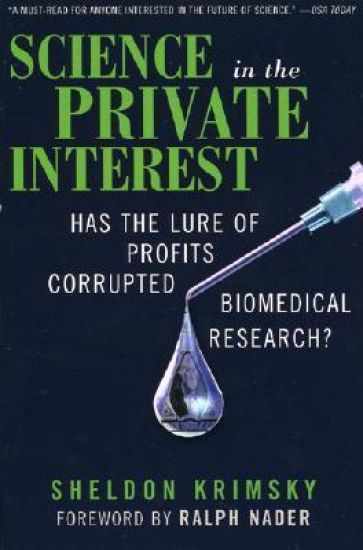
Something has changed in the culture and values of academic science over the last quarter-century. University science is now entangled with entrepreneurship, and researchers with a commercial interest are caught in an ethical quandary. How can an academic scientist honor knowledge for its own sake, while also using knowledge as a means to generate wealth? Science in the Private Interest investigates the trends and effects of modern, commercialized academic science. This book dives unhesitatingly into some of modern science's messiest and most urgent questions. How did scientists begin choosing proprietary gain over the pursuit of knowledge? What effects have academic-corporate partnerships had on the quality and integrity of science? And, most importantly, how does this affect the public?
Science in the Private Interest

Science in the Private Interest

Sheldon Krimsky; Ralph Nader

Rowman Littlefield Publishers
2003
sidottu
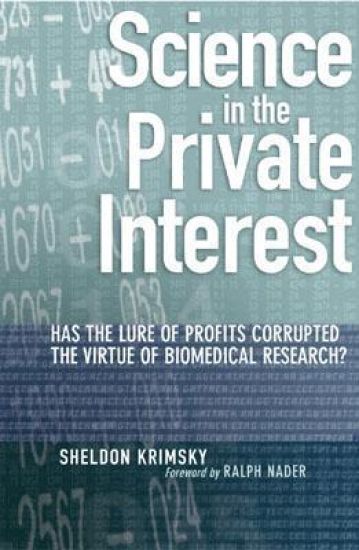
Something has changed in the culture and values of academic science over the last quarter-century. University science is now entangled with entrepreneurship, and researchers with a commercial interest are caught in an ethical quandary. How can an academic scientist honor knowledge for its own sake, while also using knowledge as a means to generate wealth? Science in the Private Interest investigates the trends and effects of modern, commercialized academic science. This book dives unhesitatingly into some of modern science's messiest and most urgent questions. How did scientists begin choosing proprietary gain over the pursuit of knowledge? What effects have academic-corporate partnerships had on the quality and integrity of science? And, most importantly, how does this affect the public?
Hormonal Chaos

Hormonal Chaos

Sheldon Krimsky; Lynn Goldman

Johns Hopkins University Press
2003
pokkari
In Hormonal Chaos, Sheldon Krimsky traces the emergence of an unorthodox hypothesis that casts new suspicions on a broad range of modern industrial chemicals. At the heart of his story is the "Environmental Endocrine Hypothesis," the assertion that a class of chemicals called "endocrine disruptors" are interfering with the normal functioning of hormones in animals and humans. Krimsky describes how this controversial theory was first elaborated and explores the complex factors that have contributed to its increased legitimacy and continued controversy.
Agricultural Biotechnology and the Environment

Agricultural Biotechnology and the Environment

Sheldon Krimsky; Roger Wrubel P

University of Illinois Press
1996
nidottu
Probing the profitable new science of creating--and altering--life forms "Extraordinarily well documented . . . remarkably clear. This is the most comprehensive coverage of these issues to date. It will be required reading for some time." -- Lawrence Busch, Michigan State University "Krimsky and Wrubel not only describe the components of agricultural biotechnology, they address and analyze controversies involving the risks and benefits of new technologies. Coverage of technical to social components of agricultural biotechnology is unusually complete and thorough. Their even-handed and comprehensive approach to these topics is rare and extremely valuable." -- Richard Weinzierl, University of Illinois Modern agriculture is being transformed by the genetic alteration of seeds, animals, and microorganisms, a process that has produced such products as flavor saver tomatoes and crops resistant to specific insects or herbicides. Agricultural Biotechnology and the Environment is the first comprehensive overview of the ongoing transformation of agriculture, exploring the impact of genetic engineering from scientific, social, ethical, and ecological perspectives. Sheldon Krimsky and Roger Wrubel detail the impact the new generation of products is expected to have on agricultural practice and the environment and assess the degree to which current trends in biotechnology match earlier expectations. They also analyze the social and political response to innovations resulting from genetic technology. Closely examined in each of three areas--transgenic plants, genetically engineered microorganisms, and transgenic animals--are technical and scientific problems, social controversies, and anticipated environmental impacts. An objective, detailed look at a subject of interest to a broad spectrum of readers, Agricultural Biotechnology and the Environment will be of interest to researchers in the new biotechnology fields as well as to educated general readers and policymakers. A volume in the series The Environment and the Human Condition
Biotechnics and Society

Biotechnics and Society

Sheldon Krimsky

Praeger Publishers Inc
1991
nidottu
Impacts of technological change have historically been assessed only after the passage of a significant period of time. It is then that historians recreate the decisions that were made, sort out the influencing factors, and debate in hindsight the options that were available at the time. Sheldon Krimsky, consistent with the importance of his subject, telescopes this process by providing to contemporary readers a broad overview of the first ten years of the industrial revolution in applied molecular genetics. He discusses the birth and expectations of the biotechnology industry, the response to products of genetic engineering, perspectives on risk assessment from different sectors of the scientific community, and public initiatives to regulate new products. The author explores the social and political discourse on the direction of biotechnology, and offers the most detailed examination to date of the controversy over the environmental release of genetically engineered organisms. Finally, he takes a critical look at the conventional role of technology assessment and suggests an alternative model that fits more closely with the needs of an environmentally sensitive world.Krimsky's thought-provoking work offers readers a unique opportunity to understand what questions were being asked, what options were available, and what decisions were being made when the industrial application of genetic technologies was still in its infancy. His insider's perspective will interest those working in the fields of biology and social issues; science, technology, and society; and the sociology of science. Challenging, cautioning, and balanced, this book is required reading for all who are seriously concerned with the relationship of emerging technologies to society.
Biotechnics and Society

Biotechnics and Society

Sheldon Krimsky

Praeger Publishers Inc
1991
sidottu
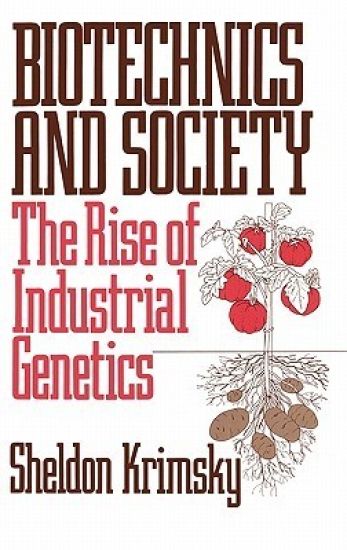
Impacts of technological change have historically been assessed only after the passage of a significant period of time. It is then that historians recreate the decisions that were made, sort out the influencing factors, and debate in hindsight the options that were available at the time. Sheldon Krimsky, consistent with the importance of his subject, telescopes this process by providing to contemporary readers a broad overview of the first ten years of the industrial revolution in applied molecular genetics. He discusses the birth and expectations of the biotechnology industry, the response to products of genetic engineering, perspectives on risk assessment from different sectors of the scientific community, and public initiatives to regulate new products. The author explores the social and political discourse on the direction of biotechnology, and offers the most detailed examination to date of the controversy over the environmental release of genetically engineered organisms. Finally, he takes a critical look at the conventional role of technology assessment and suggests an alternative model that fits more closely with the needs of an environmentally sensitive world. Krimsky's thought-provoking work offers readers a unique opportunity to understand what questions were being asked, what options were available, and what decisions were being made when the industrial application of genetic technologies was still in its infancy. His insider's perspective will interest those working in the fields of biology and social issues; science, technology, and society; and the sociology of science. Challenging, cautioning, and balanced, this book is required reading for all who are seriously concerned with the relationship of emerging technologies to society.
Environmental Hazards

Environmental Hazards

Sheldon Krimsky; Alonzo Plough

Praeger Publishers Inc
1988
sidottu
This substantive, insightful book demonstrates the growing importance of risk communication as both a technical and cultural phenomenon. The authors discuss the various processes used to communicate risk to citizens; explore how the public responds to risk messages; and examine how social, economic, historical, and political factors can influence the success or failure of risk communication. Cases presented in this volume demonstrate the diversity of risk communication approaches and activities, including public activism, federal and state agency responses, private sector response, and media coverage.