Kirjojen hintavertailu. Mukana 12 459 402 kirjaa ja 12 kauppaa.

Kirjailija

Sherrie Tucker

Kirjat ja teokset yhdessä paikassa: 4 kirjaa, julkaisuja vuosilta 2000-2014, suosituimpien joukossa Swing Shift. Vertaile teosten hintoja ja tarkista saatavuus suomalaisista kirjakaupoista.

4 kirjaa

Kirjojen julkaisuhaarukka 2000-2014.

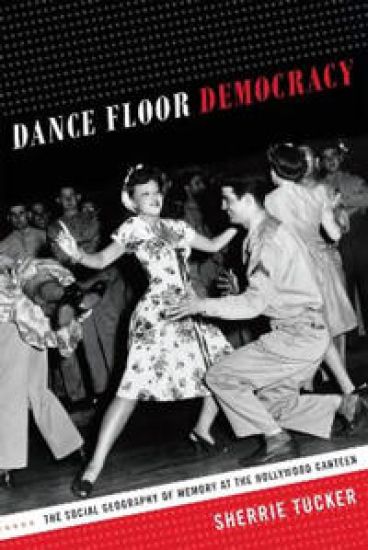
Dance Floor Democracy

Dance Floor Democracy

Sherrie Tucker

Duke University Press
2014
sidottu
Open from 1942 until 1945, the Hollywood Canteen was the most famous of the patriotic home front nightclubs where civilian hostesses jitterbugged with enlisted men of the Allied Nations. Since the opening night, when the crowds were so thick that Bette Davis had to enter through the bathroom window to give her welcome speech, the storied dance floor where movie stars danced with soldiers has been the subject of much U.S. nostalgia about the "Greatest Generation." Drawing from oral histories with civilian volunteers and military guests who danced at the wartime nightclub, Sherrie Tucker explores how jitterbugging swing culture has come to represent the war in U.S. national memory. Yet her interviewees' varied experiences and recollections belie the possibility of any singular historical narrative. Some recall racism, sexism, and inequality on the nightclub's dance floor and in Los Angeles neighborhoods, dynamics at odds with the U.S. democratic, egalitarian ideals associated with the Hollywood Canteen and the "Good War" in popular culture narratives. For Tucker, swing dancing's torque-bodies sharing weight, velocity, and turning power without guaranteed outcomes-is an apt metaphor for the jostling narratives, different perspectives, unsteady memories, and quotidian acts that comprise social history.
Dance Floor Democracy

Dance Floor Democracy

Sherrie Tucker

Duke University Press
2014
pokkari
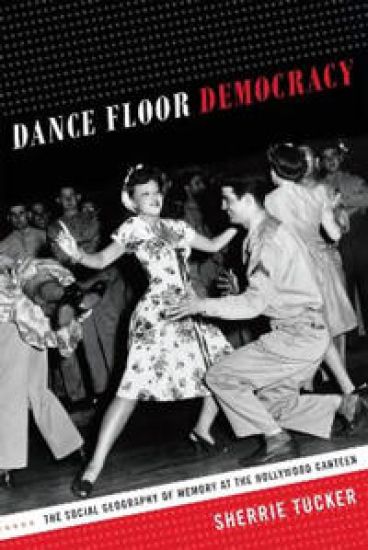
Open from 1942 until 1945, the Hollywood Canteen was the most famous of the patriotic home front nightclubs where civilian hostesses jitterbugged with enlisted men of the Allied Nations. Since the opening night, when the crowds were so thick that Bette Davis had to enter through the bathroom window to give her welcome speech, the storied dance floor where movie stars danced with soldiers has been the subject of much U.S. nostalgia about the "Greatest Generation." Drawing from oral histories with civilian volunteers and military guests who danced at the wartime nightclub, Sherrie Tucker explores how jitterbugging swing culture has come to represent the war in U.S. national memory. Yet her interviewees' varied experiences and recollections belie the possibility of any singular historical narrative. Some recall racism, sexism, and inequality on the nightclub's dance floor and in Los Angeles neighborhoods, dynamics at odds with the U.S. democratic, egalitarian ideals associated with the Hollywood Canteen and the "Good War" in popular culture narratives. For Tucker, swing dancing's torque-bodies sharing weight, velocity, and turning power without guaranteed outcomes-is an apt metaphor for the jostling narratives, different perspectives, unsteady memories, and quotidian acts that comprise social history.
Swing Shift

Swing Shift

Sherrie Tucker

Duke University Press
2001
pokkari
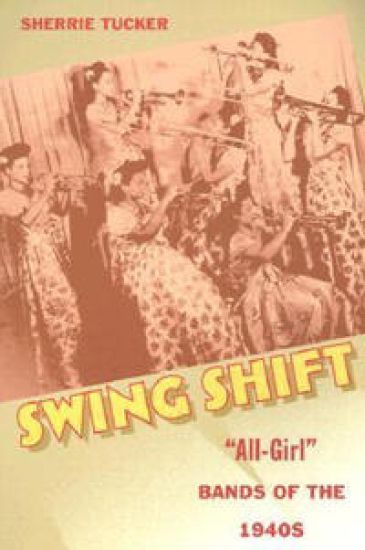
The forgotten history of the “all-girl” big bands of the World War II era takes center stage in Sherrie Tucker’s Swing Shift. American demand for swing skyrocketed with the onslaught of war as millions-isolated from loved ones-sought diversion, comfort, and social contact through music and dance. Although all-female jazz and dance bands had existed since the 1920s, now hundreds of such groups, both African American and white, barnstormed ballrooms, theaters, dance halls, military installations, and makeshift USO stages on the home front and abroad. Filled with firsthand accounts of more than a hundred women who performed during this era and complemented by thorough-and eye-opening-archival research, Swing Shift not only offers a history of this significant aspect of American society and culture but also examines how and why whole bands of dedicated and talented women musicians were dropped from-or never inducted into-our national memory. Tucker’s nuanced presentation reveals who these remarkable women were, where and when they began to play music, and how they navigated a sometimes wild and bumpy road-including their experiences with gas and rubber rationing, travel restrictions designed to prioritize transportation for military needs, and Jim Crow laws and other prejudices. She explains how the expanded opportunities brought by the war, along with sudden increased publicity, created the illusion that all female musicians-no matter how experienced or talented-were “Swing Shift Maisies,” 1940s slang for the substitutes for the “real” workers (or musicians) who were away in combat. Comparing the working conditions and public representations of women musicians with figures such as Rosie the Riveter, WACs, USO hostesses, pin-ups, and movie stars, Tucker chronicles the careers of such bands as the International Sweethearts of Rhythm, Phil Spitalny’s Hours of Charm, The Darlings of Rhythm, and the Sharon Rogers All-Girl Band.
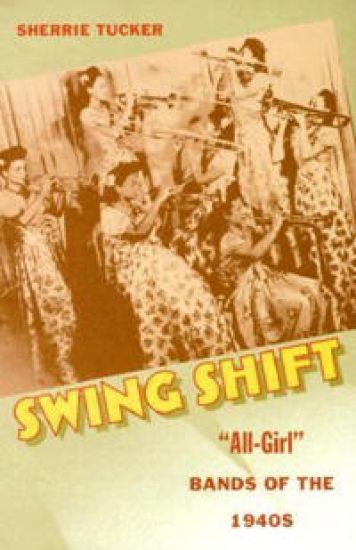
Swing Shift

Swing Shift

Sherrie Tucker

Duke University Press
2000
sidottu
The forgotten history of the “all-girl” big bands of the World War II era takes center stage in Sherrie Tucker’s Swing Shift. American demand for swing skyrocketed with the onslaught of war as millions-isolated from loved ones-sought diversion, comfort, and social contact through music and dance. Although all-female jazz and dance bands had existed since the 1920s, now hundreds of such groups, both African American and white, barnstormed ballrooms, theaters, dance halls, military installations, and makeshift USO stages on the home front and abroad. Filled with firsthand accounts of more than a hundred women who performed during this era and complemented by thorough-and eye-opening-archival research, Swing Shift not only offers a history of this significant aspect of American society and culture but also examines how and why whole bands of dedicated and talented women musicians were dropped from-or never inducted into-our national memory. Tucker’s nuanced presentation reveals who these remarkable women were, where and when they began to play music, and how they navigated a sometimes wild and bumpy road-including their experiences with gas and rubber rationing, travel restrictions designed to prioritize transportation for military needs, and Jim Crow laws and other prejudices. She explains how the expanded opportunities brought by the war, along with sudden increased publicity, created the illusion that all female musicians-no matter how experienced or talented-were “Swing Shift Maisies,” 1940s slang for the substitutes for the “real” workers (or musicians) who were away in combat. Comparing the working conditions and public representations of women musicians with figures such as Rosie the Riveter, WACs, USO hostesses, pin-ups, and movie stars, Tucker chronicles the careers of such bands as the International Sweethearts of Rhythm, Phil Spitalny’s Hours of Charm, The Darlings of Rhythm, and the Sharon Rogers All-Girl Band.