Kirjojen hintavertailu. Mukana 12 584 122 kirjaa ja 12 kauppaa.

Kirjailija

Sheryl Hamilton

Kirjat ja teokset yhdessä paikassa: 4 kirjaa, julkaisuja vuosilta 2009-2013, suosituimpien joukossa Becoming Biosubjects. Vertaile teosten hintoja ja tarkista saatavuus suomalaisista kirjakaupoista.

4 kirjaa

Kirjojen julkaisuhaarukka 2009-2013.

Impersonations

Impersonations

Sheryl Hamilton

University of Toronto Press
2013
pokkari
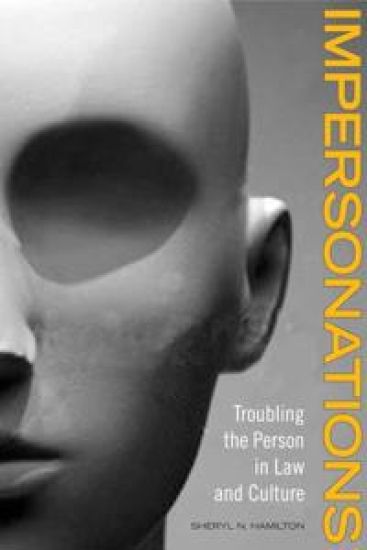
Personhood is considered at once a sign of legal-political status and of socio-cultural agency, synonymous with the rational individual, subject, or citizen. Yet, in an era of life-extending technologies, genetic engineering, corporate social responsibility, and smart technology, the definition of the person is neither benign nor uncontested. Boundaries that previously worked to secure our place in the social order are blurring as never before. What does it mean, then, to be a person in the twenty-first century? In Impersonations, Sheryl N. Hamilton uses five different kinds of persons - corporations, women, clones, computers, and celebrities - to discuss the instability of the concept of personhood and to examine some of the ways in which broader social anxieties are expressed in these case studies. She suggests that our investment in personhood is greater now than it has been for years, and that our ongoing struggle to define the term is evident in law and popular culture. Using a cultural studies of law approach, the author examines important issues such as whether the person is a gender-neutral concept based on individual rights, the relationship between personhood and the body, and whether persons can be property. Impersonations is a highly original study that brings together legal, philosophical, and cultural expressions of personhood to enliven current debates about our place in the world.
Becoming Biosubjects

Becoming Biosubjects

Neil Gerlach; Sheryl Hamilton; Rebecca Sullivan; Priscilla Walton

University of Toronto Press
2011
sidottu
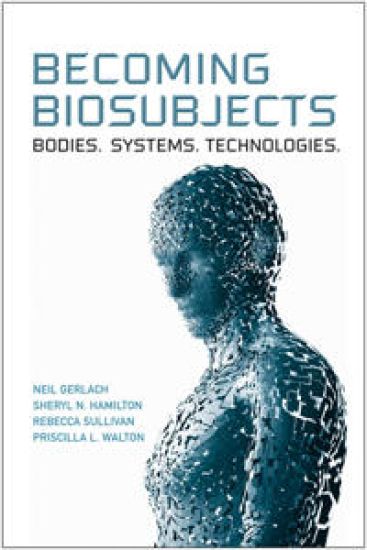
Becoming Biosubjects examines the ways in which the Canadian government, media, courts, and everyday Canadians are making sense of the challenges being posed by biotechnologies. The authors argue that the human body is now being understood as something that is fluid and without fixed meaning. This has significant implications both for how we understand ourselves and how we see our relationships with other forms of life. Focusing on four major issues, the authors examine the ways in which genetic technologies are shaping criminal justice practices, how policies on reproductive technologies have shifted in response to biotechnologies, the debates surrounding the patenting of higher life forms, and the Canadian (and global) response to bioterrorism. Regulatory strategies in government and the courts are continually evolving and are affected by changing public perceptions of scientific knowledge. The legal and cultural shifts outlined in Becoming Biosubjects call into question what it means to be a Canadian, a citizen, and a human being.
Becoming Biosubjects

Becoming Biosubjects

Neil Gerlach; Sheryl Hamilton; Rebecca Sullivan; Priscilla Walton

University of Toronto Press
2011
pokkari
Becoming Biosubjects examines the ways in which the Canadian government, media, courts, and everyday Canadians are making sense of the challenges being posed by biotechnologies. The authors argue that the human body is now being understood as something that is fluid and without fixed meaning. This has significant implications both for how we understand ourselves and how we see our relationships with other forms of life. Focusing on four major issues, the authors examine the ways in which genetic technologies are shaping criminal justice practices, how policies on reproductive technologies have shifted in response to biotechnologies, the debates surrounding the patenting of higher life forms, and the Canadian (and global) response to bioterrorism. Regulatory strategies in government and the courts are continually evolving and are affected by changing public perceptions of scientific knowledge. The legal and cultural shifts outlined in Becoming Biosubjects call into question what it means to be a Canadian, a citizen, and a human being.
Impersonations

Impersonations

Sheryl Hamilton

University of Toronto Press
2009
sidottu
Personhood is considered at once a sign of legal-political status and of socio-cultural agency, synonymous with the rational individual, subject, or citizen. Yet, in an era of life-extending technologies, genetic engineering, corporate social responsibility, and smart technology, the definition of the person is neither benign nor uncontested. Boundaries that previously worked to secure our place in the social order are blurring as never before. What does it mean, then, to be a person in the twenty-first century? In Impersonations, Sheryl N. Hamilton uses five different kinds of persons - corporations, women, clones, computers, and celebrities - to discuss the instability of the concept of personhood and to examine some of the ways in which broader social anxieties are expressed in these case studies. She suggests that our investment in personhood is greater now than it has been for years, and that our ongoing struggle to define the term is evident in law and popular culture. Using a cultural studies of law approach, the author examines important issues such as whether the person is a gender-neutral concept based on individual rights, the relationship between personhood and the body, and whether persons can be property. Impersonations is a highly original study that brings together legal, philosophical, and cultural expressions of personhood to enliven current debates about our place in the world.